Walk down any K-beauty aisle and you’ll see “brightening” on a dozen labels, each promising a more radiant complexion. Niacinamide, vitamin C, kojic acid, tranexamic acid — the options feel endless, and the differences feel unclear. The role of arbutin in Korean brightening stands out precisely because it solves a problem most other ingredients can’t: it delivers meaningful pigmentation control without the cytotoxicity, irritation, or regulatory concerns that follow harsher agents. This guide explains how arbutin works, why Korean formulators favor it, and how to use it effectively in your routine.
Table of Contents
- Key takeaways
- How arbutin works to brighten skin
- Why Korean skincare favors arbutin
- Fitting arbutin into your K-beauty routine
- Comparing arbutin to other brightening ingredients
- My perspective on arbutin and long-term brightening
- Brighten smarter with Lunarashopping
- FAQ
Key takeaways
| Point | Details |
|---|---|
| Arbutin inhibits melanin production | It blocks the tyrosinase enzyme competitively, reducing pigmentation without destroying skin cells. |
| Results require patience | Consistent twice-daily use produces visible improvement in dark spots within 6 to 12 weeks. |
| Safety exceeds hydroquinone | Arbutin carries 100 to 500 times lower cytotoxicity than hydroquinone at comparable concentrations. |
| Synergy matters in K-beauty | Korean formulas pair arbutin with niacinamide, ceramides, and antioxidants for compounding brightening and barrier support. |
| Sunscreen is non-negotiable | Daily SPF use protects your brightening progress and prevents pigmentation from returning. |
How arbutin works to brighten skin
Arbutin is a naturally occurring glycoside found in bearberry, mulberry, and certain grains. It comes in two forms: alpha-arbutin and beta-arbutin. Alpha-arbutin is the stabilized, more bioavailable version, and it is the form you’ll find in professional-grade and K-beauty formulations. Beta-arbutin is less stable and degrades faster, making it a weaker choice for consistent results.
The mechanism is precise. Alpha-arbutin inhibits tyrosinase by mimicking tyrosine, the amino acid tyrosinase normally converts into melanin. By occupying the enzyme’s active site, arbutin blocks melanin synthesis without damaging melanocytes. This is a critical distinction. Melanocytes are the cells responsible for skin pigmentation, and keeping them intact prevents uneven, patchy results that can follow more aggressive treatments.
Here is what makes this mechanism particularly effective compared to alternatives:
- No melanocyte destruction: Arbutin reduces pigmentation by disrupting melanin synthesis, not by killing the cells that produce it. This protects long-term skin color balance.
- Controlled hydroquinone release: Arbutin releases hydroquinone slowly in metabolism, which minimizes irritation and the rebound pigmentation common with topical hydroquinone use.
- Dose-dependent efficacy: Clinical models demonstrate up to 68% tyrosinase inhibition and 63% melanin reduction with consistent arbutin application.
- Cell viability preservation: Studies confirm arbutin decreases melanin content by 60% without affecting cell viability, a result hydroquinone cannot claim at equivalent concentrations.
Unlike exfoliants, which remove surface skin cells to reveal fresher skin underneath, arbutin does not speed up cell turnover. It acts upstream, at the point of melanin production itself. This means you will not see overnight results. The realistic timeline for visible improvement in dark spots is 6 to 12 weeks of twice-daily use.
Pro Tip: If you expect results within a week, you will likely abandon a product that is actually working. Mark 8 weeks on your calendar when you start an arbutin serum. That is when the data suggests visible changes begin.
Why Korean skincare favors arbutin
The safety profile of arbutin is the primary reason it appears so consistently in K-beauty brightening products. At effective concentrations, arbutin cytotoxicity is approximately 100 to 500 times lower than hydroquinone. Regulatory bodies approve alpha-arbutin at up to 2% in face creams without the restrictions that apply to hydroquinone, which is banned or tightly controlled in many markets. This makes arbutin a globally viable ingredient for brands formulating for diverse skin types.
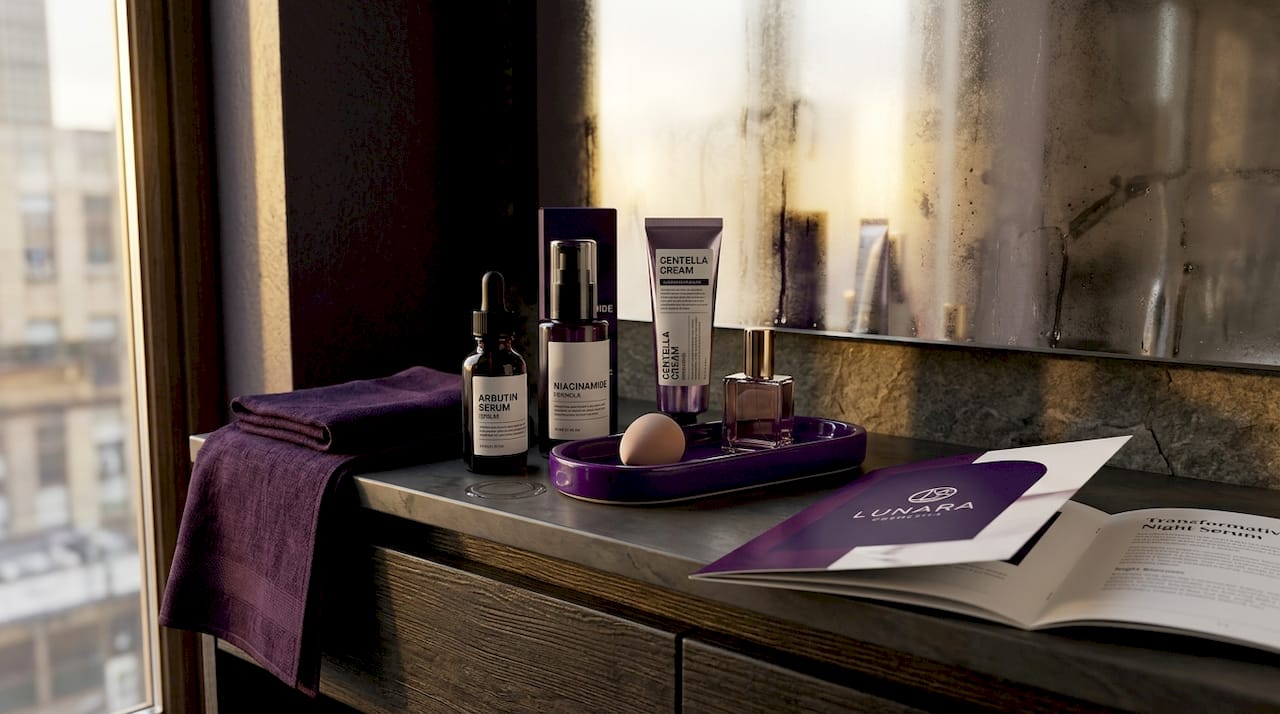
Korean skincare philosophy treats brightening differently than Western approaches often do. Rather than targeting rapid, dramatic depigmentation, K-beauty emphasizes gradual radiance with consistent use of mild actives. Dermatologists who study Korean formulations note that Korean brightening products avoid harsh concentrations and focus on tolerability so skin health is maintained alongside visible improvement. The goal is not bleaching. It is revealing the skin’s natural clarity over time.
This philosophy shapes how arbutin is formulated in K-beauty products:
- Ceramides reinforce the skin barrier so actives penetrate without causing sensitivity
- Niacinamide reduces inflammation and targets melanin transfer to surface skin cells, adding a complementary brightening pathway
- Centella asiatica (Cica) soothes irritation and supports healing, especially useful for skin prone to post-inflammatory hyperpigmentation
- Hyaluronic acid maintains hydration so skin stays resilient during consistent active use
“The K-beauty approach to brightening is built on the understanding that a compromised skin barrier will counteract any active ingredient’s effectiveness. Arbutin works best when the barrier is healthy, which is why Korean formulators build barrier support directly into the product.”
This is why you rarely see a Korean arbutin product that is just arbutin. In K-beauty, arbutin is rarely a standalone ingredient but is paired with barrier-supporting ingredients and antioxidants for optimized benefit. That formulation approach is a feature, not a limitation.
Fitting arbutin into your K-beauty routine
Understanding the mechanism is useful, but practical application is where results happen. Alpha-arbutin serums typically appear at concentrations between 0.1% and 2%. The 2% concentration represents the upper end used in clinical research and leading K-beauty products. A well-formulated 2% alpha-arbutin serum with complementary ingredients like rice bran water and niacinamide provides dual brightening mechanisms while supporting hydration and minimizing irritation.
To get the most from arbutin in a layered K-beauty routine, follow this sequence:
- Cleanse with a gentle, pH-balanced cleanser to prepare skin for absorption.
- Tone with a hydrating toner or a brightening toner that contains barrier-supporting actives to prime skin and add a first layer of brightening.
- Apply arbutin serum on clean, slightly damp skin for better penetration. Use 2 to 3 drops and press gently rather than rubbing.
- Layer niacinamide after the serum if they are in separate products. Niacinamide targets the melanosome transfer step that arbutin does not address, creating a two-phase attack on hyperpigmentation.
- Seal with moisturizer to lock in actives and protect the barrier. Pairing arbutin with a barrier-strengthening moisturizer reduces any risk of dryness or sensitivity during long-term use.
- Apply SPF 50 sunscreen every morning without exception. UV exposure is the primary trigger for melanin production. Skipping sunscreen actively reverses your brightening work.
Ingredient compatibility matters. Avoid using arbutin in the same application as high-strength AHAs or BHAs unless your skin is well-conditioned to both. Exfoliating acids lower skin pH rapidly and can disrupt arbutin’s stability while increasing sensitivity. Vitamin C derivatives (like ascorbyl glucoside) and kojic acid pair well with arbutin because they target overlapping but distinct steps in melanin synthesis. Combining arbutin with niacinamide and vitamin C derivatives creates complementary brightening effects with added barrier support.
Pro Tip: If you are new to brightening actives, start with an arbutin serum at 1% for the first four weeks before adding niacinamide or a vitamin C derivative. Building tolerance gradually reduces the chance of irritation and gives you a clearer read on what each ingredient is contributing.
Comparing arbutin to other brightening ingredients
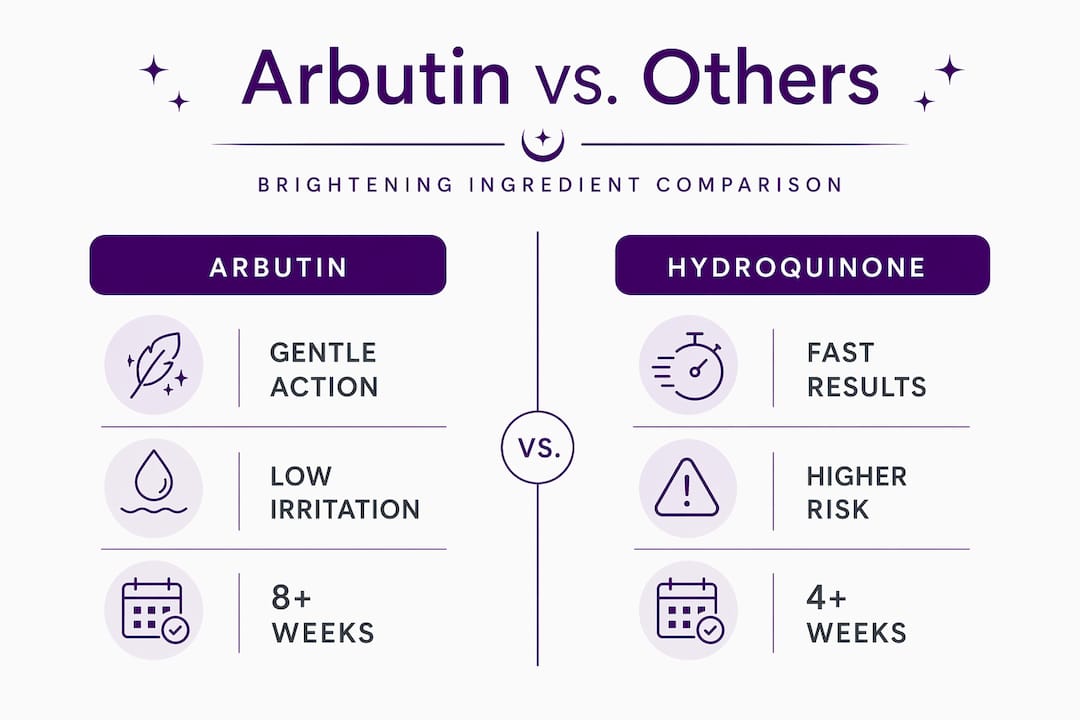
Choosing the right brightening ingredient depends on your skin type, sensitivity level, and primary concern. This table places arbutin in context with other commonly used agents.
| Ingredient | Irritation risk | Result timeline | Best use case | Regulatory status |
|---|---|---|---|---|
| Alpha-arbutin | Very low | 6 to 12 weeks | Daily brightening, sensitive skin, PIH | Approved globally up to 2% |
| Hydroquinone | High | 4 to 8 weeks | Short-term spot treatment only | Restricted or banned in many markets |
| Vitamin C (ascorbic acid) | Moderate | 8 to 16 weeks | Antioxidant brightening, dullness | Unrestricted but stability challenges |
| Kojic acid | Moderate | 8 to 16 weeks | Melasma, post-acne marks | Unrestricted; some sensitization risk |
| Tranexamic acid | Low | 8 to 12 weeks | Melasma, deeper discoloration | Emerging use, generally well tolerated |
Arbutin is especially effective for post-inflammatory hyperpigmentation, the dark marks left after acne, eczema flares, or skin trauma. Clinical observations suggest arbutin can reduce PIH resolution time to 8 to 12 weeks compared to the months it takes to fade without intervention.
Hydroquinone works faster, but the trade-off is significant. It carries cytotoxic effects on melanocytes, increases sensitivity, and creates rebound hyperpigmentation risk when discontinued. For anyone planning a long-term brightening routine rather than a short-term spot treatment, arbutin’s sustained, safe profile makes it the more practical choice. Vitamin C is an excellent complement to arbutin, but its instability means formulation quality varies widely. For comprehensive information on pigmentation treatment options, understanding where each ingredient fits in the spectrum helps you make informed product choices.
Realistic expectations are important here. No topical ingredient eliminates deep dermal pigmentation entirely. Arbutin performs best on surface-level and epidermal pigmentation. For deeper concerns like dermal melasma, professional treatments combined with topical arbutin maintenance will produce better long-term outcomes.
My perspective on arbutin and long-term brightening
I’ve worked with enough K-beauty products to notice a clear pattern: the clients who see the best long-term results are the ones who stop chasing intensity and start prioritizing consistency. I see a lot of people switch from product to product every four weeks, convinced nothing is working, when what they actually need is to stay the course for 10 to 12 weeks minimum.
Arbutin rewards that patience. In my experience, the people who struggle with it are the ones who add too many actives too quickly, disrupt their skin barrier, and then blame the arbutin when their skin gets reactive. The ingredient isn’t the problem. The barrier disruption is.
What I’ve found actually works is this: start with a well-formulated arbutin serum, give it two full months of consistent twice-daily use, and do not add additional actives until you know how your skin responds. The skin discoloration treatment options available today are more effective than ever, but they all require a healthy barrier to deliver results.
If you are new to brightening ingredients, arbutin is genuinely the right place to start. It is effective, well-tolerated, and backed by research that supports its long-term safety. The K-beauty approach to skin health is not about dramatic transformation. It is about steady, sustainable improvement, and arbutin fits that philosophy exactly.
— Lunara
Brighten smarter with Lunarashopping
At Lunarashopping, we’ve put together a selection of K-beauty brightening products that make building an arbutin-centered routine straightforward. Whether you’re starting out or refining an existing routine, pairing your arbutin serum with the right supporting products makes a measurable difference.
A hydrating face cream from INNISFREE layers beautifully over brightening actives to seal in moisture and support the skin barrier, which is exactly what arbutin needs to perform at its best. For mornings, the COSRX Aloe SPF 50 sunscreen keeps your brightening progress protected from UV-triggered melanin production. And on days when your skin needs an extra boost of hydration alongside brightening support, a deep hydrating mask from SUNGBOON fits naturally into any weekly routine. Browse the full range at Lunarashopping and build a routine your skin will thank you for.
FAQ
What does arbutin do for skin brightness?
Arbutin competitively inhibits the tyrosinase enzyme, blocking melanin synthesis without destroying melanocytes. This reduces dark spots, uneven skin tone, and post-inflammatory hyperpigmentation over time.
How long does arbutin take to show results?
With consistent twice-daily use, visible improvement in dark spots typically appears within 6 to 12 weeks. Patience and uninterrupted use are required for reliable results.
Is arbutin safe for daily use and sensitive skin?
Yes. Alpha-arbutin is approved at up to 2% for daily use and is gentle enough for sensitive skin. Its cytotoxicity is dramatically lower than hydroquinone, with no significant regulatory restrictions in major markets.
Can you use arbutin with niacinamide and vitamin C?
Absolutely. These ingredients target different steps in the melanin pathway, so combining them creates stronger brightening results. Layer arbutin serum first, then niacinamide, and use vitamin C derivatives in the same step or alternating routine.
Why do Korean brightening products use arbutin so often?
K-beauty formulation philosophy prioritizes gradual radiance with mild, tolerable actives over aggressive depigmentation. Arbutin delivers meaningful brightening with low irritation risk, making it the preferred choice for daily-use Korean formulas designed for long-term skin health.