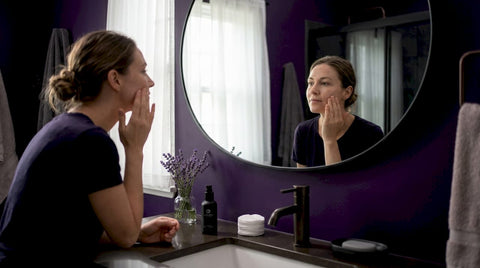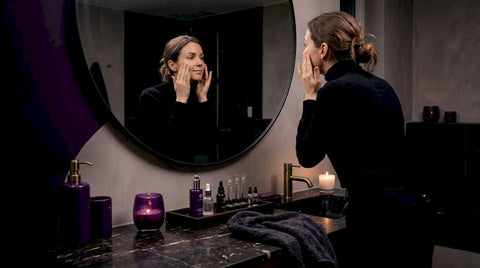
Most people assume hydration is just about keeping skin from feeling dry. Korean brands have always understood it differently. Why Korean brands emphasize hydration goes far deeper than surface moisture. It reflects a philosophy rooted in barrier health, skin longevity, and a cultural standard of care that Western beauty has only recently begun to appreciate. If you’ve ever wondered why K-beauty shelves are stacked with toners, essences, ampoules, and sheet masks all claiming to hydrate, there’s a real scientific and cultural answer behind that. This article breaks it down clearly.
Table of Contents
- Key Takeaways
- Why Korean brands emphasize hydration: the cultural roots
- The science behind hydration and your skin barrier
- Korean hydration techniques and how products are formulated
- What your skin actually gains from hydration-focused care
- My take on why hydration always wins
- Explore Lunarashopping’s hydration-focused skincare picks
- FAQ
Key Takeaways
| Point | Details |
|---|---|
| Hydration as barrier care | Korean brands treat hydration as the foundation of a healthy skin barrier, not just a comfort feature. |
| Cultural roots matter | Concepts like hwajalmuk and traditional ingredients shaped Korean beauty’s hydration-first approach long before it became global. |
| Layering is the method | The 7 Skin Method and multi-step routines deliver hydration in lightweight layers for better absorption without overloading skin. |
| Benefits go beyond dryness | Hydration improves texture, reduces reactivity, and supports even makeup application for all skin types. |
| Formulation sets K-beauty apart | Ingredients like ceramides, snail mucin, and multiple molecular weights of hyaluronic acid are standard in Korean product formulations. |
Why Korean brands emphasize hydration: the cultural roots
To understand how Korean brands promote hydration, you need to go back to the values that shaped Korean culture. Confucian principles placed significant emphasis on self-care, discipline, and respect for the body. Maintaining clean, healthy skin was not considered vanity. It was an expression of self-respect and social consideration.
Traditional Korean beauty also drew from ingredients that were already hydrating by nature:
- Rice water has been used for centuries to brighten and soften skin, delivering a light layer of moisture alongside mild nutrients.
- Ginseng was prized for its ability to support skin resilience and circulation, two factors that contribute to sustained hydration.
- Fermented ingredients like fermented rice extract were known to improve absorption and deliver nutrients deeper into the skin.
These weren’t trends. They were embedded practices passed down through generations and later refined by Korean cosmetic chemists into modern formulations.
The beauty standard that emerged from this history is captured perfectly in the concept of hwajalmuk. The hwajalmuk concept describes skin so well-hydrated that makeup sits naturally on the surface without effort. It’s not about applying more makeup. It’s about creating the skin condition where makeup becomes almost unnecessary.
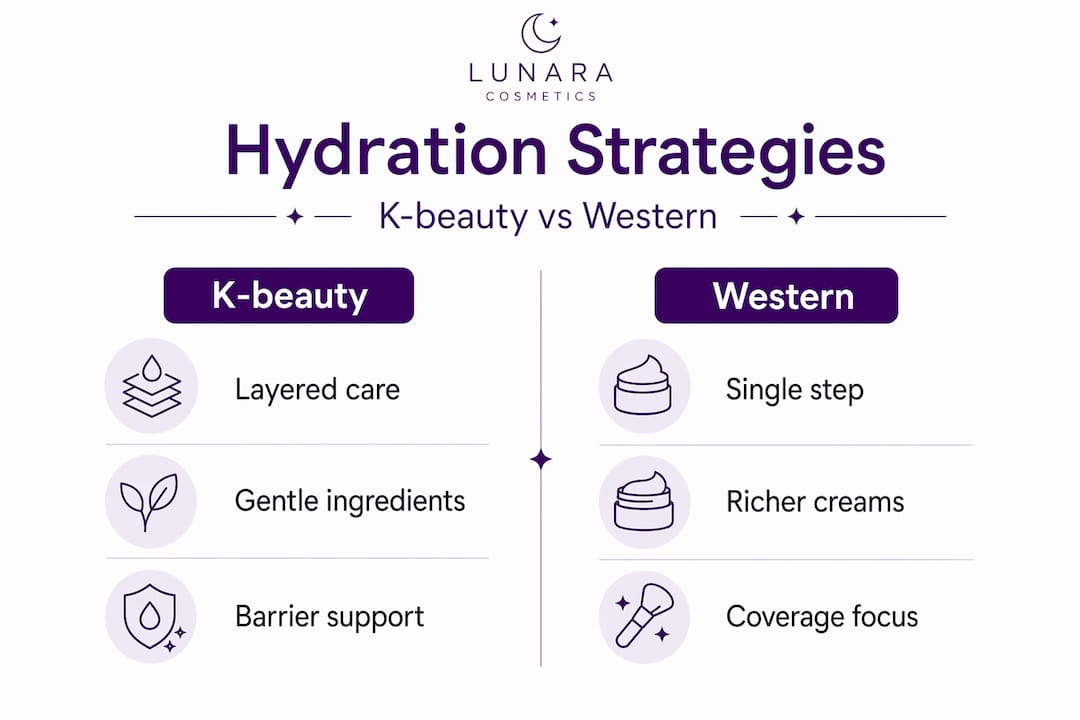
That’s a fundamentally different goal than the Western beauty tradition, which has historically focused on coverage, color correction, and surface transformation. Korean beauty has always started one step earlier: with the skin itself.
Pro Tip: If you’re new to K-beauty, understanding hwajalmuk changes how you shop. Look for products that improve skin condition rather than products that hide imperfections.
The science behind hydration and your skin barrier
The skin barrier, technically called the stratum corneum, functions like a protective filter. It keeps moisture in and environmental stressors out. When that barrier is compromised, skin becomes reactive, flaky, and prone to sensitivity. Hydration is not just cosmetically desirable. It’s physiologically necessary for barrier integrity.
“Korean skincare focuses on the skin barrier and hydration as a contrast to Western skincare, which can be transformative but often irritating.” — Dr. Danny Guo, as cited by Coveteur
This distinction explains a lot. Western skincare has traditionally favored potent actives: retinoids at high concentrations, strong acids, aggressive exfoliants. These can deliver results, but they often compromise the barrier in the process. Korean skincare takes a longer view. By keeping the barrier consistently hydrated and supported, skin becomes more resilient over time, not just temporarily improved.
The concrete benefits of sustained hydration include:
- Reduced sensitivity: A hydrated barrier is less permeable to irritants, meaning your skin reacts less to environmental triggers and product ingredients.
- Improved elasticity: Skin with adequate moisture levels retains more flexibility, which visibly affects firmness and texture over time.
- Fewer dry patches: Hydrated skin reduces flakes, oiliness from compensatory sebum production, and uneven texture.
- Stronger repair capacity: Ceramides and other lipid components in the barrier function better in a hydrated environment, supporting faster recovery from stress.
K-beauty’s barrier-first philosophy promotes skin longevity rather than just short-term improvements. That’s a meaningful difference when you’re making daily decisions about what to put on your face.
Korean hydration techniques and how products are formulated
The most visible expression of Korean skincare hydration benefits is the multi-step routine. But the logic behind it is more specific than most people realize.
The layered hydration approach
Layering lightweight hydrating products continuously replenishes moisture and strengthens the skin barrier. Each layer adds a small amount of hydration that absorbs fully before the next is applied. The cumulative effect is deeper, more even hydration than any single heavy product can deliver.
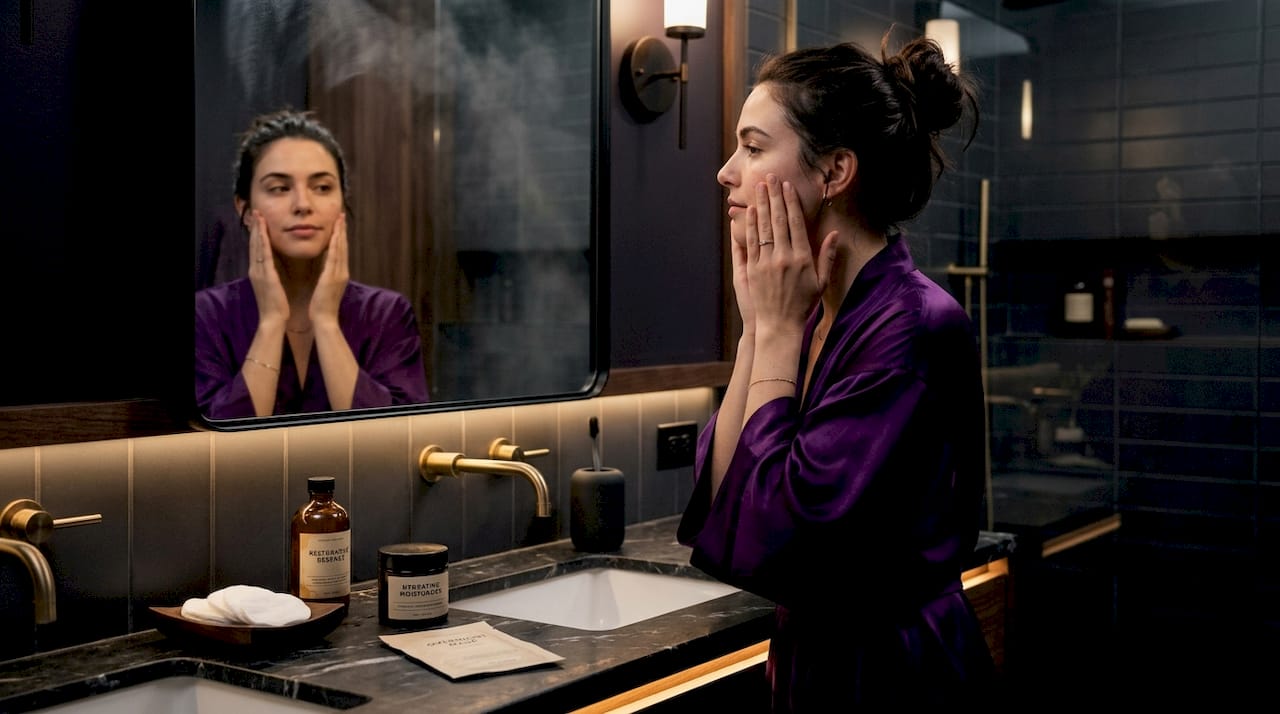
The 7 Skin Method is the most recognized example. The 7 Skin Method layers a hydrating toner multiple times, using its water-based, lightweight formula to saturate skin gradually. The method respects how much the skin can absorb at once, which is why it outperforms thick occlusives applied in a single step.
Here’s how a typical layered K-beauty routine builds hydration:
- Hydrating toner: Preps skin and delivers the first layer of water-binding ingredients. Applied with hands or a cotton pad.
- Essence: A more concentrated water-based formula that targets barrier repair and deeper hydration.
- Serum or ampoule: Delivers active hydrators like multiple molecular weights of hyaluronic acid directly where they’re needed.
- Sheet mask (2 to 3 times weekly): Provides an extended, occlusive hydration treatment that locks ingredients against the skin.
- Emulsion or light moisturizer: Seals everything in with a barrier-supporting layer of ceramides or peptides.
Pro Tip: You don’t need every step every day. Start with a toner, essence, and moisturizer. Add sheet masks twice a week and adjust based on how your skin responds.
How K-beauty formulations differ from Western moisturizers
| Feature | Korean skincare | Western skincare |
|---|---|---|
| Primary strategy | Layered, lightweight hydration | Single-step heavy moisturizer |
| Key ingredients | Hyaluronic acid, ceramides, snail mucin, centella asiatica | Petroleum, shea butter, dimethicone |
| Texture preference | Water-based, gel, or essence-like | Cream or ointment-based |
| Barrier approach | Reinforce and maintain over time | Seal and protect primarily |
| Philosophy | Preventive, long-term skin health | Immediate comfort and repair |
Korean brands prioritize gentle, barrier-supporting ingredients that work with the skin’s natural processes. Snail mucin repairs while hydrating. Centella asiatica calms inflammation that disrupts barrier function. Advanced clinical ingredients that were once limited to dermatology offices are now standard in everyday K-beauty products.
What your skin actually gains from hydration-focused care
The Korean skincare hydration benefits you read about aren’t just marketing language. They’re observable outcomes that appear with consistent use.
Texture improvement is usually the first thing people notice. When your skin is properly hydrated at the barrier level, the surface becomes smoother and more even. Pores appear smaller because they’re not congested with excess sebum produced to compensate for dryness.
The glass skin effect that K-beauty is famous for is a direct result of sustained hydration. It’s not a filter or a product trick. It’s what skin looks like when layered hydration avoids skin overload and enhances absorption over time.
Makeup wearability improves significantly on well-hydrated skin. Foundation sits evenly, concealer doesn’t crease into dry patches, and the overall finish looks more natural. This is the practical result of hwajalmuk in daily life.
Long-term benefits matter just as much:
- Reduced skin reactivity means fewer breakouts triggered by product sensitivity or environmental stress.
- Consistent moisture retention reduces the appearance of fine lines caused by dehydration rather than aging.
- Oily skin types benefit because balanced hydration reduces compensatory oil production.
The importance of hydration in Korean beauty applies to every skin type. Oily, combination, sensitive, and acne-prone skin all benefit from a hydrated, intact barrier. In fact, many people with oily or acne-prone skin find that adding hydration to their routine reduces the problem rather than worsening it.
My take on why hydration always wins
I’ve followed Korean skincare closely for years, and the most consistent pattern I’ve seen is this: the people who stick to a hydration-focused routine almost always end up with calmer, clearer skin. Not because hydration is magic, but because they stop disrupting the barrier with products that were too harsh for their skin to tolerate.
What I’ve learned from watching skincare routines succeed and fail is that chasing quick fixes tends to backfire. High-potency actives, heavy occlusive creams applied incorrectly, aggressive exfoliation cycles. These approaches often create new problems while solving old ones.
Korean skincare took a different direction from the start. The emphasis on patience and consistency to gradually build hydration and barrier health delivers results that actually hold. You don’t get there overnight, but the improvements don’t disappear either.
My honest perspective: hydration is not one step in your routine. It’s the condition your skin needs to be in for everything else to work. Without it, your actives, your SPF, your retinol. None of them perform the way they’re supposed to. Hydration isn’t the luxury part of skincare. It’s the infrastructure.
— Lunara
Explore Lunarashopping’s hydration-focused skincare picks
At Lunarashopping, we’ve curated products that reflect exactly what this article covers: barrier-supportive, hydration-focused formulations from trusted Korean brands. If you want to experience the layered hydration approach firsthand, the COSRX face care bundle is one of the best starting points. It combines gentle, ceramide-rich formulas that work together to build and maintain barrier health over time.
For targeted hydration with proven actives, the PRETTYSKIN Ginseng Retinol Multi Cream brings together traditional Korean ingredients and modern dermatology in one formula. And if you want to incorporate sheet masking into your weekly routine, the SOME BY MI aloe soothing mask delivers intensive calming hydration in a single step. Shop these and explore the full selection at Lunarashopping to find what fits your skin’s needs.
FAQ
Why do Korean brands focus so much on hydration?
Korean brands prioritize hydration because it supports skin barrier integrity, which is the foundation of long-term skin health. A healthy barrier reduces sensitivity, improves texture, and allows other skincare actives to work more effectively.
What is the 7 Skin Method in Korean skincare?
The 7 Skin Method involves applying a lightweight hydrating toner in multiple layers to progressively saturate the skin with moisture. It delivers deeper hydration than a single application without overloading the skin’s absorption capacity.
Is hydration-focused skincare only for dry skin?
No. All skin types benefit from a hydrated barrier. Oily and combination skin types often see reduced sebum production and fewer breakouts when hydration is consistently maintained, because the skin no longer needs to compensate for moisture loss.
What ingredients make K-beauty hydrators effective?
Korean skincare products commonly use hyaluronic acid at multiple molecular weights, ceramides, snail mucin, and centella asiatica. These ingredients hydrate, repair, and calm the barrier rather than simply sitting on the skin’s surface.
How is Korean skincare hydration different from Western moisturizers?
Korean skincare uses lightweight, layered products that absorb into the skin progressively. Western routines typically rely on heavier single-step moisturizers. The Korean approach builds hydration gradually, which respects the skin’s absorption capacity and avoids barrier disruption.