Yes, apply sunscreen to your eyelids and the skin around your eyes every day. The safest approach is a broad-spectrum mineral sunscreen with zinc oxide or titanium dioxide, an appropriate SPF level, in a stick, balm, or powder format that resists migration. Pat it on along the orbital bone, then back it up with sunglasses and a hat for the areas sunscreen can’t safely reach.
TL;DR:
- Mineral sunscreens with zinc oxide or titanium dioxide are preferred because they sit on the skin surface and are less likely to cause stinging or migrate into the eyes.
- Using a pea-sized amount with a gentle patting motion, avoiding the lash line, and letting it dry helps prevent irritation and ensures effective protection.
- Reapply every two hours outdoors and after swimming or heavy sweating, and layer thin applications under makeup to prevent pilling and maintain coverage.
- Fragrance-free formulas and stick or powder formats reduce the risk of irritation and migration, especially for sensitive skin around the eyes.
- Wearing sunglasses and a wide-brimmed hat significantly enhances eye safety by blocking UV rays off the skin areas sunscreen cannot reach.
Table of Contents
- Which Sunscreen Ingredients And Formats Work Best Around The Eyes?
- How Do You Apply Sunscreen Around The Eyes Without Irritation?
- When Should You Reapply, And How Do You Layer It Under Makeup?
- What Should You Do If Sunscreen Gets In Your Eye?
- What Does The Research Say About Eye-Safe Sunscreen?
- What’s Lunara’s Take On Eye-Safe Sunscreen?
- Find Eye-Safe Sunscreen Without The Guesswork
- Where Does This Guidance Come From?
- Sources
Which Sunscreen Ingredients And Formats Work Best Around The Eyes?
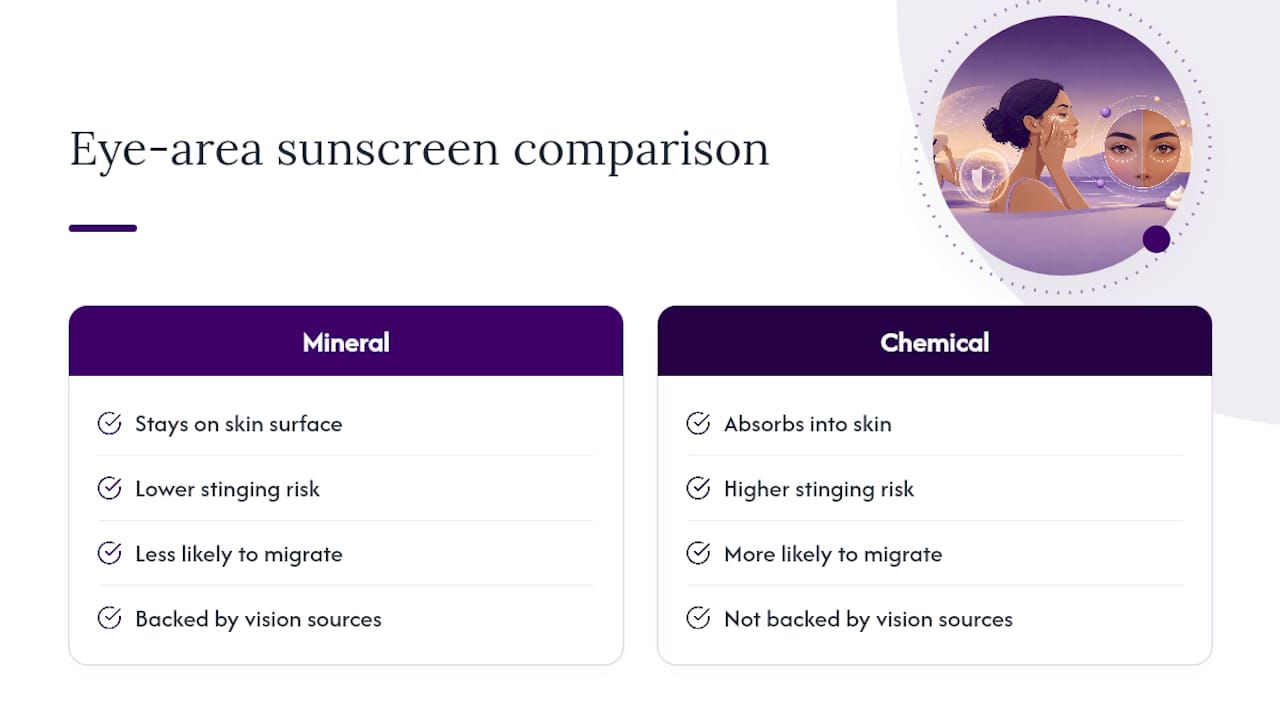
Mineral filters win for periocular skin because they sit on top of the skin instead of absorbing into it. Zinc oxide and titanium dioxide reflect UV rays from the surface, which means less contact with the eye itself if any product migrates, and lower odds of stinging compared to many chemical sunscreen formulas. Chemical filters aren’t automatically dangerous, but they’re more likely to cause that sharp, watery sting when sweat or oil carries them toward the lash line.
Fragrance is the other repeat offender. A scented sunscreen might smell pleasant on your arms, but near your eyes that same fragrance compound is a common trigger for redness and burning. Preservatives can behave the same way on this especially thin skin.
When you’re comparing products, look for:
- Broad-spectrum, SPF 30+: covers both UVA and UVB rays
- Zinc oxide or titanium dioxide listed as the active ingredient
- Fragrance-free on the label, not just “unscented”
- Ophthalmologist-tested or labeled for sensitive/eye-area use
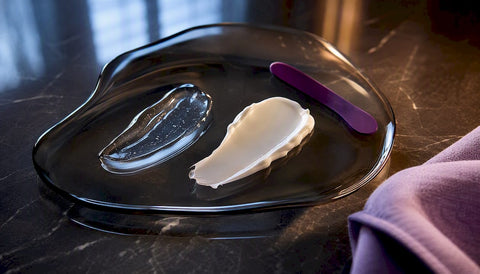
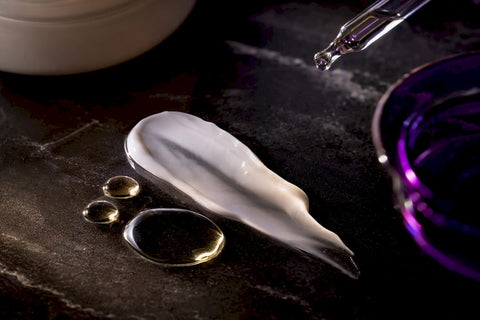
Format matters almost as much as ingredients. Sticks and balms glide on without water content, so they’re less prone to running. Tinted mineral powders offer a nearly foolproof reapplication option over makeup. Creams work fine for skin below the brow bone but tend to travel more if you’re sweating. Eye-specific SPF creams split the difference, formulated thinner and often paired with ingredients aimed at sunscreen for dark circles and puffiness.
How Do You Apply Sunscreen Around The Eyes Without Irritation?
Technique prevents more stinging incidents than product choice alone. A pea-sized amount, applied correctly, protects the whole orbital area without ever touching your lash line.
- Start with clean, dry hands and a small dab of sunscreen, roughly the size of a pea for the entire eye area.
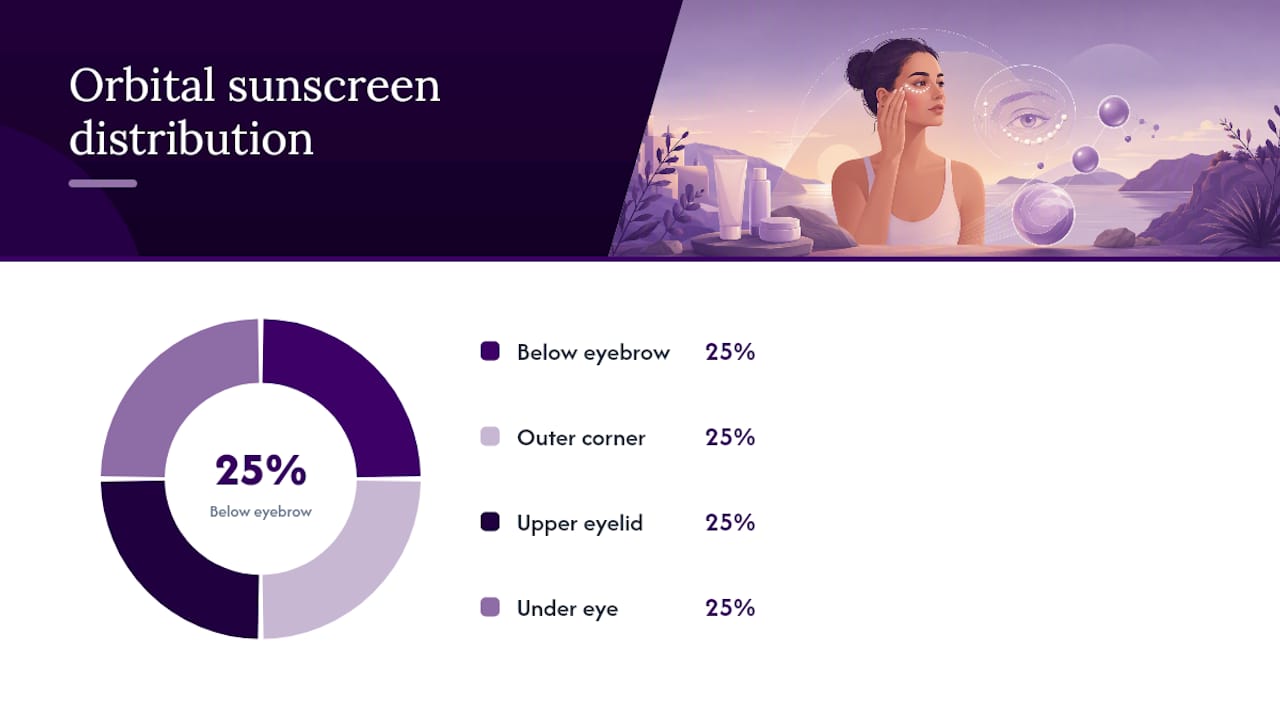
- Divide it into four dots: below the eyebrow, at the outer corner, on the upper eyelid, and under the eye.
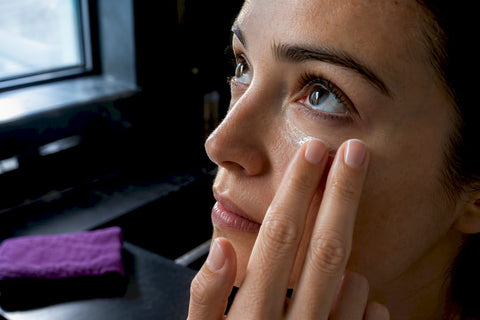
- Pat, don’t rub. Use your ring finger, which naturally applies the lightest pressure, and press the product in with small tapping motions.
- Stay off the lash line and eyelid crease. Stop about a quarter inch away from where lashes grow; the product will still spread close enough to cover exposed skin.
- Let it dry for about a minute before adding makeup or sunglasses, so it sets instead of sliding.
- Switch formats for the activity. Grab a stick or powder for sports, swimming, or hot days, and save the cream version for calmer, indoor-adjacent days when makeup layering matters more.
This orbital-rim patting method is the same technique eye-health specialists recommend for reducing the chance that sunscreen migrates into the eye itself during the day, whether from sweat, humidity, or just rubbing your face out of habit.
Pro Tip: Keep a mineral SPF stick in your bag specifically for eye-area touch-ups. It’s less messy than a cream, doesn’t require a mirror, and you can swipe it on over existing makeup without smudging anything.
When Should You Reapply, And How Do You Layer It Under Makeup?
Reapply sunscreen regularly during extended time outdoors, and immediately after swimming or heavy sweating. That two-hour window shrinks fast at the beach or on a hike, so don’t assume your morning application is covering you at 3 p.m.
Layering under makeup is where most people give up on eye-area SPF, usually because of pilling. A few adjustments fix that:
- Apply sunscreen in thin layers rather than one thick coat, letting each one absorb for 60 to 90 seconds.
- Pat concealer or eyeshadow primer on top instead of dragging a brush across it.
- Consider a tinted mineral sun serum as your base. It reduces the number of layers you need since it doubles as light coverage and sun protection in one step.
Sunscreen alone isn’t the whole strategy. Wraparound sunglasses that block UV rays and a wide-brimmed hat cover the areas, like directly on the eyeball and deep in the crease, where sunscreen shouldn’t go anyway. If you’re recovering from a skin procedure, using retinol, or applying sunscreen to a child six months or older, stick with fragrance-free mineral formulas, which pediatric and sensitive-skin guidance consistently favors over chemical filters.
What Should You Do If Sunscreen Gets In Your Eye?
Flush the eye with clean water or saline right away. If you wear contacts, remove them first when you can, since product can trap between the lens and your eye and prolong the sting.
The good news: that stinging is almost always temporary and not a sign of lasting harm. The American Academy of Ophthalmology notes there’s no evidence sunscreen causes permanent vision loss, even though the burning sensation feels alarming in the moment.
See an eye-care professional if you experience:
- Pain or redness that doesn’t ease up after rinsing
- Any change in vision, blurring, or light sensitivity
- Signs of a chemical injury, like swelling or persistent watering
Before trusting any new formula near your eyes, patch-test it on your inner wrist or behind your ear for a day first.
What Does The Research Say About Eye-Safe Sunscreen?
Eyelid skin is under 0.2 millimeters thick in most people, thinner than skin almost anywhere else on the body, and it takes a disproportionate share of eyelid-related skin cancers when left unprotected over the years.
Mineral sunscreens stay on the surface of the skin rather than absorbing into it, which is exactly why they’re less likely to migrate into the eye and cause that familiar sting.
Chronic sun exposure is also tied to visible periocular photoaging, the fine lines and pigment changes that show up around the eyes years before they appear elsewhere on the face. Consistent daily protection is what interrupts that pattern.
The numbers that matter: eyelid skin is very thin, daily SPF 30+ as the baseline recommendation, and reapplication every two hours outdoors. Specialty vision sources back mineral formulas specifically because they reduce stinging risk compared to chemical alternatives, and stick or anhydrous formats further limit the chance of the product migrating into the eye in the first place.
What’s Lunara’s Take On Eye-Safe Sunscreen?
We built our face-care curation around the same logic ophthalmology and dermatology sources point to: mineral filters, fragrance-free formulas, and low-migration textures for skin this thin and reactive. When you’re browsing, check each product page for the same label cues we’ve walked through here, zinc oxide or titanium dioxide as the active, SPF 30+, and no fragrance. Sunglasses and a hat still do half the work sunscreen can’t.
— Lunara
Find Eye-Safe Sunscreen Without The Guesswork
Shopping for periocular sunscreen shouldn’t mean reading six ingredient lists before checkout. Face sunscreens with mineral filters, fragrance-free formulas, and stick or powder options are available for the thin skin around your eyes, already filtered so you’re not cross-referencing labels against dermatology guidance yourself.

Start with the Morning Face Care Routine Set, which pairs daytime SPF with gentler complementary products suited to sensitive skin. If you want to browse the full range and compare formats side by side, the full face care collection lets you filter by what your morning routine actually needs. Pick your SPF, add sunglasses to your routine, and you’ve covered the two layers that matter most.
Where Does This Guidance Come From?
- Skin Cancer Foundation: direct guidance on safe eye-area sunscreen use
- American Academy of Ophthalmology: eye-safety data on sun exposure and vision
- PMC photoprotection review: peer-reviewed evidence on UV damage and aging
- Practical Dermatology: clinical perspective on periocular formulation choices
This article is general information, not a substitute for advice from a qualified doctor. Consult a qualified healthcare professional about your own circumstances before acting on anything here.
Sources
- Ask the Expert: Can You Safely Use Sunscreen Around Your Eyes? — Skin Cancer Foundation
- Sunscreen for the eye area — Specialty Vision
- Peer-reviewed review on photoprotection and skin aging — PMC
- Periocular sunscreen use: An essential skincare element — Practical Dermatology