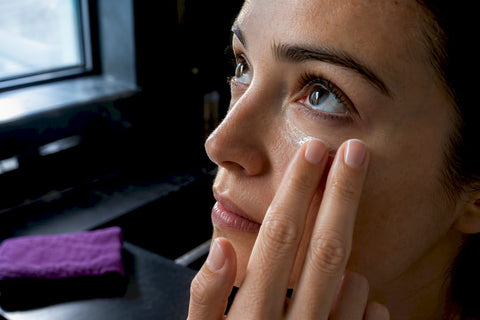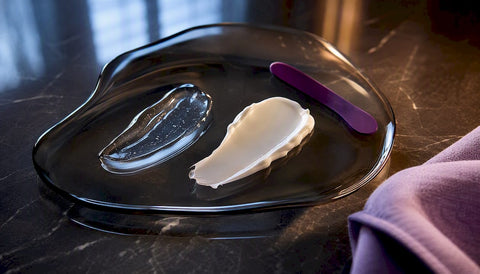
Choose an eye serum when your priority is treating a specific concern like dark circles, puffiness, or fine lines, and choose an eye cream when your priority is hydration and barrier protection. Most people get the best results using both: apply the serum first so its active ingredients absorb into skin, then follow with cream to seal in that treatment and prevent moisture loss.
TL;DR:
- Serums are best for delivering active ingredients quickly into the skin to target concerns like puffiness and dark circles, while creams focus on sealing moisture and barrier support.
- The effectiveness of any eye treatment depends more on its formulation vehicle and ingredient concentration than on its labeling as a serum or cream.
- For sensitive skin, a cream base can reduce irritation from actives like retinoids by slowing penetration, even if the active ingredient is the same as in a serum.
- Proper layering involves applying serum first, waiting for absorption, then sealing with cream, and using the ring finger to minimize skin stress.
- Price and packaging are less important than checking ingredient lists and vehicle type, with serums generally costing more per ounce due to higher concentration actives.
Table of Contents
- Eye Serum vs Eye Cream: A Quick Comparison
- What Is an Eye Serum, and What Is an Eye Cream?
- Which Ingredients Belong in a Serum, and Which Belong in a Cream?
- How to Layer and Apply Eye Serum and Cream
- Common Mistakes and Warning Signs to Watch For
- How LunaraShopping Approaches Eye Care
- Cost Comparison and Value Assessment
- Choosing Between Serum and Cream by Age and Environment
- Storage and Shelf Life Considerations
- A Quick, Honest Take on Building Your Routine
- Build Your Routine With LunaraShopping’s Curated Eye Care
- Sources
Eye Serum vs Eye Cream: A Quick Comparison
Before you commit to either product, it helps to see how differently they behave on your skin.
Eye serum:
- Lightweight, low-viscosity texture that absorbs in seconds
- Delivers concentrated, water-soluble actives deep into skin
- Best suited for puffiness, dark circles, and treating fine lines with actives like caffeine or vitamin C
Eye cream:
- Thicker, oil-rich emulsion that sits on the skin longer
- Creates occlusion, which locks in moisture and slows water loss
- Best suited for dryness, crepey texture, and reinforcing a compromised barrier
The takeaway is simple: match the product to the job. If you’re treating a concern, reach for the serum. If you’re protecting or hydrating, reach for the cream. If you want both outcomes, layer them in the right order.
What Is an Eye Serum, and What Is an Eye Cream?
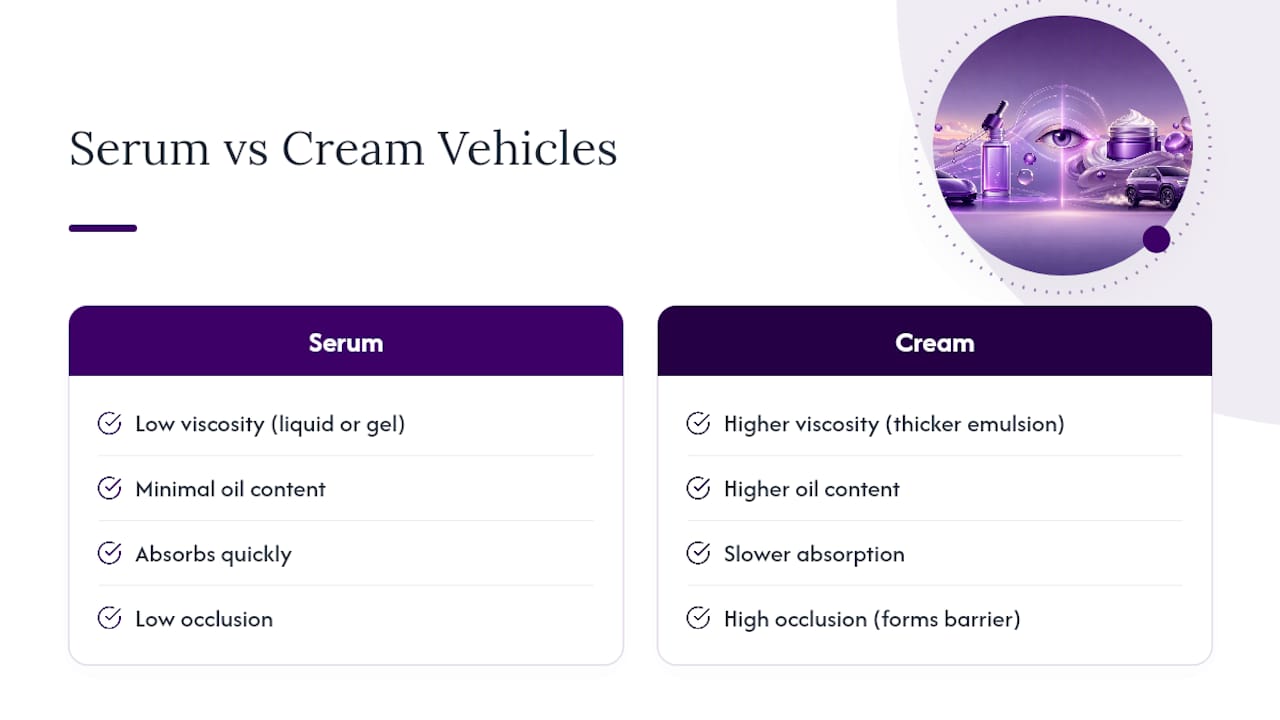
The real difference between an eye serum and an eye cream isn’t the price tag or the fancy packaging. It’s the vehicle, meaning the base formula that carries the active ingredients into your skin. A serum is a low-viscosity liquid or gel with minimal oil content, built to absorb quickly and carry concentrated actives close to living tissue. A cream is a higher-oil emulsion, thicker by design, meant to sit on the surface longer and create what dermatologists call occlusion, a barrier that traps moisture underneath it.
That distinction shapes everything else about how each product performs. Dermatologists explain that serums are generally low-occlusion, which is exactly why they absorb fast, while creams are higher-occlusion and better at holding water against the skin. Neither formula is “better” in an absolute sense. They’re built for different jobs, the same way a primer and a topcoat serve different purposes on the same wall.
This is also where formulation science gets more interesting than most product labels let on. Two eye treatments can list nearly identical ingredients and still behave completely differently, because the emulsion system, the ratio of oil to water, and the overall vehicle determine how much active ingredient actually reaches living skin versus how much just sits on the surface. A formulation analysis from North Biomedical makes this point directly: the vehicle, not the marketing copy, drives delivery.
Here’s the part most shoppers miss. “Serum” and “cream” aren’t regulated terms. Any brand can slap either word on a jar regardless of what’s actually inside. That means your best move is to skip the label and read the ingredient list and texture cues instead. Does it feel like a gel or a light lotion? That’s a serum-type vehicle. Does it feel rich and slow to absorb? That’s a cream-type vehicle, whatever the packaging claims.
Which Ingredients Belong in a Serum, and Which Belong in a Cream?
Ingredient choice matters just as much as vehicle choice, and pairing the wrong active with the wrong base can waste both your money and your patience. Here’s how the most common eye-care actives tend to map to formulation type and skin concern:
- Caffeine works best in lightweight serum bases, where it can absorb quickly and help constrict blood vessels to reduce puffiness.
- Hyaluronic acid shows up in both serums and creams, since it draws water into skin regardless of vehicle, though pairing it with an occlusive cream helps lock that hydration in.
- Peptides and retinoids are vehicle-dependent. A retinoid in a well-formulated cream base can be gentler on the eye area than the same concentration in a thin serum, because the emulsion buffers the irritation.
- Vitamin C typically performs best in serum formulations, since its brightening effect depends on getting a meaningful concentration into the skin quickly before it oxidizes.
- Niacinamide works reasonably well in either format, helping with tone and barrier support whether it’s riding in a gel or a cream.
Tolerance is the real limiting factor here, more than raw potency. Periorbital skin, the thin skin around your eyes, has a lower irritation threshold than skin on the rest of your face, and a northbiomedical.com analysis points out that tolerance, not strength, should guide which actives and concentrations you choose for that area. This is exactly why a cream base sometimes outperforms a serum for sensitive eyes treating something like retinol: the added oil phase slows penetration just enough to reduce stinging and flaking without meaningfully reducing results.
Pro Tip: Buy for the active and the vehicle together, not the product name. A well-formulated retinoid cream will consistently outperform a “serum” that lists retinol fourth on an otherwise thin ingredient panel.
How to Layer and Apply Eye Serum and Cream
Getting the order right matters as much as picking the right products. Follow this sequence for a routine that actually works:
- Cleanse your face and pat the eye area dry.
- Apply serum first, using a half-pea amount per eye. Dot it along the orbital bone, never directly on the lash line, and pat gently rather than rubbing.
- Wait 30 to 60 seconds to let the serum absorb before adding anything else.
- Apply cream second, using a small pea-sized amount. Pat it outward from the inner corner toward the temple to seal in the serum underneath.
- Use your ring finger for every step. Dermatologists recommend it specifically because it applies the least pressure of any finger, which matters on skin this thin.
Timing matters too. Mornings favor caffeine and antioxidant serums, which help with puffiness and offer some environmental protection, but always follow with sunscreen if you’re using any active ingredient during the day. Nights are the better window for retinoids, since these ingredients can increase sun sensitivity and work best without daylight exposure competing for absorption. Most formulas are designed for once or twice daily use, though retinoid-containing products are typically restricted to nighttime only.
If you use under-eye patches, treat them as a pre-step rather than a replacement. Patches create a temporary occlusive boost, delivering concentrated ingredients faster than a standard serum, and they work best applied before your cream, not instead of it.
Common Mistakes and Warning Signs to Watch For
Even a solid routine can backfire if you’re layering incorrectly or ignoring your skin’s feedback. Watch for these missteps:
- Over-applying either product, thinking more will speed up results. It won’t. It just increases irritation risk.
- Stacking two products with the same potent active, like a retinol serum under a retinol cream, which doubles the dose without doubling the benefit.
- Using a heavy occlusive formula on the eyelid itself, where thinner skin and lash follicles make clogging more likely.
- Pulling or dragging the skin during application instead of patting, which can worsen fine lines over time rather than improve them.
Pay attention to how your skin responds. Stinging, persistent redness, flaking, or small white bumps called milia are all signals to scale back frequency or switch to a gentler vehicle. If you’re using a retinoid and see these signs, taper to every other night before abandoning the ingredient entirely.
It’s also worth setting realistic expectations. Topical products can’t fully resolve hereditary dark circles caused by visible blood vessels or genuine volume loss from aging. Those cases usually call for an actual conversation with a dermatologist about in-office options rather than another jar off the shelf.
How LunaraShopping Approaches Eye Care
LunaraShopping curates Korean beauty eye care with this exact vehicle-first logic in mind, pairing lightweight serums built for active delivery with richer creams designed for barrier support, plus patches for quick, event-driven results. Rather than pushing whatever’s trending, the goal is matching you to the right texture and ingredient combination for your actual skin concern, whether that’s puffiness before a big event or persistent dryness through a dry winter. If you’re building a full eye routine from scratch, the Korean Eye Palette collection is a practical starting point, organized around exactly the serum-then-cream logic covered above.
Cost Comparison and Value Assessment
Price alone tells you almost nothing about whether an eye product is worth buying. A $12 serum with a genuinely effective caffeine concentration can outperform a $60 cream padded with fragrance and filler oils. What actually determines value is the concentration and stability of the active ingredient relative to what you’re paying, not the packaging tier.
That said, serums and creams do tend to cluster into different price brackets for structural reasons. Serums often cost more per ounce because concentrated actives and stabilizing systems (keeping vitamin C from oxidizing, for instance) add to formulation cost. Creams can sometimes deliver more perceived value per dollar simply because a little goes further and the occlusive base itself is cheaper to produce at scale.
If you’re budget-conscious, prioritize spending on the serum, since that’s where your active ingredient dollars matter most, and treat the cream as the more replaceable half of the pairing. A basic, fragrance-free occlusive cream can do its sealing job just as well as a premium one. Save your ingredient scrutiny and your budget for the product actually treating your concern.
Choosing Between Serum and Cream by Age and Environment
Your age and your environment both shift the calculus here more than most routines account for.
In your twenties and early thirties, skin typically produces enough natural oil that a serum alone, focused on prevention and early fine-line concerns, is often sufficient. Add a cream primarily in dry climates or during winter months when heating systems strip humidity from the air.
By your late thirties and beyond, natural oil production slows and skin barrier function weakens, which is when a cream stops being optional and becomes a daily necessity, regardless of climate. This is also the window where richer actives like peptides and retinoids in cream-based vehicles start paying off, since occlusive creams meaningfully reduce trans-epidermal water loss, a growing issue as skin matures.
Environment matters independent of age too. Dry, cold, or high-altitude climates call for heavier occlusive creams no matter how old you are. Humid climates let younger skin get away with serum-only routines for longer, while anyone dealing with air-conditioned offices or frequent flying should lean toward cream, since both environments accelerate moisture loss around the eyes specifically.
Storage and Shelf Life Considerations
Eye products are more fragile than most people assume, largely because the actives that make them effective are also the ones most prone to breaking down.
Vitamin C serums are the most temperature-sensitive; heat and light oxidize the active within weeks, turning the formula yellow or brown and noticeably less effective. Store these in a cool, dark spot, and if a serum’s color shifts, retire it early even if the jar isn’t empty. Retinoid products degrade similarly with light and air exposure, which is why most come in opaque, airless packaging. Keep the cap on tight between uses.
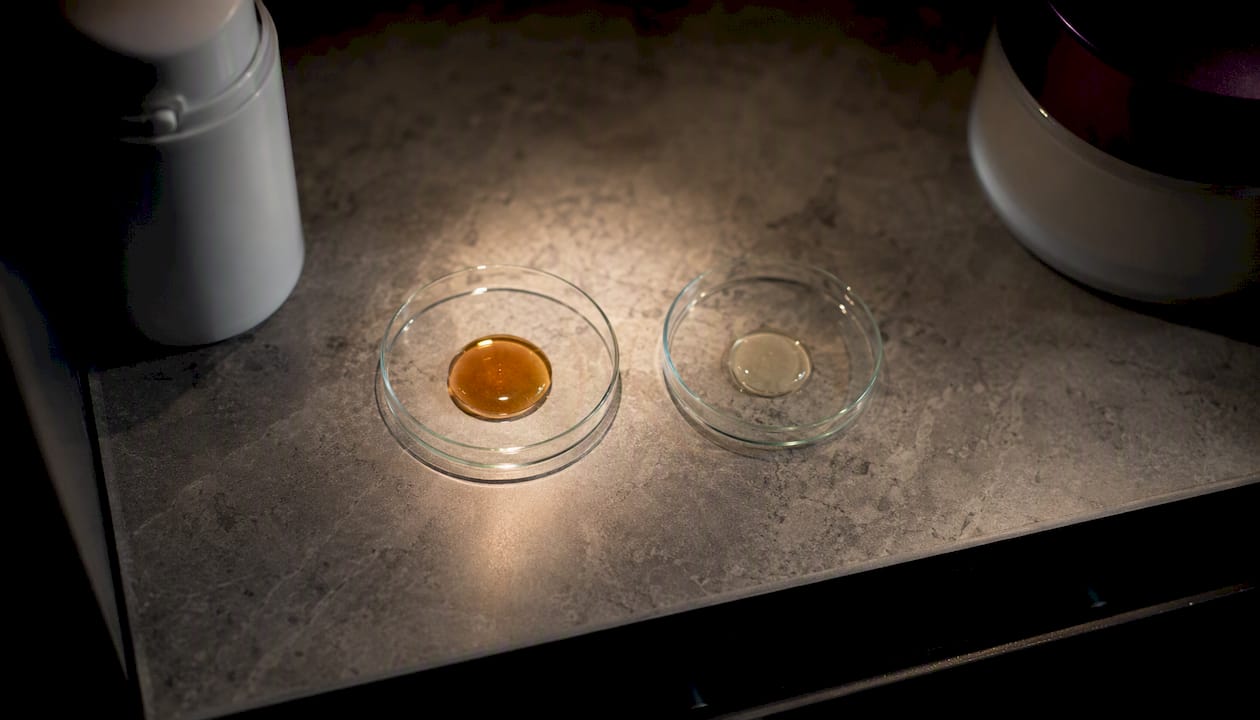
Creams generally have longer shelf stability because their oil-based formulas are less reactive, but they’re not immune to spoilage, especially once a jar is opened and exposed to repeated air and finger contact. Most opened eye products, serum or cream, are good for six to twelve months, though checking the small jar symbol on packaging (the number followed by “M”) gives you the manufacturer’s specific window. When in doubt, trust your senses over the calendar: a separated texture, an off smell, or a color shift means it’s time to toss it, regardless of what the label promises.
A Quick, Honest Take on Building Your Routine
If you only have room in your budget or your bathroom cabinet for one product, pick based on your actual concern rather than what’s trending. Puffiness or dark circles under a tight budget point toward a caffeine serum alone; a solid pick lives comfortably within an affordable skincare lineup.
Want the full layered path? Serum in the morning for actives, cream at night for repair, patches reserved for the mornings you actually need them, like before an event or a rough night’s sleep. Traveling or short on time? Skip the multi-step routine and carry one dual-purpose cream that includes a modest active concentration. It won’t outperform a dedicated serum, but it beats doing nothing.
My honest bias after digging into the formulation science: ignore whatever a product calls itself and read the ingredient list first. Marketing language sells jars. Ingredient concentration and vehicle type are what actually change your skin.
— Lunara
Build Your Routine With LunaraShopping’s Curated Eye Care
Once you know whether you need a serum, a cream, or both, the harder part is finding formulas with real, listed active concentrations instead of vague marketing claims. LunaraShopping’s face care collection is organized around exactly that principle, with ingredient panels visible on every product page so you can check the vehicle and active before you buy, not after.
If you’d rather not build a routine piece by piece, the LUNARA Complete Face Care Bundle pairs a lightweight serum with a richer cream already sequenced for the serum-first, cream-second layering this article covers, which takes the guesswork out of pairing actives correctly. Browse the ingredient lists on either page, compare textures, and pick the combination that actually matches your skin’s concern this season, not just what’s on sale.
Sources
- Eye Serum Vs. Eye Cream, Explained by Dermatologists
- Under-eye patches explained and when to use them