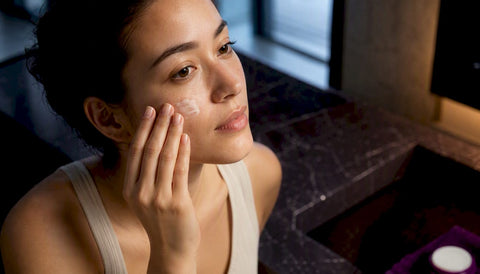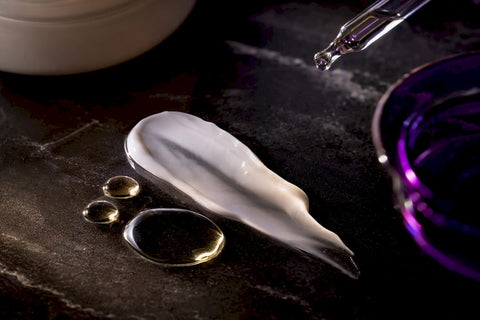
Oil and moisturizer solve different problems, so oil rarely replaces moisturizer outright. Moisturizer adds water to the skin through humectants; oil seals that water in and softens the surface. The right order matters, too: moisturize first, then apply a few drops of oil on top if your skin wants extra richness.
TL;DR:
- Oils mainly replenish skin lipids and reduce water loss but do not provide the water-based hydration that humectants in moisturizers deliver.
- Most skin types benefit from applying a humectant-based moisturizer first, followed by oil if additional nourishment is needed, especially in dry or mature skin.
- Applying oil after acids or retinoids can hinder their absorption, making the correct order of layering crucial for effective treatment.
- Oils high in polyunsaturated fatty acids oxidize faster and can irritate skin if not stored properly; choose opaque packaging with antioxidants for better stability.
- Changing skin needs with seasons and climate requires adjusting the moisturizer-to-oil ratio, with richer products for dry, cold conditions and lighter formulas during humid summers.
Table of Contents
- Facial Oil vs Moisturizer: Key Differences in Ingredients
- Can Facial Oil Replace Moisturizer?
- Facial Oil vs Cream by Skin Type: What to Actually Use
- How to Layer Facial Oil and Moisturizer Correctly
- Common Layering Mistakes and How to Fix Them
- Facial Oil, Moisturizer, and Active Ingredients: What Not to Mix Carelessly
- Choosing Quality: Ingredient Stability Matters as Much as Ingredients
- Adjusting Facial Oil and Moisturizer for Season and Climate
- Lunara’s Take on Pairing Oil With Moisturizer
- Try the Moisturizer and Oil Pairing for Yourself
- Sources
Facial Oil vs Moisturizer: Key Differences in Ingredients
The confusion between these two products comes down to what they’re actually made of. Moisturizers are formulated with three categories of ingredients working together: humectants, emollients, and occlusives. Oils are a single category doing one job well.
Humectants like glycerin and hyaluronic acid pull water into the outer skin layer, which is why a moisturizer can genuinely hydrate. Emollients smooth rough patches and fill gaps between skin cells. Occlusives, including dimethicone and petrolatum, sit on top of skin and slow water loss. This three-part structure is why moisturizers deliver water-based hydration that oil alone can’t match.
Facial oils are built differently. They’re rich in fatty acids and antioxidants, and they act mainly as emollients and occlusives rather than humectants. That means they replenish lipids and support the skin barrier without pulling in any new water. An oil can make skin feel instantly softer, but it isn’t adding hydration in the way a humectant does.
The overlap between the two categories comes down to occlusion. Occlusive ingredients, whether in a cream or a bottle of oil, form a barrier that reduces water loss from the skin below. That’s the mechanism worth remembering:
- Humectants (glycerin, hyaluronic acid): draw water into skin
- Emollients (squalane, ceramides): smooth texture and fill gaps
- Occlusives (dimethicone, shea butter, most facial oils): slow evaporation
Skip the humectant step and an oil has nothing to seal in.
Can Facial Oil Replace Moisturizer?
For most skin types, no. Oil can’t replicate what a humectant-based moisturizer does, and skipping moisturizer altogether usually leaves skin drier over time, even if it looks glossy in the short term.
There are exceptions. Very oily skin in a humid climate sometimes tolerates a light facial oil alone, especially overnight, because the skin already produces enough of its own moisture and just needs help retaining it. Mature or very dry skin, on the other hand, almost always needs both: a humectant to load water in, then oil or a rich cream to trap it.
One mechanism explains most of this debate: clinical research on topical lipids shows oils reduce trans-epidermal water loss without supplying the humectant effect that moisturizers provide. Oil manages what’s already there; it doesn’t add anything new. That’s the entire case for pairing the two rather than picking one.
Facial Oil vs Cream by Skin Type: What to Actually Use
Skin type changes the ratio, not the rule. Water first, seal second still applies almost everywhere.
- Dry and mature skin: Use a richer, ceramide-based moisturizer, then layer a nourishing facial oil at night for extra reinforcement against overnight water loss.
- Oily and acne-prone skin: Stick to a lightweight, humectant-forward moisturizer. If you add oil, choose a non-comedogenic option like squalane or grapeseed oil, applied sparingly and never over active breakouts.
- Combination skin: Apply a standard moisturizer everywhere, then spot-treat drier zones, like the cheeks, with a drop of oil instead of coating the whole face.
- Sensitive skin: Choose fragrance-free formulas in both categories, and always patch-test a new oil on your inner arm for 48 hours before it touches your face.
Pro Tip: If you’re not sure whether your skin needs oil at all, skip it for a week and just use moisturizer twice daily. If skin still feels tight or flaky by evening, that’s your sign to add oil back in.
Readers building out a full routine by texture can check out this breakdown of facial moisturizer types suited to each skin category before adding oil into the mix.
How to Layer Facial Oil and Moisturizer Correctly
Order matters because of molecule size and formulation weight. Thinner, water-based products need direct contact with skin to absorb; oil sitting on top first blocks that path.
- Cleanse and apply any water-based serum first, letting it absorb for about 30 seconds.
- Apply your moisturizer next and give it another 30 seconds to settle before touching your face again.
- Finish with two to three drops of facial oil, warmed between your palms, pressed rather than rubbed into skin.
- In the morning, apply sunscreen after moisturizer and before any oil, since oil sitting on top can dilute or shift how sunscreen sits on skin.
This sequence lines up with what dermatologists commonly recommend: thinner, water-based formulas go on before anything oil-based, because oil applied too early reduces how well the actives underneath can penetrate. The Meadow and Bark two to three drop guideline holds up well in practice. More than that just sits on the surface and transfers onto your pillow. For a fuller walkthrough of where serums, treatments, and SPF fit into this order, Lunarashopping’s guide on layering skincare products correctly covers the full stack.
Common Layering Mistakes and How to Fix Them
Most complaints about facial oil (greasiness, breakouts, wasted product) trace back to three habits, not the product itself.
- Using too much oil: Two to three drops covers the whole face. More than that just sits on top and rubs onto whatever touches your skin next.
- Applying oil directly over acids or retinoids: This blocks absorption of the very ingredient you just applied and defeats the purpose of the treatment step.
- Skipping moisturizer entirely: Oil without a humectant underneath often leaves skin feeling dry by midday, no matter how rich the oil is.
If oil feels heavy, cut back to one drop and only apply it at night for a couple of weeks. Give any new pairing 2 to 4 weeks before judging whether it’s working. Skin that looks calmer and feels supple by morning is a good sign; new breakouts or persistent shine mean it’s time to switch oils or drop the step.
Pro Tip: Keep a one-week gap between introducing a new oil and a new active ingredient like retinol. That way, if your skin reacts, you’ll actually know which product caused it.
Facial Oil, Moisturizer, and Active Ingredients: What Not to Mix Carelessly
Layering oil or moisturizer alongside acids and retinoids isn’t dangerous, but the order changes how well each product actually works. Retinoids and exfoliating acids like glycolic or salicylic acid need direct contact with skin to do their job. Applying oil first coats the skin and creates a barrier the active then has to fight through.
The safer sequence is acid or retinoid on clean, dry skin, a short wait of several minutes, then moisturizer, and oil last if you’re using one. Retinoids in particular tend to be less irritating when a moisturizer is applied first, a technique sometimes called buffering, since it slows how fast the active penetrates without blocking it entirely.
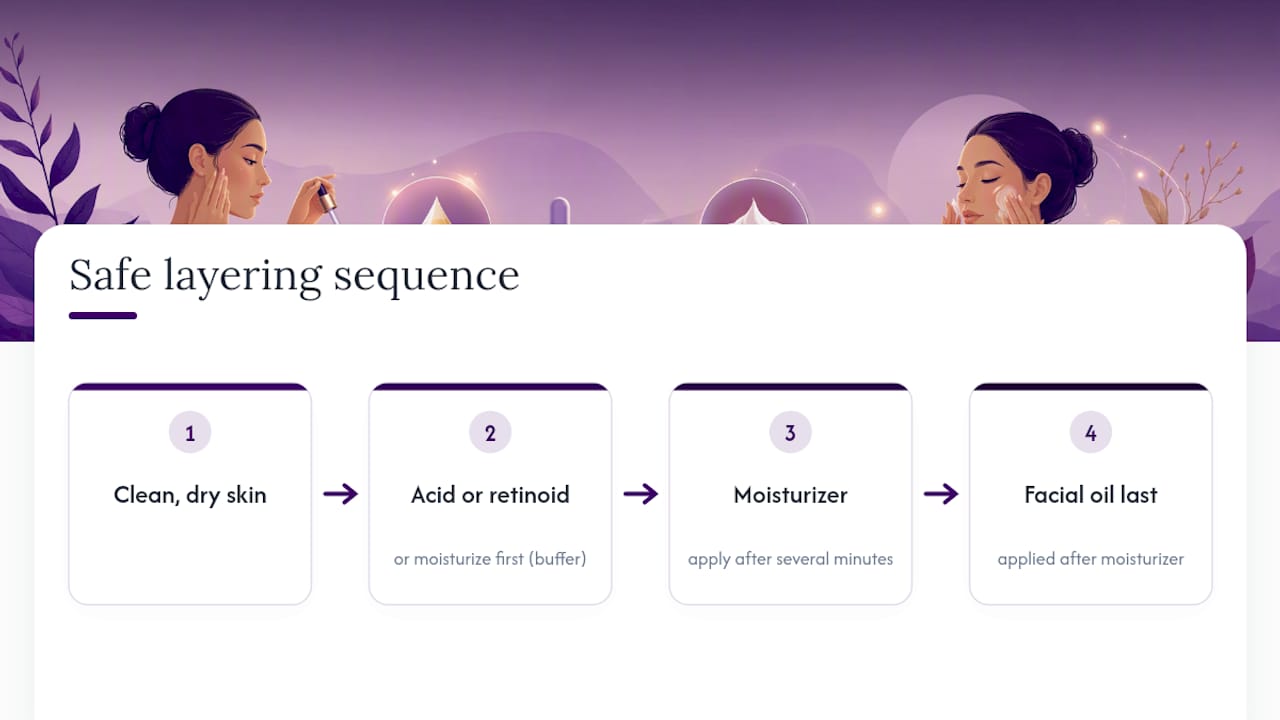
Oil itself can also buffer strong actives when applied afterward rather than before, since it slows moisture loss without preventing the acid or retinoid from working underneath it. What doesn’t work well is applying oil, then an acid on top. The acid has almost nothing to grip onto and mostly stays on the skin’s surface, doing far less than it should.
If you’re using a strong active several nights a week, keep oil use to the nights you skip it, at least while your skin adjusts. Once your skin tolerates the active well, most people can add a thin layer of oil back in on top without issues.
Choosing Quality: Ingredient Stability Matters as Much as Ingredients
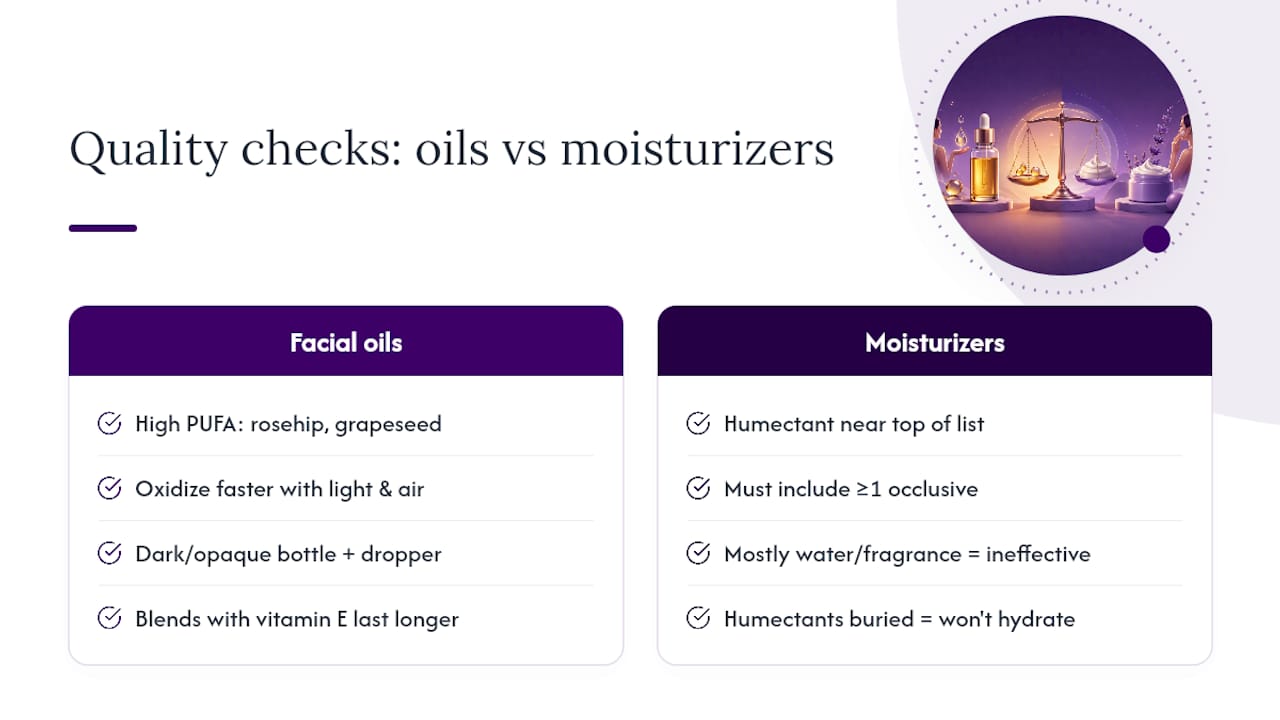
Not all facial oils age the same way, and that difference affects how well they work over time. Oils high in polyunsaturated fatty acids, like rosehip or grapeseed, oxidize faster once opened, especially with light and air exposure. An oxidized oil doesn’t just lose potency. It can actually irritate skin instead of protecting it.
Look for oils packaged in dark or opaque bottles with a dropper rather than a wide-mouth jar, since less air exposure per use slows oxidation. Oils blended with antioxidants like vitamin E tend to hold up longer on a shelf than single-ingredient oils. If a facial oil smells noticeably different, sharper or more “off,” than when you first opened it, that’s usually a sign it has started to oxidize and is worth replacing.
Moisturizer quality comes down to a different set of questions: is the humectant near the top of the ingredient list, and does the formula include at least one occlusive to lock that hydration in? A moisturizer that’s mostly water and fragrance with humectants buried at the bottom of the list won’t do much. Reading past the marketing copy on the front of the label, straight to the ingredient list itself, is the most reliable habit for judging either product.
Adjusting Facial Oil and Moisturizer for Season and Climate
Skin’s water needs shift with the weather, and the moisturizer-to-oil ratio should shift with it. Cold, dry air and indoor heating both pull moisture out of skin faster, which is exactly when a richer moisturizer paired with a nourishing oil at night earns its place.
Summer humidity works the opposite direction. Skin holds onto water more easily on its own, so a heavier oil can feel greasy and clog pores that are already producing more sebum. Switching to a lighter, gel-based moisturizer and either dropping oil altogether or swapping to a lightweight option like squalane usually solves that.
Indoor climate matters just as much as the season on the calendar. Air conditioning and forced-air heating both dry out indoor air, so someone working in an air-conditioned office all summer might need the same richer pairing that someone else only reaches for in January. Altitude and wind exposure push in the same direction, drying skin faster regardless of the actual temperature. The simplest rule: if skin feels tighter or flakier than usual, that’s the cue to add oil back in, not a fixed date on the calendar.
Lunara’s Take on Pairing Oil With Moisturizer
The Korean skincare approach that shapes how Lunarashopping curates products treats oil and moisturizer as teammates, never rivals. Moisturizer goes on first to load skin with water, and oil is reserved for the moments skin needs extra reinforcement, not applied by default every single night.
When selecting facial oils, priority is given to non-comedogenic formulas and fragrance-free options, since those two factors cause the most layering complaints. The goal isn’t to sell every reader an oil. It’s to help the right skin types find the right one. Readers who want to go deeper on how Korean routines sequence multiple steps can explore the full layering guide for the reasoning behind each step.
— Lunara
Try the Moisturizer and Oil Pairing for Yourself
Testing this pairing doesn’t require overhauling your whole cabinet. The Morning Face Care Routine Set bundles a humectant-based moisturizer with a complementary lightweight oil, so you can try the layering order this article just walked through.
If you already have a moisturizer you like and just want to add oil, browse the full face care collection for non-comedogenic, fragrance-free options sorted by skin concern. Start with a trial size before committing to a full bottle, especially if you’re testing a new oil against sensitive or acne-prone skin. For a pairing built around your specific skin type and climate, the Custom Skincare Kit Builder walks you through selecting a moisturizer and oil combination suited to what your skin actually needs this season.
Sources
- NCBI review — Moisturizers: humectants, emollients, occlusives
- PMC review — Lipids, oils, and skin barrier function
- Goop — Face oil first or moisturizer? Top dermatologists on how to layer