Korean formulas tend to sit in the 5% to 10% range and pair azelaic acid with calming actives like Centella and panthenol, which is why they generally take 12 to 16 weeks to show meaningful redness reduction rather than the faster, harsher timeline of 15% to 20% prescription versions.
- ANUA Azelaic Acid 10 Hyaluron Redness Soothing Serum — best for redness and reactive, easily irritated skin
- Purito Azelaic Acid 10% + Kojic Acid + Tea Tree Serum — best for acne-prone skin with lingering dark marks
- MEDICUBE Azelaic Acid 16% BB Calming Serum — best for experienced users who want quicker texture and tone results
- Skin1004 Azelaic Acid 10 Ampoule — best for rosacea-prone, comfort-first skin
- APLB Azelaic Acid Peptide Ampoule Serum 31.7% — best for those wanting a stronger, peptide-supported ampoule
If tolerance matters more than speed, start with a 5% to 10% option and use it three or four nights a week. If you’ve built up resistance to actives already, a 16%+ formula can shorten your timeline, though it raises the odds of flaking or stinging in the first two weeks.
Key Takeaways
| Point | Details |
|---|---|
| Match strength to tolerance | Choose 10% for sensitive or rosacea-prone skin, 16%+ only after building tolerance to actives. |
| Start slow, PM-only | Use three to four nights a week for two to four weeks before progressing to nightly or daily use. |
| Space conflicting actives | Alternate azelaic acid with retinoids, benzoyl peroxide, or low-pH vitamin C rather than layering same-session. |
| Expect a 12 to 16 week timeline | Korean OTC strengths work gradually; judge results at three to four months, not three weeks. |
| Buy from verified sources | Lunarashopping stocks ANUA’s 10% serum and the in-house APLB peptide ampoule with confirmed stock and full ingredient disclosure. |
Table of Contents
- What Makes Azelaic Acid Korean Skincare Different
- Comparing the Top Korean Azelaic Acid Serums
- Mini-Reviews: Which Serum Fits Your Skin
- How to Use Azelaic Acid Without Irritating Your Skin
- Which Azelaic Acid Serum Matches Your Skin Concern
- Why Korean Azelaic Acid Formulas Skew Gentler
- How Lunarashopping Chose These Korean Azelaic Acid Picks
- Where to Buy Korean Azelaic Acid Serums You Can Trust
- Sources
What Makes Azelaic Acid Korean Skincare Different
Azelaic acid itself isn’t a Korean invention. It’s a dicarboxylic acid long used in prescription creams for rosacea and acne. What sets azelaic acid korean skincare apart is the formulation philosophy: lower, gentler concentrations wrapped in water-gel bases with supporting actives that soften the acid’s known sting.
The ingredient works through several distinct mechanisms. It calms visible redness by inhibiting reactive oxygen species and downregulating kallikrein 5, a protein tied to inflammatory flare-ups in rosacea-prone skin. It also inhibits tyrosinase, the enzyme responsible for excess melanin production, which is why it doubles as a treatment for post-inflammatory hyperpigmentation left behind by old breakouts.
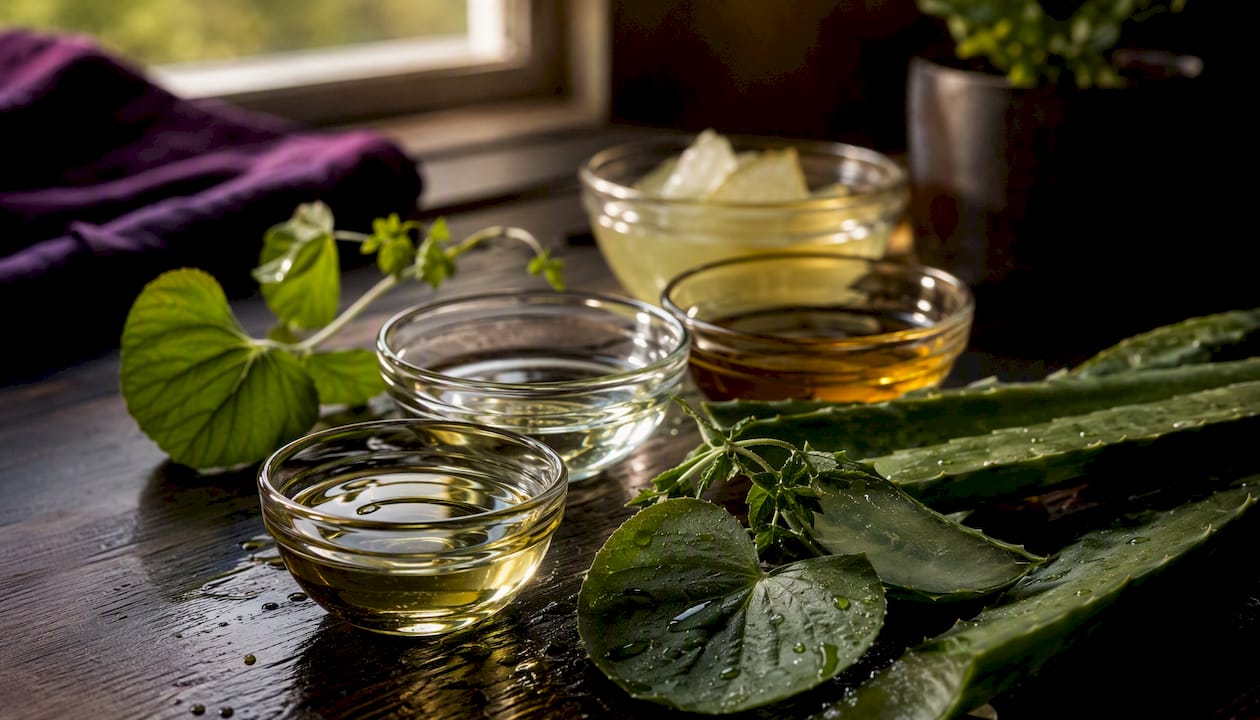
Where Korean formulas diverge from Western prescription creams is concentration and company. Most korean azelaic acid serum options run 5% to 10%, compared to the 15% to 20% strength in dermatologist-prescribed treatments. That lower dose is nearly always paired with hydrators and soothers, a formulation habit that runs through nearly every major K-beauty acid product. It’s a trade-off worth understanding before you buy: slower results but a much easier ride for sensitive skin.
Comparing the Top Korean Azelaic Acid Serums
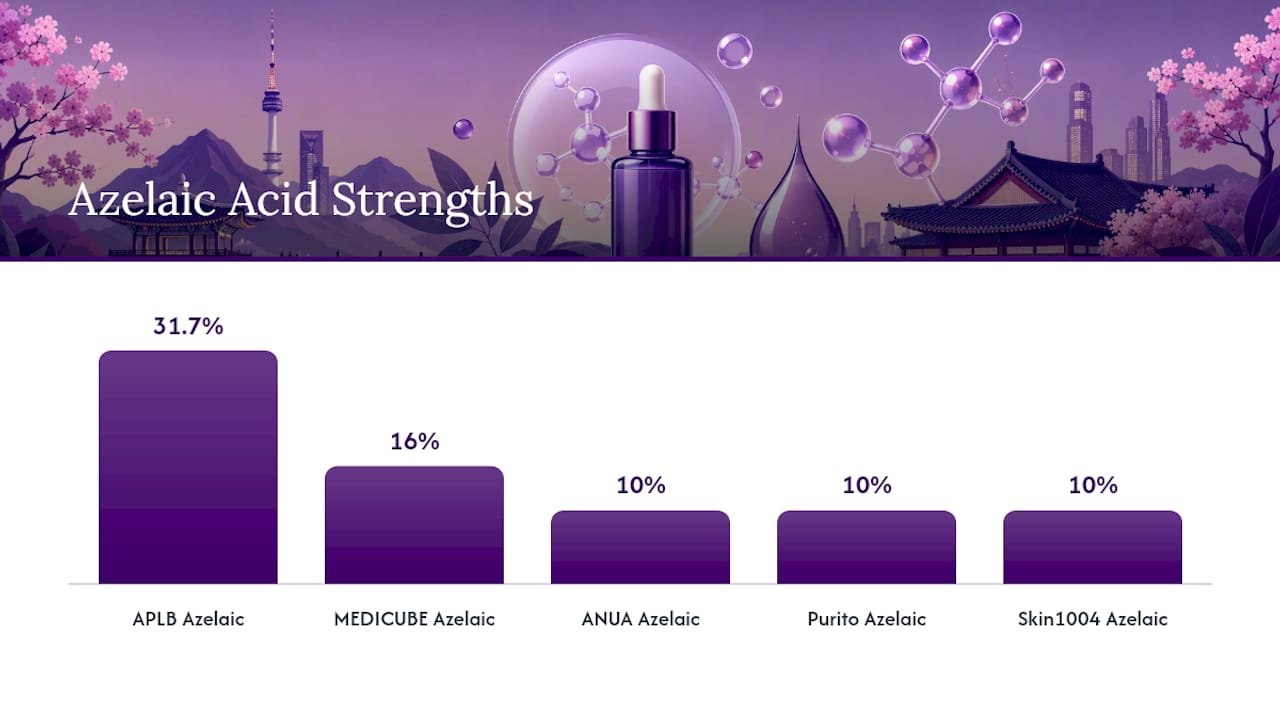
Strength, supporting actives, and texture vary more than you’d expect across these five picks. Here’s how they stack up.
| Product | Strength | Best For | Key Supporting Actives | Texture/Finish | Price & Size | US Availability |
|---|---|---|---|---|---|---|
| ANUA Azelaic Acid 10 Hyaluron Redness Soothing Serum | 10% | Redness, sensitive skin | Madecassoside, panthenol, hyaluronic acid | Lightweight gel, fast absorbing | $$ · — | Sold on Lunarashopping |
| Purito Azelaic Acid 10% + Kojic Acid + Tea Tree Serum | 10% | Acne, post-blemish marks | Tea tree water, kojic acid, glycerin | Watery gel, slightly tacky | $$ · — | Widely available online |
| MEDICUBE Azelaic Acid 16% BB Calming Serum | 16% | Faster correction, texture | Soothing complex (brand-specific) | Fluid, semi-matte finish | $$$ · — | Widely available online |
| Skin1004 Azelaic Acid 10 Ampoule | 10% | Rosacea, redness-sensitive | Centella extract | Silky ampoule, low tack | $$ · varies | Widely available online |
| APLB Azelaic Acid Peptide Ampoule Serum 31.7% | 31.7% (labeled) | High-potency correction | Peptides | Rich ampoule, slower absorption | $$$ · — | Sold on Lunarashopping |
A few notes on reading this table: “Best for” reflects the concern each formula was built to target, not a hierarchy of quality. “Texture/finish” tells you how it’ll layer under makeup or sunscreen, which matters if you’re already running a five-step routine. Both ANUA and APLB ship through Lunarashopping, so if you want a korean azelaic acid cream or serum without hunting across multiple retailers, those two are the easiest starting point, especially when paired with a nourishing Korean Collagen PDRN Capsule Cream for hydration and barrier support.
Mini-Reviews: Which Serum Fits Your Skin
ANUA Azelaic Acid 10 Hyaluron Redness Soothing Serum Why we like it: ANUA lists 10% azelaic acid alongside panthenol, madecassoside, and sodium hyaluronate, and the brand recommends easing into twice-daily use gradually rather than jumping straight in. What to know: it’s genuinely built for reactive skin, so the payoff is comfort more than speed.
- Pro: minimal stinging reports thanks to the hyaluronic and Centella-adjacent support
- Pro: lightweight enough to layer under sunscreen without pilling
- Con: results on deeper pigmentation take patience
Purito Azelaic Acid 10% + Kojic Acid + Tea Tree Serum Why we like it: Purito pairs 10% azelaic acid with tea tree water and 1,000 ppm kojic acid, a combination aimed squarely at blemishes and the marks they leave behind. What to know: the tea tree note means it’s not fully fragrance-free, so patch-test if you’re fragrance-sensitive.
- Pro: dual-action on active breakouts and old marks
- Con: slightly tacky finish under heavier moisturizers
Why we like it: at 16%, it is one of the higher-strength options in K-beauty, built for people who’ve already built tolerance to acids. What to know: start slow. Higher strength means higher irritation risk in week one.
- Pro: faster visible change in texture and tone
- Con: not a beginner formula
Skin1004 Azelaic Acid 10 Ampoule What to know: it’s a true ampoule texture, richer than a typical serum, so it works best as a standalone treatment step.
- Pro: calming vehicle reduces flare risk
- Con: less ideal if you prefer ultra-lightweight layering
Why we like it: this is Lunarashopping’s high-potency in-house pick, combining a strong labeled concentration with peptides for texture support. What to know: this is not a first-time azelaic acid product. Reserve it for skin that has already tolerated lower strengths well.
- Pro: peptide support may help with texture alongside tone correction
- Con: highest irritation potential on this list
Pro Tip: Whatever strength you choose, start PM-only for the first two to four weeks and apply it over a slightly damp toner or essence. That buffer step reduces the direct stinging sensation that turns people off azelaic acid too early.
How to Use Azelaic Acid Without Irritating Your Skin
- Patch-test first. Apply a small amount behind your ear or on your jawline for two nights before committing to full-face use.
- Start PM-only. Use it three to four nights a week for the first two to four weeks, applying it after a hydrating toner or essence but before heavier creams.
- Buffer if needed. Pressing the serum into slightly damp skin cuts stinging by softening direct contact with dry, exposed skin.
- Progress gradually. Once tolerated, move to nightly use, then consider adding a morning application if your skin handles it well.
- Space out conflicting actives. Avoid layering azelaic acid with benzoyl peroxide or low-pH vitamin C in the same session. Alternate mornings and evenings instead, and give retinoids or strong exfoliants their own night.
- Always wear SPF. Daytime use requires sunscreen, since brightening actives can leave new skin more reactive to UV exposure.
Pro Tip: If you’re also using a Korean niacinamide product, azelaic acid layers well with it. The combination is common in K-beauty routines precisely because niacinamide reinforces the barrier while azelaic acid does the corrective work.
Which Azelaic Acid Serum Matches Your Skin Concern
- Rosacea or persistent redness: ANUA 10 or Skin1004 Azelaic Acid 10 Ampoule, both built around calming, low-irritation vehicles
- Active acne with dark marks: Purito’s kojic and tea tree combination targets both problems at once
- Faster texture correction: MEDICUBE 16%, but only after you’ve handled a 10% formula for several weeks
- Maximum potency: APLB’s 31.7% ampoule, reserved for well-conditioned skin
Avoid azelaic acid entirely if you have open wounds, active dermatitis flares, or a severe rosacea subtype involving broken skin. Talk to a dermatologist before adding any acid in those cases. For everyone else, the concentration choice comes down to a simple trade-off: lower percentages protect your barrier while you wait longer for results; higher percentages move faster but ask more of your skin’s tolerance.
Why Korean Azelaic Acid Formulas Skew Gentler
Most k beauty azelaic acid products land at 5% to 10%, formulated in water-gel bases with a target pH around 3.5 to 5.0 to balance efficacy against sting. That’s a deliberate formulation choice, not a limitation.
- Water-gel vehicles reduce occlusion, which lowers the odds of a stinging reaction compared to heavier prescription creams
- Supporting actives like Centella, panthenol, hyaluronic acid, and niacinamide show up across nearly every major korean azelaic acid creams and serum line for a reason: they buy tolerance
- On ingredient labels, azelaic acid usually appears listed by its INCI name directly; watch for fragrance and propylene glycol nearby if you have known sensitivities
The result is a category of azelaic acid benefits that trades some speed for a formula more people can actually stick with long enough to see results.
How Lunarashopping Chose These Korean Azelaic Acid Picks
Our curation starts with the ingredient list, not the marketing copy. We prioritize declared azelaic acid percentages where brands disclose them, and we favor barrier-friendly vehicles over harsh, stripped-down formulas. Every product listed here, including our in-house APLB ampoule, went through the same standard: transparent formulation, verified stock, and a genuine fit for K-beauty routines.
Where to Buy Korean Azelaic Acid Serums You Can Trust
Buying azelaic acid serums from unverified marketplace sellers is a real risk in this category. Formulas degrade with heat exposure and poor storage, and counterfeit K-beauty products are common enough that ingredient transparency matters as much as price.
If you’re building a full routine rather than shopping one product at a time, the Custom Skincare Kit Builder lets you pair an azelaic acid serum with the hydrators and barrier support it works best alongside. Prefer a ready-made routine? The Morning Face Care Routine Set bundles complementary steps so you’re not guessing what goes before or after your serum. Standard shipping and return policies apply to all listed products. Browse the full face care lineup and pick your starting point today.
Sources
- Korean Azelaic Acid for Redness and Rosacea | K-Beauty Reviews
This article is general information, not a substitute for advice from a qualified doctor. Consult a qualified healthcare professional about your own circumstances before acting on anything here.
Recommended
- ANUA Azelaic Acid 10+ Hyaluron Redness Soothing Serum (1.01 fl.oz) – Lunara Cosmetics
- APLB Azelaic Acid Peptide Ampoule Serum 31.7% (1.35 fl.oz) – Lunara Cosmetics
- Korean Acne Care Best Practices for Clear Skin – Lunara Cosmetics
- Korean Skincare for Rosacea-Prone Skin: A Calm Guide – Lunara Cosmetics