Korean skincare can meaningfully reduce redness and support barrier repair for rosacea-prone skin, but only when you choose fragrance-free, centella-forward formulas and treat it as a complement to medical care rather than a replacement. The barrier-first philosophy at the heart of K-beauty maps directly onto what rosacea-prone skin needs most: gentle hydration, repeated low-level calming agents, and zero unnecessary irritants.
Start here:
- Routine backbone: gentle cleanse → centella or guaiazulene essence → ceramide moisturizer → mineral SPF (AM); gentle cleanse → centella or azelaic acid treatment → barrier-repair moisturizer (PM)
- First purchase priority: a fragrance-free centella serum or essence, then a ceramide moisturizer
- Avoid from day one: synthetic fragrance, essential oils, high-percentage AHAs/BHAs, denatured alcohol, and retinoids until your barrier is stable
Key Takeaways
Korean skincare helps rosacea-prone skin most when you lead with fragrance-free centella formulas, pair them with ceramides, and treat actives like azelaic acid as a slow introduction rather than a daily staple.
| Point | Details |
|---|---|
| Barrier-first, always | Start every routine with a gentle cleanse and centella essence before adding any active. |
| Fragrance-free is non-negotiable | Check the INCI list for parfum and essential oil names, not just the front-label claim. |
| Centella + ceramide pairing | Combining a centella serum with a ceramide moisturizer addresses both inflammation and barrier deficit. |
| Azelaic acid: slow introduction | Begin every third night, buffered under moisturizer, and increase frequency only after two weeks with no reaction. |
| See a dermatologist when needed | Persistent telangiectasia, worsening papules, or burning pain require professional diagnosis and prescription options. |
| Lunarashopping starter set | The Morning Face Care Routine Set at Lunarashopping covers all four core steps in fragrance-free, centella-forward formulas. |
Table of Contents
- Your five-step K-beauty routine for rosacea-prone skin
- K-beauty ingredients that actually calm rosacea
- Ingredients and label claims that trigger rosacea flares
- Fragrance-free Korean product picks for rosacea-prone skin
- How to patch-test and introduce actives without triggering a flare
- When skincare is not enough: red flags and medical options
- The evidence behind these recommendations
- The mindset that actually helps when you have rosacea
- Lunarashopping’s rosacea-friendly K-beauty starter set
- Sources
Your five-step K-beauty routine for rosacea-prone skin
A short, consistent routine does more for reactive skin than an elaborate one. Here is a workable AM/PM structure you can start immediately.
AM routine:
- Rinse with cool or lukewarm water, or use a gentle, low-pH gel cleanser if you wore SPF the night before
- Apply a centella or guaiazulene essence while skin is still slightly damp
- Follow with a lightweight ceramide moisturizer
- Finish with a mineral SPF (zinc oxide or titanium dioxide preferred for reactive skin)
PM routine:
- If you wore SPF or makeup, remove it with a gentle cleansing balm or oil cleanser first, then follow with your gel cleanser
- Apply your centella essence or, on active nights, a low-concentration azelaic acid treatment
- Seal with a slightly richer ceramide or barrier-repair moisturizer
- Reserve azelaic acid or any other active for two to three nights per week maximum when starting out
Pro Tip: Layer thinnest to thickest. Essence before moisturizer, always. Applying a thick cream before a watery essence blocks absorption and reduces the calming benefit of your centella step.
Rosacea often worsens in colder months, and the University of Utah Health recommends adjusting to a more occlusive moisturizer in winter and maintaining consistent professional oversight when seasonal flares occur. In summer, swap to a lighter ceramide lotion and prioritize SPF reapplication.
K-beauty ingredients that actually calm rosacea
Not every ingredient in a Korean product is safe for reactive skin. These are the ones with a genuine calming or barrier-repair rationale, and how to use each one.
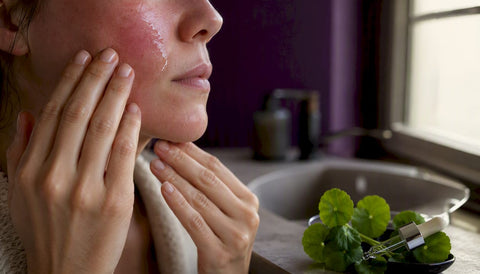
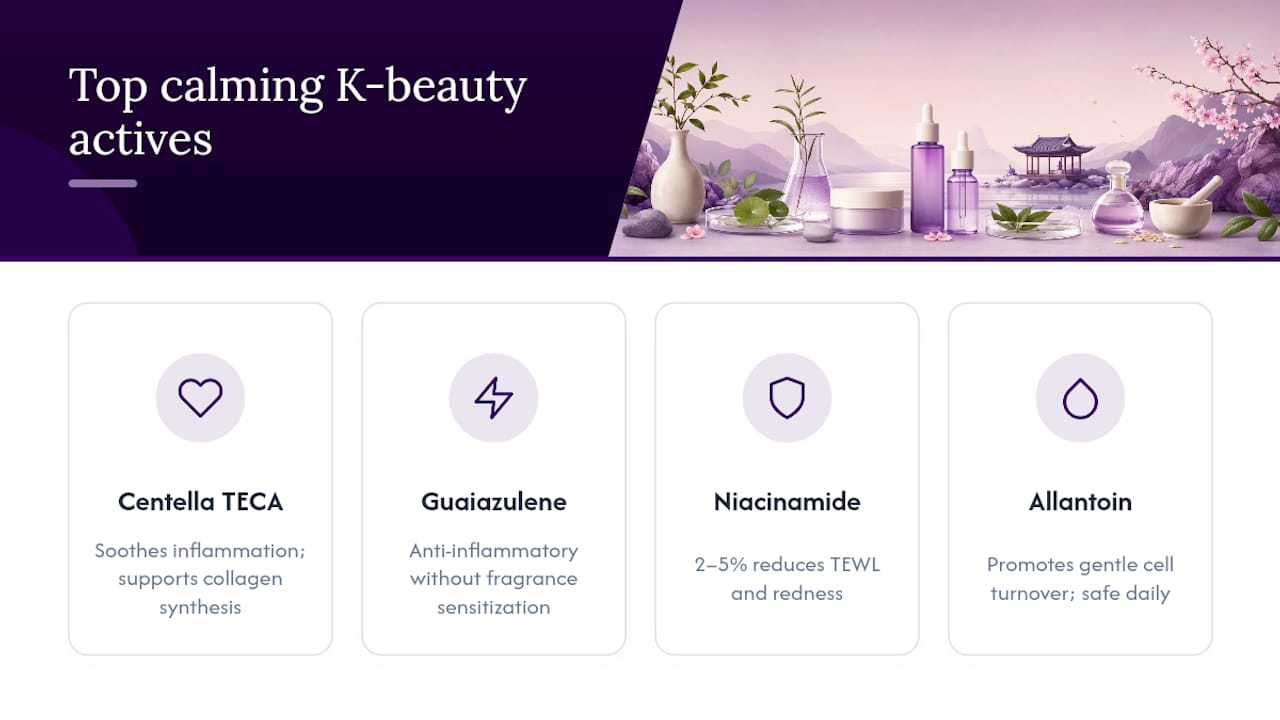
Centella asiatica (TECA) The madecassoside and asiaticoside compounds in centella reduce surface inflammation and support collagen synthesis in the barrier. Centella serums soothe redness and support barrier repair, though they are supportive care, not a cure. Apply as an essence or serum after cleansing. Expect surface calming within days; visible baseline redness reduction takes several consistent weeks.
Guaiazulene A stable, non-stinging blue hydrocarbon derived from chamomile, guaiazulene addresses inflammatory signaling without the sensitization risk of fragrant botanicals. Paired with centella, it targets both upstream triggers and downstream inflammatory pathways. Guaiazulene, centella (TECA), niacinamide, and allantoin are the four K-beauty ingredients most consistently recommended for rosacea-prone skin.
Niacinamide (moderate percentage) At concentrations of 2–5%, niacinamide reduces transepidermal water loss and calms post-inflammatory redness without the flushing risk that higher percentages can trigger in reactive skin. Avoid formulas above 10% until your barrier is stable.
Panthenol and beta-glucan Both are humectants and barrier-support agents. Panthenol (provitamin B5) accelerates barrier recovery; beta-glucan soothes and hydrates simultaneously. They stack well with centella and are rarely sensitizing.
Allantoin A keratolytic-adjacent soother that promotes cell turnover gently and reduces irritation. Common in Korean toners and essences at low concentrations. Safe to use daily.
Ceramides Ceramides are lipid molecules that hold the barrier together. Pairing centella with ceramides and panthenol addresses both the inflammatory signal and the structural deficit that makes rosacea-prone skin reactive in the first place. Pairing calming ingredients with ceramides and daily SPF is one of the most consistent recommendations across dermatology-informed K-beauty guides.
Azelaic acid Uniquely useful for inflammatory rosacea lesions, azelaic acid reduces papules and pustules and has a mild brightening effect on post-redness marks. Introduce it slowly (see Section 6 for the full protocol). It is available over the counter at 10% in the U.S.
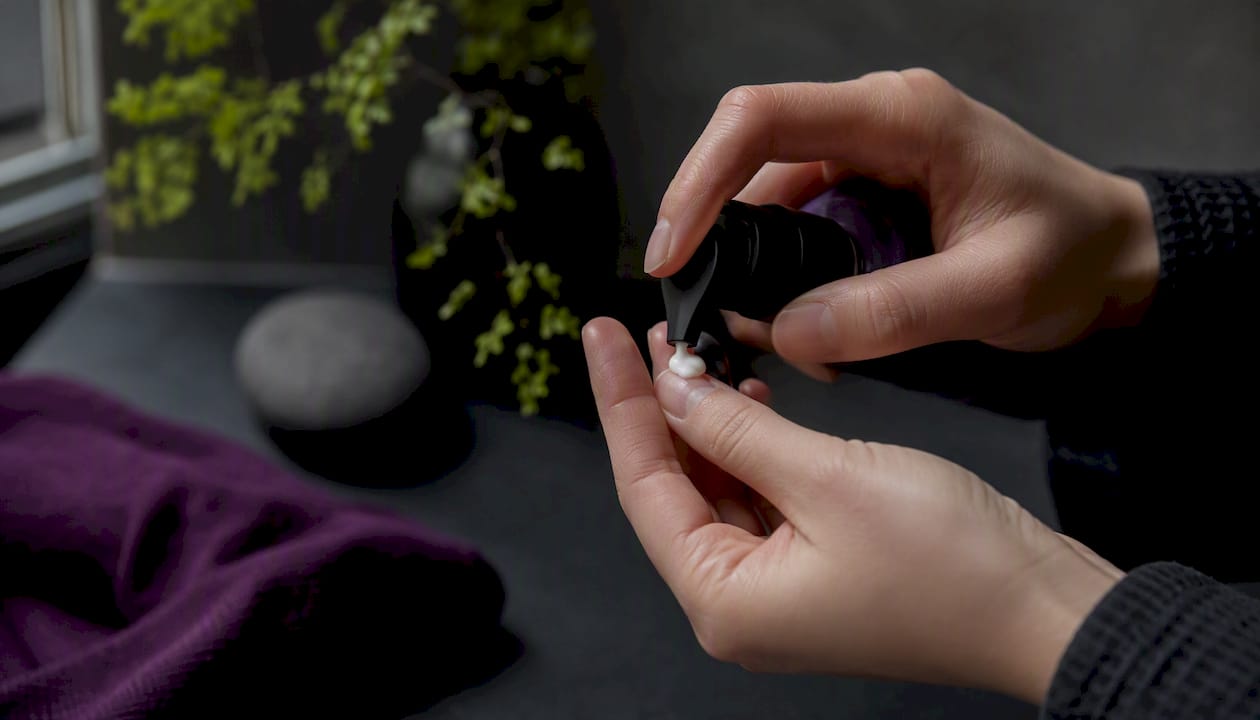
Mineral sunscreen UV exposure is one of the most reliable rosacea triggers. A zinc oxide or titanium dioxide SPF 30+ applied every morning is non-negotiable. Many Korean mineral sunscreens have lighter, less chalky textures than their Western counterparts, which makes daily compliance easier. The hydration-first K-beauty approach also supports SPF adhesion by keeping the barrier smooth.
Ingredients and label claims that trigger rosacea flares
Reading a Korean product label carefully takes about 30 seconds and can prevent weeks of setbacks. These are the categories to avoid.
- Fragrance (parfum) and essential oils: The most common hidden trigger in K-beauty. “Natural” does not mean safe for rosacea. Lavender, rose, eucalyptus, and citrus oils all carry sensitizing compounds. Look for “fragrance-free” on the front label and confirm by checking the INCI list for parfum, fragrance, or any named essential oil. For a practical guide to reading labels, choosing fragrance-free skincare is worth reviewing before your next purchase.
- High-percentage AHAs and BHAs: Glycolic acid above 5%, salicylic acid above 1%, and lactic acid at low pH all thin the stratum corneum and increase UV sensitivity, which worsens rosacea over time. PHAs (polyhydroxy acids) are a gentler alternative that exfoliate without the same pH-driven irritation.
- Denatured alcohol (alcohol denat.): A common solvent in lightweight Korean toners and essences. It disrupts the lipid barrier and triggers flushing in reactive skin. Fatty alcohols (cetyl, cetearyl) are fine.
- Vitamin C at low pH: L-ascorbic acid formulas below pH 3.5 are effective antioxidants but frequently cause stinging and flushing in rosacea-prone skin. Ascorbyl glucoside or sodium ascorbyl phosphate are pH-neutral alternatives that are far less likely to provoke a reaction.
- Retinol and strong retinoids: Retinol accelerates cell turnover but also increases barrier permeability and photosensitivity. Hold off until your barrier is consistently stable, then introduce at the lowest available concentration (0.025–0.05%) on a once-weekly schedule.
- Complex botanical extracts: Products with 20+ ingredients often hide sensitizing plant extracts behind a long list of soothing ones. Products with fewer total ingredients tend to be lower risk for highly reactive skin.
The growing fragrance-free trend in Korean skincare reflects exactly this awareness. More Korean brands now lead with “no fragrance, no essential oils” as a front-label claim, which makes screening faster.
Fragrance-free Korean product picks for rosacea-prone skin
These products are widely available in the U.S. and align with the barrier-first, centella-forward approach described above. Each is fragrance-free or widely reported as non-irritating for reactive skin.
- COSRX Low pH Good Morning Gel Cleanser: A pH-balanced, tea tree-free cleanser with betaine salicylate at a low, non-stripping concentration. Rinses clean without tightness. Available at Lunarashopping.
- Beauty of Joseon Calming Serum (Green Tea + Panthenol): Lightweight, fragrance-free, and built around panthenol and green tea extract. Sits well under moisturizer and does not pill. One reviewer with rosacea noted a noticeable calming effect from a Korean centella-style serum in a similar category, though individual results vary.
- ANUA Heartleaf 77% Soothing Toner: Heartleaf (Houttuynia cordata) is a centella-adjacent calming botanical with a strong track record in Korean formulations for reactive skin. This toner is fragrance-free and hydrates without stickiness.
- COSRX Advanced Snail 96 Mucin Power Essence: Snail secretion filtrate supports barrier repair and hydration. Fragrance-free, low-ingredient count, and well-tolerated by most reactive skin types. Available at Lunarashopping.
- Beauty of Joseon Relief Sun: Rice + Probiotics SPF 50+: A mineral-hybrid Korean sunscreen with a lightweight, non-chalky finish. Fragrance-free and formulated with rice extract for additional soothing. One of the most consistently recommended Korean SPFs for sensitive skin in the U.S. market.
- Peach & Lily Glass Skin Refining Serum: Formulated with niacinamide, peach extract, and hyaluronic acid. Fragrance-free and designed to support barrier hydration. A solid option for the hydration step when centella serums feel too heavy.
- ANUA Heartleaf Quercetinol Pore Deep Cleansing Foam: A gentle, low-pH foam cleanser that removes impurities without disrupting the acid mantle. Fragrance-free and suitable for daily use in both AM and PM routines.
For the PM sunscreen-removal step, a gentle cleansing balm (such as those in the Korean hydration essentials collection at Lunarashopping) dissolves SPF without the friction of a physical wipe.
How to patch-test and introduce actives without triggering a flare
Rosacea-prone skin reacts to new products unpredictably, and reactions can be delayed by 24–72 hours. A structured introduction plan prevents you from having to guess which product caused a flare.
- Choose a test site. Apply a small amount of the new product to the inner forearm or behind the ear, not the face. These sites are sensitive but not your primary concern area.
- Wait 48–72 hours. Check for redness, stinging, swelling, or itching. A delayed reaction at 48 hours is as meaningful as an immediate one.
- If clear, move to a small facial area. Apply to one cheek or the jawline for three to four days before using it across the full face.
- Introduce one product at a time. Wait at least one week between introducing new products. Introducing two simultaneously makes it impossible to identify the trigger if a reaction occurs.
- For azelaic acid specifically: Start at every third night, applied after your centella essence and before your moisturizer. After two weeks with no stinging or increased redness, move to alternate nights. After another two to four weeks, daily use is reasonable if tolerated.
- Buffer if needed. Apply a thin layer of your ceramide moisturizer first, then the azelaic acid on top. This slows absorption and reduces the chance of stinging without eliminating the active’s benefit. Strengthening your skin moisture barrier before introducing any active makes the process significantly smoother.
- Signs to stop: Burning that lasts more than 10 minutes, visible pustules within 48 hours, or a sudden increase in baseline redness. Pause the active, return to your centella-only routine for one to two weeks, then reintroduce at a lower frequency.
Pro Tip: Keep a simple log. Note the product, the date you introduced it, and any skin changes. Four to eight weeks of consistent use is the minimum before you can judge whether an active is working or not.
When skincare is not enough: red flags and medical options
Korean skincare can reduce redness and support barrier health, but it cannot treat diagnosed rosacea on its own. Knowing when to see a dermatologist is as important as knowing which serum to use.
Red flags that warrant a dermatologist visit:
- Persistent central-face redness that does not improve after four to six weeks of gentle, barrier-focused care
- Visible telangiectasia (broken capillaries or spider veins on the nose and cheeks)
- Papules or pustules that worsen despite removing fragrance and aggressive actives
- Burning or stinging pain that is present even without applying products
- Sudden worsening after a period of stability, which may indicate a subtype change or secondary infection
Medical treatment options your dermatologist may discuss:
- Topical metronidazole (0.75–1%) for inflammatory lesions
- Prescription azelaic acid (15–20%) for papulopustular rosacea
- Ivermectin 1% cream, which targets the Demodex mite population associated with some rosacea subtypes
- Oral antibiotics (doxycycline at sub-antimicrobial doses) for moderate-to-severe cases
- Laser and vascular therapies (pulsed dye laser, IPL) for telangiectasia and persistent erythema
Rosacea is a chronic inflammatory condition with multiple subtypes. Self-diagnosis from photos or anecdote is unreliable, and the right treatment depends on which subtype you have. A board-certified dermatologist can confirm the diagnosis, rule out conditions that mimic rosacea (perioral dermatitis, seborrheic dermatitis, lupus), and prescribe therapies that skincare alone cannot replicate. The American Academy of Dermatology is the most reliable starting point for understanding your treatment options.
Skincare supports medical treatment. It does not replace it.
The evidence behind these recommendations
The centella-first, barrier-repair approach to Korean skincare for rosacea is not a trend. It reflects a convergence of dermatology guidance and consumer evidence that has been building for years.
Wirecutter’s review of Korean skincare notes that K-beauty’s defining characteristic is its emphasis on hydration and gentle, barrier-first formulations rather than aggressive actives. That philosophy is precisely what makes Korean skincare a lower-risk starting point for rosacea-prone skin compared to Western routines that often lead with exfoliating acids or high-dose retinoids.
The limits of skincare are equally clear. Surface calming from centella or guaiazulene can be felt within days. Structural barrier repair and a measurable reduction in baseline redness take several weeks of consistent, fragrance-free care. No topical product eliminates the vascular component of rosacea or replaces prescription therapy for moderate-to-severe cases.
For readers who want to understand the hydration science behind why Korean brands build routines this way, why Korean brands emphasize hydration provides useful background on the layering philosophy.
The mindset that actually helps when you have rosacea
Boring is good. The single most common mistake people with rosacea make in K-beauty is treating the 10-step routine as a goal rather than a ceiling. Your skin does not need 10 steps. It needs three to four consistent, well-chosen ones.
Track your triggers as carefully as you track your products. Heat, alcohol, spicy food, wind, and emotional stress all activate the same vascular response that fragrance and acids do. A skincare routine that is perfect on paper will still underperform if you are regularly exposing your skin to environmental triggers without adjusting.
Seasonally, simplify further in winter: drop any active you are not fully tolerating, add a slightly richer ceramide moisturizer, and reread the University of Utah Health guidance on barrier-focused care in colder months. In summer, the priority shifts to SPF compliance and keeping the routine light enough that you actually use it every day.
Patience is the real active ingredient. Introduce one product at a time, give each change four to eight weeks before judging it, and resist the pull of new launches until your baseline is stable.
Lunarashopping’s rosacea-friendly K-beauty starter set
If you want a curated starting point rather than building from scratch, Lunarashopping’s Morning Face Care Routine Set brings together the core steps in one place: a gentle cleanser, a centella-forward serum, a ceramide moisturizer, and a mineral SPF. Every product in the set is selected for fragrance-free formulation and barrier-compatible ingredients.
Three reasons this set works for rosacea-prone skin:
- Fragrance-free throughout: no parfum, no essential oils, no hidden botanical sensitizers across any step
- Centella and ceramide pairing: the serum and moisturizer work together to calm surface inflammation while rebuilding the lipid barrier
- Mineral SPF included: zinc oxide-based sun protection that does not require chemical UV filters, which can sting reactive skin
Browse the full range of rosacea-friendly face care products at Lunarashopping to find individual items that fit your current routine, or start with the Morning Set for a low-risk, complete AM routine.
Sources
- Treating rosacea in winter – University of Utah Health
- Best Korean Centella Serums for Redness
- 16 Best Korean Skin Care Products of 2026 | Reviews by Wirecutter
This article provides general skincare information and is not a substitute for professional medical advice. If you have diagnosed rosacea or persistent skin concerns, consult a board-certified dermatologist before changing your routine or introducing new actives.