Dry or sensitive skin generally does better with a barrier-supportive cleansing balm, while oily, combination, or acne-prone skin usually responds better to a lightweight, noncomedogenic cleansing oil that emulsifies cleanly. If you wear heavy makeup or daily SPF, either format works, as long as you massage it in and rinse until the milky emulsion fully washes away.
TL;DR:
- Proper rinsing and emulsification are crucial, as a product that does not turn milky indicates poor formulation and may leave residue.
- Balm is recommended for dry or sensitive skin, especially if barrier support is needed, while lightweight oils suit oily or combination skin.
- Use a dime-sized amount, massage until melting, and rinse thoroughly to avoid leaving a greasy film or causing breakouts.
- Patch-testing is advised for fungal-acne-prone skin, and choosing noncomedogenic or fungal-safe oils helps prevent flare-ups.
- Comparing ingredient lists and performing a two-night swap test improves the chances of selecting the right cleanser format.
Table of Contents
- Cleansing Balm vs Oil: What’s the Real Difference?
- Which Skin Type Should Use Which Format?
- How Do You Use a Cleansing Balm or Oil Correctly?
- Do Cleansing Oils Really Cause Breakouts? Common Myths, Explained
- How Lunarashopping Helps You Choose Between Balm and Oil
- A Two-Night Test Beats Any Product Review
- Build a Cleansing Routine That Actually Fits Your Skin
- Sources
- FAQ
Cleansing Balm vs Oil: What’s the Real Difference?
A cleansing balm starts as a solid and melts into oil the moment it hits warm skin. A cleansing oil skips that step entirely, since it’s already liquid in the bottle. That phase change matters more than it sounds like it should: balms tend to feel more luxurious and controlled during application, while oils spread faster and work well with a pump dispenser you can use one-handed in the shower.
The part that actually determines performance isn’t texture. It’s the emulsifier. Both formats rely on emulsifying ingredients that let the oil rinse away as a milky emulsion instead of leaving a greasy film. Splash warm water onto a properly formulated balm or oil, and it should turn cloudy white within seconds. That milky shift is the practical rinse test, and it tells you more about a product’s quality than the ingredient list on the box.
Packaging brings its own trade-offs, and they’re worth considering before you buy:
- Balms usually live in jars, which means a spatula for hygiene and a slightly more ritualistic application, but they travel well without leaking.
- Oils typically come in pump or dropper bottles, which are faster to dose but a little easier to overuse or spill in a shower caddy.
- Contamination risk runs slightly higher with jarred balms if you skip the spatula and dip fingers in repeatedly.
Neither format wins outright on packaging. It comes down to how you shower and how much control you want over dosing.
Which Skin Type Should Use Which Format?
Skin type is where balm versus oil actually gets decided, not in a lab, but in your bathroom mirror over a few weeks of use.
Dry and sensitive skin tends to do best with a balm, especially one labeled lipid-enriched. Some formulas include glycolipids and sphingolipids that deposit barrier-supportive lipids while you cleanse, which helps if your skin is already compromised or reactive to standard surfactant cleansers.
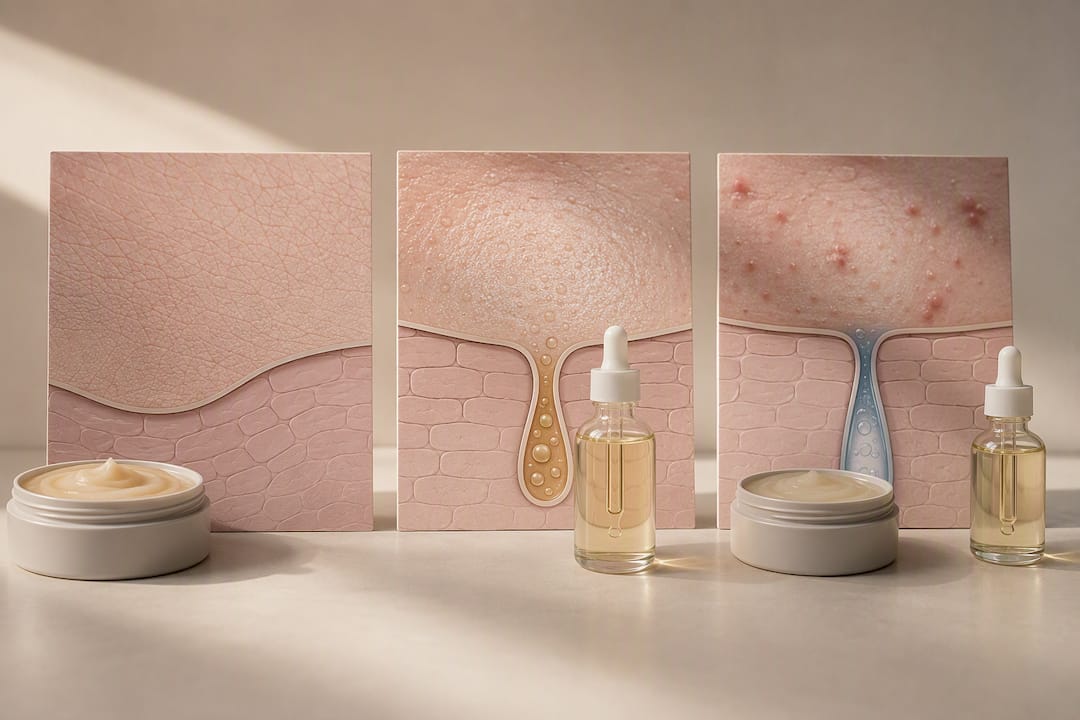
Oily and combination skin usually prefers a lightweight oil, something with a thinner texture that emulsifies fast and doesn’t sit heavy before rinsing. Squalane, grapeseed, and rice bran oils are common choices for this skin type.
Acne-prone skin benefits from noncomedogenic labeling on either format. The oil itself rarely causes breakouts. Poor rinsing does.
Fungal-acne-prone skin needs the most caution. Certain esters and plant oils feed Malassezia yeast, so patch-testing and scanning ingredient lists matters more than choosing balm over oil.
Here’s a quick way to match format to your situation:
- Dry, flaky, or barrier-compromised: start with a lipid-enriched balm.
- Oily or breakout-prone but not fungal-acne-sensitive: try a lightweight oil first.
- Heavy waterproof makeup or daily mineral SPF: either format removes it well, since oils dissolve sunscreen and long-wear formulas more effectively than water-based cleansers.
- Fungal-acne history: skip both until you’ve checked the ingredient list against known trigger oils.
Consumer comparisons consistently find that balms and oils remove makeup and sunscreen at roughly the same level. Preference comes down to texture and rinse feel, not raw cleansing power.
Pro Tip: If your skin runs oily in the T-zone but dry on the cheeks, keep both a balm and an oil on hand and switch based on the season rather than forcing one format to do every job.
How Do You Use a Cleansing Balm or Oil Correctly?
Technique decides whether either format leaves your skin clean or leaves a film behind. Follow these steps every time:
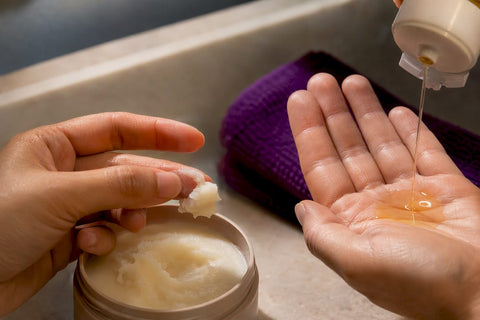
- Dose a dime-to-nickel-sized amount into dry hands.
- Warm it by rubbing palms together until the balm melts or the oil loosens.
- Massage onto dry skin for 30 to 60 seconds, working over makeup, sunscreen, and areas with more sebum.
- Add water in small amounts while continuing to massage, watching for the mixture to turn milky.
- Rinse thoroughly until no residue or slip remains on your skin.
- Follow up with a gentle water-based cleanser if you’re double-cleansing.
If a product never turns milky, no matter how much water you add, that’s a formulation problem, not a technique problem. A balm or oil should emulsify to a light milk within seconds of contact with water. When it doesn’t, expect film, clogged-feeling skin, and buildup over repeated use.
Timing matters too. If your routine includes retinol or AHAs, cleanse thoroughly and let skin dry before applying actives. Leftover oil residue can dilute or unevenly buffer these ingredients, which changes how they perform.
Do Cleansing Oils Really Cause Breakouts? Common Myths, Explained
The biggest fear people have about oil-based cleansing is that it will clog pores. Dermatologists generally push back on this. Oil cleansers dissolve oil-based makeup and sebum, and when correctly emulsified and rinsed, they can be gentler than foaming cleansers, not harsher.
Technique, specifically massage plus a full emulsification and rinse, tends to matter more than whether you chose a balm or an oil in the first place. An oil that rinses completely clean often outperforms a balm that leaves a trace of film.
Where the caution is real: fungal-acne-prone skin and certain forms of dermatitis. Some oils feed Malassezia yeast, and incomplete rinsing is the most common reason people blame a product for congestion that’s actually a technique issue.
- Patch-test any new balm or oil on your jaw or forearm for a few days before full-face use.
- Skip double-cleansing on nights your skin already feels tight, stripped, or reactive.
- Choose barrier-supportive, lipid-enriched formulas if you’re on retinoids or have a compromised barrier.
How Lunarashopping Helps You Choose Between Balm and Oil
Choosing the right format gets easier when you can actually compare ingredient lists side by side instead of guessing from marketing copy. The facial care selection includes both cleansing balms and oils from Korean skincare brands, with product pages that spell out texture, key ingredients, and skin-type fit.
When you’re scanning a product page, run through this checklist:
- Emulsifier presence: look for polysorbates or similar ingredients near the top of the list.
- Noncomedogenic labeling, especially if you’re prone to breakouts.
- Fragrance-free options if you have reactive or sensitive skin.
- Fungal-safe oils (squalane, mineral oil derivatives) if you’ve had Malassezia-related flare-ups before.
If your skin runs oily and you want a cleansing oil built for sebum control, the MIDHA Sebum Cleansing Oil With Rice Bran & Tea Tree is worth a look, and pairing it with a no-sebum routine helps you build consistency beyond just the cleanse step.
A Two-Night Test Beats Any Product Review
Don’t trust a single wash. Run a two-night swap test: one night with a balm, one with an oil, and note residue, tightness, or breakouts by morning. If irritation shows up, patch-test elsewhere before a full switch, and see a dermatologist if flare-ups persist. Emulsify fully and rinse completely. That’s the real decision point, not the label on the jar.
— Lunara
Build a Cleansing Routine That Actually Fits Your Skin
The selection includes both cleansing balms and cleansing oils, so you’re not stuck guessing which format your skin actually wants. Product pages list key ingredients, texture notes, and skin-type fit, which means you can compare a lipid-enriched balm against a lightweight sebum-control oil without digging through five different brand websites.
If you’d rather skip the back-and-forth entirely, the Custom Skincare Kit Builder walks you through a short set of questions about your skin type and concerns, then recommends a cleanser format and complementary products to match. It’s the fastest way to land on a routine that fits your barrier, your breakout history, and your makeup habits, rather than whatever happened to be trending. Start the kit builder now and get a routine built around your actual skin, not a generic bestseller list.
Sources
- How to Use an Oil Cleanser, According to Dermatologists | Glamour
- Cleansing Balm: Why Oil Removes What Water Cannot | North Biomedical
- Cleansing balm vs cleansing oil vs micellar water | Byrdie
- Murad Lipid-Enriched Double Cleansing Balm Review — DermApproved
FAQ
Do Dermatologists Recommend Cleansing Balms?
Yes, dermatologists generally support cleansing balms, especially lipid-enriched formulas, for people with dry or barrier-compromised skin, as long as the product emulsifies cleanly during rinsing.
Do Cleansing Balms Clog Pores?
Not inherently. Clogging usually traces back to incomplete rinsing or a formula with weak emulsifiers, not the balm format itself.
Does a Cleansing Balm Count as an Oil Cleanser?
Yes. A cleansing balm is essentially a solid oil cleanser that melts on contact with skin, then behaves like a liquid oil once it warms up.
Can I Use a Cleansing Balm as My Only Cleanser?
For light makeup or bare-faced days, a well-emulsifying balm can work alone. On days with heavy makeup or SPF, following up with a gentle water-based cleanser gives a more thorough clean.