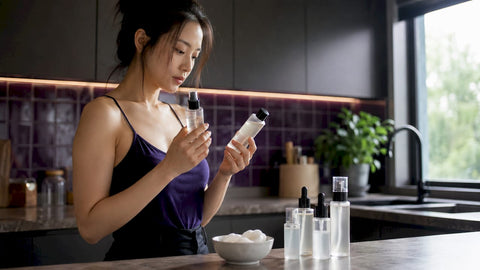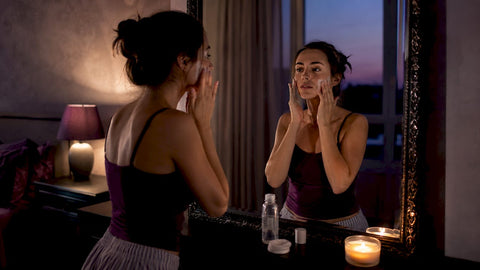
A night skincare routine checklist is a step-by-step sequence of product applications designed to cleanse, treat, and nourish your skin while you sleep. Sleep is your skin’s primary repair window, when cell turnover accelerates and barrier recovery peaks. A structured evening skincare routine takes advantage of that biology instead of leaving it to chance. The steps below are grounded in dermatologist consensus, K-beauty minimalism principles, and research showing that simplified routines outperform complex ones for both skin health and long-term adherence.
1. your night skincare routine checklist at a glance
The core checklist framework approved by dermatologists covers six steps: makeup removal, double cleansing, toning or essence, targeted treatment, moisturizer, and an optional occlusive layer. That sequence is not arbitrary. Each step prepares your skin for the next, and skipping one undermines the products that follow. Think of it as a relay race where every handoff matters.
Most Korean consumers use about three products nightly, focusing on barrier health rather than elaborate multi-step routines. That number reflects a cultural shift toward what the industry calls “skip-care” or skinimalism: fewer products, better chosen, applied consistently. The goal is not a shorter routine for convenience. The goal is a smarter routine that your skin can actually benefit from night after night.
2. step 1: makeup removal
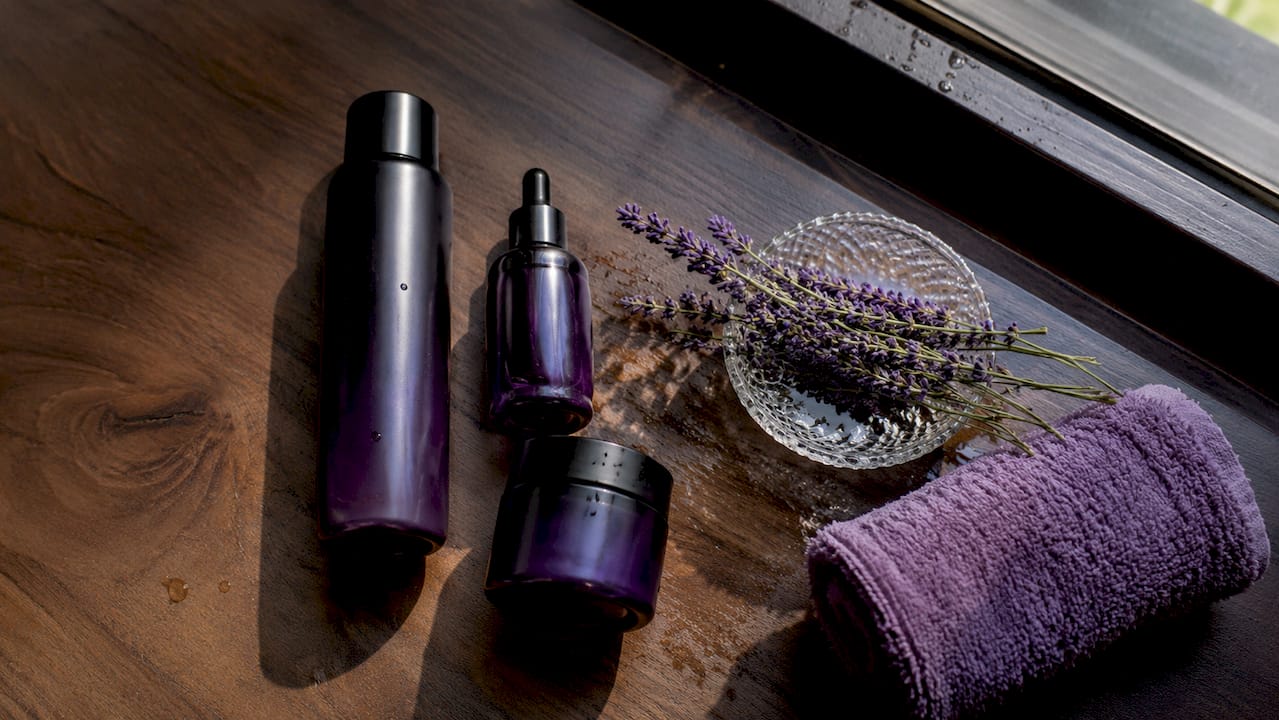
Makeup removal is the non-negotiable first step in any evening skincare routine. Leaving foundation, mascara, or SPF on your skin overnight clogs pores, accelerates oxidative stress, and blocks every product you apply afterward from absorbing properly. A dedicated makeup remover, such as a micellar water like Bioderma Sensibio H2O or a cleansing balm like Banila Co Clean It Zero, dissolves surface-level impurities before you cleanse.
Oil-based removers are the most effective for waterproof formulas and mineral sunscreen. Apply with a cotton pad or your fingertips, work in gentle circular motions, and rinse thoroughly. This step takes under two minutes and sets up everything that follows.
3. step 2: double cleansing
Double cleansing is a K-beauty cornerstone. The first cleanse uses an oil-based cleanser to break down sebum, sunscreen, and residual makeup. The second uses a water-based cleanser to remove sweat, environmental pollutants, and any remaining oil-cleanser residue. Together, they deliver a clean canvas that a single cleanser cannot match.
For oily skin, a gel-based second cleanser like COSRX Low pH Good Morning Gel Cleanser works well. For dry or sensitive skin, a cream or milk cleanser preserves more of the skin’s natural moisture. The K-beauty oily skin checklist from Lunarashopping goes deeper on cleanser selection for sebum-prone types.
4. step 3: exfoliation (2–3 times per week)
Exfoliation removes dead skin cells that accumulate on the surface, dulling your complexion and blocking serums from penetrating. Chemical exfoliants, specifically keratolytic acids like AHAs (glycolic acid, lactic acid) and BHAs (salicylic acid), are more controlled and less abrasive than physical scrubs. AHAs work on the surface and suit dry or dull skin. BHAs penetrate the pore lining and suit oily or acne-prone skin.
Limit exfoliation to 2–3 nights per week. Daily use disrupts the skin barrier and causes reactive redness. Products like Paula’s Choice BHA Exfoliant or The Ordinary Glycolic Acid 7% Toning Solution are widely used and well-tolerated at those frequencies. Apply after cleansing, before toner, and never on the same night you use a retinoid. Combining exfoliants and retinoids on the same night significantly increases irritation risk.
5. step 4: toner or hydrating essence
A hydrating toner or essence rebalances your skin’s pH after cleansing and primes it to absorb the treatment products that follow. This step is not about astringent toners that strip the skin. Modern hydrating toners, like Klairs Supple Preparation Unscented Toner or COSRX Advanced Snail 96 Mucin Power Essence, deliver humectants such as hyaluronic acid and beta-glucan that draw water into the skin.
Apply with clean hands by pressing the product gently into your skin rather than wiping it on with a cotton pad. That technique reduces product waste and improves absorption. This step takes 30 seconds and meaningfully improves how your serum performs.
6. step 5: targeted treatment serum
This is the most personalized step in your nighttime skincare checklist. Treatment serums address specific concerns: niacinamide for redness relief and blemish control, vitamin C for hyperpigmentation, peptides for firmness, and retinoids for anti-aging and cell turnover. The key rule is to use one main active per night, not several stacked together.
Overloading actives causes chemical reactions and barrier disruption that reverse your progress. Rotate actives across different nights instead. For example, use a retinol serum on Monday, Wednesday, and Friday, and a niacinamide or peptide serum on the other nights. The role of serums in your routine is to deliver concentrated actives that a moisturizer cannot.
7. step 6: retinoids and the sandwich method
Retinoids (retinol, retinal, tretinoin) are the most evidence-backed anti-aging ingredients available without a prescription. They accelerate cell turnover, stimulate collagen production, and reduce the appearance of fine lines and hyperpigmentation. The challenge is that they cause dryness and peeling during the first 4–6 weeks of use.
Dermatologists recommend starting retinoids slowly, applying 2–3 nights per week initially and building up over 4–6 weeks. The sandwich method buffers irritation: apply a thin layer of moisturizer first, then your retinoid, then another layer of moisturizer on top. This buffering technique reduces irritation during the adaptation period without significantly reducing efficacy.
Pro Tip: Apply retinoids to fully dry skin, not damp skin. Damp skin increases absorption and can intensify irritation, especially in the first few weeks of use.
8. step 7: moisturizer
Moisturizer is the step that locks in everything you have applied and supports barrier repair overnight. A good night moisturizer contains a combination of humectants (hyaluronic acid, glycerin), emollients (squalane, ceramides), and occlusives (shea butter, petrolatum). Ceramides and panthenol are particularly important because they support barrier-repair and prevent transepidermal water loss.
For oily skin, a lightweight gel-cream like Belif The True Cream Aqua Bomb delivers hydration without heaviness. For dry or mature skin, a richer cream like Laneige Water Sleeping Mask or CeraVe Moisturizing Cream provides the occlusive layer your skin needs overnight. Never skip this step, even if your skin feels hydrated after your serum.
9. step 8: optional occlusive layer
An occlusive is a thick, film-forming ingredient that seals moisture into the skin and prevents overnight water loss. Vaseline (petrolatum) is the most studied and effective option. Korean beauty brands popularized “slugging,” the practice of applying a thin layer of petrolatum or a dedicated sleeping mask as the final step. Products like Laneige Lip Sleeping Mask or Aquaphor Healing Ointment serve this purpose well.
This step is optional and works best for very dry, dehydrated, or compromised skin. If your skin is oily or acne-prone, skip it or limit it to dry patches only. Apply it last, after your moisturizer has fully absorbed.
How to adapt the checklist for your skin type
Your skin type determines which products you choose at each step, not which steps you skip. The table below maps the core checklist to four common skin types.
| Skin Type | Cleanser | Exfoliant | Treatment | Moisturizer |
|---|---|---|---|---|
| Oily | Gel or foam, water-based | BHA (salicylic acid), 2x/week | Niacinamide, retinol | Lightweight gel-cream |
| Dry | Cream or milk, oil-based first | AHA (lactic acid), 1x/week | Peptides, ceramide serum | Rich cream with occlusives |
| Sensitive | Gentle micellar, fragrance-free | Enzyme exfoliant, 1x/week | Centella asiatica, panthenol | Barrier-repair cream |
| Combination | Balancing gel, oil-based first | BHA on T-zone, 2x/week | Niacinamide, light retinol | Zone-specific application |
Sensitive skin types should introduce one new product at a time and wait two weeks before adding another. That pacing prevents you from misidentifying which product caused a reaction. For oily skin, the K-beauty skin barrier checklist approach, which prioritizes hydration even for oily types, often reduces excess sebum production over time.
Common mistakes that undermine your evening routine
Even a well-designed checklist fails when application habits are off. These are the most frequent errors and what to do instead:
- Skipping makeup removal before cleansing. A water-based cleanser alone cannot dissolve SPF or waterproof makeup. Always use an oil-based remover or cleansing balm first.
- Applying products in the wrong order. The rule is thinnest to thickest consistency. Toner before serum before moisturizer before occlusive. Reversing this order blocks lighter products from reaching the skin.
- Using retinoids every night from day one. Aggressive introduction causes peeling and barrier damage. Start at 2–3 nights per week and build slowly.
- Stacking multiple actives in one session. Retinol plus AHA plus vitamin C in one night is a formula for irritation. Rotate actives across different nights.
- Skipping moisturizer when using actives. Retinoids and exfoliants increase transepidermal water loss. Moisturizer is more important on those nights, not less.
- Inconsistency. A 4-step routine completed nightly reduces skin inflammation markers by 27% compared to 8-step routines performed sporadically. Simplicity wins when it is sustainable.
How to build and maintain the habit
Adherence drops sharply after 8 minutes. That single finding should shape how you design your routine. Aim for a total routine time of 7 minutes or less. If your current routine takes longer, cut steps rather than rush through them. A rushed routine with poor technique delivers worse results than a shorter one done correctly.
Set your products out in application order on your bathroom counter. That visual cue removes decision fatigue at the end of a long day. Use a simple checklist app or a sticky note to track which nights you used your retinoid or exfoliant. Rotating actives is easy to lose track of without a record.
Expect visible results to take time. Retinoids require 4–6 weeks before you notice meaningful changes in texture or tone. Barrier-repair products like ceramide creams show results in 2–3 weeks. Consistency over complexity is the principle that separates routines that work from routines that look impressive but get abandoned.
Pro Tip: On nights when you are too tired for the full routine, do the minimum: remove makeup, cleanse, and moisturize. Three steps done every night beat seven steps done three times a week.
Key takeaways
A consistent, simplified night skincare routine built around cleansing, targeted treatment, and barrier repair delivers better long-term skin health than any complex regimen you cannot sustain.
| Point | Details |
|---|---|
| Sequence matters | Apply products thinnest to thickest: toner, serum, moisturizer, occlusive. |
| Limit active ingredients | Use one main active per night and rotate to prevent barrier disruption. |
| Introduce retinoids slowly | Start 2–3 nights per week and use the sandwich method to reduce irritation. |
| Simplicity improves adherence | A 4-step routine completed nightly outperforms an 8-step routine done inconsistently. |
| Adapt by skin type | Choose product formulations based on your skin type, not just the step itself. |
Why i stopped chasing the 10-step routine
I spent a long time convinced that more products meant better skin. I cycled through elaborate routines with vitamin C, retinol, AHAs, peptides, and three different serums, all in the same session. My skin was reactive, dry in patches, and oily everywhere else. The irony is that I was causing the problems I was trying to fix.
What changed things was stripping back to four steps and focusing entirely on barrier health. Ceramide moisturizer, a single retinoid two nights a week, and a gentle double cleanse. Within six weeks, my skin was calmer than it had been in years. The self-care skincare research backs this up: the skin barrier does not need stimulation every night. It needs support.
The modern K-beauty philosophy, which has shifted toward barrier-first formulations over stacking actives, reflects what dermatologists have been saying for years. Fewer, better-chosen products applied with consistency will always outperform a shelf full of actives applied without a plan. Your skin is not a project to be solved. It is a system to be supported. Give it the right inputs, give it time, and it will respond.
— Lunara
Build your routine with Lunarashopping
Lunarashopping has curated a selection of Korean skincare products designed to match every step in this checklist, from gentle cleansers to barrier-repair moisturizers and targeted treatment serums. If you want a ready-to-use starting point, the Korean Glass Skin Routine Bundle brings together the core steps in one kit, formulated around the K-beauty minimalist approach this article covers.
Not sure which products fit your skin type? The Custom Skincare Kit Builder walks you through a quick selection process and matches you with products suited to your specific concerns, whether that is oily skin, sensitivity, or anti-aging. Lunarashopping also carries skincare accessories to support proper application and maximize what your routine delivers.
FAQ
What is the correct order for a night skincare routine?
The correct order is makeup remover, cleanser, exfoliant (2–3 nights per week), toner or essence, treatment serum, moisturizer, and optional occlusive. Apply products from thinnest to thickest consistency.
How many steps should a night skincare routine have?
A dermatologist-approved routine covers 4–6 steps. Research shows that a 4-step routine completed consistently reduces skin inflammation markers by 27% compared to 8-step routines performed sporadically.
Can i use retinol and exfoliants on the same night?
No. Combining retinoids and chemical exfoliants on the same night significantly increases irritation and barrier disruption. Rotate them on different nights to get the benefits of both without the damage.
How long before i see results from a night skincare routine?
Barrier-repair ingredients like ceramides show results in 2–3 weeks. Retinoids require 4–6 weeks of consistent use before visible improvements in texture and tone appear.
What is the minimum night skincare routine for tired evenings?
The minimum effective routine is three steps: makeup removal, cleansing, and moisturizer. These three steps protect the skin barrier and prevent overnight damage even when you skip the rest.