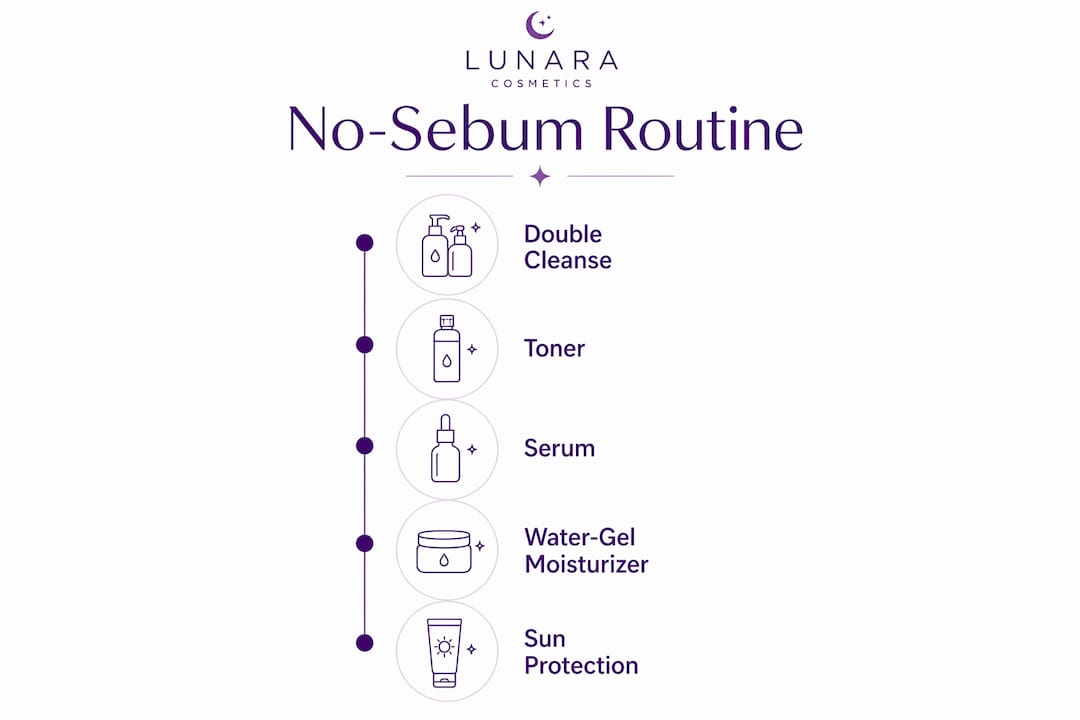
The K-beauty no-sebum routine is a targeted, simplified skincare regimen designed to regulate excess sebum production while preserving the skin’s moisture barrier for a naturally balanced, shine-controlled complexion. Unlike Western approaches that rely on mattifying powders or harsh astringents, this method prioritizes lightweight, non-comedogenic layering to achieve what Korean beauty professionals call “sebum control,” a state where oil output is regulated rather than stripped. The routine centers on five purposeful steps: double cleansing, a balancing toner, a regulating serum, a water-gel moisturizer, and an oil-controlling SPF. Understanding what the K-beauty no-sebum routine actually involves separates it from generic oily-skin advice and explains why it consistently delivers a fresh, semi-matte finish without dehydrating your skin.
What is the K-beauty no-sebum routine and how does it work?
The 5-step no-sebum regimen consists of double cleansing, a balancing toner, a regulating serum, a water-gel moisturizer, and oil-control SPF, with measurable reduction in midday shine typically seen within 2 to 3 weeks of consistent twice-daily application. That timeline matters because it sets realistic expectations: you are retraining your skin’s oil response, not masking it overnight.
Here is how each step functions within the routine:
-
Double cleanse. Start with an oil-based cleanser massaged for 60 seconds to dissolve sunscreen, sebum, and surface impurities. Follow immediately with a low-pH water-based cleanser formulated around pH 5.5 to remove residue without disrupting the acid mantle. Disrupting that barrier triggers rebound oil production, which defeats the entire purpose of the routine.
-
Balancing toner. Apply a hydrating toner to rebalance the skin’s pH after cleansing and prepare it for the next layers. K-beauty toners focus on hydration and pH rebalance rather than astringency, which prevents the moisture barrier disruption that causes oil rebound. Pat it in gently rather than wiping.
-
Regulating serum. This is the step where you target oil control directly. Key actives for sebum regulation include niacinamide, salicylic acid, Centella Asiatica, and tea tree extract, each supporting pore care, inflammation reduction, and oil regulation. THE FACE SHOP Niacinamide 10% Serum is one example of a targeted pore serum that fits this step precisely.
-
Water-gel moisturizer. Skipping moisturizer is one of the most common mistakes oily-skin types make. Skipping moisturizer increases skin dehydration, which triggers excess sebum as the skin compensates for lost moisture. A gel-based, non-comedogenic formula hydrates without heaviness or pore congestion.
-
Oil-controlling SPF. Finish your morning routine with a lightweight sunscreen designed for oily skin. The COSRX Ultra Light Invisible Sunscreen SPF 50 is formulated to sit invisibly on skin without adding shine, making it a practical oil-control SPF choice for this final step.
Pro Tip: Wait 60 seconds between each product layer. This absorption window prevents pilling, reduces oxidation-related greasiness, and allows each active ingredient to penetrate before the next layer is applied.
How do textures and ingredients support oil control?
The no-sebum routine’s success depends less on which products you buy and more on the texture and formulation choices you make. This is the distinction that separates sebum control in skincare from simply blotting your face with powder.
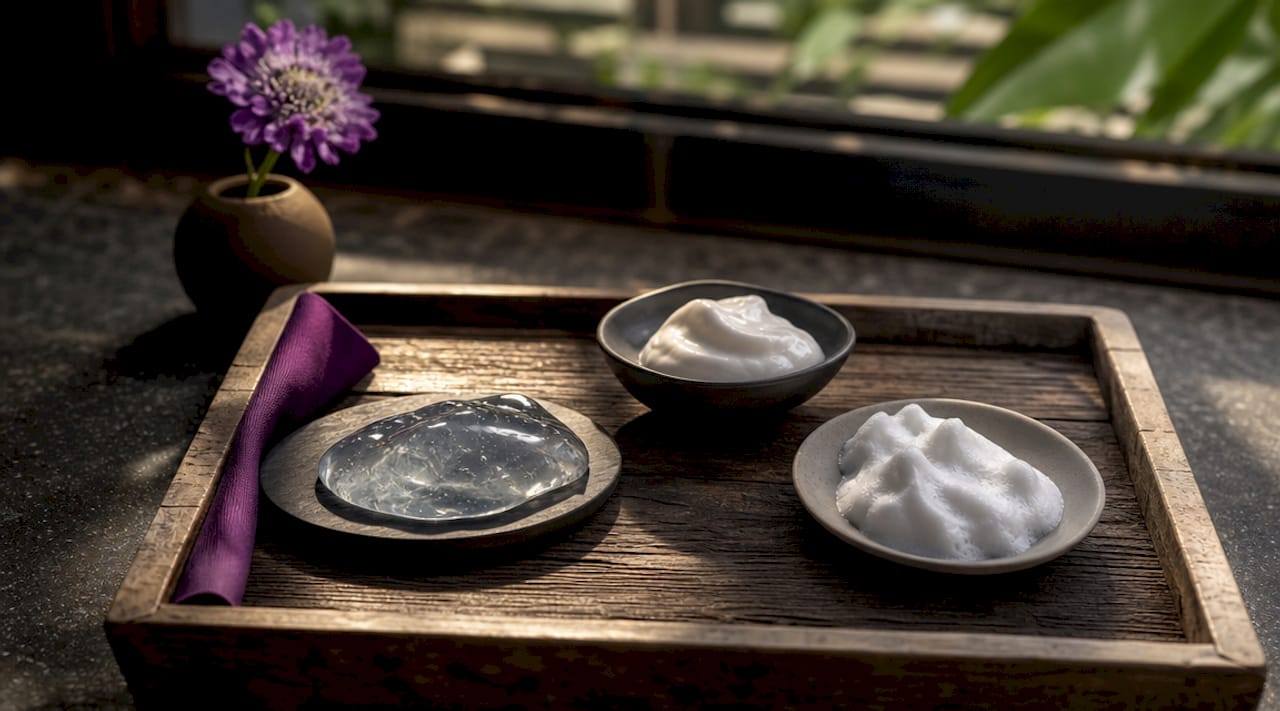
Non-comedogenic, gel-based formulas absorb quickly into the skin without leaving a film that traps debris inside pores. Heavy creams and occlusive balms, even hydrating ones, can increase congestion for oily skin types by slowing transepidermal water loss in a way that also seals in sebum. Gel textures allow the skin to breathe while still delivering hydration.
The ingredient profile matters just as much as the texture:
- Niacinamide regulates sebum secretion at the cellular level and visibly minimizes pore appearance with consistent use over four to eight weeks.
- Salicylic acid is a keratolytic beta-hydroxy acid that penetrates oil-filled pores to dissolve debris and reduce blackhead formation.
- Centella Asiatica calms inflammation and supports barrier repair, which is particularly useful for acne-prone oily skin that experiences frequent irritation.
- Hyaluronic acid delivers lightweight hydration by drawing moisture from the environment into the skin, keeping it plump without adding oil.
Layering lightweight, purpose-driven products like Centella Asiatica and niacinamide supports hydration and oil regulation simultaneously, preventing shiny midday skin without depriving the skin of necessary moisture. That balance is the core philosophy of the K-beauty approach to oily skin.
Pro Tip: If your skin feels tight after cleansing, your cleanser is too harsh. Switch to a gentle, sulfate-free formula to stop the cycle of stripping and overproduction before it starts.
What experts say about misconceptions in the K-beauty routine
The most persistent myth about K-beauty is that the routine requires 10 steps to be effective. Dermatologists and K-beauty specialists consistently push back on this.
“K-beauty routines are menus, not mandatory checklists. Personalization and simplicity are more effective than a rigid 10-step routine, especially for oily skin where heavy layering can clog pores and worsen shine.” — Harper’s Bazaar, citing K-beauty experts
This perspective reframes how you should approach building your regimen. The goal is not to accumulate products but to select each one with a clear purpose. For oily skin, that purpose is always hydration plus regulation, never aggressive stripping.
Over-exfoliation is another common mistake. Using salicylic acid daily alongside a physical scrub and a retinol can compromise the skin barrier, causing inflammation that paradoxically increases oil production. Experts recommend limiting chemical exfoliation to two or three times per week and observing how your skin responds before adding more actives.
Routines also need to flex with your environment. In humid summer months, you may skip the water-gel moisturizer in the evening if your skin feels adequately hydrated after toning and serum. In dry winter conditions, adding a lightweight emulsion between your serum and moisturizer supports barrier health without adding greasiness. The K-beauty philosophy centers on skin barrier health, moisture retention, and gentle ingredients rather than aggressive correction, and that principle applies year-round.
How to implement the routine daily and manage midday shine
Consistency and technique determine results more than product selection alone. Here is a practical morning and evening framework for the no-sebum K-beauty skincare routine.
Morning routine (approximately 10 to 12 minutes):
- Rinse with cool water or use a gentle water-based cleanser only. A full double cleanse in the morning is optional unless you sweat heavily overnight.
- Apply balancing toner by patting it into skin with clean hands. Wait 60 seconds.
- Apply your niacinamide or Centella Asiatica serum in a thin, even layer. Wait 60 seconds.
- Press a small amount of water-gel moisturizer across the face, focusing on drier zones like the cheeks.
- Apply oil-controlling SPF as the final step. Allow it to set for two minutes before applying any makeup.
Evening routine (approximately 12 to 15 minutes):
- Begin with an oil-based cleanser for a full 60-second massage to remove SPF and daily buildup.
- Follow with a low-pH water-based cleanser. Rinse with lukewarm water.
- Apply hydrating toner. Wait 60 seconds.
- Use your regulating serum. If you are exfoliating tonight, apply salicylic acid here instead of your standard serum, but limit this to two or three evenings per week.
- Finish with a water-gel moisturizer.
For midday shine management, Korean cushion foundations for oily skin are lighter and sheerer than traditional formulas, applied with pressing motions rather than swiping to avoid disturbing the skin underneath. Blotting papers remove excess oil before reapplication and prevent the cakey buildup that occurs when powder is layered over active sebum. Carry a small blotting sheet pack rather than a pressed powder compact for a cleaner, more natural finish throughout the day.
Seasonal adjustments are straightforward. In summer, prioritize lighter toners and skip the emulsion layer. In winter, add a hydrating essence between your toner and serum to compensate for barrier stress from cold, dry air. The routine adapts to your skin’s current state rather than staying fixed.
Key takeaways
The K-beauty no-sebum routine controls oily skin through hydration-first layering, targeted actives, and lightweight textures rather than stripping or mattifying.
| Point | Details |
|---|---|
| 5-step structure | Double cleanse, toner, serum, water-gel moisturizer, and oil-control SPF form the complete daily regimen. |
| Results timeline | Consistent twice-daily application reduces midday shine within 2 to 3 weeks. |
| Moisturizer is non-negotiable | Skipping it triggers dehydration-driven sebum overproduction, worsening oiliness over time. |
| 60-second wait rule | Waiting between each layer prevents pilling, oxidation, and greasy buildup throughout the day. |
| Personalization over complexity | A focused 5-step routine outperforms a rigid 10-step checklist for oily skin types. |
Why hydration is the real foundation of oil control
From my experience working with K-beauty products and oily skin types, the single biggest shift people need to make is accepting that hydration and oil control are the same goal, not opposing ones. When your skin is adequately hydrated at the barrier level, it stops producing excess sebum as a compensatory response. That is the mechanism the no-sebum routine is built around.
What I find most encouraging about this approach is how forgiving it is. You do not need to overhaul your entire routine overnight. Start with a gentle double cleanse and a niacinamide serum, observe how your skin responds over two weeks, then add the water-gel moisturizer and SPF. Gradual introduction reduces the risk of irritation and gives you clear feedback on what is actually working.
The cultural shift K-beauty represents is also worth acknowledging. The goal is no longer a flat, powdery matte finish. It is a fresh, clarified skin surface that looks healthy rather than controlled. That shift in beauty ideals aligns with what dermatology has been saying for years: a functioning skin barrier is the best cosmetic you can invest in.
My personal recommendation is to prioritize your moisturizer and sunscreen above all other steps. If your budget or time is limited, those two products deliver the most consistent oil regulation and barrier protection across all skin types and seasons.
— Lunara
Start your no-sebum routine with Lunarashopping
Lunarashopping carries a curated selection of Korean skincare products designed specifically for oily and combination skin types. The Korean Glass Skin Routine Bundle brings together oil-balancing, hydration-focused products in one ready-to-use set, removing the guesswork from building your first no-sebum regimen. For pore-focused concerns, the Korean Pore Care and Texture Bundle targets texture refinement and sebum regulation with trusted K-beauty formulas. If you prefer a fully personalized approach, Lunarashopping’s custom skincare kit builder lets you select each step according to your specific skin needs. Every product is expert-selected and sourced from established Korean beauty brands.
FAQ
What is sebum control in skincare?
Sebum control in skincare refers to regulating the skin’s natural oil output to prevent excess shine, clogged pores, and acne without stripping the moisture barrier. The K-beauty approach achieves this through hydrating, non-comedogenic products rather than harsh astringents.
How long does the no-sebum routine take to show results?
Consistent twice-daily application of the 5-step K-beauty no-sebum routine typically produces a measurable reduction in midday shine within 2 to 3 weeks. Skin barrier repair and sebum regulation improve progressively over four to eight weeks.
Do I really need to moisturize if my skin is oily?
Yes. Skipping moisturizer dehydrates the skin, which triggers increased sebum production as a compensatory response. A lightweight, gel-based, non-comedogenic moisturizer is a non-negotiable step in any effective no-sebum routine.
What are the best K-beauty ingredients for oil control?
Niacinamide, salicylic acid, Centella Asiatica, and tea tree extract are the most effective actives for sebum regulation in K-beauty serums. Niacinamide reduces pore appearance and oil secretion, while salicylic acid clears debris from inside pores.
Can I use the K-beauty no-sebum routine if I have sensitive oily skin?
Yes, with modifications. Limit salicylic acid to two or three evenings per week and prioritize Centella Asiatica and niacinamide for their calming, barrier-supporting properties. Avoid layering multiple actives in the same routine until your skin has adapted.