
A facial cleanser is a formulated product that removes excess sebum, sweat, environmental pollutants, makeup, and cosmetic residues from your skin’s surface, then prepares it to absorb the serums and treatments you apply afterward. That single step, done correctly, is what separates a routine that works from one that just feels like effort.
Here is what to do right now:
- Pick a cleanser matched to your skin type. Dry and sensitive skin needs a cream or micellar formula; oily or acne-prone skin does better with a gel or low-pH foam.
- Check the label for red flags. Avoid sodium lauryl sulfate (SLS), denatured alcohol, and added fragrance if your skin is reactive.
- Use correct technique. Lukewarm water, fingertip massage for 60–90 seconds, a full rinse, then moisturizer immediately after.
- Match frequency to your skin. Twice daily for oily, acne-prone, or normal skin; once nightly for dry or sensitive skin.
Table of Contents
- What are the main types of facial cleansers?
- What a cleanser actually does for your skin health
- How to choose the right cleanser for your skin type
- How to use a facial cleanser correctly
- What dermatologists say about microbiome and barrier protection
- Key Takeaways
- The trade-off most people get wrong with cleansers
- Start your cleansing routine with tested Korean formulas
- Useful sources for further reading
What are the main types of facial cleansers?
Cleanser formulations differ in what they remove, how they feel, and how much they affect your skin barrier. Knowing the difference helps you pick the right tool for your skin and routine.
| Cleanser Type | Best For | Key Mechanism | Barrier Impact |
|---|---|---|---|
| Oil / Balm | Heavy makeup, sunscreen, dry skin | Solubilizes oil-based residues | Low — adds emollients |
| Cream / Milk | Dry, sensitive, mature skin | Emollient-rich, mild surfactants | Low |
| Gel | Oily, combination, acne-prone | Water-based, moderate surfactants | Moderate |
| Foam | Oily skin, morning cleanse | Anionic surfactants, lathers well | Moderate to high |
| Micellar Water | Sensitive skin, light makeup | Micelles lift debris without rinsing | Very low |
| Cleansing Wipes | Travel, emergency use | Mechanical + mild solvent | Variable — often drying |
Oil and balm cleansers work by a straightforward chemistry principle: like dissolves like. They solubilize lipophilic residues — sunscreen, sebum plugs, long-wear foundation — that water-based products simply cannot break down on their own. Balms are the same concept in a solid format that melts on contact with skin.
Cream and milk cleansers rely on emollient-rich bases with mild amphoteric or nonionic surfactants. They cleanse without stripping, which makes them the safest daily option for dry or sensitized skin. Gel cleansers sit in the middle: effective at cutting through oil but potentially drying if overused. Foam cleansers often contain anionic surfactants like SLS, which lather well but carry a higher risk of barrier disruption with repeated use.
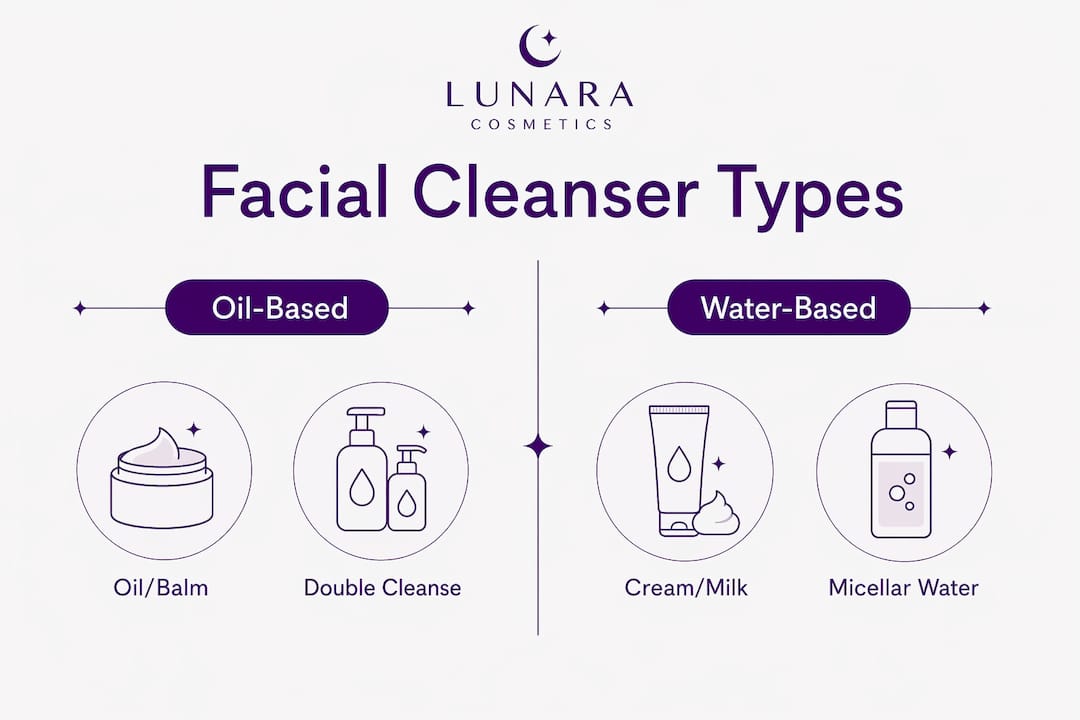
Micellar water uses tiny micelle structures that attract both oil and water simultaneously, lifting debris without the need for vigorous rinsing. It is a genuinely gentle option, though it may not remove heavy SPF or full-coverage makeup completely on its own.
Double cleansing (oil-based first, water-based second) is the most effective method when you wear sunscreen or heavy makeup daily. The oil step breaks down lipophilic residues; the water-based step removes what remains. Skip it on dry or sensitive skin on mornings when you have no product buildup to clear.
Pro Tip: “Gentle” on a label is not a regulated claim. Look instead for objective signals: fragrance-free, soap-free, pH-balanced, and surfactant types listed as cocamidopropyl betaine or decyl glucoside rather than sodium lauryl sulfate. Those specifics tell you far more than any marketing adjective.
For a deeper look at why pH matters in cleanser formulation, Korean skincare science offers some of the clearest explanations available.
What a cleanser actually does for your skin health
The role of a facial cleanser goes well beyond basic hygiene. Dermatological reviews confirm that removing sebum, pollutants, and residues is the foundation for every other step in your routine. When debris sits on the skin surface, it physically blocks serums and actives from penetrating the stratum corneum, making your expensive treatments significantly less effective.
The concrete benefits of appropriate cleansing include:
- Prevents pore congestion. Excess sebum and dead cells mix with environmental particulates; regular cleansing clears that buildup before it oxidizes and forms comedones.
- Improves absorption of subsequent products. A clean surface allows humectants, retinoids, and vitamin C serums to reach the skin cells they are meant to target.
- Reduces microbial overgrowth. Cleansing removes the substrate that certain bacteria feed on, which matters particularly for acne-prone skin.
- Supports the skin barrier when done correctly. A well-formulated cleanser preserves the acid mantle and the lipid matrix of the stratum corneum.
Over-cleansing causes the opposite of every benefit listed above. Strip the skin too aggressively or too often, and you disrupt the barrier, trigger reactive sebum overproduction, and create the conditions for irritation and sensitivity. A comprehensive clinical review of facial cleanser formulations documents this balance directly: cleansing efficacy and stratum corneum preservation are not opposing goals, but they require the right formulation to achieve simultaneously.
Dermatologists also note that cleansing is the essential prep step that lets serums and treatments penetrate effectively rather than sitting on top of debris. That framing shifts cleansing from a hygiene task to a clinical one.
How to choose the right cleanser for your skin type
The best cleanser for your skin is the one that removes what needs to go without leaving your skin feeling tight, irritated, or stripped. Start with these decision criteria.
Skin type matching:
- Oily or acne-prone: Gel or low-pH foam with salicylic acid (a keratolytic that clears pores) or benzoyl peroxide for active breakouts. Use per dermatologist guidance on medicated formulas.
- Dry or mature: Cream, milk, or balm. Look for glycerin, ceramides, and squalane in the ingredient list.
- Sensitive or reactive: Micellar water or a fragrance-free cream cleanser with minimal actives.
- Combination: A gentle gel or low-pH foam in the T-zone, or a single mild gel used across the face without over-massaging dry areas.
Ingredients to favor:
- Mild amphoteric surfactants (cocamidopropyl betaine, sodium cocoamphoacetate)
- Nonionic surfactants (decyl glucoside, lauryl glucoside)
- Humectants (glycerin, sodium hyaluronate)
- Barrier-supporting lipids (ceramides, squalane, shea butter)
Ingredients to avoid for sensitive or dry skin:
- Sodium lauryl sulfate (SLS) and sodium laureth sulfate (SLES) at high concentrations
- Denatured alcohol (listed as “alcohol denat.”)
- Synthetic fragrance or parfum
- High concentrations of essential oils on reactive skin
Label checklist before buying:
- pH-balanced or low-pH claim (ideally 4.5–6.5 for facial use)
- Fragrance-free and soap-free stated explicitly
- Presence of active ingredients only if you are treating a specific concern (acne, congestion)
- No “squeaky clean” promise — that sensation signals over-stripping
Red flags in use: persistent tightness after moisturizing, stinging during application, visible flaking within an hour of cleansing, or increased breakouts after switching formulas.
If you are using retinoids or chemical exfoliants, choose the gentlest possible cleanser. Actives already stress the barrier; a harsh cleanser compounds that. Adjusting your cleanser seasonally also matters — winter skin care often calls for a richer, less stripping formula than you use in summer.
For personalized guidance, Lunarashopping’s custom skincare kit builder walks you through skin type, concerns, and routine preferences to match you with compatible products.
How to use a facial cleanser correctly
Use a gentle cleanser. Adjust frequency by skin type: twice daily for oily, acne-prone, or normal skin; once nightly for dry or sensitive skin. That single rule prevents most cleansing mistakes.
Step-by-step technique:
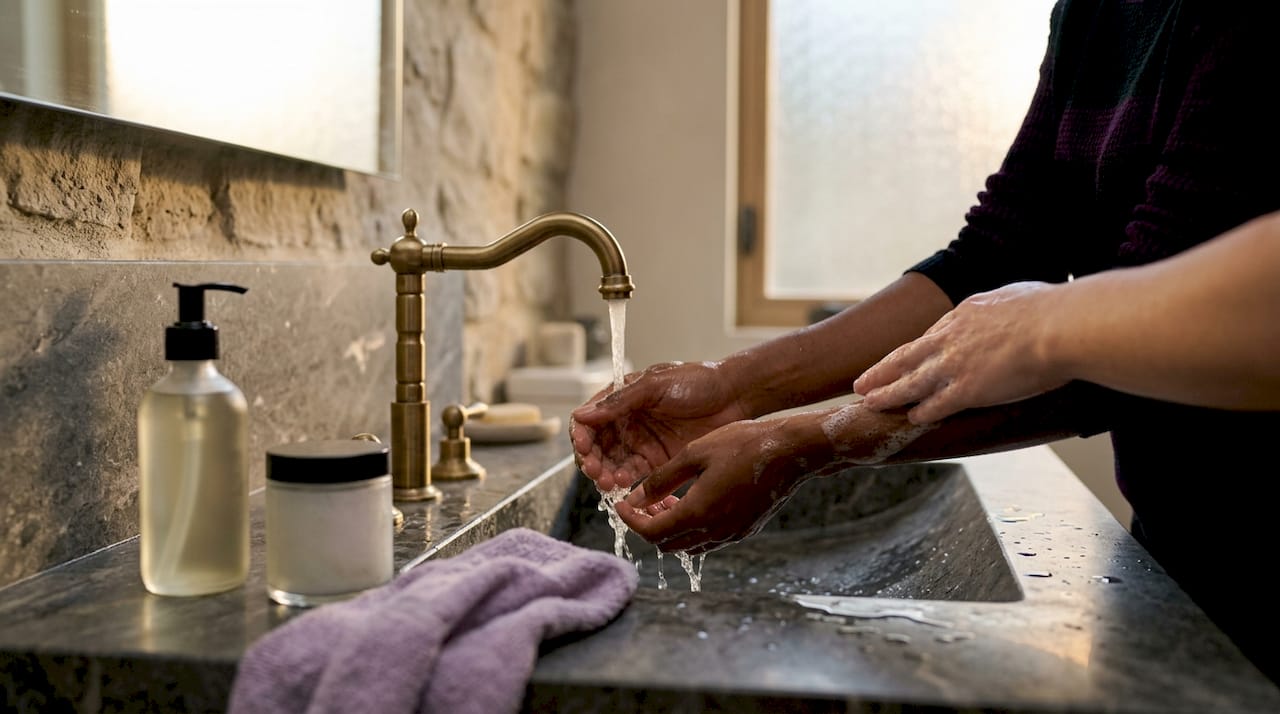
- Wet your face with lukewarm water. Hot water accelerates barrier disruption; cold water reduces cleanser efficacy.
- Apply a small amount of cleanser (about the size of a nickel for most formulas) to your fingertips.
- Massage gently in circular motions for 60–90 seconds. Water alone cannot remove oil-based residues like sunscreen or sebum; the contact time matters.
- For medicated cleansers (salicylic acid, benzoyl peroxide), leave on for 1–2 minutes per Cleveland Clinic guidance before rinsing, unless your dermatologist advises otherwise.
- Rinse thoroughly. Any residue left behind can clog pores or cause irritation.
- Pat dry with a clean towel. Do not rub.
- Apply moisturizer within 60 seconds of patting dry to lock in hydration before the skin surface dries out.
Double cleansing protocol: Apply an oil cleanser or balm to dry skin first, massage to emulsify, then rinse. Follow with your water-based cleanser using the steps above. Reserve this for evenings when you have worn sunscreen or makeup. Mornings rarely need it.
Avoid washcloths and scrubbing tools for daily cleansing. They abrade the skin surface and introduce bacteria. Fingertips are the right tool.
Pro Tip: To test whether your cleanser is over-drying, apply your usual moisturizer immediately after cleansing and wait 20 minutes. If your skin still feels tight or looks dull, the cleanser is stripping more than it should. Switch to a cream or micellar formula and re-evaluate.
A complete night skincare routine places cleansing as step one for good reason: everything that follows depends on it.
What dermatologists say about microbiome and barrier protection
The skin microbiome is a living ecosystem of bacteria, fungi, and other microorganisms that help regulate immunity, pH, and barrier integrity. Harsh surfactants do not just remove dirt — they remove protective microbial communities along with it. Modern mild surfactants are specifically formulated to minimize that disruption, which is why ingredient selection matters beyond simple “clean vs. not clean” thinking.
Clinical guidance from dermatological literature confirms that appropriate cleanser selection is clinically relevant for acne, rosacea, and xerosis. Cleansers formulated with mild surfactants and humectants support treatment outcomes for these conditions, while harsh or overly frequent cleansing worsens barrier compromise and can trigger flares. The stratum corneum and its resident microbiome require preservation, not elimination.
Personalized frequency based on skin type consistently outperforms a blanket twice-daily mandate. Wirecutter’s reporting on dermatologist guidance makes this explicit: those with dry or sensitive skin who cleanse only once nightly often see improved hydration and reduced reactivity within weeks.
For acne-prone skin, the combination of a gentle cleanser with appropriate actives (salicylic acid or benzoyl peroxide) supports treatment efficacy without compounding barrier stress. Korean acne care protocols apply this principle consistently: cleanse gently, treat specifically, and protect the barrier at every step.
The takeaway from clinical evidence is direct: cleansing is not a neutral act. The wrong formula or the wrong frequency causes measurable harm to the skin’s protective systems.
Key Takeaways
A facial cleanser’s role extends beyond surface cleaning — it protects the skin barrier, supports the microbiome, and determines how well every subsequent treatment performs.
| Point | Details |
|---|---|
| Core function | Cleansers remove sebum, pollutants, makeup, and residues that block treatments and disrupt the barrier. |
| Frequency by skin type | Twice daily for oily, acne-prone, or normal skin; once nightly for dry or sensitive skin. |
| Technique timing | Massage for 60–90 seconds with lukewarm water; always moisturize immediately after rinsing. |
| Ingredient red flags | Avoid SLS, denatured alcohol, and synthetic fragrance on sensitive or dry skin. |
| Lunarashopping | Offers Korean cleanser formulas from brands like COSRX and ANUA, matched to skin type via a custom kit builder. |
The trade-off most people get wrong with cleansers
The conventional wisdom says cleanse thoroughly, twice a day, every day. In practice, that advice fits only one skin type: oily. For everyone else, it is a recipe for a compromised barrier and a reactive skin cycle that no serum can fix downstream.
The real trade-off is not between clean and dirty skin. It is between effective removal and preservation. A cleanser that leaves your skin feeling “fresh and tight” is almost always doing damage. That squeaky sensation means the acid mantle has been disrupted and the lipid matrix of the stratum corneum has been partially stripped. Your skin then overproduces sebum to compensate, and the cycle repeats.
The smarter approach is to under-cleanse slightly rather than over-cleanse. One gentle evening cleanse is better for most skin types than two aggressive ones. If you are not wearing makeup or SPF, a morning rinse with water alone is a legitimate choice that many dermatologists support. Cleansing is a tool, not a ritual to maximize.
When in doubt, consult a board-certified dermatologist, particularly if you are managing acne, rosacea, or eczema. A professional assessment of your skin type and barrier status will always outperform any general guide, including this one.
Start your cleansing routine with tested Korean formulas
Choosing a cleanser should not mean sorting through hundreds of options with no guidance. Lunarashopping curates Korean skincare cleansers from brands with documented formulation standards, including COSRX, ANUA, and INNISFREE, selected for their low-pH, barrier-friendly profiles.
The morning routine set pairs a gentle cleanser with compatible hydrating steps, making it a practical starting point if you are building a routine from scratch. For readers who want to browse individual cleansers and read full ingredient lists before committing, the face care collection covers every formulation type discussed in this guide. Patch-test any new cleanser on a small area for 24–48 hours before full use, particularly if your skin is sensitive or reactive.
Useful sources for further reading
| Source | What it covers |
|---|---|
| Comprehensive clinical review of facial cleanser formulations | Peer-reviewed overview of cleanser formulation, barrier function, and clinical applications |
| Dermatological studies on surfactants and skin barrier | Clinical study on surfactant effects on the stratum corneum |
| PubMed — Cleansing and skin pH | Research on how cleansers affect skin surface pH and microbiome |
| PubMed — Sebum and cleanser interaction | Study on sebum removal efficacy across cleanser types |
| Cleveland Clinic — How to wash your face | Dermatologist-reviewed technique guide with step-by-step instructions |
| Healthline — Face washing rules | Practical ingredient and frequency guidance for general readers |
| The Conversation — Cleanser science explainer | Expert-authored piece on surfactant chemistry and double cleansing |
| IJPS Journal — Comprehensive cleanser review | Formulation science and dermatological applications across skin conditions |
This article is general skincare information, not medical advice. Confirm the right cleanser and routine for your specific skin condition with a board-certified dermatologist.