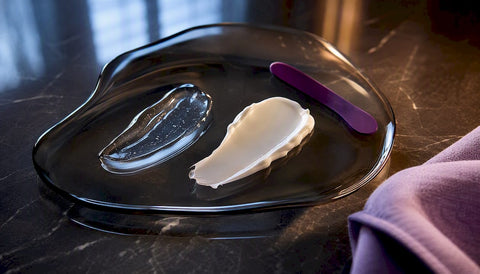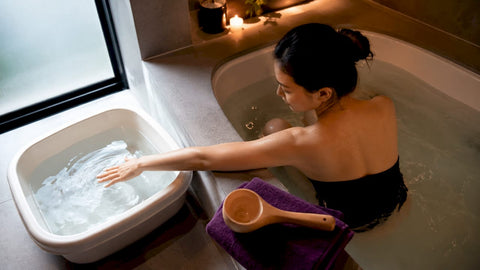
Recreating an authentic Korean spa at home comes down to one sequence: warm soak or steam, seshin body scrub, contrast hot/cold rinse, then hydrate and seal. Soak for a suitable duration before you scrub, keep the scrub itself to 5–15 minutes, and patch-test any new exfoliant or active first. Skip the scrub entirely if your skin is broken, sunburned, or irritated. That single safety note matters more than any product on your shelf.
TL;DR:
- Soaking or steaming for 15 to 30 minutes before scrubbing significantly enhances skin receptivity and prevents irritation from skipping this step.
- Mechanical exfoliation with textured mitts should be gentle, avoiding aggressive friction to prevent redness and skin damage, especially when dealing with sensitive or broken skin.
- Facial steaming or warm towels improve product absorption and effectiveness, but layering multiple new active ingredients simultaneously can cause reactions.
- Contrast water therapy involves ending with a cool rinse to close pores, but should be avoided by those with cardiovascular issues or severe skin conditions.
- A simple routine with a few high-quality products used consistently tends to produce better long-term results than complex, multi-step regimens.
Table of Contents
- What Is the Full At-Home Korean Spa Ritual?
- How Do You Do the Korean Scrub (Seshin) at Home?
- How Do You Handle Facial Care During a Home Spa Session?
- Is Hot and Cold Water Therapy Safe to Do at Home?
- What Products Do You Actually Need for a Home Spa Setup?
- Should You Do This Daily or Weekly?
- What Do Dermatologists Say About This Routine?
- How Do You Maintain Results After the Spa Session Ends?
- Can You Use Natural Ingredients Instead of Store-Bought Products?
- How Should You Adjust This Routine for Your Skin Type?
- Why Simple, Consistent Routines Beat Elaborate Ones
- Ready to Build Your Own Korean Spa Kit?
- Sources
What Is the Full At-Home Korean Spa Ritual?
A proper session follows a fixed order because each step prepares your skin for the next. Skipping the soak and going straight to scrubbing is the most common mistake, and it’s the one that leads to raw, irritated skin instead of the soft, glowing result you’re after.
Here’s the sequence, start to finish:
- Set the scene. Dim the lights, run a diffuser, queue a quiet playlist, put your phone away, and warm your bathroom to a comfortable temperature.
- Soak or steam. Fill the tub with warm (not scalding) water and soak for 15 to 30 minutes, or take a hot shower long enough to soften skin. This step changes tissue receptivity, making exfoliation far more effective.
- Scrub (seshin). Work in sections, starting with limbs before moving to torso and back, using a textured mitt.
- Contrast rinse. Alternate a controlled burst of cool water after the warm rinse to close pores and calm the skin.
- Hydrate and seal. Apply body oil while skin is still damp, follow with a hydrating face mask, then moisturize and drink water or warm tea to finish.
Rest for a few minutes afterward. Your skin is more absorbent right after a soak, so this is when body oil and masks do their best work.
How Do You Do the Korean Scrub (Seshin) at Home?
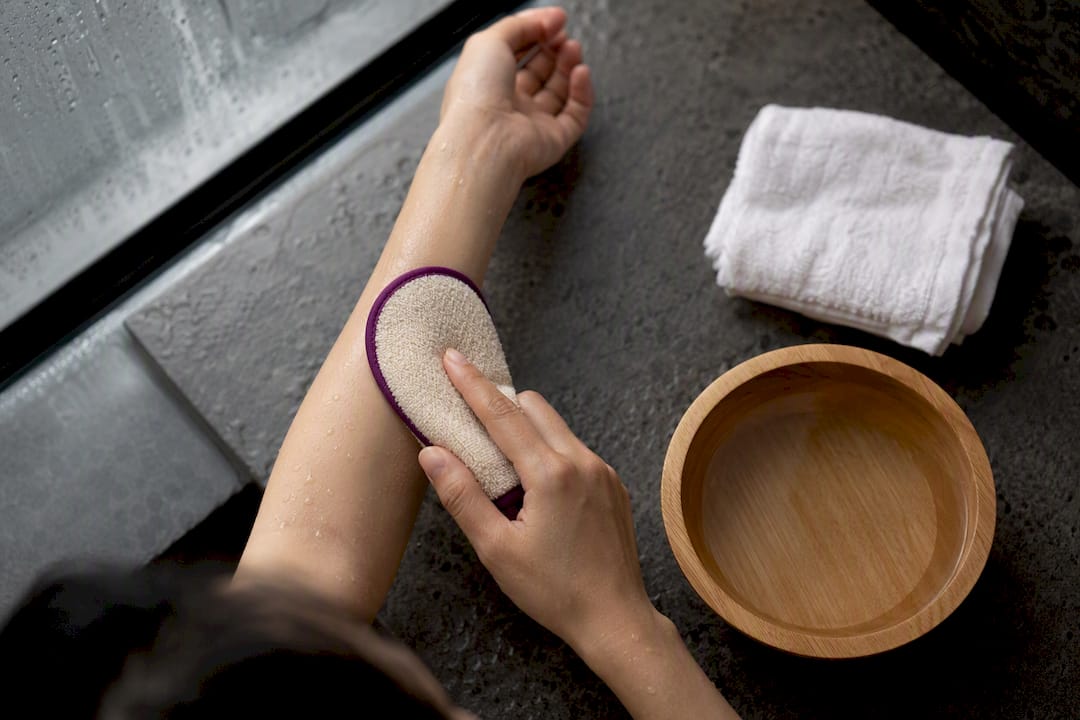
Seshin is mechanical exfoliation, not a chemical peel. A textured mitt physically lifts dead skin cells and, in the process, boosts circulation, which is part of why skin looks brighter immediately after. Practitioners describe the correct pressure as a sustained, controlled massage rather than aggressive friction, and that distinction is what separates smooth results from red, scraped skin.
You have two mitt options. A nubby woven mitt (the classic Korean bathhouse tool) gives the strongest exfoliation and works best on limbs and torso. A long-handled or looped towel lets you reach your own back, which is otherwise impossible to scrub evenly.
- Start at the shoulders and work down each limb in long, even strokes.
- Move to the torso next, using lighter pressure over the chest and stomach.
- Save the back for last, using the towel method with a gentle sawing motion.
- Rinse the mitt between sections to avoid redistributing dead skin.
Scrub regularly but not daily, to avoid irritation. Skip it entirely over sunburn, eczema flares, or any broken skin. For the wash-off step before scrubbing, a foaming cleanser like the MIDHA Rice Bran Facial Scrub Foam softens skin further without the harsh stripping that bar soap can cause.
Pro Tip: Test pressure on your forearm first. If skin turns bright red and stays that way for more than a few minutes, you’re pressing too hard.
How Do You Handle Facial Care During a Home Spa Session?
Your face needs a different rhythm than your body. Start with an oil-based cleanser to dissolve sunscreen and sebum, then follow with a low-pH water-based cleanser. This two-step approach removes buildup without stripping the skin barrier, which a single harsh cleanser tends to do.
- Double cleanse first: oil-based, then a gentle formula like the CIROA Face-Body-Hair Wash 3 in 1.
- Steam for 2 to 5 minutes with a facial steamer, or hold a warm damp towel over your face if you don’t own one.
- Apply a sheet mask for hydration, or a wash-off clay or exfoliating mask if you’re targeting texture or oil.
- Layer essence, then serum, then moisturizer, finishing with a sleeping pack if your skin tolerates richer formulas overnight.
Steaming genuinely changes outcomes here. Short ultrasonic sessions soften the stratum corneum enough that masks and serums perform noticeably better afterward. One caution: introduce only one new active ingredient per session. Layering three new serums at once makes it impossible to know what caused a reaction if your skin protests. Check our toner layering guide if you want the full hydration sequence.
Is Hot and Cold Water Therapy Safe to Do at Home?
Contrast hydrotherapy, alternating hot and cold water, triggers vascular constriction that can reduce localized inflammation and leaves skin looking noticeably less puffy right after a scrub.
The safe home version: finish your warm soak or shower, then switch to cool (not ice-cold) water for 15 to 30 seconds. Return to warm for a minute, then repeat the cold burst two or three times total, always ending on cool to close pores.
Who should skip this: anyone with cardiovascular disease, uncontrolled blood pressure, pregnancy, or severe rosacea should modify or avoid cold exposure entirely, and check with a doctor first. Watch for dizziness, chest tightness, or unusually intense redness that doesn’t fade within a few minutes. Stop immediately if any of those happen.
What Products Do You Actually Need for a Home Spa Setup?
You don’t need a shopping cart full of specialty items. A short, deliberate list covers everything the ritual requires.
Body essentials:
- Textured scrub mitt or long exfoliating towel
- Gentle foaming exfoliant, like the MIDHA Rice Bran Facial Scrub Foam
- Body oil for post-soak sealing
- Foot file and bath salts (optional but traditional additions)
Face essentials:
- Oil-based cleanser
- Low-pH water cleanser, such as CIROA’s 3-in-1 wash
- Facial steamer or a hot towel as a substitute
- Sheet masks and a hydrating essence
Ultrasonic steamers and LED or microcurrent devices are optional upgrades, not requirements. If you use them, follow the manufacturer’s timing exactly. Overuse of high-frequency devices can irritate skin that’s already been freshly exfoliated. If you’d rather start with something already assembled, the Morning Face Care Routine Set and the general accessories collection are curated starting points that remove the guesswork.
Should You Do This Daily or Weekly?
Two rhythms cover almost everyone: a short daily routine and a longer weekly deep session.
- Daily (20 to 30 minutes): double cleanse, light layering (essence, moisturizer), a quick warm-towel press instead of a full steam, and SPF every morning without exception.
- Weekly (60 to 90 minutes): the full soak, seshin scrub, deeper mask or device work, and an overnight sleeping pack to lock in hydration.
- Track your timeline: expect visibly smoother, better-hydrated skin within 2 to 4 weeks; pigmentation and texture changes take a few months of consistency.
Pick one day and time for your deep session so it becomes a habit rather than something you squeeze in randomly. Hydrate well afterward, and jot down any reaction so you can adjust before your next round.
What Do Dermatologists Say About This Routine?
The mechanics behind this ritual aren’t just spa folklore. Dermatology-aligned guidance backs almost every step.
Double cleansing with an oil-based formula followed by a low-pH water cleanser removes sunscreen, makeup, and sebum buildup without disrupting the skin’s protective barrier, a foundational piece of modern K-beauty practice.
Steaming or soaking before treatment isn’t just relaxing, either. Softening the outer skin layer measurably improves how well topical products absorb, which is why masks feel more effective right after a steam than when applied cold. Experts also agree that a simplified, consistent routine outperforms a sporadic 10-step one. Doing four steps every week beats doing twelve steps once a month. The consistent thread across all of it: patch-test anything new, and introduce one active ingredient at a time so you can trace any reaction back to its source.
How Do You Maintain Results After the Spa Session Ends?
The 24 hours after a deep session are when your skin is most vulnerable and most receptive, so your follow-up routine matters as much as the ritual itself.
Skip retinoids, acids, and any other strong actives for at least a day after scrubbing. Freshly exfoliated skin has a thinner protective layer, and layering an active on top of that invites redness or stinging that has nothing to do with the ingredient itself being wrong for you. Stick to bland, barrier-supportive products instead: a ceramide-rich moisturizer, a calming essence, and nothing else.
Sunscreen becomes non-negotiable the next morning. Freshly buffed skin is more reactive to UV exposure, and skipping SPF after exfoliation is one of the fastest ways to trigger uneven pigmentation later. Reapply if you’re outdoors for more than a couple of hours.
Hydration compounds over the following days, as explained in your complete skincare guide for naturally glowing skin. A body oil applied nightly for the week after your spa session helps maintain the softness the scrub created, since dead skin cell turnover continues even after the mechanical exfoliation is done. On your face, keep layering light, essence and moisturizer are enough, and save richer treatments like sleeping packs for the next deep session rather than every night.
Watch for delayed reactions too. Some irritation from over-exfoliation doesn’t show up until 24 to 48 hours later as tightness, flaking, or small breakouts. If that happens, pull back your scrub frequency next time and extend the gap between sessions.
Can You Use Natural Ingredients Instead of Store-Bought Products?
Kitchen-ingredient scrubs and masks have a long history in Korean home skincare, and several genuinely work if you respect the same pressure and timing rules as any store product.
Rice water, made by soaking or rinsing uncooked rice and saving the cloudy liquid, has been used for generations as a gentle toner and rinse. Green tea, brewed strong and cooled, works as a soothing final rinse after your contrast hydrotherapy step. Honey, applied as a 10 minute face mask before your water cleanse, adds humectant moisture without added fragrance or preservatives.
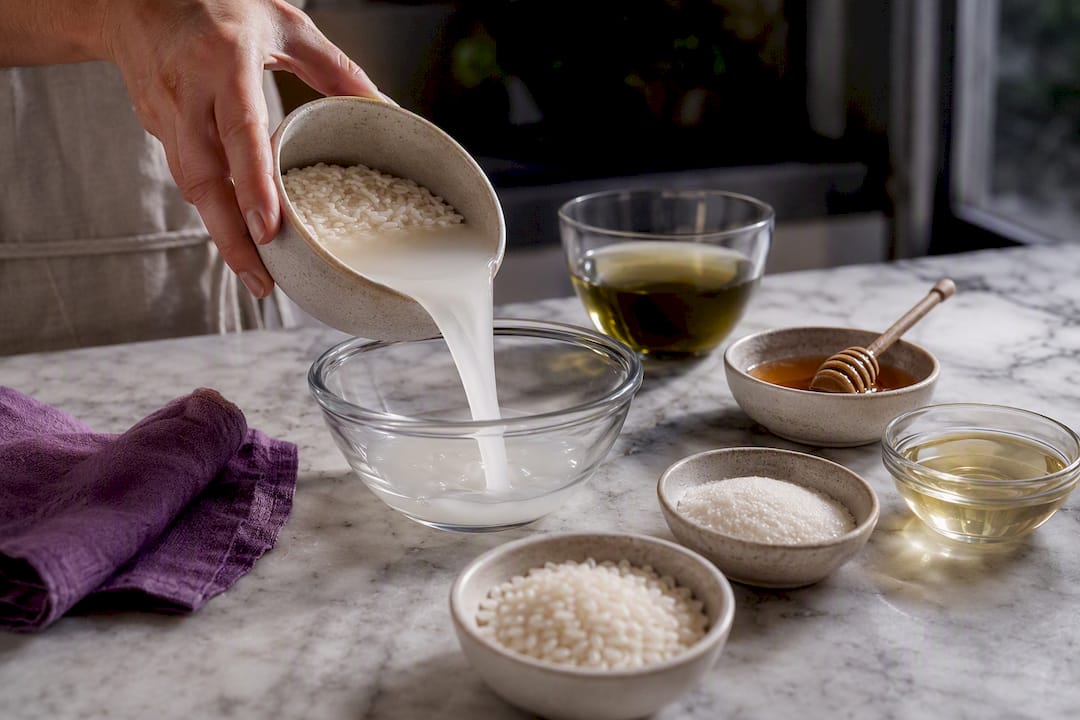
For body exfoliation, a mix of fine sugar and a neutral oil like rice bran or grapeseed can substitute for a store-bought scrub in a pinch. The caveat matters here: DIY mixes can work, but they carry more contamination risk and inconsistent grit size compared to formulated products, which are milled for even texture and packaged to stay sanitary. If you make your own, use it within a day or two and store it in the refrigerator.
Oat and honey masks suit sensitive or reactive skin better than sugar scrubs, since oats soothe rather than abrade. None of these natural swaps replace the double cleanse or sunscreen step. They’re additions to the ritual, not substitutes for its core structure.
How Should You Adjust This Routine for Your Skin Type?
The core sequence stays the same for everyone. What changes is intensity, frequency, and which products fill each slot.
Oily and acne-prone skin tolerates more frequent scrubbing, closer to weekly, but should avoid heavy body oils on the face and stick to lightweight, non-comedogenic hydrators instead. Check our guide to Korean acne care before adding actives like salicylic acid into the mix, since combining exfoliation with an acid the same day is a common cause of irritation.
Dry and mature skin benefits from shorter, less frequent scrub sessions (every two weeks is often plenty) and richer sealing steps: body oil, a heavier moisturizer, and an overnight sleeping pack after nearly every deep session.
Sensitive skin and rosacea-prone skin need the gentlest version of everything. Shorten soak time slightly, use the softest mitt texture available, skip the cold-water contrast entirely or keep it extremely brief, and always patch-test new products on the inner arm 24 hours before applying them to your face.
Combination skin usually does best treating the face in zones. Follow the oily-skin approach on the T-zone and the dry-skin approach on the cheeks, rather than applying one product uniformly across a face that doesn’t behave uniformly.
Whatever category you fall into, the golden rule doesn’t change: if a step causes lasting redness, stinging, or breakouts, drop its frequency before you drop the ritual altogether.
Why Simple, Consistent Routines Beat Elaborate Ones
Most people assume an authentic Korean spa ritual requires a dozen products and an hour every single day. That assumption is backward, and it’s the reason so many people abandon Korean-style skincare within a month. The real authenticity is in the technique and the order, soak before scrub, steam before mask, warm before cold, not in the size of your product shelf.
What we’ve learned curating routines for customers is that people who stick with two or three well-chosen products, used correctly and consistently, see better results than people who buy ten items and use them sporadically. Our 10-step Korean skincare guide exists precisely to show which steps are essential and which are optional add-ons.
Start with the sequence, not the shopping list. Patch-test everything new, and let your skin’s response guide how often you scrub.
— Lunara
Ready to Build Your Own Korean Spa Kit?
You don’t need a bathhouse membership or a flight to Seoul to get this right, you need the correct products in the correct order, and that’s exactly what Lunarashopping curates. Every item in this guide, from the exfoliating foam to the multi-use wash, is sold as a standalone or as part of a starter set, so you’re not stuck buying a dozen half-used bottles to piece together one routine.
The Morning Face Care Routine Set bundles the cleanse-and-hydrate steps this guide walks through, built for people who want the sequence right without researching every ingredient themselves. If your skin needs something more specific, like added exfoliation, hair removal tools, or lip repair, browse all face care products or the skin care accessories collection for mitts and steamers that support the ritual. Prefer to mix and match instead of committing to a set list? The custom skincare kit builder lets you assemble your own combination based on skin type and budget. Pick your starting point today and build the rest as your routine settles in.
Sources
- Korean skincare routine 2026 — Janeyoo MD
- Get Relaxing Korean Spa At Home - DIY Bath House Ideas — Domino
- Korean skincare routine — Vogue
- Creating a Korean Home Spa Routine with Tech and Wellness Rituals — Franvia