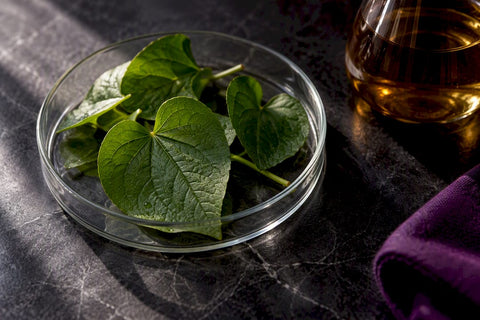
Heartleaf, known botanically as Houttuynia cordata, is a gentle botanical that soothes redness, supports acne-prone skin, and helps preserve hydration through antioxidant and enzyme inhibiting activity. Most of this comes from lab research and a handful of small clinical tests rather than large-scale trials, so think of it as a well-supported calming ingredient rather than a miracle cure. You’ll typically find it in toners, serums, and soaked pads, which makes it easy to add to an existing routine.
TL;DR:
- Heartleaf’s antibacterial activity against acne-causing bacteria is supported by lab tests, but it remains a supportive ingredient rather than a sole treatment.
- The plant’s anti-inflammatory effects are primarily demonstrated in cell and animal studies, with human trial evidence still limited.
- Its ability to inhibit enzymes like hyaluronidase and collagenase suggests significant potential for supporting skin hydration and preventing early signs of aging.
- Topical reactions are mild and rare, but patch-testing is recommended, especially for individuals with plant allergies or sensitive skin.
- Using heartleaf in gentle forms like toners or soaked pads, introduced gradually, is best for reactive or barrier-compromised skin.
Table of Contents
- What is heartleaf and how do formulators use it in skincare?
- How strong is the anti-inflammatory and soothing evidence?
- Does heartleaf help with acne and antimicrobial support?
- What does heartleaf do for hydration and anti-aging?
- How do you add heartleaf to your routine the right way?
- Is heartleaf safe, and who should be cautious?
- What does the evidence actually support?
- What are the nutritional benefits of eating heartleaf?
- What is the traditional and historical use of heartleaf?
- Can heartleaf interact with medications or other herbs?
- Who should avoid using heartleaf on their skin?
- We recommend heartleaf for customers dealing with redness, breakouts, or barrier stress who want a gentler entry point than stronger actives. Start with a toner or pad, patch-test first, and build from there.
- Try heartleaf: LunaraShopping product options and a safe starter path
- Sources
- FAQ
What is heartleaf and how do formulators use it in skincare?
Houttuynia cordata goes by several names on ingredient labels, including heartleaf, fish mint, and its Latin name written in full. Korean beauty brands often list it simply as Houttuynia cordata extract, sometimes specifying whether it comes from the leaf, stem, or whole plant.
Extracts fall into two main types. Aqueous, or water-based, extracts pull out water-soluble compounds and polysaccharides, while ethanolic extracts capture a broader range of flavonoids, including quercetin and quercitrin. That distinction matters because flavonoid-rich ethanolic extracts tend to show stronger antioxidant and antimicrobial activity in lab testing, while the polysaccharide content in aqueous extracts contributes more to surface hydration. Formulators choose one or blend both depending on whether the product’s job is calming, humectant support, or a mix of the two.
How strong is the anti-inflammatory and soothing evidence?
Heartleaf’s reputation for calming irritated skin holds up reasonably well under lab conditions. In human dermal fibroblasts exposed to lipoteichoic acid, a bacterial compound that triggers inflammation, heartleaf extract at 20 micrograms per milliliter reduced TNF-alpha mRNA by up to about 40 percent and cut COX-2 protein levels by roughly 52 percent. Both TNF-alpha and COX-2 are markers tied directly to visible redness, swelling, and the lingering irritation that follows a breakout.
That mechanism helps explain why heartleaf shows up so often in products aimed at reactive or post-blemish skin. A broader review of Houttuynia cordata research confirms this anti-inflammatory activity appears consistently across in vitro and animal studies, alongside antioxidant and antimicrobial effects. The same review is candid about the gap that remains: most of this evidence comes from cell cultures and animal models, not large human trials. That doesn’t erase the findings, but it does mean the soothing effect you feel from a heartleaf toner is best understood as plausible and lab-supported, not definitively proven at scale.
Does heartleaf help with acne and antimicrobial support?
Heartleaf’s antibacterial activity against acne-causing bacteria is one of its better-documented properties. In lab testing, an ethanolic Houttuynia cordata extract inhibited Cutibacterium acnes at a minimum inhibitory concentration of 2.47 milligrams per milliliter, and imaging under a scanning electron microscope showed visible collapse of the bacterial cell structure after exposure.
That’s a meaningful data point, but it comes from a controlled lab setting, not a clinical acne trial. In practice, heartleaf works best as a supportive layer in an acne-prone routine rather than a replacement for prescription treatments like topical retinoids or benzoyl peroxide. If you’re managing active breakouts, pair a heartleaf toner or serum with a non-stripping cleanser that won’t disrupt your skin barrier further, and keep sunscreen and a lightweight moisturizer in daily rotation. Acne-prone skin is often inflamed and barrier-compromised at the same time, so calming and antimicrobial support tend to work better together than either one alone.
What does heartleaf do for hydration and anti-aging?
Hydration and early anti-aging support both trace back to the same enzyme-inhibiting activity. Lab testing on Houttuynia cordata extracts recorded hyaluronidase inhibition as high as 98.7 percent, alongside measurable inhibition of collagenase and elastase, the enzymes that break down collagen and elastin over time.

Hyaluronidase breaks down hyaluronic acid, the molecule responsible for holding water in skin tissue. Slowing that enzyme means more of the skin’s own hyaluronic acid stays intact, which supports plumper, better-hydrated skin over time. The same logic applies to collagen and elastin: inhibiting the enzymes that degrade them helps preserve the extracellular matrix that keeps skin firm.
These are preventive and supportive effects, not corrective ones. Heartleaf won’t reverse existing sun damage or deep-set lines, but used alongside daily sunscreen and a proper moisturizer, it adds another layer of defense against the gradual breakdown that leads to sagging and dehydration.
How do you add heartleaf to your routine the right way?
Heartleaf is forgiving to work into an existing routine because it comes in several lightweight formats, and none of them require you to restructure your whole regimen.
- Toner or mist: apply after cleansing, before serums, to calm skin and prep it for the next step.
- Soaked pads: swipe over the face as a light exfoliating and soothing step, especially useful post-cleanse on congested skin.
- Essence or lightweight serum: layer after toner and before moisturizer for a more concentrated dose of active compounds.
- Lotion or light cream: use as a final step when you want hydration and calming combined in one product.
Start with once-daily use for the first week, especially if you’re also using retinoids or exfoliating acids, since layering too many actives at once can mask whether irritation is coming from heartleaf or something else. Heartleaf pairs well with hyaluronic acid, panthenol, and centella asiatica, all of which reinforce hydration and barrier repair. Avoid introducing it on the same night as a new strong acid or retinol until you know how your skin responds to each individually.
Pro Tip: Patch-test any new heartleaf product on your inner arm for 24 to 48 hours before applying it to your face, especially if you have a history of plant-based allergies.
Is heartleaf safe, and who should be cautious?
Topical heartleaf is generally well tolerated, but its safety profile varies depending on how it’s used. Serious concerns come almost entirely from injected Houttuynia formulations, not topical skincare. A systematic analysis of adverse drug reactions tied to Houttuynia injections documented 1,232 reported cases, with respiratory symptoms most common and some serious reactions including anaphylactic shock, particularly when combined intravenously with certain antibiotics.
That data describes injected use, not the toners and serums on your bathroom shelf, and it’s worth knowing simply as context for how potent the plant’s compounds can be under different delivery methods. Topical reactions tend to be mild by comparison: occasional redness, stinging, or itching in sensitive individuals. If you notice swelling, hives, or breathing difficulty after topical use, stop immediately and seek medical care. Anyone with known plant allergies, especially to related botanicals, should patch-test carefully before full-face application.
What does the evidence actually support?
The strongest data points behind heartleaf are specific: a 2.47 mg/mL MIC against Cutibacterium acnes, hyaluronidase inhibition reaching 98.7 percent, and a clinical toner study showing reduced sebum and increased cheek moisture after eight weeks compared to placebo. Together, these support heartleaf’s role in calming, antimicrobial, and hydration-focused formulas.
The gaps are just as clear. Most findings come from in vitro assays or small trials on finished products, not large, standardized human studies isolating the extract itself. The broader review of Houttuynia cordata research calls for more clinical work to confirm effect sizes outside the lab. For now, the practical takeaway is that heartleaf is a reasonably well-supported calming and supportive ingredient worth trying if you have reactive, oily, or acne-prone skin, with realistic expectations about what a botanical extract can and can’t do.
What are the nutritional benefits of eating heartleaf?
Beyond skincare, heartleaf has a long history as a food and folk remedy in parts of Asia, where the fresh leaves are eaten raw or cooked as a vegetable. The plant contains flavonoids like quercetin and quercitrin, along with essential oil compounds and polysaccharides, the same phytochemicals responsible for its antioxidant and anti-inflammatory activity when applied to skin.
Quercetin in particular is a well-studied plant antioxidant found across many fruits and vegetables, and its presence in heartleaf is one reason the plant has drawn interest as both a dietary and topical ingredient. Traditional use has associated consumption of the leaves with general wellness support, though this is distinct from the more rigorously tested topical and in vitro applications covered earlier.
If you’re considering heartleaf as a food rather than a skincare ingredient, treat it the way you would any new leafy vegetable: introduce it in small amounts, and be mindful of any known sensitivities to related plants. The topical benefits discussed throughout this guide, calming, antimicrobial, and hydration support, come from concentrated extracts formulated specifically for skin, not from dietary intake, so the two uses shouldn’t be conflated when deciding how to use the plant.

What is the traditional and historical use of heartleaf?
Heartleaf has a long history in traditional medicine systems across East Asia, where it has been used for generations to address respiratory complaints, digestive discomfort, and skin irritation. The plant’s common association with detoxifying and cooling properties in folk practice lines up loosely with the anti-inflammatory activity later confirmed in laboratory settings.
Its introduction into modern Korean skincare formulations is a more recent development, building on this older reputation as a calming, multipurpose plant. Formulators drew on both the traditional use and the emerging lab data on flavonoid and polysaccharide content to position heartleaf as an ingredient for redness-prone and blemish-prone skin specifically. That shift from folk remedy to formulated skincare active is part of why you’ll see heartleaf marketed heavily within Korean beauty rather than in more established Western dermatology, even though the underlying compounds are increasingly studied through conventional lab methods.
Can heartleaf interact with medications or other herbs?
Topical heartleaf products carry a low risk of systemic interaction because so little of the extract is absorbed beyond the skin’s surface layers. The interaction concerns documented in research relate almost entirely to injected or high-dose oral Houttuynia preparations, particularly when combined with certain antibiotics, where the systematic ADR analysis noted increased risk of serious reactions.
There’s no established evidence of topical heartleaf interfering with common skincare actives like retinoids, vitamin C, or acids, though introducing any new active alongside a strong exfoliant can increase the chance of general irritation simply from layering too much at once. If you take oral medications and are considering heartleaf in food or supplement form rather than skincare, it’s worth checking with a healthcare provider first, since the interaction data that exists concerns non-topical use, not the toners and serums this guide focuses on.
Who should avoid using heartleaf on their skin?
Heartleaf is broadly well tolerated, but a few groups should be more cautious. Anyone with a known allergy to Houttuynia cordata or closely related plants should avoid it entirely or patch-test extensively before any facial application. People with a history of severe reactions to botanical extracts in general are also better served introducing heartleaf gradually, starting with a small patch test rather than a full-face product.
Because the serious adverse reactions documented in the research literature relate to injected formulations rather than topical use, there’s no strong evidence that heartleaf skincare is unsafe for the general population. Still, if you develop redness, swelling, or itching that doesn’t resolve shortly after use, discontinue the product and consult a dermatologist. Pregnant or nursing individuals introducing any new topical extract should check with a healthcare provider as a general precaution, not because heartleaf specifically carries documented risk in topical form.
We recommend heartleaf for customers dealing with redness, breakouts, or barrier stress who want a gentler entry point than stronger actives. Start with a toner or pad, patch-test first, and build from there.
Try heartleaf: LunaraShopping product options and a safe starter path
If you’re ready to try heartleaf, starting with a toner is the simplest way to see how your skin responds before committing to a full routine. LunaraShopping’s Face Toners & Mists collection includes gentle, hydrating formats designed for exactly this kind of low-commitment first step, and browsing All Face Care Products gives you a fuller view of formats if you’d rather start with a serum or lightweight lotion instead.

A few starting points worth knowing:
- Toner-first approach: apply after cleansing to calm skin before layering anything stronger.
- Lotion option: the ANUA Heartleaf 70+ Hyaluron Daily Lotion combines heartleaf with hyaluronic acid for calming plus hydration in one step.
- Patch-test reminder: test any new product on your inner arm for 24 to 48 hours first.
LunaraShopping curates its Korean beauty selection around gentle, effective formulations suited to a range of skin types, so you’re choosing from products picked for quality rather than sorting through an entire market on your own. Shipping runs at a flat rate starting from $6.49 on standard orders, making it simple to try a single toner without a large upfront commitment. Browse the toner collection, pick a starter format, and see how your skin responds over the first couple of weeks.
Sources
- Anti-Aging, Anti-Acne, and Cytotoxic Activities of Houttuynia cordata Extracts and Phytochemicals Analysis by LC-MS/MS
- Therapeutic potentials of Houttuynia cordata Thunb. against inflammation and oxidative stress: A review
- Clinical reports/systematic analysis of Houttuynia injection–associated adverse drug reactions
FAQ
What are the side effects of heartleaf?
Topical heartleaf is generally well tolerated, with occasional mild redness, stinging, or itching in sensitive individuals. Serious reactions, including anaphylactic shock, have been documented almost exclusively with injected Houttuynia formulations, not topical skincare products.
Is heartleaf good for acne-prone skin?
Yes, lab testing found an ethanolic heartleaf extract inhibited Cutibacterium acnes with a MIC of 2.47 mg/mL, supporting its use as a complementary step in acne routines. It works best alongside, not instead of, prescription acne treatments.
Does heartleaf actually reduce redness?
Lab research on human dermal fibroblasts showed heartleaf extract reduced inflammatory markers like TNF-alpha and COX-2 at tested concentrations. This mechanism supports its reputation for calming visible redness, though most evidence comes from lab studies rather than large clinical trials.
Can heartleaf help with hydration and anti-aging?
Heartleaf extracts showed strong hyaluronidase inhibition, up to 98.7 percent, in vitro, which helps preserve the skin’s own hyaluronic acid and supports hydration. The same research found collagenase and elastase inhibition, suggesting a preventive role in supporting skin firmness over time.
What products contain heartleaf?
Heartleaf commonly appears in toners, essences, soaked pads, and lightweight lotions, formats that let you introduce it without disrupting an existing routine. A clinical study on a heartleaf-containing toner found reduced sebum and increased skin moisture after eight weeks of use.