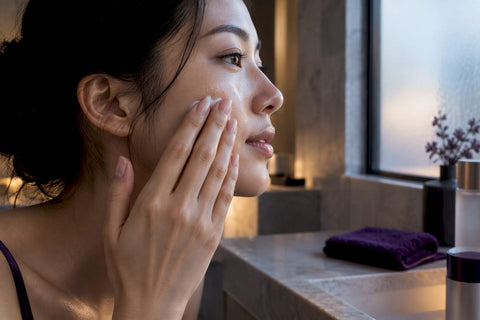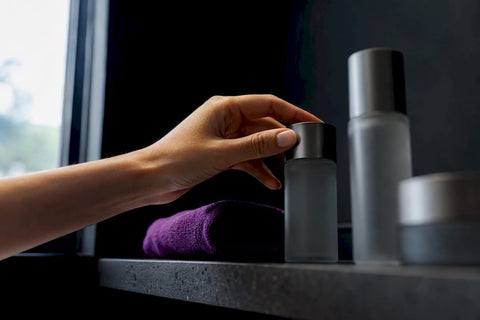
The most effective minimalist K-beauty routine has three steps: cleanse, moisturize, and apply sunscreen in the morning, then cleanse and repair at night. Add one targeted treatment only when your skin needs it. This core routine takes under two minutes daily, protects your skin barrier, and delivers consistent results without the guesswork of a ten-step ritual.
TL;DR:
- The routine should always include a gentle cleanser, moisturizer, and broad-spectrum SPF in the morning, and a cleanser and repair product at night.
- Double cleansing is only necessary after wearing makeup, heavy sunscreen, or exposure to pollution, and should be limited to 60-90 seconds total.
- Choose multi-functional products like SPF moisturizers or serums with niacinamide to reduce the number of steps and simplify the routine.
- Introduce active ingredients gradually, patch test first, and limit exfoliants and retinoids to two to three times a week to minimize irritation.
- Consistency in a basic routine outperforms complex routines by reducing ingredient conflicts, skipping steps, and misreading irritation signals.
Table of Contents
- The core 3-step routine, morning and night
- Adding a fourth step: one targeted treatment, done right
- Double cleansing and what the 4-2-4 rule gets wrong
- Choosing multi-functional products for your minimalist kit
- Adjusting the minimalist template to your skin type
- Lunara’s rules for testing new products safely
- Why simpler routines outperform complicated ones
- Where to start building your minimalist K-beauty kit
- Sources
- FAQ
The core 3-step routine, morning and night
A functional K-beauty routine does not need ten products to work. It needs three steps done well, every day, in the right order.
In the morning, start with a gentle cleanse, or simply splash your face with water if your skin was not exposed to much overnight. Follow with a moisturizer, or a moisturizer that already contains SPF if you want to fold two steps into one. Finish with a broad-spectrum sunscreen of SPF 30 or higher as your final step, since it sits on top and needs to stay on the surface to work.
At night, cleanse again, but only double cleanse if you wore makeup or heavy sunscreen that day. Follow with a moisturizer or a slightly richer repair cream to support your skin overnight.
- Apply products from lightest texture to heaviest so thinner formulas absorb before richer ones seal them in.
- Wait about a minute between a watery essence and a cream so each layer settles before the next goes on.
- Reserve double cleansing for nights with makeup, sunscreen, or heavy pollution exposure.
Most people can complete this core routine in under two minutes, which is part of why it sticks. A routine you actually finish beats one you abandon by week two.
Adding a fourth step: one targeted treatment, done right
Once your three-step routine feels automatic, you can add a single active ingredient if you have a specific concern. Acne responds well to a BHA like salicylic acid. Uneven tone often improves with niacinamide or a low-dose vitamin C. Fine lines and texture respond to a low-strength retinol introduced slowly.
- Choose one active that matches your main concern, not three that address different ones at once.
- Patch test on your inner arm or jawline for 24 to 48 hours before applying it to your whole face.
- Introduce it for two weeks before judging whether it works or causes irritation, giving your skin time to adjust.
- Use exfoliating actives only two to three times a week at first, and retinoids on alternate nights, while keeping cleanse and moisturize steps unchanged.
Pro Tip: If your skin reacts to a new active, drop back to the plain 3-step routine for a few days before trying again at a lower frequency.
Keep everything else the same while you test. If your skin flares up, moisturizer and sunscreen are the two steps you never skip while you figure out what caused it.
Double cleansing and what the 4-2-4 rule gets wrong

The 4-2-4 rule asks you to massage an oil cleanser for four minutes, follow with a water-based cleanser for two minutes, then rinse for another four. For most people, that much contact time is unnecessary and can strip more than it helps.
A more sustainable version, backed by dermatologist-recommended cleansing guidance, runs 60 to 90 seconds with an oil cleanser when you need one, followed by 30 to 60 seconds with a low-pH water-based cleanser. That is roughly two to three minutes total, not ten.
- Double cleanse only after wearing sunscreen, makeup, or heavy pollution exposure.
- Skip the oil step entirely on bare-skin days or when your skin feels reactive.
- Use lukewarm water, since hot water strips natural oils and disrupts your barrier faster than a longer cleanse does.
A dermatologist-backed alternative to the timed ritual keeps oil cleansing under 90 seconds and water-based cleansing under a minute, which reduces the risk of barrier damage that comes with prolonged scrubbing, especially for sensitive skin.
Choosing multi-functional products for your minimalist kit
The easiest way to keep a routine short is to choose products that do more than one job. An SPF moisturizer replaces two steps. A hydrating serum with niacinamide covers hydration and tone in one bottle. A gentle, low-pH cleanser removes the day without needing a separate toner to rebalance your skin afterward.
Look for these ingredients when building a minimalist kit:
- Hyaluronic acid draws water into the skin and works well under any moisturizer.
- Ceramides rebuild the barrier lipids that cleansing and sun exposure wear down.
- Niacinamide helps with tone and oil control without the irritation risk of stronger actives.
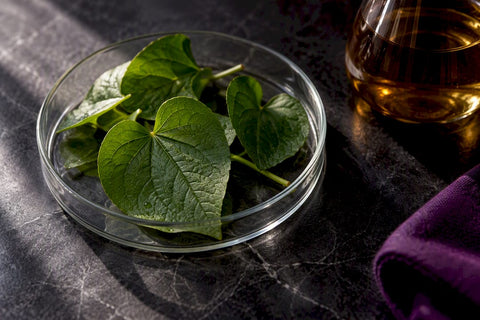
- Centella asiatica calms redness and supports recovery after a new active.
- Low-dose vitamin C brightens gradually without the instability of high-percentage formulas.
Save high-percentage vitamin C and high-strength retinoids for later, once your barrier is established. When shopping, prioritize fragrance-free formulas if you have sensitive skin, and check that cleansers sit close to your skin’s natural pH.
Pro Tip: Check your sunscreen label for “broad-spectrum” and reapply every two hours outdoors, since SPF only works as labeled when reapplied on schedule.
Adjusting the minimalist template to your skin type
The three-step frame stays the same across skin types. What changes is texture and the order of priorities.
- Dry skin: use a richer cream moisturizer, layer a hyaluronic acid serum underneath, and add an occlusive balm at night to lock in moisture.
- Oily skin: choose a lightweight gel-cream moisturizer and a non-comedogenic sunscreen, and skip heavy facial oils in your daily rotation.
- Sensitive skin: shorten or skip double cleansing most nights, choose fragrance-free formulas, and lean on ceramides and centella instead of active ingredients.
- Acne-prone skin: introduce a BHA or retinoid slowly with patch testing first, and never drop your moisturizer step while treating breakouts, since dehydrated skin can produce more oil.
Your skin type shifts the products, not the structure. Cleanse, moisturize, protect: that framework holds whether your main concern is dryness, oil, sensitivity, or breakouts.
Lunara’s rules for testing new products safely
Some retailers help K-beauty shoppers move past the ten-step myth and toward routines they will actually keep up with. The rules below come from that experience curating multi-functional Korean formulas for real skin, not showroom shelves.
- Add one new product at a time and give it two full weeks before deciding if it works.
- Patch test on your jawline or inner arm before applying anything new to your whole face.
- If irritation shows up, return to the plain 3-step routine for a few days before reintroducing anything.
- Favor multi-functional formulas that combine hydration, brightening, or SPF into fewer steps.
Dermatologists consistently point out that a simple routine followed every day outperforms a complicated one followed occasionally. Build the habit first. Add extras later, and only one at a time.
Why simpler routines outperform complicated ones
The biggest misconception about K-beauty is that more steps mean more results. In practice, the opposite tends to hold: complexity introduces more chances for ingredient conflicts, more chances to skip a step when you are tired, and more chances to misread irritation as a sign you need yet another product.
The 4-2-4 cleansing ritual is a good example of advice that sounds thorough but does not hold up to scrutiny. Four minutes of oil massage followed by four minutes of rinsing is not gentler than a 90-second version, and for many people it is harder on the barrier, not easier.
What actually moves the needle is unglamorous: a broad-spectrum sunscreen worn daily, a moisturizer that matches your skin type, and the patience to test one product at a time instead of five. Skip-care exists because it works, not because it is trendy. If you take one thing from this guide, let it be this: master the three steps before you chase a fourth.
— Lunara
Where to start building your minimalist K-beauty kit
A minimalist routine is only as good as the products behind it, and that is where a curated starting point saves you from guesswork. Look for a cleanser, a moisturizer, and a sunscreen or SPF moisturizer that work together rather than fighting for space on your shelf.

- Start with a gentle, low-pH cleanser suited to your skin type.
- Add one moisturizer that matches your texture preference, whether that is a lightweight gel or a richer cream.
- Choose an SPF moisturizer if you want to combine two AM steps into one.
- Introduce anything beyond these three slowly, one product at a time.
If you would rather skip the trial and error, our morning routine set pairs a cleanser, moisturizer, and SPF step for a ready-made minimalist kit. Browse the full face care collection to build your own version, and check available shipping options at checkout when you are ready to order.
Sources
- American Academy of Dermatology (AAD) — sunscreen and basic routine guidance
- FDA monograph: Sunscreen drug products for OTC human use
- HadaBuddy — The 4-2-4 rule: Does the K-beauty cleanse actually work?
FAQ
What is the 4-2-4 rule in skincare?
The 4-2-4 rule is a timed double-cleansing method: four minutes massaging an oil cleanser, two minutes with a water-based cleanser, then four minutes rinsing. Most dermatologists consider this excessive, recommending 60 to 90 seconds of oil cleansing and 30 to 60 seconds of water-based cleansing instead.
What is the 4-2-4 Korean skincare method?
It refers to the same timed double-cleanse ritual, sometimes marketed as a traditional K-beauty step. In practice, it is not required for effective cleansing, and a shorter version achieves the same result with less risk of barrier disruption.
What is the best minimalist skincare routine?
The best minimalist routine follows three steps: cleanse, moisturize, and apply broad-spectrum sunscreen in the morning, then cleanse and repair at night. Dermatologists note that this simple structure protects the skin barrier while covering the essentials most people need.
How do I add a new active without irritating my skin?
Introduce one new product at a time and wait about two weeks before judging its effect, patch testing first on your jawline or inner arm. Keep your cleanse, moisturize, and sunscreen steps unchanged while you test, and scale back to the basics if irritation appears.