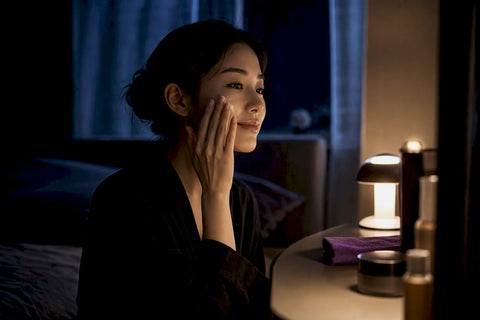
A minimal effective Korean night routine looks like this: cleanse (double cleanse if you wore makeup or sunscreen), then layer products from thinnest to thickest so each one absorbs before the next goes on. That order matters more than the number of products you use. Personalization decides what fills the middle of that sequence, since your skin type and concerns should shape which treatments you add.
TL;DR:
- Layer products from thinnest to thickest, ensuring adequate absorption and avoiding pilling or product waste.
- Introduce active ingredients like retinoids and acids gradually, limiting retinoid use to one to two nights a week and avoiding combining strong actives in one night.
- Use hydration layers such as toner, essence, and serum appropriately, matching moisturizer textures to skin type for effective sealing of moisture overnight.
- Adjust the routine based on skin type and condition, simplifying when needed to prevent over-layering and skin irritation.
- Complete the routine within 10 to 15 minutes with proper wait times, prioritizing consistency over length for optimal skin repair.
Table of Contents
- Your step-by-step nighttime sequence
- Why layering order and timing actually matter
- Which nighttime actives to use, and how often
- Hydration layers and how to seal them in overnight
- Personalize the routine to your skin type
- Faster routines for busy or traveling nights
- What dermatologists and K-beauty experts say about layering
- Fixing common nighttime skin issues
- Preparing your skin and mind before you start
- Common mistakes that undermine a night routine
- Why nighttime skincare carries more weight than your morning routine
- How long a Korean night routine actually takes
- Why Lunara believes in a flexible, barrier-first approach
- How Lunara can help you start tonight
- Sources
- FAQ
Your step-by-step nighttime sequence
The sequence below covers the full version of a Korean night routine. You don’t need every step every night, but knowing the order helps you build a routine that fits your skin.
- Oil cleanser or balm. Warm a coin-sized amount between your palms, massage over dry skin for 30 to 60 seconds to dissolve makeup and sunscreen, then rinse or wipe away. Micellar water can substitute on lighter makeup days, though a proper cleansing oil or balm tends to lift SPF more completely.
- Water-based cleanser. Follow with a gentle, low-pH cleanser suited to your skin type: a gel for oily or combination skin, a cream or foam for dry or sensitive skin. This step removes any oily residue and sweat left behind. Double cleansing is most useful for people wearing makeup or waterproof sunscreen; if you’re bare-faced, one thorough cleanse is often enough.
- Toner or essence. Pat on a hydrating toner to rebalance your skin’s pH and prep it for absorption, or reach for an essence if you want a lighter dose of active ingredients alongside hydration. Some formulas blend both functions, so you can use one or the other depending on how much hydration your skin needs that night.
- Serum or ampoule. This is where you place your targeted treatment, whether that’s a brightening vitamin C, a calming centella extract, or a night-focused active like retinol. Apply a few drops and press gently into the skin rather than rubbing.
- Eye cream. Use a rice-grain amount and pat it around the orbital bone with your ring finger, which applies the lightest pressure. Skip tugging or dragging, since the skin here is thinner than anywhere else on your face.
- Moisturizer. Choose a texture that matches your skin’s needs: a lightweight gel for oily skin, a lotion for combination skin, or a richer cream for dry skin. This step seals in everything underneath and slows water loss overnight.
- Sleeping mask or facial oil (optional). On nights when your skin feels tight or dry, finish with a sleeping mask or a few drops of facial oil as an occlusive final layer. This step isn’t nightly for everyone, but it’s useful during dry seasons, after long flights, or when your barrier needs extra support.
Each of these steps has a job, and skipping one because you’re tired is far less costly than skipping the order entirely. If you only manage three steps tonight, make them cleanse, treatment, and moisturizer.
Why layering order and timing actually matter
The rule of thumb in a Korean night routine is thin to thick: watery textures go on first so they can absorb, and heavier creams or oils go last to seal everything in. Apply a rich cream before a watery essence and you block the essence from penetrating at all, which wastes the product and its active ingredients.
A few practical habits keep layering effective:
- Wait roughly 30 to 60 seconds between layers, or until the previous product no longer feels tacky, before applying the next one.
- Press products in with your palms instead of rubbing, which helps you gauge absorption and avoids irritating the skin.
- If a layer pills or balls up under your fingers, stop layering, gently rub or blot the area, and let it fully absorb before continuing.
- When pilling keeps happening, drop back to one hydrating step instead of stacking several similar-texture products.
Exceptions exist: a thick, occlusive spot treatment sometimes goes on before a thinner layer if you’re targeting a single blemish. But as a general practice, thinnest to thickest keeps every layer doing its job.
Pro Tip: Press a product into your cheek with your palm for a few seconds. If it feels tacky or sits on the surface, give it more time before you add the next layer.
Which nighttime actives to use, and how often
Night is when your skin does most of its repair work, which is also why certain actives are reserved for after dark. Retinoids break down in sunlight and can increase sun sensitivity, so they’re applied at night and always followed by daytime sunscreen. Many exfoliating acids carry the same sun sensitivity concern, making evenings the safer window for both.
Dermatologists recommend introducing active treatments slowly and using them at frequencies your skin can tolerate, rather than layering several strong actives at once. A few working rules:
- Start retinoids at one to two nights a week, then build up gradually as your skin adjusts.
- Use AHA or BHA exfoliants a few times a week rather than nightly, since overuse can compromise your skin barrier.
- Avoid applying retinol and a strong chemical exfoliant on the same night. Alternate them instead, for example retinol on Monday and Wednesday, an exfoliating treatment on Friday.
- Pair actives with barrier-supporting ingredients like niacinamide, ceramides, and hyaluronic acid, which help offset dryness or sensitivity from treatment nights.
This alternation approach protects your barrier while still letting you use effective ingredients. If your skin ever feels tight, red, or flaky for more than a day or two, that’s a sign to scale back frequency rather than push through it. For a closer look at working niacinamide into your routine without disrupting other actives, Lunara’s niacinamide guide walks through safe pairing and timing.
Combination skin often does best alternating treatment nights with pure hydration nights, giving the barrier recovery time between actives. Sensitive skin may only tolerate one active ingredient at a time, introduced weeks apart so you can track how your skin responds to each one.
Hydration layers and how to seal them in overnight
Toner, essence, and hydrating serum sound interchangeable, but they serve different purposes. Toner preps and balances skin after cleansing. Essence delivers a lighter concentration of active ingredients with a hydration boost. A hydrating serum, by contrast, usually carries a higher concentration of a specific ingredient, like hyaluronic acid, meant to plump and hold water in the skin.
Your moisturizer texture should match your skin type:
- Gel moisturizers suit oily or acne-prone skin that needs hydration without added weight.
- Lotions work well for combination skin, balancing lightness with enough richness to prevent tightness.
- Cream moisturizers suit dry skin, offering the heavier barrier support that thinner textures can’t provide.
Sleeping masks and facial oils sit at the very end of the routine as an occlusive seal, meaning they slow water evaporation while you sleep rather than adding new hydration themselves. Apply a thin, even layer over your moisturizer and leave it on overnight instead of rinsing.
These occlusive finishers are especially useful in dry climates, during winter months, while traveling, or after a procedure that leaves skin more prone to water loss. Lunara’s guide to Korean skincare for dry skin goes deeper into building a barrier-first routine around these products. A silk pillowcase, like the 30 Momme Mulberry Silk Pillowcase from Bella Lu, can also help preserve that overnight hydration by reducing friction against your skin as you sleep.
Personalize the routine to your skin type
No single Korean night routine fits every skin type, and dermatologists caution against over-layering regardless of what a viral routine promises. Start with the minimum effective version for your skin type, then add treatments gradually.
| Skin type | Nightly minimum | Treatment frequency |
|---|---|---|
| Oily or acne-prone | Gel cleanser, lightweight essence, gel moisturizer | BHA exfoliant 2 to 3 times weekly |
| Dry | Cream cleanser, hydrating essence, rich cream moisturizer | Sleeping mask 2 to 3 nights weekly |
| Sensitive | Gentle cleanser, soothing essence, ceramide moisturizer | One active ingredient at a time, introduced weeks apart |
| Combination | Balanced cleanser, essence, lotion moisturizer | Alternate treatment nights with hydration-only nights |
| Aging-focused | Gentle cleanser, hydrating serum, retinoid, rich moisturizer | Retinoid 1 to 2 times weekly, building gradually |
When introducing anything new, patch test on your inner arm first, add one product at a time, and give it two to four weeks before judging whether it works for you. Watch for red flags like persistent redness, stinging, breakouts in new areas, or a rough, flaky texture that doesn’t improve. Any of these signals mean it’s time to pause the product rather than push through.
Faster routines for busy or traveling nights
Not every night calls for the full sequence, and a shorter routine still protects your skin when time is tight.
- Bare-minimum night: if you’re makeup-free, a single gentle cleanse, one targeted treatment, and moisturizer covers the essentials.
- Weekly extras: save sleeping masks and intensive treatments for two or three nights a week rather than trying to fit them in daily.
- Travel nights: pack a cleanser, one hydrating essence or serum, and a moisturizer with built-in barrier support, then skip the extras until you’re home.
Airplane cabins in particular dry out skin fast, so a hydrating essence and a richer moisturizer than you’d normally use can help offset that before and after a flight. The goal on any short night is repair, not completeness: a clean face and a sealed moisture barrier beat a rushed ten-step routine every time.
What dermatologists and K-beauty experts say about layering
Cleveland Clinic recommends double cleansing mainly for people who wear makeup or waterproof sunscreen, while a single thorough cleanse works for those who don’t. That distinction matters more than the total step count.
K-beauty experts interviewed by Vogue describe the so-called ten-step routine less as a fixed checklist and more as a flexible way of thinking about layering.
The “10-step” label is a misunderstanding. The routine is modular and should be adapted daily based on skin needs rather than followed as a rigid checklist.
Vogue’s reporting on the routine also notes that essences and toners overlap in function and can be swapped or combined depending on how hydrating each formula is. LunaraShopping applies that same philosophy to how it curates Korean skincare, focusing on gentle, compatible formulations rather than pushing every customer toward the same fixed sequence.
Fixing common nighttime skin issues
Most nighttime routine problems have quick fixes, but a few deserve extra caution.
- If a product pills, stop layering, gently rub or blot the area, then let it fully absorb before continuing.
- After a new breakout or irritation, stop introducing any new products and return to a simple cleanser plus barrier-repair moisturizer until your skin settles.
- Persistent redness, stinging, or breakouts that don’t improve within a week or two are worth bringing to a dermatologist rather than treating with more products.
- When in doubt, simplify. Fewer compatible products beat a longer routine with conflicting actives.
Preparing your skin and mind before you start
A few minutes of preparation makes the entire routine work better. Tie back your hair and wash your hands first, since anything transferred from your fingers can undercut a clean start. Splashing lukewarm, not hot, water on your face also helps, since very hot water strips natural oils and can leave skin drier by morning.
Treat the routine itself as a small wind-down ritual rather than a chore to rush through. Dim the lights, put your phone aside, and give each step the 30 to 60 seconds it needs to absorb instead of layering everything at once. That pacing isn’t just about the products working better, it also signals to your body that the day is winding down, which can make it easier to fall asleep afterward.
If your skin feels flushed or sensitive that evening, skip active treatments and stick to cleansing and moisturizing instead. Reacting to how your skin actually feels each night, rather than forcing the same steps regardless, is part of what makes a Korean night routine sustainable over time.
Common mistakes that undermine a night routine
A few habits quietly sabotage an otherwise solid routine. Skipping the water-based cleanse after an oil cleanser is one of the most common: the oil step alone can leave a residue that blocks the next layers from absorbing properly.
Layering too many active ingredients in one night is another frequent misstep, especially combining retinol with a strong exfoliant, which can leave skin raw and reactive rather than improved. Applying heavy creams before thinner serums is a close third, since it seals the skin before lighter products get a chance to penetrate.
Rushing through the routine without waiting between layers causes pilling and wastes product, and skipping moisturizer on treatment nights leaves the barrier under extra stress right when it needs support. Finally, adding several new products at once makes it nearly impossible to tell which one caused an improvement or a flare-up. Introducing one product at a time, however tempting a full new routine feels, saves both your skin and your patience in the long run.

Why nighttime skincare carries more weight than your morning routine
Your morning routine exists mainly to protect: cleanse, treat lightly, moisturize, and finish with sunscreen to shield skin from UV exposure and pollution during the day. Dermatologists note that vitamin A derivatives like retinol should be avoided in the morning since sunlight can inactivate them, which is part of why treatment tends to shift to the evening.
Nighttime, by contrast, is when skin isn’t fighting environmental stress and can focus on repair. That’s why retinoids, stronger exfoliants, and richer treatments belong in the evening: they get uninterrupted hours to work rather than competing with sunscreen and daytime exposure. A Korean night routine reflects that division by putting more of the corrective, barrier-building work into the PM steps, while the AM routine stays lighter and protective.
How long a Korean night routine actually takes
A full nightly sequence, done unhurried with proper wait times between layers, generally takes about 10 to 15 minutes. The double cleanse and moisturizing steps take the least time, while the pauses between serum, essence, and treatment layers make up most of that window.
On nights you’re using a sleeping mask or a retinoid treatment, add a few extra minutes since these final steps benefit from being pressed in fully rather than rushed. A shortened routine, cleanse, treatment, and moisturizer, can take as little as five minutes and still delivers the core repair benefits. The exact time matters less than consistency: a five-minute routine done nightly beats a fifteen-minute routine done twice a week.
Why Lunara believes in a flexible, barrier-first approach
We built our approach around what actually holds up over time: hydration first, actives introduced slowly, and a routine you’ll still want to do in a month. Rigid step counts rarely survive a busy week, but a barrier-first sequence, cleanser, hydrating layers, targeted treatment, moisturizer, and an occasional sleeping mask, adapts to how your skin feels each night. That flexibility is why we curate products in that same order, so building a routine from our shelves feels closer to following a plan than guessing at what comes next.
— Lunara
How Lunara can help you start tonight
You don’t need to source ten separate products from ten different brands to follow this routine well. LunaraShopping’s Face Cleansers & Scrubs, Face Toners & Mists, and Face Creams & Moisturizers collections map directly onto the steps covered above, so you can build a routine around gentle, compatible formulations from trusted Korean beauty brands without piecing it together yourself.

When you’re ready to add a sleeping mask or sheet mask into your weekly rotation, browse our Face Masks collection, and check current shipping rates before you check out.
Sources
FAQ
What is the 4-2-4 rule in skincare?
There’s no established dermatological definition of a “4-2-4 rule,” and it doesn’t appear in the clinical or K-beauty sources behind this guide. If you’ve seen it referenced online, treat it as an informal shorthand rather than a standard framework, and focus instead on the thin-to-thick layering principle covered above.
What are the steps of a Korean nightly skincare routine?
A full Korean night routine typically follows oil cleanser, water-based cleanser, toner or essence, serum or ampoule, eye cream, moisturizer, and an optional sleeping mask. Experts describe this less as a fixed count and more as a flexible layering approach you adapt based on what your skin needs that night.
What do Koreans typically apply on their face at night?
A typical nighttime lineup includes a cleanser, a hydrating toner or essence, a targeted treatment like a serum, and a moisturizer, with a sleeping mask added on nights skin needs extra hydration. Double cleansing is common first, especially for anyone removing makeup or sunscreen.
What does a Korean morning routine look like?
A Korean morning routine is lighter than the nighttime version, generally cleanser, a hydrating toner or essence, a lightweight moisturizer, and sunscreen as the final step. Dermatologists note that sunscreen is essential every morning and that stronger treatments like retinol are better saved for nighttime use.
Do I need to follow all ten steps every night?
No. Dermatologists and K-beauty experts alike frame the routine as modular, meaning you choose the steps your skin needs rather than applying every product nightly. A cleanser, one treatment, and a moisturizer cover the essentials on nights you’re short on time.