You spent real money on that vitamin C serum. You layered your routine carefully, tracked your skin’s progress, and then noticed the formula turned orange and stopped working. To store Korean skincare products properly is to protect both your investment and your results. Degradation happens faster than most people realize, and the culprits are almost always environmental. Temperature, light, humidity, and air exposure break down active ingredients at the molecular level before you even get through half a bottle. This guide walks you through exactly what to do, product by product.
Table of Contents
- Key takeaways
- How to store Korean skincare products properly
- Choosing the right storage spots
- Storing specific Korean skincare products
- Common storage mistakes and spoilage signs
- Protecting products during travel and daily use
- My honest take on skincare storage
- Build a routine worth protecting
- FAQ
Key takeaways
| Point | Details |
|---|---|
| Control your environment | Keep products cool, dry, and away from light to slow ingredient degradation. |
| Choose the right packaging | Airless pumps and opaque containers protect actives better than open jars. |
| Store by product type | Vitamin C serums and retinoids need stricter conditions than moisturizers and cleansers. |
| Watch for spoilage signs | Changes in smell, color, or texture signal product degradation before the expiry date does. |
| Travel requires extra care | Insulated pouches and sealed containers prevent damage from heat and temperature swings. |
How to store Korean skincare products properly
The technical term for what you’re trying to prevent is photochemical and oxidative degradation. That sounds complicated, but it comes down to four simple enemies: heat, light, air, and moisture. All four shorten skincare lifespan by triggering chemical reactions that break down active ingredients, alter pH, and create conditions where bacteria can thrive.
Here’s what each factor actually does to your formulas:
- Heat speeds up chemical reactions inside a product. Actives like vitamin C, niacinamide, and peptides are particularly sensitive. Even moderate warmth above 77°F (25°C) can accelerate oxidation and spoilage in ways you won’t see right away.
- Light drives photochemical oxidation. UV and visible light both degrade unstable molecules, which is why vitamins and peptides break down faster in clear packaging left on a bright countertop.
- Air exposure introduces oxygen directly to your formula. Once the seal is broken, oxidation begins. The more you expose the product to air during use, the faster that process moves.
- Humidity creates a breeding ground for microbial growth. Moist environments support bacteria and fungi, compromising both safety and formula quality over time.
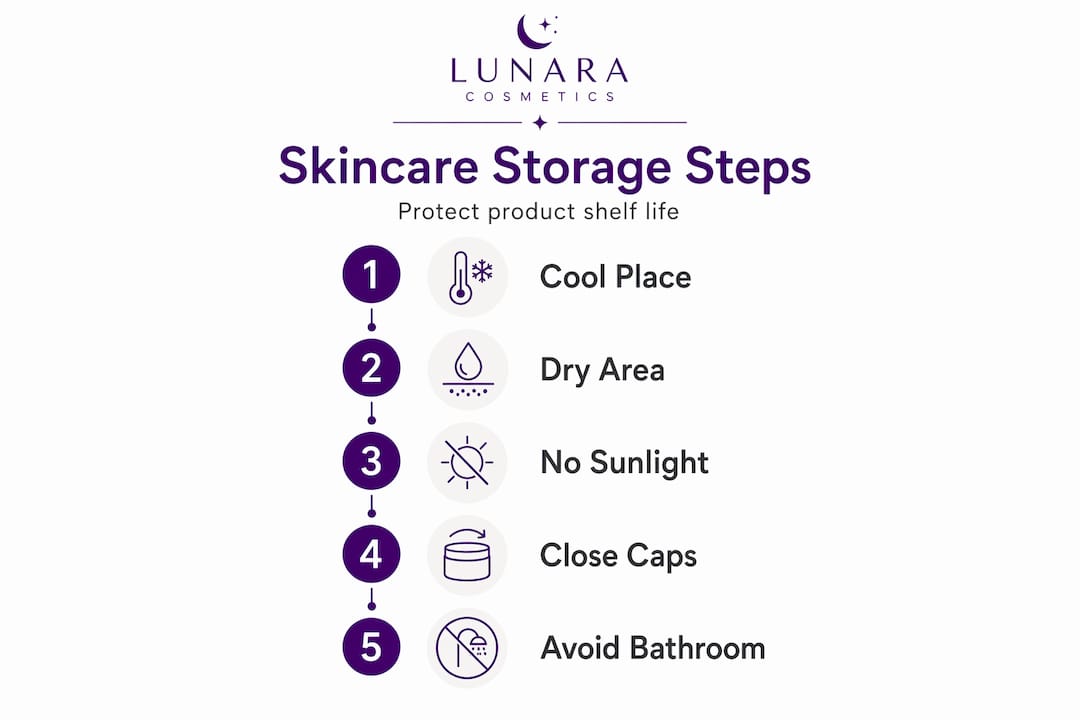
The ideal storage conditions for most Korean skincare are cool temperatures between 50°F and 70°F (10°C to 21°C), low humidity, minimal light exposure, and containers that limit air contact.
Pro Tip: If you want a reliable gauge, think of your skincare like fresh produce. A bowl of fruit on a sunny counter ripens and spoils fast. The same fruit in a cool, dark refrigerator lasts much longer. Your serums work the same way.
Choosing the right storage spots
Not every spot in your home treats your products equally. Some locations actively damage formulas without you realizing it.
Where to store and where to avoid
The bathroom counter seems like the obvious choice, but it’s often the worst one. Showers and baths generate steam that raises both temperature and humidity repeatedly throughout the day. Bathroom humidity accelerates oxidation and microbial contamination, even in products with preservatives. Windowsills expose products to direct sunlight and temperature swings. Leaving products in your car is especially damaging since interior car temperatures can exceed 130°F (54°C) in summer.
Better options exist in almost every home:
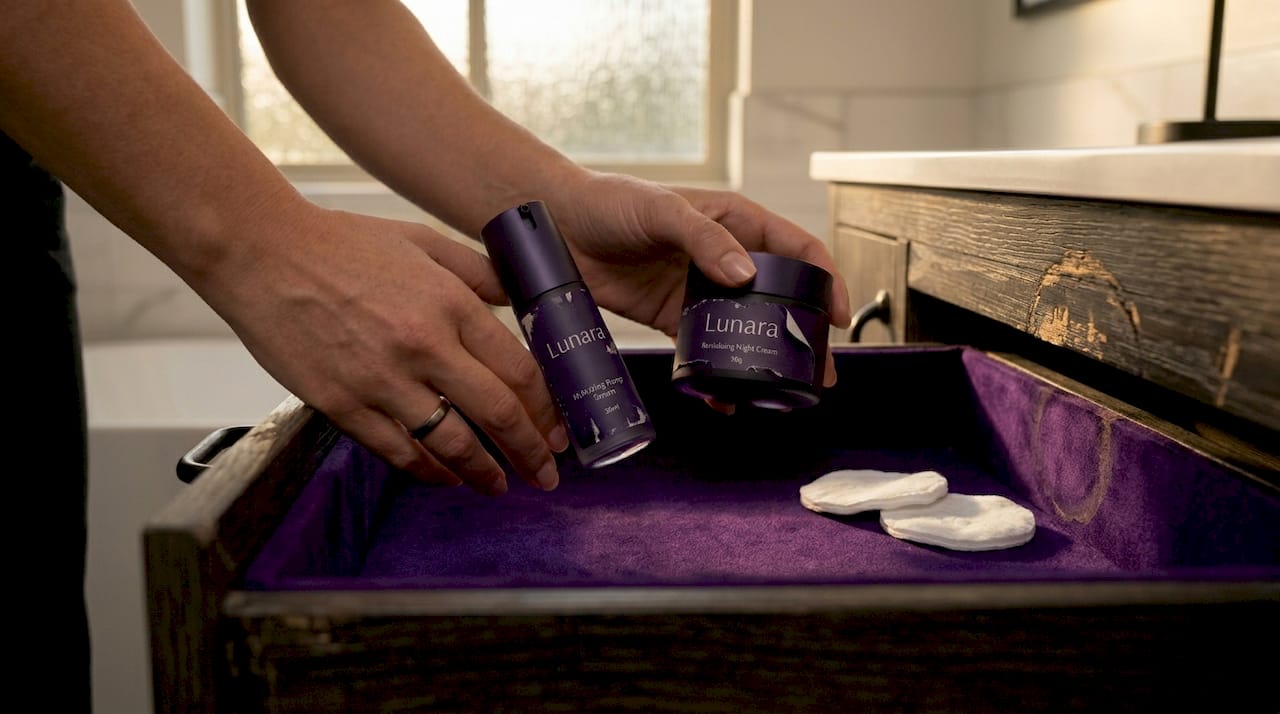
- A bedroom drawer or cabinet keeps products away from light and at a stable, cooler temperature
- A dedicated skincare organizer inside a closet works well for larger collections
- A compact skincare refrigerator, which typically maintains 40°F to 50°F (4°C to 10°C), is excellent for vitamin C serums, sheet masks, and eye creams
- If the bathroom is your only option, store products in a closed cabinet in the coolest corner, away from the shower
Storage solutions compared
| Storage option | Best for | Key benefit | Drawback |
|---|---|---|---|
| Bedroom drawer | All product types | Dark, stable, cool | No temperature control |
| Skincare fridge | Serums, eye creams, masks | Precise cool temperature | Costs money, limited space |
| Closed bathroom cabinet | Cleansers, toners | Accessible | Still humid, use with caution |
| Opaque organizer with lid | Full routine collections | Protects from light | Depends on room temperature |
When it comes to containers, airless pumps and opaque packaging outperform open jars in every clinical measure. They limit both air and light contact, which directly extends active ingredient stability. If you transfer products into secondary containers, choose ones with airtight, opaque lids and spatulas rather than finger-dipping.
Storing specific Korean skincare products
Different formulas have different vulnerabilities. Applying one-size-fits-all storage to your entire routine means you’re likely protecting some products and neglecting others.
-
Vitamin C serums. These are the most storage-sensitive products in Korean skincare. Consistent cool temperature and limiting oxygen exposure significantly prolong serum potency. Store your vitamin C serum in a dark, cool drawer or a skincare fridge. Always close the cap firmly immediately after use. If you invest in vitamin-rich formulas, airless pump packaging is worth prioritizing at purchase.
-
Retinoids and night treatments. Retinol and retinoids degrade under both light and heat. Store these in a cool, dark cabinet and never on a countertop. Keep them in their original opaque packaging whenever possible.
-
Moisturizers and cleansing oils. These are more stable than actives but still benefit from sealed, consistent storage. Keep caps fully closed between uses and store away from heat sources like radiators or bathroom steam.
-
Jar products and eye creams. Jars are the highest contamination risk in any routine. Each time you open a jar and dip your finger in, you introduce bacteria. Use a clean spatula every time. Eye creams in tube or pump packaging fare better. Store opened jars in cool, dry locations and move through them quickly once open.
-
Sunscreens. SPF products are heat-sensitive. High temperatures alter the filter chemistry and reduce protection. Store sunscreens below 77°F (25°C) and never leave them in a hot car or beach bag in direct sun for extended periods.
-
Sheet masks and hydrogel patches. These do best refrigerated. The cooling effect also provides an added soothing benefit at application time.
Pro Tip: Get into the habit of closing every cap before moving to the next step in your routine. It sounds minor, but leaving a serum open on the counter while you apply toner adds unnecessary air exposure every single day.
Common storage mistakes and spoilage signs
Most product failures are avoidable. The patterns show up repeatedly, and once you know what to look for, they’re easy to correct.
The most common mistakes include:
- Storing products on a bathroom countertop or windowsill
- Leaving caps loose or open between uses
- Decanting actives into clear glass containers and displaying them decoratively
- Ignoring a product for months past its period-after-opening (PAO) date
- Buying in bulk when you know you won’t finish the product within 6 to 12 months
Spoilage doesn’t always look dramatic. Changes in smell, color, and texture are better indicators of degradation than an expiration date on the box. A vitamin C serum turning yellow or orange has oxidized. A moisturizer that smells rancid or separated into layers has gone off. A watery product that once had a gel consistency has likely broken down. In all these cases, discontinue use.
PAO symbols (the open jar icon with a number like “12M” or “6M”) indicate how many months a product remains stable after opening. These are guidelines based on ideal storage conditions, meaning that if your storage conditions are poor, a product can degrade significantly faster than the PAO suggests.
Repeated temperature swings and improper handling reduce shelf life even in products that haven’t been opened yet. If you keep your skincare rotation tight and organized, you’ll naturally avoid the trap of forgetting products at the back of a drawer until they expire unused.
Protecting products during travel and daily use
Taking your routine on the road introduces risks that your bedroom drawer never does. Temperature swings, bag compression, and repeated opening during travel all add up.
A few practices that make a real difference:
- Pack actives and SPF products in an insulated travel pouch to buffer against heat in bags, cars, and checked luggage
- Separate your temperature-sensitive products (serums, retinoids) from heat-generating items like hair tools or electronics in the same bag
- Use mini airless travel containers instead of bringing full-size bottles when decanting is an option
- Keep packaging sealed and upright to prevent leaks that expose formulas to air and contamination
- Avoid storing products in your gym bag or car long-term, where temperatures fluctuate constantly
Pro Tip: If you’re traveling to a humid climate, storing products becomes even more critical. Tropical or beach destinations can push ambient humidity well above 70%, which is enough to visibly alter the texture of creams and accelerate microbial growth in opened products. An insulated pouch with a small silica gel pack does the job.
My honest take on skincare storage
I’ll be direct: most storage advice stops at “keep it cool and dark,” and while that’s correct, it misses the nuance that actually changes results.
In my experience, the biggest misconception is that Korean skincare products are fragile across the board. They’re not. Well-formulated moisturizers and cleansing oils are genuinely stable. The products that demand real attention are the actives: vitamin C, retinoids, AHAs, and anything with live fermentation components or unstable peptides. Those are where storage conditions make a measurable difference in whether the product delivers what it claims.
What I’ve also noticed is that packaging innovation in Korean beauty has gotten ahead of most consumers’ awareness. Many brands now use airless pump systems precisely because they’ve formulated actives that need protection from oxygen. If you understand that, you stop transferring those products into pretty glass jars for your shelf display. You keep them in their original packaging because the packaging is part of the formula’s protection system.
The practical takeaway is this: you don’t need a dedicated skincare fridge for everything. You need one or two consistent habits, a cool dark drawer, closed caps, and genuine awareness of the products that deserve extra care. That alone will extend the efficacy of your routine more than any add-on product.
Understanding how formulation and storage interact is what separates a routine that performs from one that sits on a shelf looking good but doing very little.
— Lunara
Build a routine worth protecting
If you’re going to store your Korean skincare properly, it starts with choosing products formulated to perform and packaged to last. At Lunarashopping, every item in the catalog is selected for ingredient integrity and packaging quality, from the INNISFREE Green Tea Hyaluronic Skincare Set with its antioxidant-rich formula to curated morning routine sets designed for daily consistency. Use the custom skincare kit builder to put together a personalized routine built around your skin type and storage setup. Every product ships with guidance on handling and storage so you get the results the formula was designed to deliver.
FAQ
How should I store vitamin C serums?
Store vitamin C serums in a cool, dark place such as a bedroom drawer or skincare fridge, and close the cap immediately after every use. Limiting heat, light, and oxygen exposure significantly extends serum potency.
Is the bathroom a good place to keep skincare?
The bathroom is generally a poor storage location because heat and steam accelerate oxidation and microbial growth. If it’s your only option, use a closed cabinet in the coolest spot, away from the shower.
What does the PAO symbol mean on Korean skincare?
The PAO (period-after-opening) symbol shows how many months a product is stable after you first open it. Under poor storage conditions, products can degrade faster than the PAO number indicates.
How do I know if a skincare product has gone bad?
Look for visible changes in color, smell, or texture. A serum that has changed color or a cream that smells rancid has likely degraded and should be replaced.
Do Korean skincare products need to be refrigerated?
Not all of them. Vitamin C serums, retinoids, sheet masks, and eye creams benefit from refrigeration. Stable formulas like cleansers and moisturizers do well in a cool, dark drawer at room temperature.