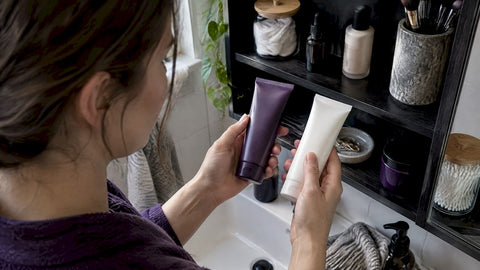
The retinol sandwich method layers moisturizer, then retinol, then moisturizer again, and it works as a short-term buffering technique for beginners, sensitive skin, or dry skin types. It slightly slows retinol absorption, which lowers the odds of stinging, redness, and peeling while your skin builds tolerance. We recommend trying it for the first few weeks of a new retinol routine, then easing toward direct application as your skin adjusts.
TL;DR:
- Using an open sandwich (moisturizer before or after retinol) helps preserve retinoid bioactivity, making it more effective than a full sandwich during long-term use.
- Starting with a full sandwich during initial retinol introduction reduces irritation, then switching to an open sandwich or direct application builds skin tolerance.
- Limiting retinol to two to three nights per week initially allows the skin to adapt and reduces the risk of prolonged irritation or damage.
- Avoid layering high-strength exfoliants on the same night as retinol and always wear sunscreen to manage increased sun sensitivity.
- Using lightweight gel moisturizers underneath and richer balms on top creates optimal layering for buffering retinol without compromising efficacy.
Table of Contents
- What is the retinol sandwich method and why it helps beginners
- Your step-by-step nighttime sandwich routine
- Open sandwich versus full sandwich: what the evidence shows
- Building frequency and troubleshooting irritation
- Safety notes: pregnancy, ingredient conflicts, and sun protection
- Which textures work best for sandwiching
- Find the right textures to start sandwiching tonight
- What beginners usually ask about the retinol sandwich
- Sources
What is the retinol sandwich method and why it helps beginners
Sandwiching works on a simple idea: a moisturizer barrier placed before and after retinol slows how fast the active ingredient reaches your skin, which softens the peak irritation that often shows up in week one or two of a new routine. This buffering effect does not cancel out retinol’s benefits; it just spreads out the intensity while your skin adjusts.
This approach fits several groups well:
- People trying retinol for the first time who want to avoid a rough start
- Anyone with naturally sensitive or reactive skin
- Dry or dehydrated skin types that flake easily under active ingredients
- People with deeper skin tones who want to reduce the risk of post-inflammatory marks from irritation
There is more than one way to buffer. A “full sandwich” surrounds retinol with moisturizer on both sides. An “open sandwich” applies moisturizer only before or only after. Some people skip sandwiching altogether and mix a drop of retinol directly into their moisturizer instead, which dilutes the product but changes the layering dynamic less than a true sandwich.
Your step-by-step nighttime sandwich routine
Cleanse your face and pat it completely dry. Damp skin absorbs more product, and a retinol layer applied to wet skin can penetrate faster than your skin is ready for, which raises irritation risk.
- Apply a thin layer of a lightweight gel or gel-cream moisturizer across your whole face as the first layer.
- Wait a minute or two, then apply a pea-sized amount of retinol, spreading it evenly and avoiding the eye area, lips, and nostrils.
- Follow with a second, richer moisturizer or an occlusive cream to seal everything in.
If certain areas, like the cheeks or around the mouth, react more than the rest of your face, you can spot-sandwich just those zones instead of covering your entire face with the full technique.
Mixing retinol directly into your moisturizer is a reasonable alternative when you want a gentler, more diluted introduction rather than distinct layers. It is less precise than sandwiching since you cannot control retinol placement as tightly, but it works well for very reactive skin that needs an even gentler start.
Pro Tip: Keep your base moisturizer fragrance-free and simple while you are still building tolerance, since added actives in that layer can complicate what is actually causing any irritation.
Choosing the right texture matters here, and our guide to building a daily moisturizing routine walks through how to pick a base layer that will not fight with your retinol.
Open sandwich versus full sandwich: what the evidence shows

Ex vivo research presented at a recent dermatology meeting compared how much retinoid activity survives different layering methods. The findings, published through the Journal of the American Academy of Dermatology, showed that a full sandwich, moisturizer on both sides of retinol, measurably reduced bioactivity, while an open sandwich, moisturizer applied only before or only after, preserved it.
The study reported that full sandwiching reduced bioactivity significantly, providing evidence that this technique tones down retinol’s strength rather than just feeling gentler.
Tretinoin and retinol bioactivity were retained when layered with an adjunctive gel-matrix or cream moisturizer in an “open sandwich” regimen, while the full sandwich arrangement reduced measured bioactivity. Journal of the American Academy of Dermatology
Read together, this suggests a practical path: use the full sandwich while you are newly starting out and still irritation-prone, then shift to an open sandwich or direct application once your skin tolerates retinol well. Some dermatologists also recommend a staging approach, applying moisturizer early in your routine, letting it fully absorb, then applying retinol 10 to 15 minutes later without re-layering moisturizer on top.
Building frequency and troubleshooting irritation
Start slow. Begin with retinol two to three nights a week, and only increase to every other night or nightly once your skin shows no lasting redness or flaking.
- If irritation shows up, pull back to fewer nights per week or shorten how long the product sits before you layer moisturizer over it.
- Spot-sandwich only the areas that react instead of treating your whole face the same way.
- Consider a lower-strength retinol product if irritation persists even with sandwiching and a slow schedule.
- Pause use entirely and let your skin recover if you see sustained burning, swelling, or broken skin.
If over-the-counter retinol never settles down even with these adjustments, that is a reasonable point to talk with a dermatologist about whether a prescription retinoid at a different strength, or a different active entirely, fits your skin better. For more on how retinol compares with other retinoid strengths, our retinol versus retinal comparison breaks down where each one fits for different experience levels.
Safety notes: pregnancy, ingredient conflicts, and sun protection
Topical tretinoin is absorbed in only small amounts through intact skin, but NCBI’s clinical monograph notes it is generally recommended to avoid it during pregnancy due to potential risk, and the same caution is commonly extended to breastfeeding. Talk with your doctor before using any retinoid if you are pregnant, trying to conceive, or nursing.
- Avoid layering high-strength AHAs or BHAs on the same night as retinol, since the combined exfoliation raises irritation risk.
- Space out strong exfoliating treatments to separate nights from your retinol routine.
- Protect sensitive zones with a thin ring of moisturizer around the eyes, sometimes called “moisturizer goggles,” and keep a simple balm on your lips to stop retinol from migrating there.
- Wear sunscreen every morning, since retinol increases sun sensitivity.
Which textures work best for sandwiching
We recommend a lightweight gel or gel-cream for your first layer since it hydrates without blocking retinol entirely, paired with a richer cream or occlusive balm on top to lock everything in. Sandwiching is meant to be a temporary onboarding step, so the goal over time is building enough tolerance to apply retinol directly. Browsing our face creams and moisturizers makes it easier to find both textures in one place as you put together a routine that fits your skin.
Find the right textures to start sandwiching tonight
Building a sandwich routine comes down to having the right pair of moisturizers on hand along with a retinol your skin can tolerate. Our Face Creams & Moisturizers collection carries both lightweight gel-creams and richer, more occlusive formulas, so you can filter by texture and build your base and top layers from one place.

- Filter by gel, gel-cream, cream, or occlusive balm to match each layer of your sandwich.
- Use our Custom Skincare Kit Builder if you would rather get paired product suggestions based on your skin type.
- If you want a stronger retinoid texture once you have built tolerance, Medik8’s r-Retinoate Day & Night Cream is one option worth knowing about for later stages.
Every order ships with flat-rate standard shipping starting at $6.49, so stocking both layers of your sandwich routine does not add unpredictable costs at checkout.
What beginners usually ask about the retinol sandwich
How long should you sandwich retinol?
Most people use the full sandwich technique for the first few weeks of a new retinol routine, then gradually shift to an open sandwich or direct application as irritation fades. There is no fixed timeline since it depends on how quickly your skin adjusts, so let your skin’s response guide the pace rather than a set calendar.
What should you never mix with retinol?
Avoid applying high-strength AHAs or BHAs on the same night as retinol, since combining strong exfoliants with a retinoid tends to intensify irritation. Space these products to separate nights instead of layering them together.
What is the 1/2/3 rule for retinol?
Definitions of this rule vary across sources, and it is not a standard dermatological guideline. A commonly cited version refers to starting with retinol once a week, then twice, then three times weekly as tolerance builds, which lines up with the gradual frequency increase we recommend for beginners.

What is the dark side of retinol?
Retinol’s main downsides are irritation, dryness, and increased sun sensitivity, especially during the first few weeks of use. These effects are usually temporary and manageable through buffering techniques like sandwiching, a slow start schedule, and consistent daily sunscreen.
Sources
- 62386 Tretinoin and Retinol Bioactivity are Retained when Layered with Adjunctive Gel-Matrix Moisturizer or a Cream Moisturizer in an “Open Sandwich” Regimen - Journal of the American Academy of Dermatology
- Topical Tretinoin (NCBI Bookshelf)
This article is general information, not a substitute for advice from a qualified doctor. Consult a qualified healthcare professional about your own circumstances before acting on anything here.