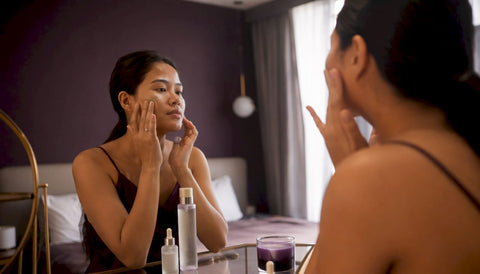
Neck creams hydrate, improve texture, and support mild firmness — and while a dedicated formula is not strictly required for everyone, your neck skin genuinely benefits from targeted care. The Cleveland Clinic confirms that neck skin is thinner, has fewer oil glands, and carries a weaker barrier than facial skin, making it more prone to irritation and dehydration. If your current facial moisturizer is gentle and low-irritant, extending it downward works well. If your facial routine includes strong acids or high-strength retinoids, a dedicated neck cream is the smarter, safer choice.
- Extend gentle facial products down to the neck and décolletage if they are fragrance-free and non-irritating.
- Choose a dedicated neck cream when your facial actives are too strong or when you want targeted firming and hydration ingredients.
- Daily SPF on the neck is non-negotiable. Sun exposure is a primary driver of premature aging in this area, and most people simply forget to apply it below the jawline.
Table of Contents
- Why does neck skin age differently than your face?
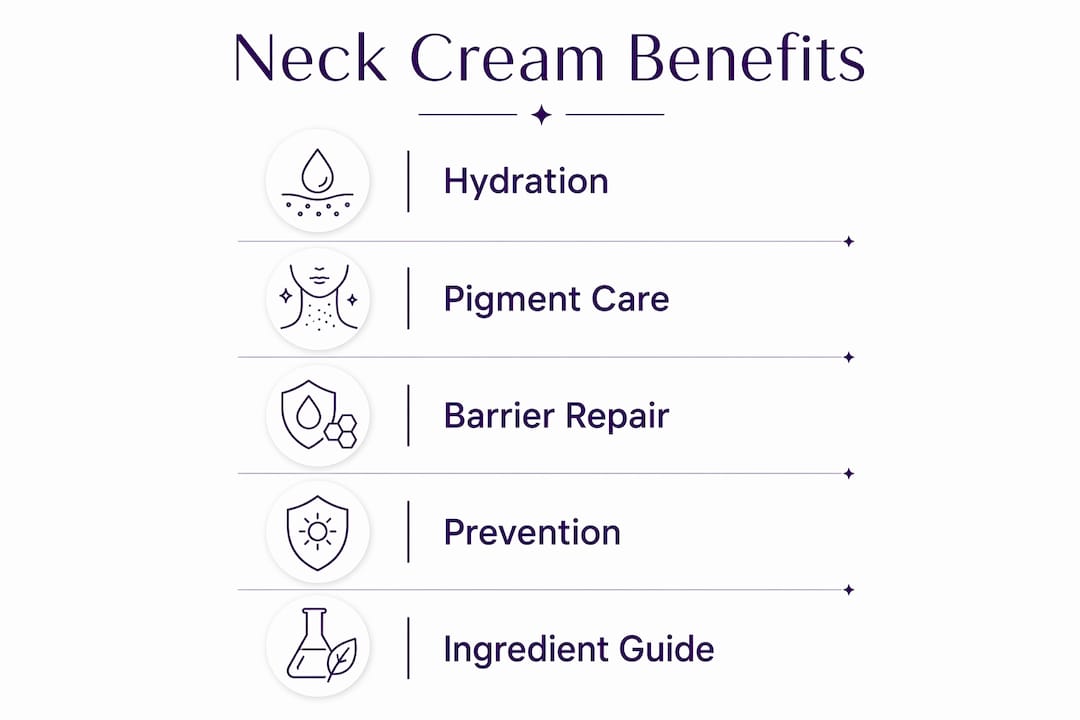
- What benefits can you realistically expect from a neck cream?
- Which ingredients should you look for in a neck cream?
- How do you apply neck cream and fit it into your daily routine?
- What can topical neck creams actually do, and when do you need a professional?
- What does the clinical evidence say about neck creams?
- Key Takeaways
- The case for treating your neck like a first-class skin concern
- Build your neck-care routine with Lunarashopping
- Useful sources for further reading
Why does neck skin age differently than your face?
The neck is not just an extension of your face. Structurally, it behaves differently, and those differences explain why the same routine that works beautifully on your cheeks can fall short here.
- Thinner epidermis and dermis. Neck skin is more extensible and shows greater loss of elasticity over time, partly because the dermis is thinner and has fewer structural appendages.
- Fewer sebaceous glands. Lower sebum secretion means the neck dries out faster and has less natural protection against environmental stressors.
- Constant movement. Turning, tilting, and looking down repeatedly creates horizontal compression lines, often called necklace lines, that deepen over time.
- Weaker barrier function. The neck is more prone to irritation, pigmentation changes, and collagen loss when exposed to potent actives.
- High cumulative sun exposure. The neck and chest receive significant UV radiation year-round, yet SPF application typically stops at the chin.
Dr. Vergara, a Beverly Hills cosmetic dermatologist, put it plainly: “The skin of the neck and the chest is more fragile than the skin of the face. The skin in these areas is thinner, has fewer sebaceous glands, and has a weaker barrier function, which makes it more prone to irritation, pigmentation changes, dryness, and collagen loss.”
These structural realities are why formulation choice matters so much for neck care. A product calibrated for oily or acne-prone facial skin may actively irritate the neck. Gentler, barrier-supportive formulas are the right starting point.
What benefits can you realistically expect from a neck cream?
The benefits of neck cream are real, but they scale with consistency and realistic expectations. Here is what regular use actually delivers.
Hydration and barrier repair are the most immediate and reliable results. Ingredients like hyaluronic acid and ceramides restore moisture and reinforce the skin barrier, producing a plumper, smoother texture within days to a few weeks of consistent use.

Improved skin texture and reduced crepiness follow with longer-term use. Crepey skin on the neck responds well to hydration and gentle collagen-supporting actives. Visible texture improvement typically takes weeks to months, not days.
Mild firmness and fine-line softening are achievable for early to moderate aging. A randomized, double-blind clinical study published in the Journal of Drugs in Dermatology found that twice-daily application of a neck cosmetic cream produced significant improvements in neck laxity, lines, crepiness, roughness, hyperpigmentation, and radiance. Crucially, those improvements were corroborated by objective cutometer measurements of firmness and elasticity, not just self-reported perception.
Statistic: The JDD study suggested the mechanisms behind these improvements include stimulation of neocollagenesis and neoelastogenesis, confirmed in in vitro 3D skin models.
Pigment and tone benefits are possible when antioxidants and brightening actives such as niacinamide or vitamin C are included in the formula. Uneven tone and sun-related hyperpigmentation on the neck respond to these ingredients over time.
Prevention is the biggest benefit of all. Consistent hydration and daily SPF delay the structural changes that eventually require in-office procedures. Starting early and staying consistent is far more cost-effective than corrective treatment later.
Which ingredients should you look for in a neck cream?
Not every active that works on your face belongs on your neck. The table below summarizes the most effective ingredients for neck skin, their roles, and key safety notes.
| Ingredient | Role | Safety Note |
|---|---|---|
| Hyaluronic acid | Moisture binding, plumping | Safe for daily use; layer under a cream to seal hydration |
| Ceramides | Barrier repair, reduces water loss | Gentle; suitable for sensitive and compromised skin |
| Low-strength retinol / retinoids | Collagen stimulation, fine-line reduction | Start every other night; ramp up slowly on neck |
| Peptides | Collagen support, firmness signaling | Well-tolerated; can be used nightly |
| Vitamin C / ferulic acid | Antioxidant protection, brightening | Use AM; pair with SPF for best results |
| Niacinamide | Tone evening, barrier support | Gentle; works well alongside ceramides and peptides |
| Panthenol / centella asiatica | Soothing, barrier calming | Ideal for reactive or post-retinoid skin |
| Fragrance | N/A | Avoid on neck; a primary irritant for thin-barrier skin |
| High-strength acids (AHA/BHA) | N/A | Use cautiously or avoid; high risk of irritation on neck |
| High-strength retinoids | N/A | Reduce strength and frequency compared with face use |
Ceramides and hyaluronic acid are the foundation of any neck-care routine. Retinoids and peptides are the most effective actives for collagen support, but the neck’s thinner barrier demands a slower, gentler approach than the face.
Pro Tip: For retinoids on the neck, start every other night for two weeks, then move to nightly only if your skin tolerates it without redness or flaking. If irritation appears, dilute by applying your neck cream first, then the retinoid on top, or drop back to twice-weekly use until your skin adjusts.
Fragrance-free formulas are strongly preferred for the neck. Fragrance is one of the most common contact irritants, and the neck’s weaker barrier makes it particularly vulnerable.
How do you apply neck cream and fit it into your daily routine?
Application technique and routine order matter as much as ingredient selection. Follow these steps for both your morning and evening routines.
Morning routine
- Cleanse your face and neck gently with a low-irritant cleanser.
- Apply an antioxidant serum (vitamin C or niacinamide) to face and neck while skin is still slightly damp.
- Apply your neck cream or moisturizer using upward strokes from the chest to the jawline. Use 1–2 fingertip amounts to cover the full neck and décolletage without rubbing or pulling.
- Finish with broad-spectrum SPF 30+ extended fully over the neck and chest. Reapply if you are outdoors for extended periods.
Evening routine
- Cleanse thoroughly to remove SPF and any residue.
- Apply a low-strength retinoid or peptide serum to the neck. On retinoid nights, use every other night initially.
- Follow with your neck cream or moisturizer to seal in actives and support the barrier overnight.
Frequency: Hydrating neck cream can and should be used twice daily. Retinoids on the neck should start at every-other-night frequency and increase only as tolerated. Peptides are generally well-tolerated nightly from the start.
Patch testing: Before introducing any new active to the neck, apply a small amount to the inner neck area and wait 24–48 hours. If redness, stinging, or flaking appears, discontinue use and return to a plain moisturizer until the skin settles. For a K-beauty routine built for mature skin, this step-by-step layering approach is especially relevant.

Pro Tip: Never apply retinoids immediately after cleansing on damp skin — the neck absorbs actives more readily when wet, which increases irritation risk. Wait two to three minutes after cleansing before applying any retinoid.
What can topical neck creams actually do, and when do you need a professional?
Topical neck creams are genuinely effective for prevention and modest improvement, but they have clear limits. Setting realistic expectations protects you from disappointment and helps you decide when to escalate care.
What topicals can do:
- Prevent and modestly improve mild laxity, crepiness, and fine lines with consistent use.
- Improve hydration and texture relatively quickly (days to weeks for hydration; 8–16 weeks for visible texture and fine-line changes).
- Support gradual, limited firmness improvements over months of consistent use.
- Delay the structural changes that eventually require procedural intervention.
What topicals cannot do:
- Reverse prominent platysmal bands (the vertical cords that appear with significant aging).
- Correct heavy sagging or significant skin redundancy.
- Replace the results of lasers, radiofrequency devices, injectables, or surgical neck lifts for deep structural changes.
Practitioners confirm that topical improvements are surface-level. Injectables, lasers, or surgery are required for deep correction. The prevention-first approach that consistent topical care enables is specifically about delaying the point at which those procedures become necessary.
When to consult a dermatologist or aesthetic provider: Persistent deep bands, rapid worsening of laxity, or any functional concern (difficulty swallowing, unusual lumps) are signals to seek professional evaluation rather than adding more products. For cosmetic concerns that topicals have not improved after four to six months of consistent use, an aesthetic provider can discuss in-office options.
The Neck & Face Lifting LED Therapy Device available at Lunarashopping is one at-home adjunct option that sits between topical-only care and in-office procedures, offering light-based support without the cost or downtime of clinical treatments.
What does the clinical evidence say about neck creams?
The strongest evidence for neck cream efficacy comes from a randomized, double-blind study published in the Journal of Drugs in Dermatology. Participants applied a neck cosmetic cream twice daily, and results showed significant improvements across neck laxity, lines, crepiness, roughness, hyperpigmentation, and radiance. Objective cutometer measurements confirmed improvements in firmness and elasticity, not just participant-reported perception. The proposed mechanisms included stimulation of neocollagenesis and neoelastogenesis in in vitro 3D skin models.
The Cleveland Clinic’s guidance aligns with this evidence: gentle facial products can be extended to the neck, but the neck’s thinner barrier demands lower-strength actives and careful formulation choices. Dermatologists view neck creams as a bridge product that allows safe delivery of anti-aging ingredients to a fragile area without the contact irritation that potent facial resurfacing products can cause.
Expert consensus from practitioners cited in The Strategist reinforces the prevention angle: consistent care and sun protection are bigger drivers of long-term neck health than cycling through multiple new actives. Retinoids remain among the most effective topical actives for collagen stimulation, but on neck skin they require lower concentrations and a slower ramp-up than on the face.
Key Takeaways
Neck creams work best as a consistent, prevention-first tool: daily SPF, barrier-supportive hydration, and low-strength actives deliver the most meaningful long-term results for neck skin.
| Point | Details |
|---|---|
| Daily SPF is the top priority | Apply broad-spectrum SPF 30+ to the neck every morning; it is the single most effective preventive step. |
| Extend or dedicate based on your routine | Gentle facial products can be extended down; use a dedicated neck cream when facial actives are too strong. |
| Core ingredients to prioritize | Look for hyaluronic acid, ceramides, peptides, and low-strength retinol; start retinoids every other night. |
| Topicals have real limits | Visible texture improvement takes several weeks to months; deep structural issues like platysmal bands require professional treatment. |
| Lunarashopping’s neck-care range | The Dr. MELAXIN and DERMATORY neck creams at Lunarashopping align directly with these ingredient and formulation guidelines. |
The case for treating your neck like a first-class skin concern
Most skincare conversations stop at the jawline, and that gap is where premature aging quietly takes hold. The neck is not a secondary concern or an afterthought. It is often the first place visible aging appears, precisely because it receives so little consistent attention.
What I find most overlooked in the neck cream conversation is the prevention math. The cost of a well-formulated neck cream used consistently over years is a fraction of what a single in-office procedure costs. The clinical evidence backs this up: twice-daily application of a targeted formula produces objective, measurable improvements in laxity and texture. That is not marketing language. That is a randomized, double-blind study with cutometer endpoints.
The other point worth making directly: you do not need a complicated, expensive neck-specific product to start. Extending your existing gentle moisturizer, adding a low-strength retinoid a few nights a week, and applying SPF every morning covers most of the evidence-based ground. A dedicated neck cream earns its place when your facial routine includes actives too strong for the neck’s thinner barrier, or when you want a formula specifically calibrated for firmness and hydration without the irritation risk.
Lunarashopping’s approach to neck care reflects exactly this thinking: gentle, evidence-minded formulations that work with the neck’s biology rather than against it. The K-beauty prevention philosophy that underpins the brand’s product selection is a natural fit for the neck, where consistent, low-irritant care consistently outperforms aggressive intervention.
Build your neck-care routine with Lunarashopping
Your neck deserves the same consistency you give your face, and Lunarashopping makes it straightforward to build a routine that actually delivers.

For a complete AM/PM approach, two products stand out. The Dr. MELAXIN Necklinephalt Neck Cream is a specialized neck formula designed to address firmness, hydration, and the structural concerns specific to neck skin. For retinoid-based support, the DERMATORY Retinal Spicule Wrinkle & Neck Cream delivers retinal actives in a formulation calibrated for the neck’s sensitivity, making it a strong PM option for those ready to add a collagen-stimulating step. Pair either with a morning antioxidant and SPF from Lunarashopping’s morning routine set to cover the full prevention framework this article outlines.
Start with the Dr. MELAXIN neck cream for daily hydration and barrier support, introduce the DERMATORY retinal formula on alternate evenings, and extend your SPF to the neck every morning without exception. Browse the full range and build your routine at Lunarashopping.
Useful sources for further reading
- Journal of Drugs in Dermatology — Randomized, Double-Blind Neck Cream Study: The primary clinical reference for objective neck cream efficacy, including cutometer measurements and proposed neocollagenesis mechanisms.
- Cleveland Clinic — Best Skincare Ingredients for Your Neck: Dermatologist-reviewed guidance on ingredient selection, barrier differences, and when to use a dedicated neck product versus extending facial care.
- Vogue — Do You Actually Need a Neck Cream?: Practitioner perspectives on neck creams as bridge products and the limits of topical correction for structural aging.
- The Strategist (New York Magazine) — How to Treat Neck Wrinkles: Expert consensus on prevention-first neck care, retinoid ramp-up strategy, and the role of consistent routine adherence over product cycling.