Alpha hydroxy acids (AHAs) are water-soluble chemical exfoliants that loosen the bonds between dead surface cells, revealing smoother, brighter, and more even-toned skin underneath. The single most important safety rule: AHAs increase your skin’s sensitivity to UV radiation, so daily broad-spectrum sunscreen is non-optional while you use them and for at least one week after you stop. The FDA requires AHA-containing cosmetics to carry a “Sunburn Alert” on the label for exactly this reason.
Sunburn Alert: Increased sun sensitivity from AHA use can persist for up to one week after you discontinue the product. Apply SPF 30 or higher every morning, regardless of weather.
Table of Contents
- What is AHA skincare and how does it work on your skin?
- The six common AHA types and when to choose each
- AHA vs BHA: which one does your skin actually need?
- What AHAs actually do for your skin: evidence-backed benefits
- How to use AHAs safely: concentration, pH, frequency, and layering
- AHA product forms: which format fits your tolerance and goals?
- A dermatologist-aligned starter routine for introducing AHAs
- Side effects, overuse risks, and when to see a dermatologist
- Key Takeaways
- A note from Lunarashopping
What is AHA skincare and how does it work on your skin?
AHAs work at the outermost layer of the skin by breaking the chemical bonds that hold corneocytes (dead surface cells) together. Once those bonds weaken, the dead cells shed more efficiently, which accelerates cell turnover and exposes the fresher skin beneath. Because AHAs are water-soluble, they act primarily on the surface rather than penetrating into pores, which is what makes them well-suited for dry, dull, or aging skin.
With consistent, controlled use, that increased cell turnover does more than just smooth texture. Clinical reviews show that repeated exfoliation can signal deeper collagen and elastin synthesis over time, which is why dermatologists include AHAs in anti-aging protocols. The effect is gradual, not overnight, but the mechanism is well-established.
The six common AHA types and when to choose each
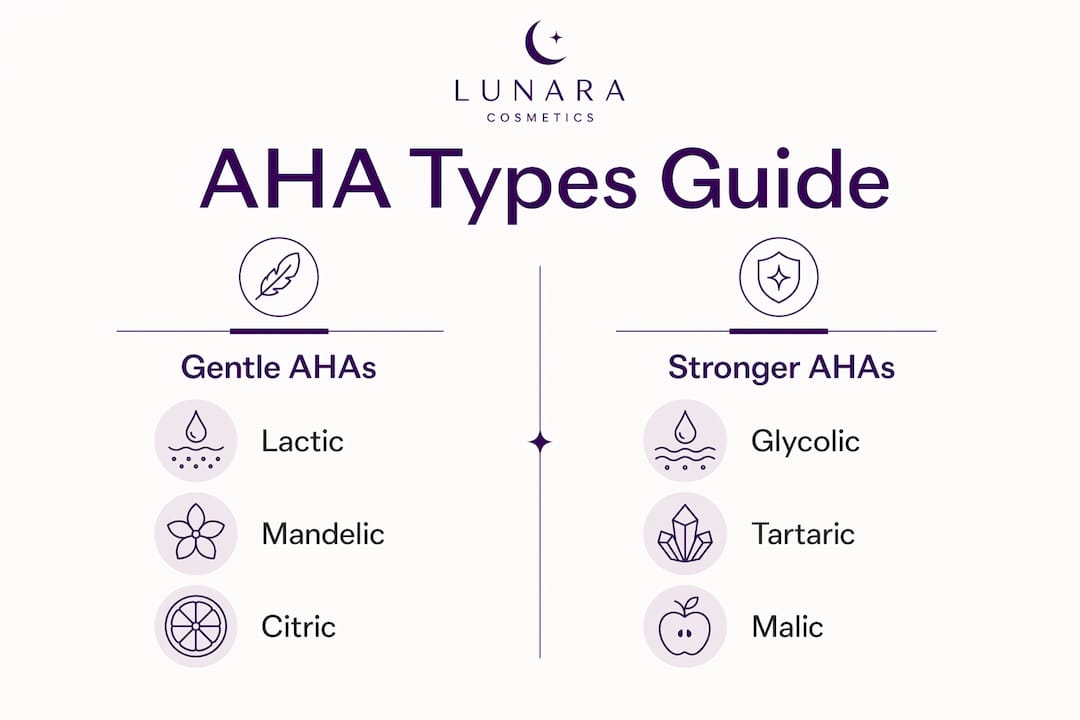
Not all AHAs behave the same way. Molecular size, natural source, and formulation pH all determine how deeply an acid penetrates and how much irritation it may cause.
- Glycolic acid (from sugar cane) has the smallest molecular size of any AHA, which means it penetrates more deeply and delivers faster results. It is the most researched option and works well for normal to oily skin with texture concerns or fine lines.
- Lactic acid (from milk) is larger than glycolic, penetrates more gently, and carries mild humectant properties that support hydration. It is a strong choice for dry or sensitive skin and is among the most well-researched OTC acids.
- Mandelic acid (from bitter almonds) has a notably larger molecule, which slows penetration and reduces irritation risk. Practitioners often recommend it for darker skin tones because it is less likely to trigger post-inflammatory hyperpigmentation.
- Citric acid (from citrus fruits) functions as both an exfoliant and a pH adjuster in formulations. It also provides antioxidant protection, though it is rarely used as a standalone active.
- Malic acid (from apples) and tartaric acid (from grapes) are poly-AHAs with multiple hydroxy groups. They appear most often in complex formulations and chemical peels, where they contribute balanced exfoliation and help stabilize pH.
Pro Tip: If you are new to AHAs or have sensitive or darker skin, start with lactic or mandelic acid at a low concentration before moving to glycolic. The gentler penetration profile gives your skin barrier time to adjust.
AHA vs BHA: which one does your skin actually need?
The core difference comes down to solubility. AHAs are water-soluble and work on the skin’s surface; BHAs (primarily salicylic acid) are oil-soluble and can travel into the pore lining to dissolve sebum and debris. That distinction shapes everything about which one fits your skin.
Choose AHAs when your concern is:
- Dry or dehydrated skin that needs surface exfoliation with hydrating support
- Uneven texture, dullness, or rough patches
- Fine lines and early signs of photoaging
- Hyperpigmentation or post-acne dark spots on the surface
Choose BHAs when your concern is:
- Oily or acne-prone skin with clogged or enlarged pores
- Blackheads and whiteheads (comedonal acne)
- Excess sebum production
Some people use both, alternating on different nights rather than layering them together. Combining strong chemical exfoliants in the same application raises the risk of barrier disruption, and pairing either acid type with prescription-strength retinoids on the same night is generally not recommended without dermatologist guidance. If you want to explore layering skincare products correctly, the sequencing matters as much as the ingredients themselves.
What AHAs actually do for your skin: evidence-backed benefits
The short answer: smoother texture, brighter tone, reduced fine lines, and better absorption of the products you apply afterward. Those outcomes are supported by clinical evidence, not just marketing copy.
- Improved surface texture: Exfoliation removes the buildup of dead cells that makes skin look dull and feel rough.
- Reduced hyperpigmentation: Regular AHA use helps fade dark spots and post-acne marks by accelerating the turnover of pigmented surface cells.
- Fine line reduction: Long-term use supports collagen and elastin synthesis, which gradually softens the appearance of fine lines.
- Brighter, more even tone: Faster cell turnover reveals newer skin layers with more uniform pigmentation.
- Enhanced product absorption: A cleared surface allows serums and moisturizers to penetrate more effectively.
- Acne adjunct: AHAs exfoliate pore openings and reduce the buildup that contributes to blemishes, though BHAs typically go deeper for active acne.
For readers building an anti-aging K-beauty routine, AHAs pair well with hydrating toners and barrier-supporting moisturizers.
How to use AHAs safely: concentration, pH, frequency, and layering
Safe AHA practice centers on three variables: concentration, pH, and how gradually you introduce the product. Get those right, and most people tolerate AHAs well.
- Check the concentration. OTC cosmetic AHAs typically feature concentrations of 10% or less. Start at the lower end (5% or below) if you are new to chemical exfoliants.
- Check the pH. Safer OTC formulas generally maintain a pH level designed to balance efficacy and reduce irritation. Lower pH increases free acid activity and irritation risk.
- Patch test first. Apply a small amount to your inner forearm or behind the ear for 24 hours before using it on your face.
- Start at 1–2 times per week. Give your skin at least two to three days between applications to assess tolerance.
- Increase frequency slowly. Only move to more frequent use after several weeks of no adverse reaction.
- Apply SPF every morning. This is not optional. Broad-spectrum SPF 30 or higher, every day, including cloudy days.
- Limit additional sun exposure for at least one week after stopping AHA use.
What not to mix: Avoid using strong retinoids, other chemical exfoliants (BHAs, enzymes), or physical scrubs on the same night as your AHA. Alternating on separate nights is the safer approach. For a complete nighttime layering guide, sequencing your actives correctly prevents most irritation issues.
Signs of over-exfoliation include persistent redness, tightness, stinging with water, or a shiny, almost raw-looking skin surface. If any of these appear, stop use immediately, switch to a gentle cleanser and plain moisturizer, and let your barrier recover before reintroducing any active.
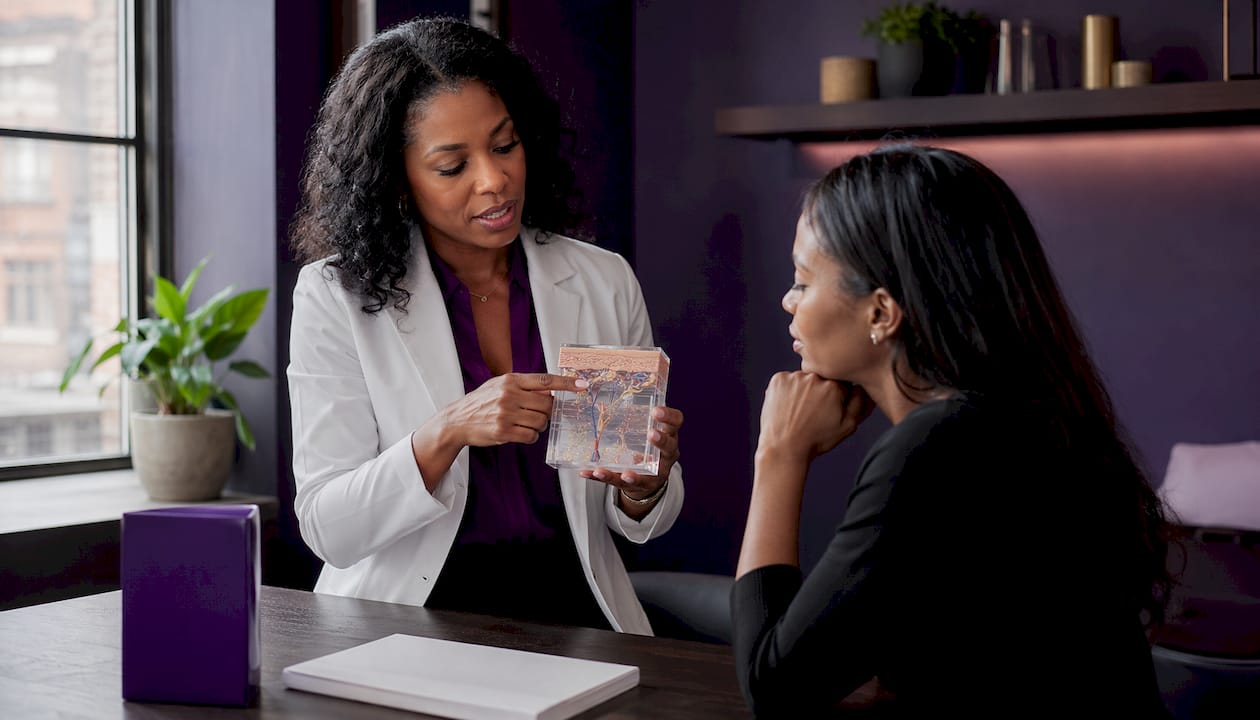
Pro Tip: A tingle is normal; a burn is not. If your AHA product causes significant burning or stinging that does not subside within a minute or two, rinse it off and choose a gentler formulation or lower concentration.
AHA product forms: which format fits your tolerance and goals?
The format you choose determines how long the acid stays in contact with your skin, which directly affects how strong the effect is.
| Product Form | Typical AHA % | Contact Time | Best For |
|---|---|---|---|
| Cleansers | 1–5% | 30 seconds | Beginners, sensitive skin |
| Toners / essences | 5–10% | Leave-on | Mild exfoliation, daily use |
| Serums / treatments | 5–10% | Leave-on | Targeted texture and tone work |
| At-home peels | 10–30% | 2–10 minutes | Experienced users, periodic resurfacing |
| In-office peels | 30% or higher | Clinician-controlled | Prescription-level correction |
- Cleansers with AHAs are the most beginner-friendly format. Short contact time limits the acid’s activity, making them a low-risk entry point.
- Leave-on toners and serums (typically 5–10% for OTC products) deliver more consistent results because the acid stays on the skin. This is the format most people use for ongoing texture and tone improvement.
- At-home peels use higher concentrations for a defined period. They require more caution and are not suitable for beginners or sensitive skin without professional guidance.
- In-office chemical peels reach concentrations well beyond OTC limits and are performed by licensed clinicians. They treat conditions like acne scarring, melasma, and significant photoaging with a level of precision that home products cannot replicate.
A dermatologist-aligned starter routine for introducing AHAs
A safe starter routine uses a low-concentration leave-on AHA or a mild serum 1–2 times per week, paired with a daily moisturizer and broad-spectrum SPF. Here is how to build that routine over eight weeks.
- Week 1–2 (Patch test and first use): Patch test your chosen product for 24 hours. If no reaction, apply a pea-sized amount to clean, dry skin on one evening. Use a gentle cleanser and moisturizer on all other nights.
- Week 3–4 (Establish tolerance): If week 1–2 showed no irritation, use the AHA twice that week. Continue daily SPF every morning without exception.
- Week 5–6 (Assess and adjust): If your skin is tolerating twice-weekly use well, you can try three times per week. If you notice any tightness or redness, stay at twice weekly.
- Week 7–8 (Maintenance): Most people find a sustainable rhythm of 2–3 times per week. At this stage, you can consider whether a slightly higher concentration or a different AHA type better fits your goals.
For product selection, the COSRX AHA 7 Whitehead Power Liquid is a well-regarded leave-on option with a 7% glycolic acid concentration, suitable for those moving past the beginner stage. For personalized picks across skin types, Lunarashopping’s Custom Skincare Kit Builder can help you match the right AHA format to your specific concerns.
Pro Tip: Apply your AHA to completely dry skin. Damp skin can increase acid penetration and raise irritation risk, especially with higher-concentration formulas.
Side effects, overuse risks, and when to see a dermatologist
Mild tingling and brief, transient redness are common when you first introduce an AHA, and they typically resolve within a few minutes. Those reactions are not a concern. What does require attention is anything that persists or worsens.
Common side effects:
- Mild tingling or warmth on application (normal, especially in the first few weeks)
- Temporary redness that fades within 15–20 minutes
- Slight dryness or flaking as dead cells shed
Signs that warrant stopping use:
- Burning or stinging that does not subside quickly
- Blistering, swelling, or significant skin peeling
- Worsening redness or a raw, compromised skin surface
Post-inflammatory hyperpigmentation (PIH) is a specific risk for darker skin tones. Strong exfoliation can trigger an inflammatory response that leaves behind dark patches, sometimes worse than the original concern. Choosing gentler AHAs like lactic or mandelic acid at lower concentrations significantly reduces this risk. Starting slowly and never skipping sunscreen are the two most effective preventive steps.
If irritation is severe, blistering occurs, or you develop worsening hyperpigmentation, stop use immediately, apply a fragrance-free barrier moisturizer, and consult a board-certified dermatologist. For readers managing acne alongside AHA use, the Korean acne care guidelines on Lunarashopping’s blog offer practical, compatible advice.
This article is general information, not medical advice. Confirm the right approach for your skin with a licensed dermatologist, especially if you have a diagnosed skin condition.
Key Takeaways
AHAs are water-soluble chemical exfoliants that improve skin texture, tone, and collagen production with consistent use, but they require daily SPF and a gradual introduction to avoid irritation.
| Point | Details |
|---|---|
| AHA definition | Water-soluble acids that break bonds between dead surface cells to smooth, brighten, and improve texture. |
| Start low and slow | Begin with 5% or less at 1–2 times per week; OTC cosmetic formulas are typically 10% or less. |
| Sunscreen is mandatory | AHA-increased sun sensitivity can last up to one week after stopping use; apply broad-spectrum SPF 30+ daily. |
| Match AHA to skin type | Lactic or mandelic for sensitive or darker skin; glycolic for normal to oily skin with texture or aging concerns. |
| Know what not to mix | Avoid combining AHAs with strong retinoids or other chemical exfoliants on the same night. |
A note from Lunarashopping
At Lunarashopping, we curate Korean skincare products specifically because K-beauty brands have long understood the value of gentle, well-formulated actives. Many of the AHA products in our collection are designed with the kind of careful pH and concentration balance that makes them accessible for first-time users and experienced skincare enthusiasts alike.
If you are ready to add an AHA to your routine, browse our full face care collection for cleansers, serums, and treatments that pair well with daily SPF. For a complete morning setup that covers your sunscreen and hydration needs alongside your AHA routine, the Morning Face Care Routine Set is a practical starting point. And if you want a guided approach, the Custom Skincare Kit Builder matches you with products suited to your skin type and goals.