Fragrance-free skincare is defined as products formulated without any added scent compounds or masking agents. For people with sensitive skin, eczema, rosacea, or contact dermatitis, the decision to choose fragrance free skincare is the single most protective step you can take against allergic reactions and chronic irritation. Fragrance compounds like limonene and linalool rank among the most common cosmetic allergens identified in dermatology reviews. This guide walks you through what the label actually means, how to spot hidden irritants in an ingredient list, and how to build a gentle routine that keeps your skin calm and healthy.
What does “fragrance-free” really mean on a skincare label?
“Fragrance-free” and “unscented” are not the same thing. This distinction matters more than most front-label claims combined.
A fragrance-free product contains no added scent, whether synthetic or natural. Fragrance-free products avoid synthetic perfumes and essential oils, while unscented products typically include masking agents that neutralize odor but still sit on your skin. Those masking agents can include benzyl alcohol, citronellol, limonene, lanolin, and various essential oils. They may not smell like anything, but they can still trigger redness, itching, and inflammation.
The confusion runs deeper because “natural” does not mean safe. Natural fragrances like lavender and citrus oils are potent contact allergens that cause inflammation and itching at rates comparable to synthetic perfumes. Many people switch to botanical-heavy products expecting relief and find their skin reacts just as badly.
Here is what to look for when reading a label:
- Fragrance-free: No added scent of any kind, synthetic or natural
- Unscented: May contain masking agents that are still allergenic
- Natural fragrance: Still a fragrance. Still a potential irritant
- Essential oils listed individually: Lavender oil, citrus extract, rose water. All count as fragrance
- “Hypoallergenic” or “sensitive skin” on the front: These claims offer no fragrance absence guarantee. Always read the ingredient list
Pro Tip: Flip the bottle before you buy. The front label is marketing. The ingredient list is the truth.
How do you identify hidden fragrance ingredients in skincare?
Fragrance hides under many names in an ingredient list. Knowing the most common ones protects you from buying a product that looks clean but still irritates your skin.
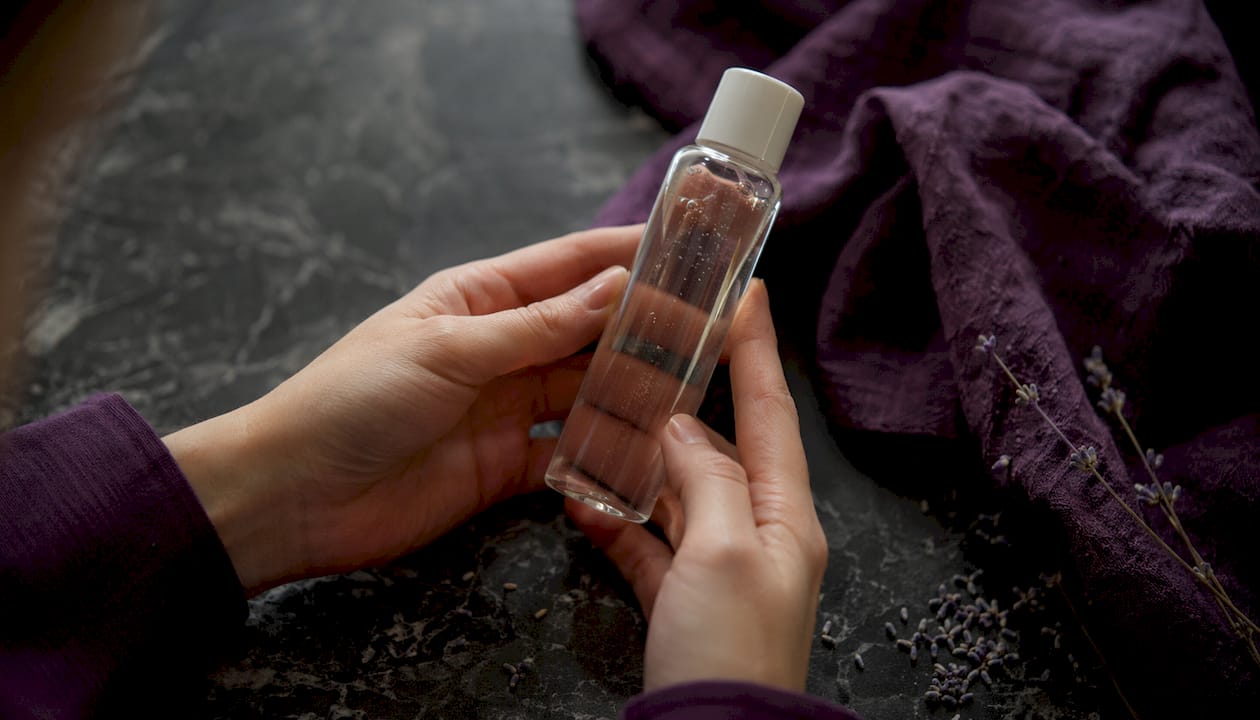
The three most common umbrella terms are “parfum,” “fragrance,” and “aroma.” Each of these is a single ingredient declaration that can legally represent a blend of dozens of individual chemicals. Brands are not required in the United States to disclose what those chemicals are. The EU takes a stricter position: European regulatory standards require the disclosure of 26 specific fragrance allergens when present above a threshold concentration. That list includes limonene, linalool, citronellol, geraniol, and eugenol, among others. If you see any of these listed individually on a product, the formula contains fragrance allergens regardless of what the front label says.
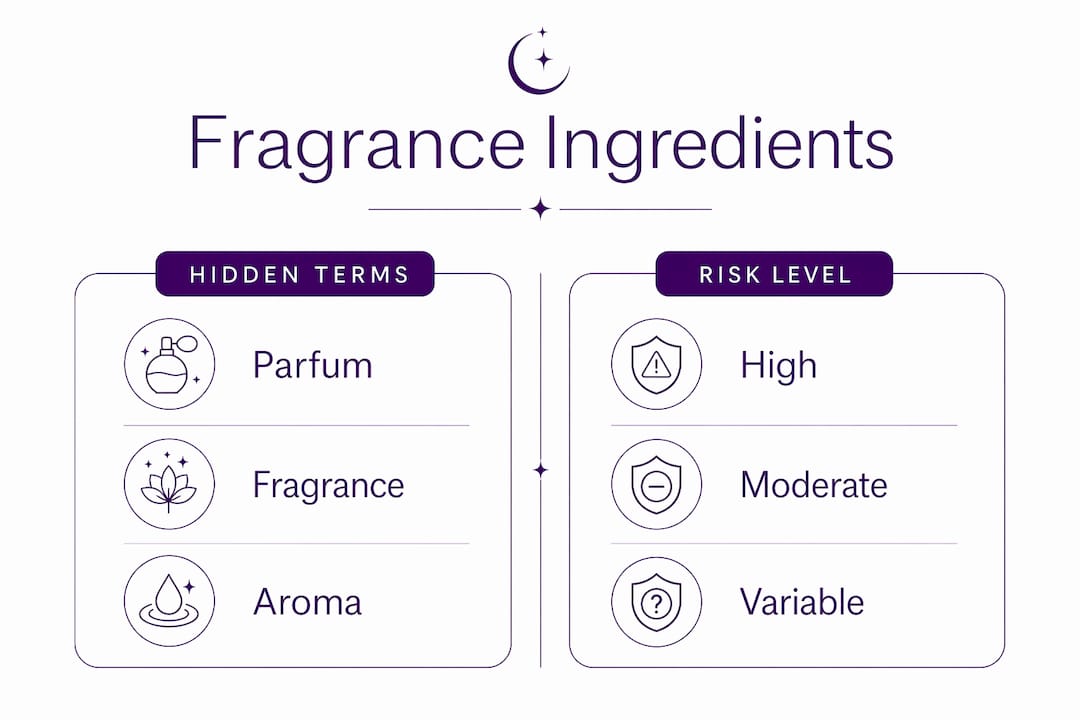
Natural botanical extracts are another hiding spot. Ingredients like chamomile extract, ylang ylang oil, bergamot oil, and sandalwood all carry fragrance allergens. They appear in products marketed as “clean” or “plant-based,” which makes them easy to overlook.
Here is a practical process for checking any product before purchase:
- Search for “parfum,” “fragrance,” or “aroma” anywhere in the ingredient list. If present, the product is not fragrance-free.
- Scan for essential oils. Any ingredient ending in “oil” or “extract” from a plant source warrants a closer look.
- Check for the EU’s 26 allergens. Limonene, linalool, and geraniol are the most frequently flagged.
- Use an ingredient checker. Tools like INCI Decoder or CosDNA let you paste a full ingredient list and flag potential irritants by category.
- Look for dermatological certifications. Labels from organizations like the National Eczema Association (NEA) in the United States indicate a product has been reviewed for known irritants.
| Term on label | What it means | Risk level for sensitive skin |
|---|---|---|
| Parfum / Fragrance / Aroma | Undisclosed scent blend | High |
| Essential oil (any) | Natural fragrance source | Moderate to high |
| Limonene, linalool | EU-listed fragrance allergens | High |
| “Unscented” | May contain masking agents | Moderate |
| “Fragrance-free” | No added scent compounds | Low |
Pro Tip: Save a photo of your current ingredient lists. When you react to a product, comparing lists helps you isolate the specific irritant faster.
How to pick the best fragrance-free skincare products for your skin
Start with leave-on products. Gradually replacing leave-on products before rinse-off ones reduces irritation risk and is more budget-friendly than overhauling your entire routine at once. Moisturizers, serums, and sunscreens stay on your skin all day. They have the most contact time and the highest potential to cause cumulative irritation. Swap those first, then address cleansers and toners.
Follow this selection process:
- Choose minimal ingredient lists. Fewer ingredients mean fewer potential triggers. A moisturizer with 10 ingredients is easier to evaluate than one with 30.
- Look for pH-balanced, dermatologist-tested formulas. These labels indicate the product has been reviewed for skin compatibility, even if they do not guarantee fragrance absence on their own.
- Prioritize barrier-supporting ingredients. Ceramides, hyaluronic acid, shea butter, and squalane support skin barrier repair and are well-tolerated by most sensitive skin types.
- Avoid drying alcohols and harsh sulfates. Ingredients like denatured alcohol (alcohol denat.) and sodium lauryl sulfate strip the skin barrier and increase sensitivity to other ingredients.
- Patch test every new product. Apply a small amount to the inner forearm or behind the ear. Wait 24–48 hours before applying to your face. This window catches delayed hypersensitivity reactions that a quick test misses.
Soothing ingredients to actively seek out include:
- Aloe vera: Calms redness and provides lightweight hydration
- Shea butter: Occlusive moisturizer that supports barrier repair
- Squalane: Lightweight oil that mimics skin’s natural sebum
- Niacinamide: Reduces redness and strengthens the skin barrier
- Centella asiatica (cica): A Korean skincare staple known for its calming and healing properties
The Korean skincare fragrance-free trend reflects a broader shift toward gentle, ingredient-focused formulas that prioritize skin health over sensory experience. Many Korean beauty brands have built their reputations on exactly this kind of minimalist, barrier-first approach.
What mistakes do people make when switching to fragrance-free skincare?
The transition to fragrance-free products is straightforward in theory. In practice, a few common errors slow progress or cause new reactions.
Confusing “unscented” with “fragrance-free” is the most frequent mistake. Products labeled “unscented” often contain masking agents like benzyl alcohol and citronellol that are still allergenic. Dermatologists warn that many of these products trigger the same reactions as openly scented ones. Always verify the ingredient list, not the front label claim.
Other pitfalls to avoid:
- Replacing everything at once. Swapping your entire routine in a single week makes it impossible to identify which product causes a reaction. Introduce one new product at a time.
- Skipping patch testing. Many people apply a new product directly to their face and assume a few hours without a reaction means it is safe. Delayed hypersensitivity reactions can appear 24–48 hours after first contact.
- Using fragrance-free products alongside strong actives without caution. Fragrance combined with retinoids or exfoliating acids increases cumulative irritation significantly. If you use retinol or AHAs, your entire routine should be fragrance-free to keep the barrier intact.
- Expecting immediate results. Skin that has been chronically irritated takes time to recover. Reduced redness and improved texture typically appear after several consistent weeks on a fragrance-free routine.
If you experience a flare-up after switching, strip your routine back to two or three products you know are safe. Reintroduce items one at a time with a full week between each addition. A night skincare routine checklist built around fragrance-free basics gives your skin the recovery time it needs between exposures.
Key Takeaways
Choosing fragrance-free skincare, not just “unscented,” is the most reliable way to reduce allergic reactions and protect a compromised skin barrier.
| Point | Details |
|---|---|
| Fragrance-free vs. unscented | Only fragrance-free products guarantee no added scent or masking agents. |
| Hidden allergens are common | Terms like parfum, aroma, and essential oils all indicate fragrance presence in an ingredient list. |
| Start with leave-on products | Replace moisturizers, serums, and sunscreens first for the greatest irritation reduction. |
| Patch test for 24–48 hours | Shorter testing windows miss delayed hypersensitivity reactions that appear after a full day. |
| Avoid fragrance with actives | Using scented products alongside retinoids or acids compounds skin barrier damage. |
What I’ve learned from years of watching sensitive skin routines
The most common pattern I see is this: someone with reactive skin spends months trying product after product, assuming the issue is their skin type. They try richer creams, lighter serums, more actives, fewer actives. The real culprit is fragrance sitting quietly in every step of their routine.
What surprises people most is that the “natural” products often cause the worst reactions. Lavender, rose, and citrus are beautiful ingredients in theory. On a compromised skin barrier, they behave like any other allergen. The marketing around botanical skincare is genuinely convincing, and I understand why people trust it. But the ingredient list does not care about the packaging.
The other thing I want to be direct about: simplicity works. A three-step fragrance-free routine built on a gentle cleanser, a barrier-supporting moisturizer, and a mineral sunscreen will outperform a ten-step routine that includes even one scented product. Your skin does not need complexity. It needs consistency and the absence of things that irritate it.
Long-term, the people who commit to fragrance-free skincare report not just less redness and fewer reactions, but a clearer understanding of what their skin actually needs. That clarity is worth more than any trending ingredient. If you want to build that kind of routine with confidence, the custom skincare kit builder at Lunarashopping is a practical place to start.
— Lunara
Fragrance-free skincare from Lunarashopping
Lunarashopping curates Korean skincare products selected for gentle, effective formulas that work for sensitive and allergy-prone skin. The focus is on ingredients that support hydration and barrier repair without added scent compounds.
The Morning Face Care Routine Set brings together fragrance-free essentials designed to simplify your daily routine without guessing which products are safe. For a broader selection of gentle facial care options, the full face care range includes cleansers, moisturizers, and targeted treatments suited to reactive skin. Each product is chosen with ingredient transparency in mind, so you spend less time decoding labels and more time seeing results.
FAQ
What is the difference between fragrance-free and unscented?
Fragrance-free products contain no added scent or masking agents. Unscented products may include chemicals like citronellol or benzyl alcohol to neutralize odor, which can still cause irritation in sensitive skin.
Can natural essential oils cause skin reactions?
Yes. Natural essential oils like lavender, citrus, and ylang ylang are recognized contact allergens. They trigger inflammation and itching at rates similar to synthetic fragrances, especially on a compromised skin barrier.
How do I patch test a new skincare product correctly?
Apply a small amount to your inner forearm or behind the ear and wait 24–48 hours before using it on your face. This window is necessary to catch delayed hypersensitivity reactions.
Is “hypoallergenic” the same as fragrance-free?
No. “Hypoallergenic” is a marketing term with no regulated definition. A product can carry that label and still contain fragrance allergens. Always check the full ingredient list.
Which skincare products should I replace with fragrance-free options first?
Start with leave-on products: moisturizers, serums, and sunscreens. These have the longest skin contact time and the highest potential to cause cumulative irritation.