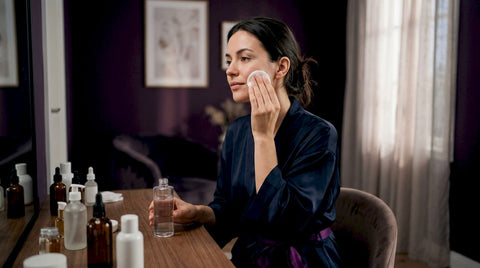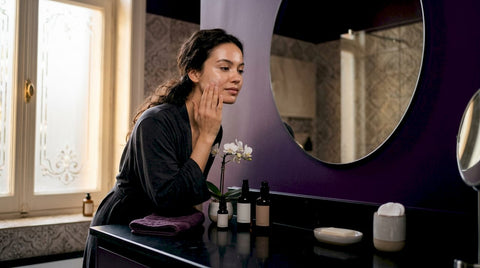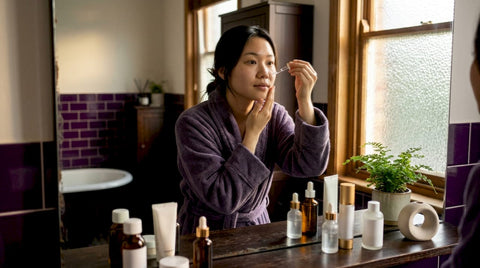
Peptide Korean ampoules are concentrated topical formulations designed to deliver signaling molecules directly into the skin, stimulating collagen synthesis and improving hydration and texture over time. The role of peptide Korean ampoule treatments in a well-structured routine is to act as intensive, short-term boosters rather than permanent daily staples. Peptides, the short chains of amino acids at the core of these products, function as biological messengers. They tell your skin to produce more collagen and elastin without forcing rapid cell turnover the way exfoliating acids do. This makes them one of the most skin-friendly actives available in Korean beauty today.
How do peptides in Korean ampoules work to improve skin?
Peptides act as signaling molecules that encourage the skin’s natural repair processes, including collagen and elastin production. They do not strip or resurface the skin. Instead, they send chemical messages that prompt fibroblasts, the cells responsible for structural proteins, to work harder. The result is gradual, cumulative improvement rather than the immediate but sometimes harsh effects of retinoids or alpha hydroxy acids.
Two of the most clinically studied peptides in Korean skincare are GHK-Cu and Matrixyl. GHK-Cu stimulates collagen types I and III synthesis and carries antioxidant properties. Matrixyl has demonstrated measurable reductions in wrinkle depth in clinical trials. These are not marketing claims. They are findings from peer-reviewed research that give peptide formulations a credible foundation.
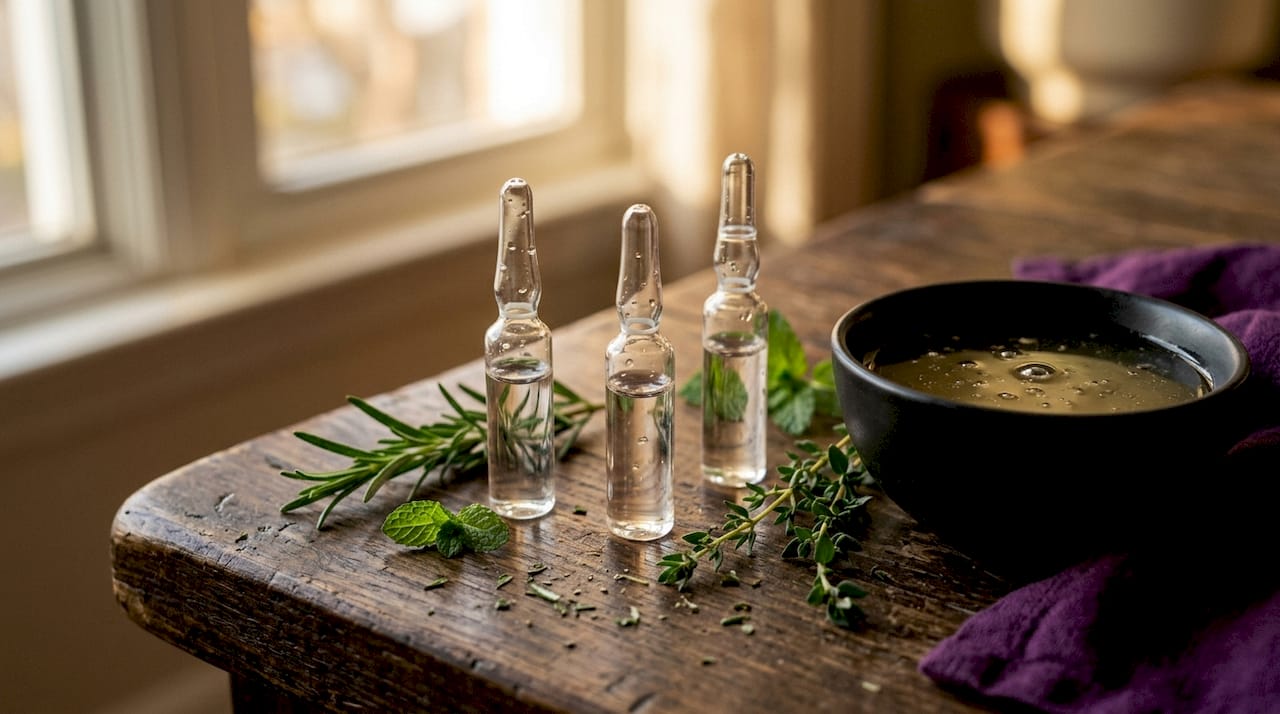
The benefits of Korean ampoules built around peptides extend beyond anti-aging. Peptides also support the skin barrier, improve moisture retention, and reduce the appearance of uneven texture. Because they work at a structural level, the improvements feel natural rather than surface-level.
Peptides carry a low irritation profile, which is why they suit sensitive skin well. Unlike retinoids, they do not cause peeling, redness, or photosensitivity. This makes them compatible with gentle Korean skincare formulas that prioritize barrier health over aggressive correction.
Key peptide benefits at a glance:
- Collagen stimulation: Encourages fibroblast activity to rebuild skin structure
- Elastin support: Helps skin maintain firmness and bounce
- Hydration improvement: Strengthens the barrier to reduce transepidermal water loss
- Anti-inflammatory action: Calms low-grade skin inflammation linked to premature aging
- Low irritation risk: Safe for sensitive, compromised, and reactive skin types
Pro Tip: If your skin reacts to retinoids or strong exfoliants, peptide ampoules are a practical alternative that still delivers structural skin improvement without the downtime.
What makes ampoules different from serums and essences?
An ampoule is defined as a supercharged, highly concentrated treatment booster used in short cycles rather than as a permanent routine step. The term comes from pharmaceutical packaging, where single-dose vials hold potent solutions. In Korean skincare, the concept translates to products with higher active concentrations than serums, typically in smaller volumes, intended for intensive use over two to four weeks.
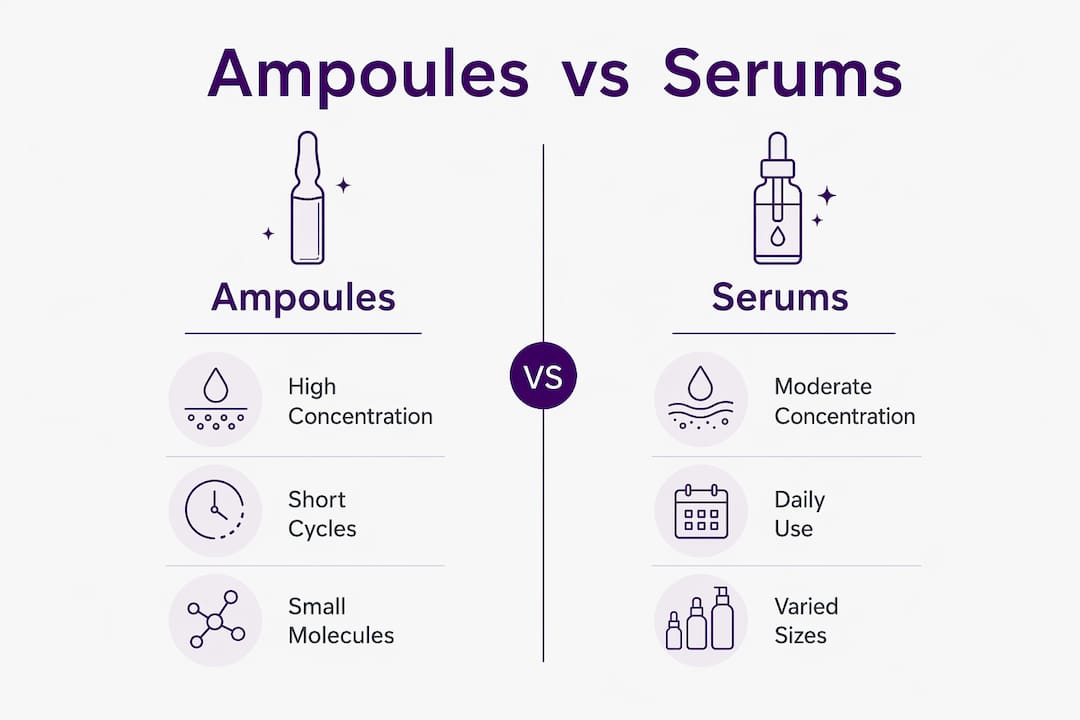
That said, the label “ampoule” carries no official regulatory definition. No governing body defines what an ampoule must contain or how concentrated it must be. This means formulations vary widely between brands. Some products labeled as ampoules genuinely deliver two to five times the active concentration of a standard serum. Others are essentially serums in different packaging. Reading the ingredient list and concentration disclosures matters more than the label alone.
The table below clarifies how ampoules, serums, and essences typically differ in practice:
| Feature | Ampoule | Serum | Essence |
|---|---|---|---|
| Active concentration | High (intensive) | Moderate | Low to moderate |
| Texture | Thin to medium | Thin to medium | Watery |
| Volume per unit | Small (5–30 ml) | Medium (30–50 ml) | Medium to large |
| Usage frequency | Cyclical (2–4 weeks) | Daily | Daily |
| Routine placement | After toner, before serum | After essence | After toner |
| Primary purpose | Intensive treatment | Targeted correction | Hydration and prep |
Ampoules sit between your essence and serum in the layering order. Their smaller molecule size and higher concentration mean they need to contact the skin before heavier products seal the surface.
Pro Tip: During an ampoule cycle, you can reduce or pause your regular serum if it contains overlapping actives. This prevents redundancy and lowers the preservative load your skin processes each day.
How to incorporate peptide ampoules into your skincare routine
A peptide ampoule works best when placed correctly in your layering sequence and used for a defined period. Follow these steps for a practical, effective peptide skincare routine:
- Cleanse thoroughly. Start with a clean face. Residue from previous products blocks absorption and reduces efficacy.
- Apply toner or essence. These prep the skin and raise surface hydration, which helps peptides absorb more evenly.
- Apply the peptide ampoule. Press two to three drops gently into the skin. Do not rub. Allow 30–60 seconds for absorption before the next step.
- Follow with your regular serum (if needed). If your serum contains niacinamide or hyaluronic acid, it layers well over peptides. Learn how to combine niacinamide effectively for best results.
- Seal with moisturizer. A good moisturizer locks in the peptide treatment and supports barrier function.
- Apply SPF in the morning. Peptides do not increase photosensitivity, but UV exposure degrades collagen and undermines the results you are building.
Timing and duration matter as much as layering order. Experts recommend using ampoules in two to four week intensive cycles during periods of skin stress, seasonal transitions, or when you want to address a specific concern. Using them indefinitely as daily staples reduces their impact and increases the risk of barrier overload.
Peptide bonds are sensitive to pH. Do not layer peptides immediately after applying AHA or BHA exfoliants. Low-pH environments cause peptide bonds to hydrolyze, which means the active molecules break down before they can work. Either alternate your exfoliant and ampoule evenings, or wait at least 20 minutes for your skin’s pH to normalize before applying the peptide step.
Over-layering multiple actives introduces redundant ingredients and excess preservatives that can overwhelm the skin barrier and trigger inflammaging, a low-grade chronic inflammation that accelerates visible aging. Limit your routine to one ampoule at a time and keep the total number of active-containing products to a manageable level.
Pro Tip: Use your peptide ampoule cycle during autumn or winter when the skin barrier is under more environmental stress. This is when the concentrated repair support delivers the most noticeable results.
What results can you expect, and how long do they take?
Visible improvements in skin texture, firmness, and hydration appear after 4–12 weeks of consistent daily use. That timeframe reflects the biology of collagen remodeling, which is a slow, structural process. Expecting overnight results from peptides sets up disappointment. Expecting a brighter, firmer, smoother finish after a full treatment cycle is realistic.
The table below maps common skin concerns to the peptide benefits that address them:
| Skin concern | How peptides help | Expected timeframe |
|---|---|---|
| Fine lines and wrinkles | Stimulate collagen I and III to plump skin structure | 8–12 weeks |
| Loss of firmness | Support elastin production and skin density | 6–12 weeks |
| Dryness and dehydration | Strengthen barrier to reduce water loss | 4–8 weeks |
| Uneven texture | Promote cell renewal signals without exfoliation | 6–10 weeks |
| Redness and sensitivity | Anti-inflammatory peptides calm barrier stress | 4–8 weeks |
The peptide approach favors long-term skin health over aggressive short-term correction. This is a meaningful distinction. Exfoliants and retinoids produce faster visible changes but carry higher irritation risk and require careful management. Peptides build results quietly and sustainably.
Additional benefits worth noting:
- Peptides carry antioxidant properties, particularly GHK-Cu, which neutralizes free radical damage alongside its collagen-stimulating role
- They support compromised skin barriers, making them suitable during recovery from over-exfoliation or after cosmetic procedures
- They work well alongside hyperpigmentation-focused routines without causing additional sensitivity
Key Takeaways
Peptide Korean ampoules deliver the most value when used as cyclical, concentrated treatments that support collagen production and barrier health rather than as permanent daily additions.
| Point | Details |
|---|---|
| Peptides are messengers, not exfoliants | They stimulate collagen and elastin without irritation or forced cell turnover. |
| Ampoules are intensive, not indefinite | Use them in 2–4 week cycles during skin stress, not as permanent routine staples. |
| pH timing protects efficacy | Avoid applying peptides immediately after AHA or BHA treatments to prevent bond breakdown. |
| Results require patience | Visible improvements in texture, firmness, and hydration take 4–12 weeks of consistent use. |
| Less layering delivers more | Limiting to one ampoule per routine prevents barrier overload and inflammaging. |
Peptide ampoules work best as tools, not rituals
I have seen a pattern repeat itself in skincare communities: people discover peptide ampoules, love the results, and then use them every single day indefinitely. The logic feels sound. If a four-week cycle improved my skin, surely daily use will keep improving it. That reasoning misunderstands how these products work.
Peptide ampoules are designed to deliver a concentrated signal during a defined window. Using them cyclically respects the skin’s own pace of collagen remodeling. Using them every day without breaks does not accelerate results. It adds preservative load, increases the chance of ingredient redundancy, and can quietly stress the barrier over months.
The Korean skincare philosophy that produced these formulations is built on barrier respect, not ingredient maximalism. The most effective peptide skincare routine I have seen is a simple one: a well-formulated cleanser, a hydrating toner, a peptide ampoule cycle every six to eight weeks, and a reliable moisturizer with SPF. That approach consistently outperforms a ten-step daily stack loaded with overlapping actives.
My honest recommendation is to treat your peptide ampoule the way a dermatologist treats a prescription treatment: with a clear start date, a clear end date, and a specific concern in mind. That discipline produces results you can actually measure.
— Lunara
Peptide skincare sets curated for your routine
Lunarashopping carries a curated selection of Korean skincare products designed to support intensive treatment cycles like the ones described here.
The morning routine sets at Lunarashopping include products formulated for hydration and texture improvement, making them a practical starting point for a peptide-focused cycle. Each set is selected for ingredient quality and formulation compatibility, so you are not guessing which products layer well together. If you prefer to build your own protocol, the full face care collection covers everything from ampoules and serums to moisturizers suited for sensitive and barrier-compromised skin. Browse both options and find what fits your current skin needs.
FAQ
What is the role of a peptide Korean ampoule?
A peptide Korean ampoule delivers concentrated signaling molecules to the skin to stimulate collagen synthesis, improve hydration, and support barrier repair. It functions as an intensive treatment booster used in short cycles rather than as a daily staple.
How often should you use a peptide ampoule?
Experts recommend using peptide ampoules in two to four week intensive cycles during periods of skin stress or seasonal change, not indefinitely every day. This approach maximizes results while protecting the skin barrier.
Can you layer a peptide ampoule with other actives?
Yes, peptides pair well with hyaluronic acid and niacinamide. Avoid applying them immediately after AHA or BHA exfoliants, since low-pH environments break down peptide bonds and reduce efficacy.
How long before you see results from peptide ampoules?
Visible improvements in skin texture, firmness, and hydration typically appear after 4–12 weeks of consistent use. Collagen remodeling is a gradual biological process, so patience and consistency are required.
Are peptide ampoules safe for sensitive skin?
Peptides carry a low irritation risk and are suitable for sensitive and compromised skin types. They do not cause peeling or photosensitivity, which makes them one of the most accessible anti-aging actives available.