
A Korean eye patch is a hydrogel or sheet mask applied directly under the eyes to deliver concentrated skincare ingredients targeting dark circles, puffiness, fine lines, and dryness. These small, crescent-shaped patches are a cornerstone of K-beauty routines and have become one of the most accessible Korean skincare eye patches available globally. Brands like Abib, Beauty of Joseon, and PRETTYSKIN have built dedicated followings around their under-eye formulas. At Lunarashopping, the selection reflects exactly this demand: targeted, ingredient-driven eye care that delivers visible results without complicated routines.
What is a Korean eye patch and how does it work?
A Korean eye patch works by holding active ingredients in sustained contact with the delicate periorbital skin, the thin tissue surrounding your eyes, for 15 to 20 minutes. The hydrogel format creates a semi-occlusive environment that enhances ingredient penetration compared to creams, which are absorbed quickly and unevenly. This extended contact time is the core mechanical advantage of patches over standard eye creams.
The hydrogel material itself is typically made from a water-based polymer gel that conforms to the under-eye contour. This fit matters because it prevents the formula from evaporating before your skin can absorb it. The result is a more efficient delivery of hydrators, brighteners, and anti-aging actives than most topical alternatives can achieve in the same timeframe.
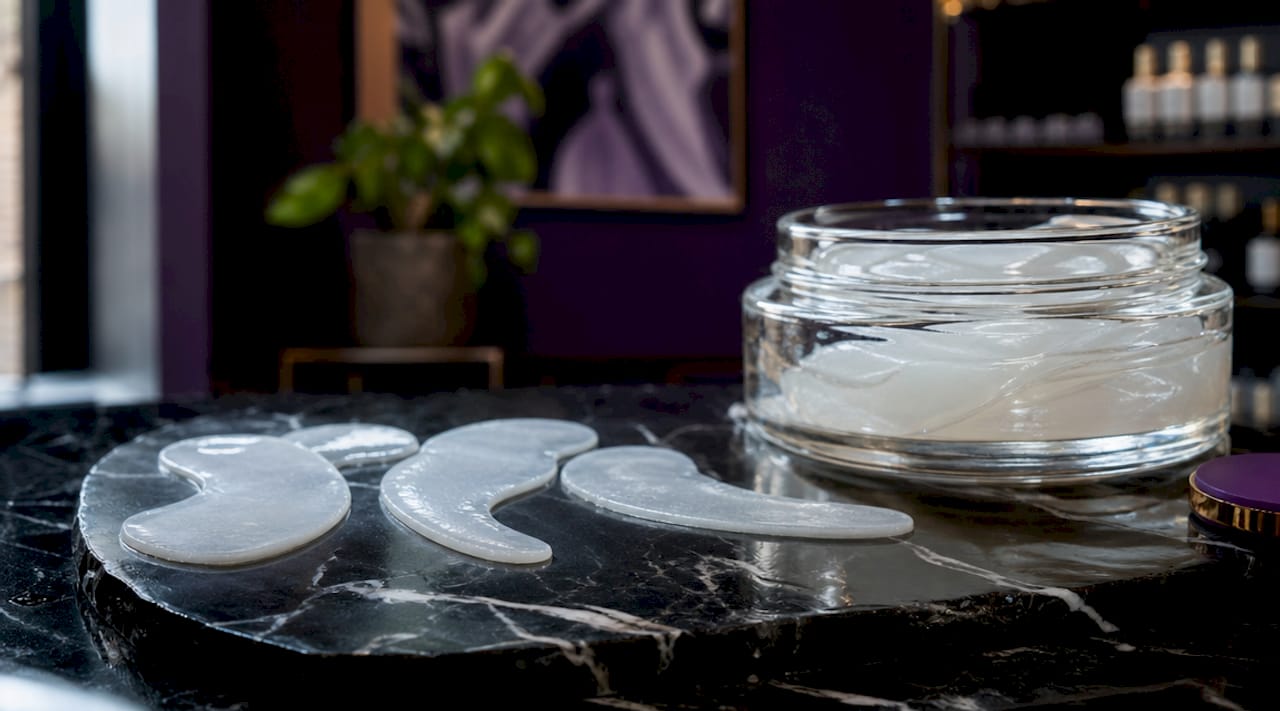
Korean beauty eye patches address four primary concerns: dehydration, hyperpigmentation-related dark circles, periorbital puffiness, and surface-level fine lines. Each concern requires a different set of active ingredients, which is why reading the label before purchasing is not optional. It is the most important step in choosing the right patch for your skin.
What ingredients are in Korean eye patches?
The ingredient list determines whether a patch actually delivers results or simply feels pleasant for 20 minutes. The most effective Korean eye patches use a layered approach, combining hydrators, brighteners, and targeted actives in a single formula.
Hydrating agents form the base of nearly every quality patch:
- Multi-weight hyaluronic acid hydrates multiple layers of under-eye skin simultaneously, providing immediate plumping and smoothness. An eye patch with multi-weight hyaluronic acid targets both the surface and deeper tissue for a fuller, smoother finish.
- Glycerin draws moisture from the environment into the skin and reinforces the hydration barrier.
- Collagen in patches primarily acts as a humectant film rather than penetrating the skin. Collagen molecules are too large to pass through the skin barrier, so their benefit is surface-level moisture retention, not structural rebuilding.
Brightening agents target hyperpigmentation and discoloration:
- Niacinamide at 2% or higher concentration inhibits melanin transfer and reduces dark circles after consistent use over 4 to 8 weeks. This timeline matters. Brightening is a cumulative effect, not an overnight fix.
- Arbutin and vitamin C derivatives work similarly, reducing oxidative discoloration over time.
Anti-aging and depuffing actives address texture and swelling:
- Peptides like Argireline signal the skin to produce more collagen and reduce the appearance of expression lines.
- Adenosine is a well-researched anti-aging ingredient recognized for improving skin firmness and reducing fine lines.
- Caffeine temporarily constricts blood vessels and reduces puffiness for several hours. It is one of the fastest-acting ingredients in any patch formula.
- Centella asiatica reduces inflammation contributing to swelling and soothes reactive skin.
Pro Tip: Check where niacinamide or caffeine appears in the ingredient list. If either falls below the fifth position, the concentration is likely too low to produce meaningful results. Fragrance and colorants near the top of the list are a red flag for sensitive skin.
How do Korean eye patches compare to other under-eye treatments?
Korean skincare eye patches occupy a specific niche between quick-fix topicals and clinical procedures. Understanding where they fit helps you use them correctly and set realistic expectations.
| Treatment | Primary benefit | Duration of effect | Best for |
|---|---|---|---|
| Hydrogel eye patches | Hydration, depuffing, brightening | Immediate to cumulative (4-8 weeks) | Daily maintenance and targeted concerns |
| Eye creams | Moisturization, gradual anti-aging | Cumulative over weeks | Long-term barrier support |
| Eye serums | High-concentration actives | Cumulative over weeks | Targeted treatment with faster absorption |
| Medical-grade options | Structural correction | Long-term or permanent | Genetic dark circles, volume loss |
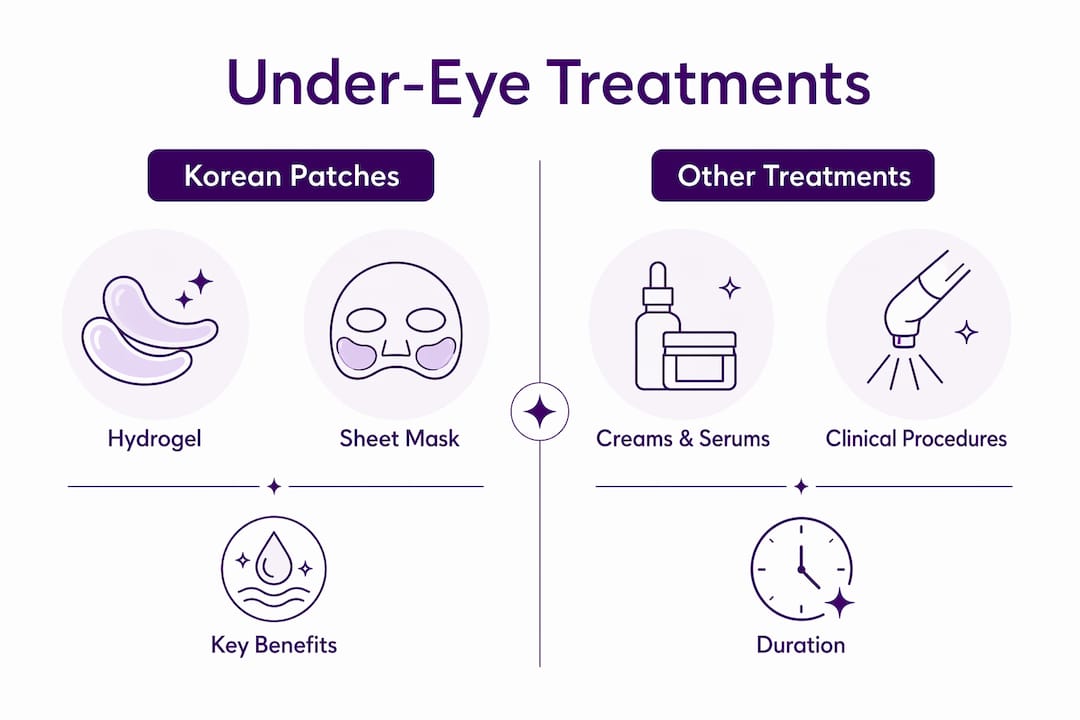
Eye creams and serums require consistent daily application over months to show measurable results. Patches accelerate ingredient delivery through their occlusive format, which means you can see hydration and depuffing effects within a single session. That said, high-quality patches cannot change genetics or bone structure-related dark circles. If your dark circles are caused by deep-set eyes or thin skin revealing underlying blood vessels, no cosmetic patch will resolve that permanently.
One common point of confusion involves the eye patches worn by K-pop idols in public. Those are medical eye patches used to treat styes, post-procedure swelling, or eye fatigue. They serve a functional medical purpose and contain no skincare actives. Cosmetic hydrogel patches are an entirely different product category.
For concerns that go beyond what topical products can address, under-eye filler or PRF EZ Gel treatments offer structural correction that patches cannot replicate. These are clinical options worth exploring if cosmetic patches have not addressed your specific concern after consistent use.
How to use Korean eye patches effectively
Proper application technique and timing determine how much benefit you actually get from each patch. Most people apply them correctly but miss the details that separate good results from great ones.
- Cleanse your face first. Apply patches to clean, dry skin. Residual sunscreen, makeup, or oils create a barrier that reduces ingredient absorption.
- Apply eye cream if using one. Layering a hydrating eye cream before the patch creates a moisture-rich base. Applying patches after eye cream at night seals in hydration and aligns with your skin’s nocturnal repair process.
- Position patches precisely. Place the curved edge flush against your lower lash line. Press gently to remove air pockets and maximize skin contact.
- Leave on for 15 to 20 minutes. Exceeding this time does not improve results and can cause mild irritation, especially with active-heavy formulas.
- Pat in remaining serum. After removing the patches, gently tap the remaining essence into the skin rather than wiping it away.
- Follow with moisturizer or eye cream. Lock in the actives with a final hydrating layer.
Frequency matters as much as technique. Hydrating patches can be used daily without concern. Patches containing retinol or peptides should be limited to 2 to 3 times weekly to avoid irritation in the thin periorbital skin. Caffeine-based depuffing patches work well 3 to 4 times per week.
Pro Tip: Store your patches in the refrigerator for a stronger immediate depuffing effect. The cold temperature amplifies the vasoconstrictive action of caffeine and botanical extracts, making chilled patches noticeably more effective for morning puffiness.
What are the best Korean eye patches in 2026?
Choosing the right patch depends entirely on your primary concern. The table below covers the top-performing options across the most common under-eye issues, based on ingredient transparency and formulation quality.
| Product | Key ingredients | Best for | Price per use |
|---|---|---|---|
| Abib Collagen Jericho Rose Jelly | Multi-weight hyaluronic acid, Jericho rose extract | Hydration, fine lines | Mid-range |
| Beauty of Joseon Revive Under Eye Patch | Ginseng, retinal (retinaldehyde) | Anti-aging, firmness | Mid-range |
| PRETTYSKIN Rice Niacinamide Hydrogel Eye Patch | Niacinamide, rice extract | Brightening, dark circles | Affordable |
| PRETTYSKIN Ginseng Retinol Hydrogel Eye Patch | Retinol, ginseng | Anti-aging, texture | Affordable |
| BONNYHILL Vita-C Eye Patch | Vitamin C derivatives, hyaluronic acid | Radiance, hydration | Affordable |
Korean eye patches typically cost $0.40 to $0.70 per treatment when purchased in 60-patch tubs. This pricing makes them significantly more accessible than many Western department store alternatives, which often charge several dollars per use for comparable actives.
For dark circles caused by hyperpigmentation, the PRETTYSKIN Rice Niacinamide patch delivers consistent brightening through its niacinamide concentration. For anti-aging concerns, the PRETTYSKIN Ginseng Retinol patch uses retinol within a hydrogel format that limits irritation by controlling exposure time. The ARONIX Hyaluronic Acid Collagen Eye Patch is a strong choice for pure hydration and plumping without active ingredients that require frequency restrictions.
If you want to understand why Korean formulations prioritize hydration so heavily, the Korean skincare hydration philosophy explains the foundational approach that makes these patches so effective.
Key takeaways
Korean eye patches deliver targeted skincare benefits through hydrogel delivery, and their effectiveness depends on matching the right active ingredients to your specific under-eye concern.
| Point | Details |
|---|---|
| Hydrogel delivery is the advantage | Semi-occlusive format keeps actives in contact with skin longer than creams or serums. |
| Ingredients determine results | Niacinamide brightens over 4 to 8 weeks; caffeine depuffs immediately; retinol improves texture with consistent use. |
| Frequency varies by formula | Hydrating patches are safe daily; retinol and peptide patches should be used 2 to 3 times weekly. |
| Collagen patches hydrate, not rebuild | Collagen molecules cannot penetrate skin; hydration comes from hyaluronic acid in the formula. |
| Patches have real limits | Genetic or structural dark circles require clinical intervention, not cosmetic patches. |
Why I think most people are using eye patches wrong
Most readers approach Korean eye patches as a quick fix applied whenever they remember. That approach produces inconsistent results and leads to the conclusion that patches “don’t work.” The reality is that patches work precisely when used with intention.
The single biggest mistake I see is ignoring application timing. Night use after eye cream is measurably more effective than morning use on bare skin because your skin’s repair cycle peaks during sleep. Using a retinol patch at night, on properly prepped skin, 2 to 3 times a week produces results that a daily morning application of the same patch simply cannot match.
The second mistake is expecting brightening results in days. Niacinamide and arbutin require 4 to 8 weeks of consistent use to visibly reduce hyperpigmentation. Switching products every two weeks because you see no immediate change is the most common reason people give up on ingredients that would have worked.
My honest recommendation: pick one patch formula aligned with your primary concern, use it consistently at the correct frequency, and give it a full 6 weeks before evaluating. Pair it with a Korean face massage technique to improve lymphatic drainage and reduce puffiness further. The combination of targeted ingredients and manual stimulation produces results that neither approach achieves alone.
— Lunara
Explore Korean eye patches at Lunarashopping
Lunarashopping carries a curated selection of Korean eye patches chosen for ingredient quality, formulation transparency, and real-world results. Whether you are addressing dark circles, puffiness, or early signs of aging, the eye care collection includes options across every concern and budget.
For a full under-eye and complexion routine, the Korean Glass Skin Routine Bundle pairs eye patches with complementary hydration and brightening products designed to work together. If you prefer a personalized approach, the Custom Skincare Kit Builder lets you select individual products matched to your skin type and concerns. Every product ships with clear usage guidance so you get results from day one.
FAQ
What does a Korean eye patch actually do?
A Korean eye patch delivers concentrated skincare actives including hyaluronic acid, niacinamide, caffeine, and peptides directly to the under-eye area through a hydrogel format that enhances absorption. Immediate effects include hydration and depuffing; brightening and anti-aging results develop over 4 to 8 weeks of consistent use.
How often should you use Korean eye patches?
Hydrating patches can be used daily, while patches containing retinol or peptides should be limited to 2 to 3 times per week to avoid irritating the thin periorbital skin. Caffeine-based depuffing patches are effective 3 to 4 times weekly.
Are Korean eye patches good for dark circles?
Korean eye patches with niacinamide at 2% or higher reduce hyperpigmentation-related dark circles after 4 to 8 weeks of consistent use. Patches cannot correct dark circles caused by genetics, bone structure, or visible blood vessels through thin skin, which require clinical treatment.
What is the difference between hydrogel and sheet eye patches?
Hydrogel eye patches are made from a water-based gel polymer that conforms closely to the under-eye contour and creates a semi-occlusive seal for better ingredient delivery. Sheet patches use a fabric or fiber material that sits on the skin but does not seal as effectively, making hydrogel the preferred format for active ingredient absorption.
Can you use Korean eye patches every day?
Hydrating formulas with hyaluronic acid and glycerin are safe for daily use. Formulas containing retinol, retinal, or high-concentration peptides should be used 2 to 3 times per week maximum to prevent irritation and allow the skin barrier to recover between applications.