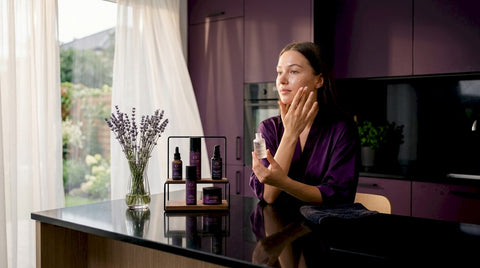
A skincare routine is a deliberate daily sequence of cleansing, moisturizing, and sun protection steps designed to maintain and improve skin health. Most people overcomplicate it. Dermatologists at Cleveland Clinic and Geisinger consistently point to three core steps as the foundation of any effective regimen: cleanse, moisturize, and apply SPF 30 or higher sunscreen. Your morning routine focuses on protection, while your nighttime routine shifts toward cleansing and cellular repair. Whether you have oily, dry, sensitive, or combination skin, the principles stay the same. Start simple, stay consistent, and build from there.
What is a skincare routine and why does it matter?
A daily skincare regimen is defined by three non-negotiable steps: cleansing to remove impurities, moisturizing to maintain the skin barrier, and applying sunscreen to prevent UV damage. Dermatologist Shilpi Khetarpal, MD, at Cleveland Clinic frames it clearly: morning routines protect, nighttime routines repair. This distinction matters because the products you choose for each window serve fundamentally different biological purposes.
The importance of skincare goes beyond appearance. A consistent routine supports the skin barrier, which is your body’s first line of defense against environmental stressors, bacteria, and moisture loss. Neglecting it leads to accelerated aging, hyperpigmentation, and chronic dryness or breakouts. Treating skin reactively costs more time and money than maintaining it proactively.

Beginners often assume they need a 10-step program to see results. That assumption is wrong. A simpler targeted routine used consistently outperforms a complicated one with many products. Fewer products mean fewer chances for ingredient clashes and skin irritation.
What are the essential steps in a basic skincare routine?
The three core steps every beginner needs are cleansing, moisturizing, and sun protection. Each step has a specific role, and skipping any one of them creates a gap in your skin’s defense and repair cycle.
-
Cleanse. Use a gentle, nonmedicated cleanser with lukewarm water in the morning and evening. Cleansing removes excess oil, sweat, pollutants, and any makeup residue. Pat your skin dry with a clean towel rather than rubbing, which can cause micro-irritation. If you wear makeup, a double cleanse at night (an oil-based cleanser followed by a water-based one) removes product buildup more thoroughly.
-
Moisturize. Apply moisturizer immediately after cleansing while skin is slightly damp. This locks in hydration and supports the skin barrier. In the morning, a lightweight lotion works for most skin types. At night, a richer cream or one containing barrier-supporting ingredients like ceramides or niacinamide helps with overnight repair.
-
Apply sunscreen. SPF 30 or higher is the minimum every morning, regardless of weather or season. UV exposure is the leading cause of premature aging and skin cancer risk. Sunscreen is the single most evidence-backed step in any skincare regimen.
Beyond these basics, your nighttime routine can include targeted treatments. Antioxidants like vitamin C and vitamin E applied in the morning help neutralize free radical damage. Retinoids, which are vitamin A derivatives, are among the most studied ingredients for reducing fine lines and improving skin texture, but they belong in the nighttime routine only because they degrade in sunlight.
Pro Tip: If you are new to retinoids, start with the lowest available concentration and use it two to three nights per week before building up. Introducing them too quickly damages the skin barrier and causes redness and peeling that many people mistake for an allergic reaction.
How should you order and layer skincare products for best results?
Product order is not a preference. It is a functional requirement. Applying products in the wrong sequence reduces their absorption and can cause irritation or render active ingredients ineffective.
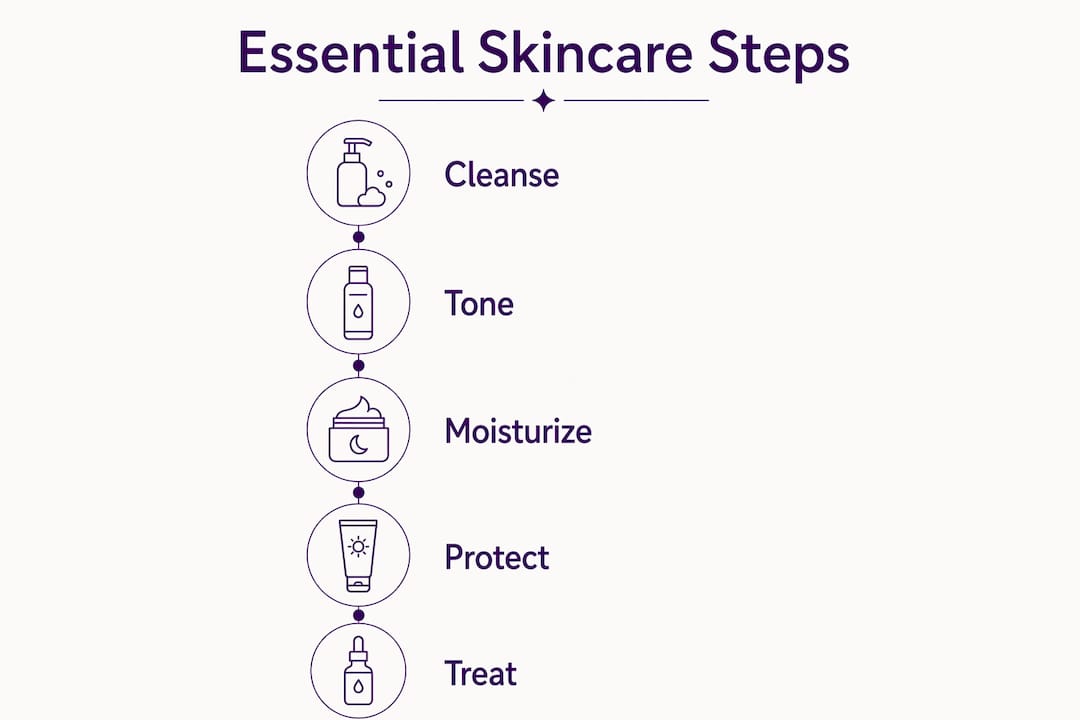
The rule is straightforward: apply from thinnest to thickest consistency. Here is the correct morning sequence:
- Cleanser (rinse off, not a leave-on product)
- Toner or essence (water-based, very lightweight)
- Serum (targeted actives like vitamin C or hyaluronic acid)
- Eye cream (if used)
- Moisturizer
- Sunscreen (always last in the morning)
For your nighttime routine, replace sunscreen with your repair or treatment products:
- Cleanser
- Toner or essence
- Treatment serum or retinoid
- Moisturizer or barrier cream
Dermatologist Sean McGregor, DO, at Cleveland Clinic notes that minimizing product counts and following correct layering order keeps routines efficient and reduces irritation risk. This is especially relevant when you start adding actives like acids or retinoids.
| Step | Morning | Evening |
|---|---|---|
| Cleanser | Gentle, nonmedicated | Gentle or double cleanse |
| Treatment | Vitamin C serum | Retinoid or acid serum |
| Moisturizer | Lightweight lotion | Richer cream or barrier repair |
| Protection | SPF 30+ sunscreen | Not needed |
Pro Tip: Sunscreen reapplication is required every two hours when you are outdoors. Water exposure reduces protection even in waterproof formulas. Carry a mineral powder SPF or a spray sunscreen for easy midday touch-ups.
How to customize a skincare routine for your skin type and goals
Skin type determines which ingredients and formulas will work for you and which will cause problems. Dr. Eduardo Ortiz, MD, at Geisinger stresses that matching products to skin type reduces irritation risk and improves outcomes for beginners.
Here is how the four major skin types translate into product choices:
- Oily skin: Look for gel-based or foaming cleansers, oil-free moisturizers, and non-comedogenic formulas. Salicylic acid (a keratolytic ingredient) is highly effective for clearing pores and controlling sebum. Avoid heavy creams that can clog pores and worsen breakouts.
- Dry skin: Prioritize hydrators like hyaluronic acid and occlusives like shea butter or squalane. Cream cleansers are gentler than foaming ones. Avoid alcohol-heavy toners, which strip moisture from an already compromised barrier.
- Combination skin: Zone-specific application works well here. Use a balancing gel moisturizer across the face and a slightly richer formula on dry patches around the cheeks and eyes.
- Sensitive skin: Fragrance-free, dye-free, and minimal-ingredient formulas are non-negotiable. Patch test every new product on your inner forearm for 24 to 48 hours before applying it to your face. Avoid physical scrubs, which cause micro-tears in reactive skin.
When adding active ingredients like retinoids, AHAs (alpha hydroxy acids like glycolic or lactic acid), or BHAs (beta hydroxy acids like salicylic acid), introduce one at a time. Wait at least four weeks before adding another. This approach lets you identify which ingredient is responsible if irritation occurs.
Patience is the most underrated part of building a skincare regimen. Visible improvements from skincare products typically require 6 to 12 weeks of consistent use. Switching products before that window closes is the most common reason people feel their routine is not working.
What common mistakes should you avoid when building your skincare routine?
Most skincare failures come from predictable, avoidable errors. Knowing them in advance saves your skin and your budget.
- Using too many products at once. Layering five or six actives simultaneously creates ingredient conflicts and makes it impossible to identify what is helping or hurting. Start with three steps and add one product at a time.
- Expecting results in days. Skin cell turnover takes approximately 28 days in younger adults and longer as you age. Judging a product after one week is not a fair test.
- Overusing strong actives. Retinoids and acids used daily from the start cause chronic irritation, redness, and barrier damage. This is especially true for teens, where overusing multiple strong ingredients leads to worsening acne and persistent redness rather than improvement.
- Confusing purging with a bad reaction. Purging is a temporary increase in breakouts caused by actives like retinoids accelerating cell turnover. It typically resolves within four to six weeks. A true reaction includes burning, swelling, or hives and requires stopping the product immediately.
- Skipping sunscreen on cloudy days. UVA rays, which cause aging and DNA damage, penetrate clouds and glass. Daily SPF use is non-negotiable regardless of season or weather.
“A simpler targeted skincare routine used consistently is often more effective than complicated ones with many products.” — Cleveland Clinic dermatologists
Teens and people with sensitive skin benefit most from a stripped-back approach: cleanser, moisturizer, and SPF. That is a complete, protective routine. Adding more does not automatically mean better results.
What are practical tips for maintaining your daily skincare routine?
Building a habit is as important as choosing the right products. A routine you skip half the time produces half the results.
- Anchor your routine to existing habits. Apply your morning skincare immediately after brushing your teeth. Do your nighttime routine right after washing your face before bed. Attaching new behaviors to existing ones makes them stick faster.
- Keep products visible and accessible. Store your routine products on the bathroom counter rather than in a cabinet. Visibility reduces friction and increases follow-through. For proper product longevity, learn how to store Korean skincare products to maintain their efficacy.
- Apply moisturizer on slightly damp skin. This technique, common in Korean skincare practice, traps residual moisture in the skin and improves hydration retention significantly.
- Use about an ounce of sunscreen on all exposed skin. Most people apply far less than needed, which reduces the actual SPF protection they receive. For your face alone, a nickel-sized amount is the minimum. Browse face sunscreen options formulated specifically for facial skin if body sunscreens feel too heavy.
- Consult a dermatologist for persistent concerns. If you experience ongoing acne, hyperpigmentation, or rosacea, a professional evaluation identifies the right actives and avoids months of trial and error. Clinics like Rituel Med Spa offer acne treatment options that complement a home routine for more stubborn cases.
Pro Tip: If budget is a concern, you do not need expensive products to build an effective routine. Check out affordable skincare essentials under $30 that cover every core step without compromising on quality.
Key takeaways
A skincare routine built on cleansing, moisturizing, and daily SPF 30+ sunscreen, applied in the correct order and matched to your skin type, delivers measurable improvements within 6 to 12 weeks of consistent use.
| Point | Details |
|---|---|
| Three core steps | Cleanse, moisturize, and apply SPF 30+ sunscreen every morning without exception. |
| Layer thinnest to thickest | Apply serums before moisturizers and always finish with sunscreen as the last morning step. |
| Match products to skin type | Oily skin benefits from salicylic acid; dry skin needs hyaluronic acid and ceramide-rich formulas. |
| Expect results in 6 to 12 weeks | Switching products too early is the most common reason routines appear ineffective. |
| Simplicity beats complexity | Three well-chosen products used consistently outperform ten products used inconsistently. |
What I have learned from years of watching skincare routines succeed and fail
The most common mistake I see is treating a skincare routine like a shopping list rather than a system. People add products because they read a positive review, not because their skin actually needs that ingredient. The result is a bathroom shelf full of half-used bottles and a face that is perpetually reactive.
What actually works is boring by comparison. A gentle cleanser, a moisturizer suited to your skin type, and a broad-spectrum SPF 30 or higher. That combination, used every single day without exception, produces better long-term results than any elaborate multi-step protocol applied inconsistently.
The second thing I have noticed is that people abandon routines right before they start working. The 6 to 12 week window for visible improvement is real, and most people quit at week three when they do not see dramatic changes. Skin does not transform overnight. It responds to sustained, repeated input over time.
My honest recommendation: build your routine around three products first. Give it 8 weeks. Photograph your skin at the start and again at week 8 in the same lighting. The difference is almost always there, even when it does not feel obvious day to day. Only after that baseline is established should you consider adding a targeted treatment like a vitamin C serum or a retinoid.
Skincare does not need to be expensive or complicated to work. It needs to be consistent.
— Lunara
Start your routine with curated Korean skincare sets
Building a routine from scratch is easier when the product selection is done for you. Lunarashopping carries the Korean Glass Skin Routine Bundle, a beginner-friendly all-in-one set that covers every core step with dermatologist-compatible formulations. Korean skincare brands are known for prioritizing hydration, barrier repair, and gentle actives, which makes them ideal for anyone starting out or resetting an overloaded routine.
If you have specific skin concerns or want to build something more personalized, the custom skincare kit builder at Lunarashopping lets you select products matched to your skin type and goals. Every kit is curated from trusted Korean beauty brands with a focus on quality and skin health.
FAQ
What is a skincare routine in simple terms?
A skincare routine is a daily sequence of steps, typically cleansing, moisturizing, and applying sunscreen, designed to maintain and improve skin health. Dermatologists at Cleveland Clinic recommend these three steps as the non-negotiable foundation for any regimen.
How many steps should a beginner skincare routine have?
A beginner skincare routine needs only three steps: cleanser, moisturizer, and SPF 30+ sunscreen in the morning. Starting simple reduces the risk of irritation and makes the habit easier to maintain consistently.
How long does it take to see results from a skincare routine?
Most skincare actives require 6 to 12 weeks of consistent use before visible improvements appear. Evaluating a product before that window closes does not give your skin enough time to respond.
What order should I apply skincare products?
Apply products from thinnest to thickest consistency. The correct morning order is cleanser, toner or serum, moisturizer, then sunscreen last. Applying sunscreen before moisturizer reduces its effectiveness.
Is a skincare routine for oily skin different from other skin types?
Yes. A skincare routine for oily skin prioritizes oil-free, non-comedogenic formulas and ingredients like salicylic acid to control sebum and clear pores. Heavy creams and occlusive ingredients that work well for dry skin can worsen breakouts on oily skin.