
Shopping for Korean beauty products online is defined by three non-negotiable factors: store authenticity, ingredient literacy, and a routine that matches your skin type. The global K-beauty market exceeded $10 billion in 2025, which means the number of retailers selling Korean skincare products has multiplied fast, and so has the risk of buying counterfeits. This shop Korean skincare online guide covers every step you need: how to verify legitimate stores, decode ingredient labels, build a starter routine, and compare prices without getting burned. Brands like COSRX, Laneige, and Innisfree are widely available across platforms like Olive Young Global and YesStyle, but knowing where and how to buy makes all the difference.
How to shop Korean skincare online without buying fakes
Counterfeit K-beauty products are a real problem, and the first line of defense is checking store credentials before you add anything to your cart. Legitimate Korean retailers display a Korean Business Registration Number in their website footer, and you can verify it directly through the Korean Fair Trade Commission website. If a store does not show this number, treat it as a red flag.
Beyond registration numbers, cross-reference the retailer against the authorized seller lists published on official brand websites. COSRX, for example, maintains a public list of approved resellers. Buying outside that list means you have no guarantee the product is genuine, even if the packaging looks identical.
Here are the core authenticity checks to run before purchasing:
- SSL certification and secure payment options (look for HTTPS and payment processors like PayPal or Stripe)
- Transparent return and refund policies clearly stated on the site
- Customer reviews on third-party platforms like Trustpilot and the r/AsianBeauty community on Reddit
- Consistent pricing that aligns with standard retail ranges. Prices significantly below the $10 to $40 typical range for Korean skincare products are a strong indicator of counterfeit or expired stock
- Brand range depth. A credible store carries at least 30 to 50 brands, and top platforms stock 100 or more
Marketplace platforms like Amazon and eBay carry genuine products from some sellers, but third-party listings on those platforms are harder to vet. Dedicated Korean beauty retailers with a focused catalog are a safer starting point.
Pro Tip: Before placing your first order, search the store name plus “review” on Reddit’s r/AsianBeauty forum. The community actively flags unauthorized sellers and shares real purchase experiences.
What types of Korean skincare stores exist and which suits you best
Not every online store operates the same way, and choosing the right type saves you money, time, and frustration. The four main categories are multi-brand retailers, direct brand websites, wholesale platforms, and general marketplaces.
| Store type | Best for | Trade-off |
|---|---|---|
| Multi-brand retailers (Olive Young Global, YesStyle, StyleKorean) | Variety, convenience, competitive pricing | Slightly higher markup than direct brand sites |
| Direct brand websites (COSRX.com, Laneige.com) | Guaranteed authenticity, early product access | Limited to one brand’s range |
| Wholesale platforms | Business buyers, bulk orders, supply chain control | Minimum order quantities, less suited for personal use |
| General marketplaces (Amazon, eBay) | Fast shipping in some regions | Harder to verify seller legitimacy |
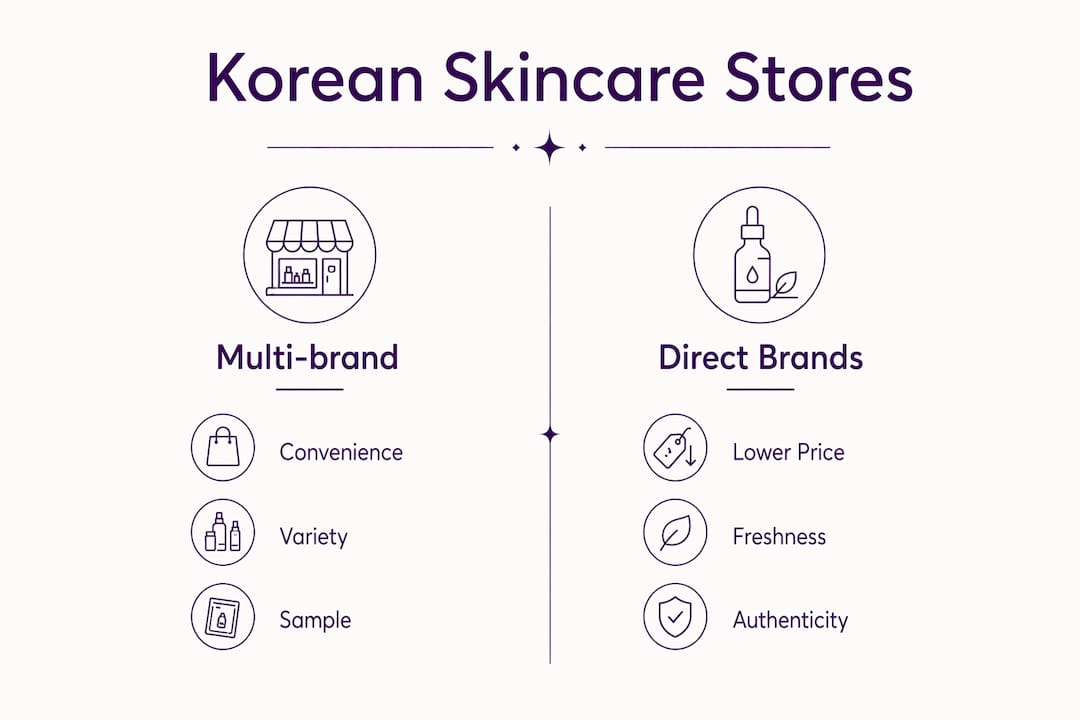
Multi-brand retailers offer convenience and variety under one roof, while direct brand sites reduce markup and give you full supply chain transparency. For most individual shoppers, a multi-brand retailer is the practical choice because you can compare products across brands and hit free shipping thresholds more easily.
If you are building a routine from scratch, multi-brand platforms let you test products from COSRX, Some By Mi, and Klairs in a single order. Direct purchasing from brands reduces markup but limits your product variety, which matters when you are still figuring out what works for your skin.
Pro Tip: Check whether the retailer lists manufacturing dates alongside expiration dates. Freshness transparency is a reliable signal of a store’s quality standards and directly affects how well active ingredients perform.
How to read Korean skincare ingredients for your skin type
Korean skincare ingredient lists follow the same descending order as Western products, meaning the first ingredient is present in the highest concentration. This single fact changes how you evaluate a product. If water is first and niacinamide is listed near the bottom, you are getting a hydrating base with a small dose of brightening actives, not a concentrated niacinamide treatment.
For sensitive skin, the ingredients at the top of the list matter most. Look for these well-tolerated, barrier-supporting actives:
- Centella asiatica (Cica): Reduces redness and supports skin repair. Found in products from Dr. Jart+ and COSRX
- Ceramides: Restore and reinforce the skin barrier, reducing transepidermal water loss
- Panthenol (Vitamin B5): A humectant that draws moisture into the skin and soothes irritation
- Hyaluronic acid: Binds water to the skin surface for immediate hydration
- Squalane: A lightweight emollient that mimics the skin’s natural sebum without clogging pores
Equally important is knowing what to avoid. Fragrance (listed as “parfum” or “fragrance”) is the most common irritant in skincare. The fragrance-free trend in K-beauty is growing for good reason: removing fragrance from formulas significantly reduces the risk of contact dermatitis and sensitization over time. Alcohol denat, essential oils like eucalyptus and peppermint, and high concentrations of exfoliating acids are also worth avoiding if your skin reacts easily.
Ingredient tip: If you see “Centella Asiatica Extract” listed in the first five ingredients of a moisturizer, the product contains a meaningful concentration of the active. If it appears near the end of a 30-ingredient list, the amount is likely too small to produce a measurable effect.
Understanding gentle skincare formulas and why they perform well for reactive skin types helps you filter products before you buy, not after a reaction forces you to return them.
How to build a Korean skincare routine from online purchases
Starting with a four-step routine is the most effective approach for beginners and for anyone with reactive skin. A simple regimen of gentle cleanser, hydrating toner, soothing serum, and barrier moisturizer covers every skin need without overloading your skin. Complex multi-step routines can overstimulate the barrier and cause irritation, especially when you are introducing new products.
Follow this sequence when building your first routine online:
- Choose a gentle, low-pH cleanser. Look for a pH between 4.5 and 6.5. COSRX Low pH Good Morning Gel Cleanser is a widely trusted option and is available on most major platforms.
- Add a hydrating toner. Toners in K-beauty are hydrators, not astringents. Klairs Supple Preparation Unscented Toner is formulated without fragrance and suits most skin types.
- Select a soothing serum. For sensitive skin, a centella asiatica or panthenol-based serum addresses redness and hydration simultaneously. Some By Mi AHA BHA PHA 30 Days Miracle Serum is better suited for oily or acne-prone skin rather than reactive skin.
- Finish with a barrier moisturizer. Ceramide-rich formulas like the COSRX Balancing Gel Moisturizer or Laneige Water Bank Moisture Cream seal in hydration and protect the skin overnight.
- Order samples or travel sizes first. Most multi-brand retailers sell travel sizes, and some include free samples with orders. Testing a product for two weeks before committing to a full size reduces waste and the risk of a bad reaction.
- Check manufacturing and expiration dates. Reputable stores list both. Products with less than 12 months of shelf life remaining should be avoided, particularly for vitamin C serums and retinol formulas where oxidation degrades efficacy.
Layering order follows a simple rule: apply products from thinnest to thickest consistency. Toner goes on before serum, serum before moisturizer. Applying a heavy cream before a watery serum blocks absorption and reduces the serum’s effectiveness.
Pro Tip: When you receive a new product, patch test it on your inner forearm for 48 hours before applying it to your face. This is especially important for Korean skincare for sensitive skin, where even well-tolerated ingredients can cause reactions in some individuals.
For a deeper look at personalizing your routine based on your specific skin type, the process involves assessing your skin’s hydration level, oil production, and sensitivity before selecting actives.
How to compare prices, shipping, and avoid buying mistakes
Price benchmarking protects you from overpaying and from buying counterfeit products sold at suspiciously low prices. Most Korean skincare products retail between $10 and $40, with serums and treatments at the higher end and cleansers and toners at the lower end. Anything priced more than 40% below the standard retail range warrants scrutiny.
Shipping costs and thresholds vary by platform:
- Free shipping thresholds typically fall between $35 and $60 on most Korean beauty retailers
- Express shipping costs between $15 and $30 and delivers in 3 to 7 business days
- Standard international delivery takes 7 to 14 days on average
- US customs duty does not apply to shipments valued under $800, which covers most personal skincare orders
- EU and Australian buyers should check current de minimis thresholds, as these have changed recently and VAT may apply to smaller orders
Common buying mistakes to avoid:
- Purchasing from sellers who do not list expiration or manufacturing dates
- Buying full-size products before testing a sample or travel size
- Ignoring seller return policies before checkout
- Choosing the cheapest option without verifying store credentials
- Ordering too many new products at once, which makes it impossible to identify what caused a reaction
Proper storage after purchase also affects how long your products stay effective. Knowing how to store Korean skincare products correctly, particularly vitamin C serums and sheet masks, extends their shelf life and protects your investment.
Key takeaways
Buying Korean skincare online successfully requires verifying store authenticity, reading ingredient labels with your skin type in mind, and building a routine incrementally rather than all at once.
| Point | Details |
|---|---|
| Verify store credentials | Check for a Korean Business Registration Number and cross-reference authorized seller lists. |
| Understand ingredient order | Ingredients are listed by concentration; prioritize products where key actives appear in the top five. |
| Start with four steps | A cleanser, toner, serum, and moisturizer cover all skin needs without overloading the barrier. |
| Benchmark prices carefully | Standard Korean skincare products cost $10 to $40; prices far below this range signal risk. |
| Test before committing | Order travel sizes and patch test for 48 hours before applying new products to your face. |
What I’ve learned from years of guiding K-beauty shoppers
The most common mistake I see is people treating the Korean skincare routine as a checklist to complete rather than a system to build gradually. The 10-step routine gets a lot of attention online, but the truth is that most people, especially those with sensitive or reactive skin, see better results from four well-chosen products than from ten mediocre ones layered in the wrong order.
My honest recommendation is to start with one reliable multi-brand retailer like Olive Young Global or YesStyle, verify their credentials using the steps above, and order a small haul of travel sizes before spending on full sizes. The r/AsianBeauty community on Reddit has saved countless shoppers from bad purchases. Reading through their megathreads on specific products before buying is one of the most underused research tools available.
On ingredients, I think the fragrance issue is underestimated. Many shoppers focus on finding the right active ingredients while ignoring fragrance buried in the middle of the list. A product with excellent ceramides and centella asiatica can still cause persistent redness if it also contains jasmine extract or synthetic fragrance. Reading the full ingredient list, not just the marketing claims on the front of the packaging, is what separates informed buyers from frustrated ones.
The gentle skincare approach is not a trend. It is the foundation that makes every other active ingredient work better, because a compromised barrier cannot absorb or respond to actives effectively.
— Lunara
Start your Korean skincare routine with Lunarashopping
Lunarashopping takes the guesswork out of building your first Korean skincare routine by offering curated bundles sourced from trusted brands. The Korean Glass Skin Routine Bundle brings together the core products for a hydration-focused regimen in one order, with no need to research compatibility or hunt across multiple sites.
For targeted skin concerns, the Pore Care and Texture Bundle addresses uneven texture and enlarged pores with clinically recognized ingredients. If you prefer to select each product yourself, the custom skincare kit builder lets you assemble a personalized routine with full ingredient transparency and dedicated customer support at every step.
FAQ
What is the safest way to buy Korean skincare online?
Purchase from retailers that display a Korean Business Registration Number, carry at least 30 to 50 brands, and list both manufacturing and expiration dates on product pages. Cross-referencing the store against official brand authorized seller lists adds a second layer of verification.
Which Korean skincare brands are best for sensitive skin?
COSRX, Klairs, and Dr. Jart+ consistently formulate with barrier-friendly ingredients like centella asiatica, ceramides, and panthenol. Many of their core products are also available in fragrance-free versions, which reduces irritation risk for reactive skin types.
How many steps should a beginner Korean skincare routine include?
A four-step routine covering cleanser, toner, serum, and moisturizer is the recommended starting point. Adding more steps before your skin has adjusted increases the risk of barrier overstimulation and makes it harder to identify problem products.
Do I have to pay customs duties when buying Korean skincare in the US?
US shipments valued under $800 clear customs duty-free in most cases, which covers the majority of personal skincare orders. EU and Australian buyers should verify current de minimis thresholds before ordering, as VAT rules have shifted recently.
How do I know if a Korean skincare product is counterfeit?
Pricing significantly below the $10 to $40 standard retail range is the clearest warning sign. Other indicators include missing batch codes, inconsistent packaging quality, and sellers who cannot provide manufacturing or expiration date information.