Korean low pH cleansers are formulated to match your skin’s natural acidity, typically between pH 4.5 and 5.5, making them one of the most skin-compatible cleanser categories available. This design choice is not a trend. It reflects decades of dermatological research showing that maintaining the skin’s acid mantle is the foundation of barrier health, microbiome balance, and long-term skin clarity. Brands like COSRX built their reputation on this principle, and the science behind why Korean cleansers have low pH explains exactly why these products outperform traditional soaps for daily use.
Why Korean cleansers use low pH: the acid mantle explained
The acid mantle is a thin, slightly acidic film on the skin’s surface formed by sebum, sweat, and natural moisturizing factors. Its pH sits in the range of 4.5–5.5 in healthy skin. This acidity is not incidental. It drives the activity of enzymes responsible for barrier repair, controls water retention, and creates an environment where beneficial bacteria thrive.
When your cleanser disrupts this acidity, the consequences are measurable. Alkaline cleansers raise skin pH for 1–6 hours after each wash, impairing the enzyme activity that rebuilds the lipid barrier. That window of impairment compounds with twice-daily use, leaving skin progressively more vulnerable.
The skin does have a buffering capacity, but it is limited. Repeated alkaline cleansing overwhelms this buffering system, forcing the skin into slow wound-healing mode just to restore its baseline. Over time, this cycle produces chronic sensitivity, tightness, and increased reactivity to other products.
Your skin’s microbiome also depends on this acidity. Beneficial bacteria like Staphylococcus epidermidis are acid-adapted. They protect against pathogens and support barrier signaling. Shift the pH upward and you shift the microbial balance in the wrong direction.
Key functions of the acid mantle
- Enzyme activation: Serine proteases and lipases that repair the barrier require an acidic environment to function correctly.
- Microbial defense: Acid pH suppresses pathogens like Staphylococcus aureus while supporting protective commensal bacteria.
- Hydration retention: Intact barrier lipids reduce transepidermal water loss, keeping skin plump and resilient.
- Inflammation control: A stable pH reduces the likelihood of inflammatory cascades triggered by barrier disruption.
How do low pH Korean cleansers compare to alkaline cleansers?
Traditional bar soaps typically register at pH 9–10. That gap between a soap’s pH and your skin’s natural pH is not cosmetic. It is chemically significant.
Using alkaline soap raises skin pH for up to six hours, disrupting barrier enzymes and creating conditions where harmful bacteria can colonize. This is why people who wash with bar soap often report tightness, flaking, and increased breakouts. The cleanser itself is the trigger.
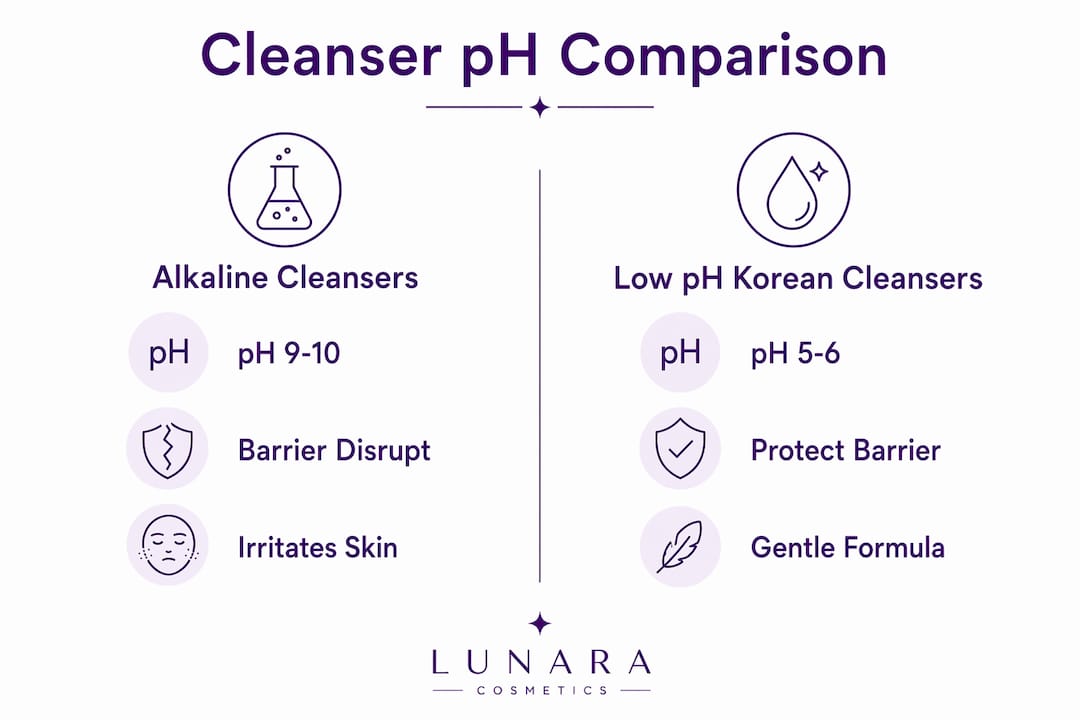
Low pH Korean cleansers, formulated at pH 5.0–6.0, avoid this disruption entirely. Soap-free cleansers in this pH range show better hydration outcomes and lower transepidermal water loss compared to traditional soaps. The skin does not need to recover after cleansing. It simply stays balanced.
| Feature | Alkaline cleansers (pH 9–10) | Low pH Korean cleansers (pH 5–6) |
|---|---|---|
| Barrier enzyme activity | Inhibited for 1–6 hours post-wash | Preserved immediately after cleansing |
| Microbiome impact | Displaces acid-adapted bacteria | Supports S. epidermidis and commensal flora |
| Hydration effect | Increases transepidermal water loss | Maintains or improves moisture retention |
| Irritation risk | High, especially with daily use | Low, suitable for sensitive skin |
| Recovery time needed | Yes, skin must rebuffer | No recovery period required |
Pro Tip: Check your current cleanser’s pH with inexpensive litmus strips. If it reads above 7, your skin is spending hours every day trying to recover from the wash itself.
What role do surfactants play in Korean low pH cleansers?
pH alone does not determine how gentle a cleanser is. Surfactants, the cleansing agents that lift oil and debris from skin, are equally critical. This is where Korean formulation philosophy separates itself most clearly from conventional Western cleansers.
Sodium lauryl sulfate (SLS) is the surfactant found in many traditional cleansers and shampoos. SLS disrupts lipid lamellae in the skin barrier, causing water loss and microbiome damage that can persist for up to 24 hours after a single wash. Even at low pH, a cleanser containing SLS will still compromise your barrier.
Korean cleansers commonly use amino acid-based surfactants instead. Sodium cocoyl glycinate and sodium lauroyl methyl isethionate are two examples. These molecules have larger molecular sizes, which reduces their ability to penetrate the skin and cause irritation. The result is effective cleansing without the barrier cost. The INNISFREE Green Tea Amino Hydrating Facial Cleansing Foam is a well-known example of this approach, using amino acid surfactants to deliver a gentle, skin-compatible lather.
Formulating at low pH requires selecting surfactants that remain stable and effective in an acidic environment without perturbing the acid mantle or barrier lipids. This is a formulation challenge that Korean beauty brands have spent years refining.
What to look for in a Korean cleanser’s ingredient list
- Amino acid surfactants: Sodium cocoyl glycinate, sodium lauroyl methyl isethionate, or potassium cocoyl glycinate signal a gentler formula.
- Absence of SLS/SLES: Sodium lauryl sulfate and sodium laureth sulfate are red flags for barrier disruption.
- Humectants in the formula: Ingredients like hyaluronic acid, glycerin, or panthenol indicate the formula is designed to support hydration post-cleanse.
- No high-fragrance load: Fragrance compounds can irritate even when pH is correct, especially for sensitive skin types.
Pro Tip: A cleanser that leaves your skin feeling “squeaky clean” is almost always too alkaline or too harsh. Your skin should feel comfortable and slightly dewy immediately after rinsing.
What are the real benefits of using low pH Korean cleansers daily?
The benefits of low pH cleansers are cumulative. Each wash that preserves your acid mantle is a wash that does not set back your barrier repair. Over weeks and months, that consistency produces visible results.
- Sustained barrier integrity. Your skin’s lipid matrix stays intact, reducing redness, flaking, and sensitivity. People with conditions like rosacea or eczema often see the most dramatic improvement here.
- Microbiome-friendly cleansing. Low pH cleansers preserve acid-adapted microbes, preventing dysbiosis and favoring healthy bacteria like S. epidermidis over pathogens. A balanced microbiome directly reduces acne risk and inflammatory flare-ups.
- Better hydration retention. With the barrier intact, your skin loses less water throughout the day. Moisturizers and serums applied after cleansing also absorb more effectively.
- Reduced breakouts and irritation. Low pH cleansers reduce dryness, irritation, and breakouts over time by supporting natural barrier repair. This is especially relevant for acne-prone skin, where barrier disruption and microbial imbalance are both contributing factors.
- Better compatibility with your full routine. In a multi-step Korean skincare routine, starting with a pH-balanced cleanser means your toner, essence, and serum are applied to skin that is already in its optimal state. Products absorb more evenly and perform closer to their tested efficacy.
The COSRX Low pH Good Morning Gel Cleanser and the GLAMFOX Ginseng Black Rice Low pH Cleanser are two widely used examples that demonstrate how Korean beauty low pH formulation translates into daily practice.
Common mistakes people make with low pH cleansers
The biggest mistake is assuming a “pH balanced” label guarantees a gentle product. A pH balanced label alone does not guarantee gentleness. Surfactant choice critically influences irritation and barrier damage potential, regardless of pH. A cleanser can be pH 5.5 and still contain SLS, which will damage your barrier on every use.
Other common pitfalls include:
- Using water that is too hot. Warm water between 30–34°C is recommended for cleansing. Hot water accelerates lipid dissolution in the barrier, undoing the gentleness of your low pH cleanser.
- Over-cleansing. Washing more than twice daily strips the acid mantle faster than it can recover, even with a gentle formula.
- Skipping the ingredient check. Many cleansers marketed as “natural” or “gentle” still contain sulfates. Reading the INCI list is non-negotiable.
- Expecting immediate results. Skin adaptation takes time. Consistent use over four to six weeks is typically needed before barrier improvements become visible.
- Ignoring the rest of your routine. A low pH cleanser cannot compensate for an alkaline toner or an over-exfoliated barrier. The whole routine needs to support skin acidity.
Key Takeaways
Low pH Korean cleansers protect your skin’s acid mantle at every wash, preventing the barrier disruption, microbiome imbalance, and chronic irritation caused by alkaline cleansers.
| Point | Details |
|---|---|
| Skin pH range matters | Healthy skin sits at pH 4.5–5.5; cleansers above pH 7 impair barrier enzyme activity. |
| Alkaline cleansers cause lasting damage | Traditional soap raises skin pH for 1–6 hours, disrupting the barrier and microbiome with each use. |
| Surfactants are as important as pH | Amino acid surfactants like sodium cocoyl glycinate cleanse effectively without damaging barrier lipids. |
| Microbiome balance depends on acidity | Low pH cleansers support beneficial bacteria like S. epidermidis and reduce acne-causing dysbiosis. |
| Consistent use drives results | Barrier improvements from low pH cleansing become visible after four to six weeks of daily use. |
My take on why cleanser pH is the most underrated step in skincare
After spending years studying Korean skincare formulations and watching people rebuild compromised skin barriers, I keep arriving at the same conclusion: most people are damaging their skin before they even start their routine. The cleanser is the first product that touches your face every day, and if it is alkaline, everything that follows is working against a compromised foundation.
What I find most telling is how quickly skin responds when someone switches from a traditional soap or high-pH gel cleanser to a well-formulated low pH option. Tightness disappears within days. Redness calms within weeks. Products that “never worked” suddenly perform because the barrier is finally intact enough to absorb them properly.
The Korean beauty philosophy behind gentle formulation is not about being soft or cautious. It is about being precise. Matching your cleanser to your skin’s chemistry is not a luxury step. It is the baseline from which every other product in your routine either succeeds or fails.
My honest advice: stop chasing the next serum or treatment and audit your cleanser first. If it foams aggressively, smells strongly, or leaves your skin feeling tight, it is almost certainly working against you. The right cleanser should feel like nothing happened, because nothing bad did.
— Lunara
Explore low pH Korean cleansers at Lunarashopping
Lunarashopping carries a curated selection of Korean low pH cleansers from brands including COSRX, GLAMFOX, MIDHA, and INNISFREE, all chosen for their skin-compatible formulations and amino acid surfactant profiles.
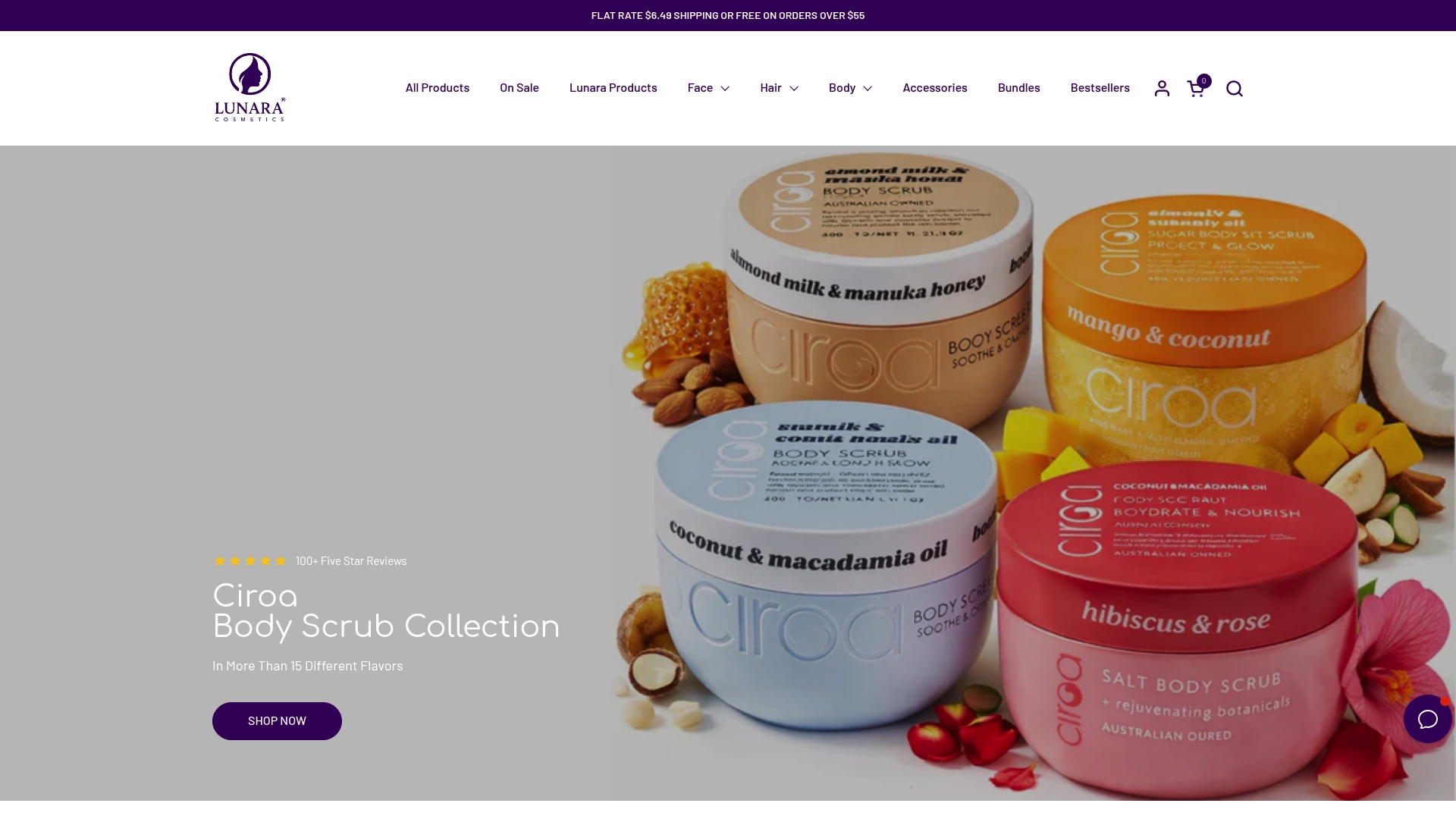
If you are ready to build a complete routine around barrier-first cleansing, the Korean Glass Skin Routine Bundle is a strong starting point. It pairs a low pH cleanser with hydration and barrier-support steps designed to work together. For a morning-specific setup, the Morning Face Care Routine Set offers a gentle, pH-conscious approach from the first step of the day. You can also use the custom skincare kit builder to select individual products tailored to your skin type and concerns.
FAQ
What pH should a Korean cleanser be?
Korean cleansers are typically formulated at pH 5.0–6.0, which closely matches the skin’s natural acid mantle range of 4.5–5.5. This range preserves barrier enzyme activity and supports a healthy skin microbiome.
Is low pH good for all skin types?
Low pH cleansers are suitable for all skin types, including sensitive, acne-prone, and dry skin. They are especially beneficial for people with compromised barriers or conditions like rosacea, where pH disruption triggers flare-ups.
Can a low pH cleanser still irritate skin?
Yes. A low pH cleanser that contains harsh surfactants like SLS can still cause irritation and barrier damage. Surfactant type matters as much as pH, so checking the ingredient list for amino acid-based surfactants is the most reliable way to confirm gentleness.
How long does it take to see results from switching to a low pH cleanser?
Most people notice reduced tightness and redness within the first one to two weeks. Measurable barrier improvements, including better hydration and fewer breakouts, typically appear after four to six weeks of consistent use.
Does water temperature affect how well a low pH cleanser works?
Water temperature directly impacts cleansing outcomes. Water between 30–34°C is recommended. Hot water accelerates lipid dissolution in the skin barrier, which counteracts the gentleness of even the best low pH formula.