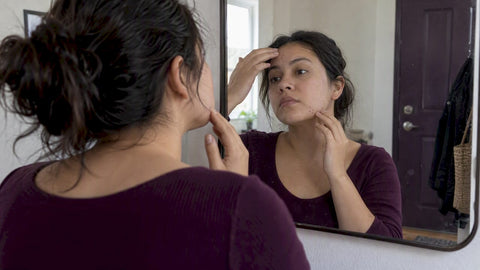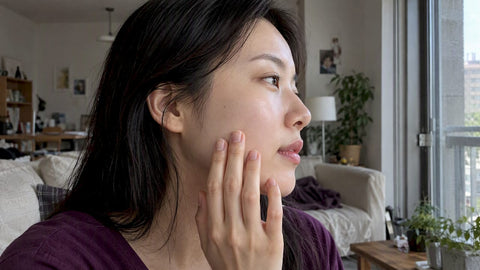
Chok-chok (촉촉) literally means “moist” or “dewy,” and in K-beauty it describes a well-hydrated, luminous complexion. The word is pronounced roughly “chawk-chawk,” with a short, crisp vowel sound. When Korean beauty guides talk about “chok-chok skin,” they mean skin that looks plump, supple, and softly reflective rather than dry, flaky, or greasy.
TL;DR:
- Start with a gentle cleanser, then apply toner or essence and a humectant serum to slightly damp skin before sealing everything with moisturizer.
- In dry environments, follow humectants with emollients or an occlusive, since water binding ingredients without a seal can draw moisture from deeper skin.
- Dry skin often needs richer creams and overnight occlusion, while oily or combination skin suits gel humectants, thin emulsions, and heavier products only on dry patches.
- Leave a few minutes between layers for absorption, and patch test new active ingredients for a day or two, especially with sensitive skin.
Table of Contents
- What chok-chok (촉촉) literally means in Korean
- What chok-chok skin actually looks like in K-beauty
- How to get chok-chok skin: a practical routine and ingredient checklist
- Common confusions: chok-chok vs. similar words
- Expert tips on building realistic hydration expectations
- Why chok-chok matters beyond a trend
- Building your chok-chok routine with LunaraShopping
- FAQ
- Sources
What chok-chok (촉촉) literally means in Korean
Chok-chok is an adjective rooted in sound and sensation rather than a scientific term. The Korean Language Dictionary entry for 촉촉하다 defines it as a state of being slightly wet due to moisture, a description that covers everything from fresh bread to morning dew to healthy skin. It carries a positive connotation: this is moisture you want, not moisture that causes discomfort.
The base form 촉촉하다 shifts depending on how it’s used in a sentence. You’ll most often see:
- 촉촉한 (chok-chok-han): the descriptive form used before a noun, as in “촉촉한 피부” (chok-chok-han pi-bu), meaning “moist skin.”
- 촉촉하게 (chok-chok-ha-ge): the adverb form, used to describe how something feels or becomes moist, as in making your skin feel dewy.
Pronunciation is straightforward for English speakers once you break it down. Each “chok” rhymes with “talk,” and the word repeats with no pause in between, a pattern typical of Korean descriptive words that mimic a feeling through repetition. That repetition isn’t decorative. According to a lesson on Korean onomatopoeia, words like chok-chok imitate the sensation they describe, so the doubled syllable mirrors the gentle, continuous feeling of moisture rather than a single wet instant. That’s part of why the word maps so naturally onto skincare: it’s built to evoke a feeling, not just label a condition.
This sensory quality separates chok-chok from purely clinical language. A dermatologist might describe hydration in terms of transepidermal water loss or barrier function, but chok-chok describes what hydrated skin feels and looks like to the person touching it. It’s an aesthetic and tactile word first, which is exactly why it traveled so easily from everyday Korean speech into beauty marketing.
What chok-chok skin actually looks like in K-beauty
When K-beauty content calls skin “chok-chok,” it’s pointing to a specific set of visual and tactile cues rather than a vague compliment. The look combines a soft sheen across the high points of the face, a plump and bouncy texture, and skin that feels cushioned rather than tight when you touch it. Crucially, it’s not the same as shine from oil. Chok-chok skin reflects light evenly because the surface is smooth and well-hydrated, while oily skin tends to pool shine in the T-zone and can look patchy by midday.
The products most associated with building this look share a common goal: delivering and holding water in the skin rather than just covering texture with makeup. Typical categories include:
- Hydrating toners and essences, which prep skin with a thin layer of water-binding ingredients right after cleansing.
- Humectant serums, often built around hyaluronic acid or glycerin, which draw moisture into the surface layers.
- Facial mists, used throughout the day to refresh hydration without disrupting makeup.
- Lightweight creams or emulsions, which seal in the layers underneath without adding heaviness.
K-beauty coverage consistently pairs the chok-chok ideal with these same categories, essences, sheet masks, and mists, because they deliver visible hydration quickly and support the glow effect readers associate with the term. The goal is plumpness without excess, which is where chok-chok parts ways with both extremes. Overly dry skin shows fine lines and flaking that catch light unevenly, while overly oily skin develops a slick, uniform shine that looks heavy rather than fresh. Chok-chok sits in the middle: enough water content in the skin to soften texture and reflect light gently, without the surface feeling slick to the touch.
Hydration loss happens fast once your skin’s barrier is compromised, which is part of why K-beauty routines emphasize layering hydrating steps rather than relying on a single heavy product. Each layer adds a little more water-holding capacity, building toward that cushioned, dewy finish rather than forcing it with one product alone.
How to get chok-chok skin: a practical routine and ingredient checklist
Building chok-chok skin is less about any single product and more about layering water-attracting and water-sealing ingredients in the right order. Here’s a routine structure that reflects how most K-beauty hydration regimens are built:
- Cleanse gently. Start with a cleanser that removes dirt and oil without stripping your skin, since a damaged barrier can’t hold moisture well no matter what you apply afterward.
- Apply a hydrating toner or essence. This thin, water-based layer preps your skin and delivers the first dose of humectants while your face is still slightly damp.
- Layer a humectant serum. Ingredients like hyaluronic acid and glycerin pull in and hold water at the skin’s surface, which is the core mechanism behind the dewy look.
- Seal with a moisturizer or emulsion. Emollients such as squalane or ceramides reinforce the skin’s natural barrier and help lock in everything applied underneath.
- Add an occlusive when needed. Heavier oils or petrolatum-based balms create a physical seal on top, useful in dry climates or overnight, but usually unnecessary for oilier skin types during the day.
- Use sheet masks or mists as a boost, not a replacement. These give an intensive or quick hydration lift between full routine applications.
The order matters because each category plays a different role. Humectants attract water, emollients reinforce and smooth the barrier, and occlusives physically prevent water from evaporating. Skipping the sealing step after a humectant serum can backfire in dry environments, since water-binding ingredients can pull moisture from the air, but they can also pull it from deeper in your skin if there’s nothing to lock it in. For a clearer breakdown of the mechanics behind this order, Beauvex’s guide to skincare application order walks through the reasoning step by step.
Timing matters as much as sequence. Many K-beauty routines call for a short pause, often a couple of minutes, between hydrating layers so each product has time to absorb before the next goes on. Applying everything in a rush on top of still-wet toner can leave products sitting on the surface rather than sinking in.
Skin type changes how heavy each step should be. Dry skin generally benefits from richer emollients and a consistent occlusive step, especially overnight. Oily and combination skin tends to do better with lighter gel-based humectants and a thinner emulsion, saving heavier creams for drier patches or colder months. If you want a fuller walkthrough tailored to layering mechanics, our dewy skin routine guide breaks the process down week by week.

Pro Tip: Pat products in with your palms instead of rubbing, and give your skin a few minutes to absorb each hydrating layer before moving to the next step.
Before adding any new active ingredient, patch test on a small area of skin for a day or two, particularly if you have sensitive or reactive skin. This is a basic precaution worth taking with any new serum or mask, regardless of how gentle the formula claims to be.
Common confusions: chok-chok vs. similar words
Learning chok-chok often comes with a few mix-ups, and clearing them up early saves confusion later. The most common is confusing it with 축축 (chuk-chuk), a similar-sounding word that also means wet, but with an unpleasant connotation, like soggy clothes or a damp, musty room. The difference comes down to desirability:
- 촉촉 (chok-chok): pleasant moisture, used for dewy skin, fresh bread, or morning dew.
- 축축 (chuk-chuk): unwanted wetness, used for soggy shoes or a damp, clammy feeling.
Mixing these up in conversation can send the opposite message of what you intend, so it’s worth drilling the distinction if you’re learning the language alongside the beauty term.
A separate and unrelated mix-up comes from Cantonese. The slang word “chok” in Hong Kong pop culture has nothing to do with Korean moisture at all. According to Zolima City Mag’s breakdown of Cantonese slang, “chok” in that context refers to striking a deliberate pose or putting on an exaggerated attitude, often used playfully to call out someone being overly dramatic for a photo. The two words share a sound but come from entirely different languages with no shared root, so treating them as interchangeable is a common but avoidable error for anyone searching across both cultures.
Expert tips on building realistic hydration expectations
Getting to chok-chok skin is a matter of consistency more than any single miracle step. A frequent mistake is rushing through layers, applying a serum and moisturizer back to back with no absorption time, which blunts the effect each product is meant to deliver.
Dewy, well-hydrated skin reflects ongoing care rather than a one-time treatment, and realistic timelines matter more than instant transformation.
We recommend Korean skincare formulas built for this kind of layering, pairing toners, essences, and moisturizers that work together rather than competing for absorption time. If you’re building a routine from scratch, browsing hydrating toners, lightweight moisturizers, and sheet masks as a connected system, rather than picking one standout product, tends to produce more consistent results.
Why chok-chok matters beyond a trend
Chok-chok has stuck around in Korean beauty culture because it describes a condition, not a finish. Trends come and go, but skin that genuinely holds water looks healthier under any lighting, in any season, with or without makeup. That durability is the real reason the word keeps surfacing in routines decades after it entered beauty vocabulary.
What’s worth taking from it isn’t a single product chase but a habit of thinking about your skin barrier first, ingredients second. Learn what humectants, emollients, and occlusives each do, then build a simple routine you’ll actually repeat. Consistency with a few well-chosen steps outperforms a shelf full of products used sporadically.
— Lunara
Building your chok-chok routine with LunaraShopping
Once you know what chok-chok skin requires, hydration layered in, locked in, and refreshed, the easier part is having the right products on hand. Our Face Toners & Mists collection covers the first hydrating layer, while our Face Creams & Moisturizers range handles the sealing step that keeps moisture from escaping.

For an occasional boost, our Face Masks selection offers a quick way to add intensive hydration between regular routine days. We ship every order with flat rate standard shipping, so building out a full routine doesn’t mean piling on shipping costs order by order. Browse our face care collection to start layering your own chok-chok routine today.
FAQ
What is chok-chok in Korean?
Chok-chok (촉촉) is a Korean descriptive word meaning pleasantly moist or dewy, used for skin, food, and nature alike. The Korean Language Dictionary defines it as a state of being slightly wet in a way that feels desirable rather than uncomfortable.
What does chok mean in Cantonese?
In Cantonese slang, “chok” has no connection to the Korean word and instead refers to striking an exaggerated pose or attitude, often for photos. This usage, documented by Zolima City Mag, comes from Hong Kong pop culture and is unrelated to skincare or hydration.
What does chok mean in English?
“Chok” on its own isn’t an English word. In Korean skincare contexts it appears doubled as “chok-chok,” translating to moist or dewy, while the standalone Cantonese slang version translates closer to posing or showing attitude.
What is chok-chok skin?
Chok-chok skin describes a complexion that looks plump and softly luminous rather than dry or greasy, achieved through layered hydration from toners, serums, and moisturizers. It reflects light evenly across the skin’s surface, a result of water retention rather than surface oil.
Sources
- 국립국어원 (Korean Language Dictionary) — 촉촉하다
- Zolima City Mag — Pop Cantonese: Hea, Chok and Chur
- Life and Seoul of the Party — Korean onomatopoeia lesson