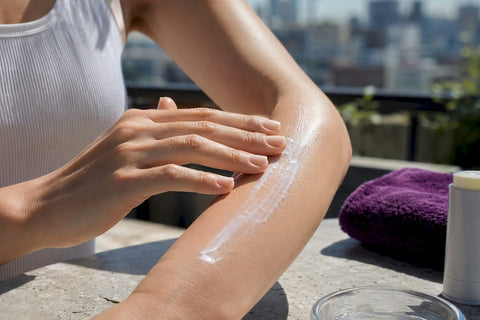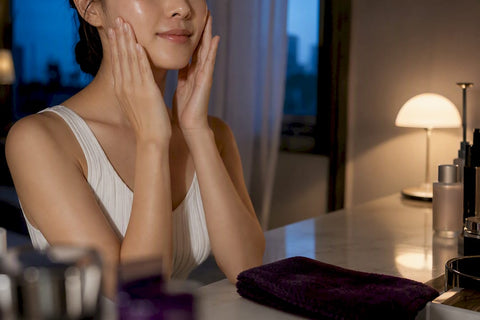
The fastest, sustainable path to dewy skin is a simple daily pattern: gentle cleansing, multiple thin layers of water-based hydration, a light sealing moisturizer, and SPF every morning. Skin looks noticeably softer within days, and you’ll see consistent, camera-ready radiance in two to four weeks. The layering works because water and humectants plump the surface while a light seal locks that moisture in instead of letting it evaporate.
TL;DR:
- Using multiple thin layers of water-based hydration and sealants is key to achieving lasting dewy skin without excess product.
- Gentle cleansing, patting toner, and waiting 20-30 seconds between layers help prevent pillage and maximize absorption.
- Exfoliating once or twice weekly with gentle acids, along with regular hydrating masks, maintains surface smoothness and light reflection.
- Dewy skin relies on humectants, light occlusives, and barrier-supporting ingredients, applied in sequence on damp skin for optimal results.
- Consistent routines with proper product layering and avoiding matte sunscreens can produce noticeable radiance within days to weeks.
Table of Contents
- What Does a Dewy Skin Routine Actually Look Like Each Morning?
- How Should You Structure an Evening Dewy Skin Routine?
- How Often Should You Exfoliate for Dewy Skin?
- Which Ingredients Actually Build a Dewy Finish?
- What Is the 7-Skin Method and Do You Need All 7 Steps?
- How Do You Adjust a Dewy Skin Routine for Your Skin Type?
- Why Isn’t Your Skin Staying Dewy, and How Long Should Results Take?
- Why Trust This Guide?
- A Quick Note From Lunara
- Start Your Dewy Skin Routine With the Right Starter Kit
- Sources
- FAQ
What Does a Dewy Skin Routine Actually Look Like Each Morning?
A true dewy skin routine starts with restraint, not more product. If your skin feels comfortable and isn’t visibly oily, rinse with lukewarm water instead of a full cleanse. If you slept in makeup or SPF, or your skin looks shiny with congestion, use a gentle, low-foam cleanser instead.
From there, the goal is building what Korean skincare calls mul-gwang, or “water-light” skin. This is a lighter, water-based sheen, distinct from the heavier, oil-driven glow of honey skin. You get there through repetition, not richness.
- Rinse or cleanse based on how skin feels, not habit.
- Apply toner or essence in multiple thin passes, patting rather than rubbing. Beginners can start with two. Each thin pass absorbs faster than one heavy application, and you’ll feel the surface get slightly tacky before it fully sinks in.
- Layer a hyaluronic acid or humectant serum onto damp skin to trap that water.
- Seal with a lightweight water-cream or gel-cream, not a heavy balm. This is what keeps the dew looking wet rather than greasy by midday.
- Finish with SPF formulated with a natural or dewy finish rather than a matte one. A matte sunscreen will flatten every layer you just built.
For makeup, switch to cream or liquid formulas and press them in with fingers or a damp sponge instead of sweeping with a brush. Skip setting powder anywhere you want visible glow, especially the cheekbones and bridge of the nose.
Pro Tip: Let each toner or essence layer sit for about 20 to 30 seconds before the next one. If you rush the passes, product sits on the surface instead of soaking in, and that’s what causes pilling later.
How Should You Structure an Evening Dewy Skin Routine?
Evenings are when you rebuild the barrier that daytime pollution, SPF, and makeup wear down. Skip this step and your skin won’t hold hydration overnight, no matter how well your morning routine performs.
If you wore makeup or sunscreen, double cleanse: an oil or balm cleanser first to lift product, followed by a gentle water-based cleanser. Bare-faced days only need the second step.
- Cleanse according to the day’s makeup load.
- Layer toner or essence, same light-pass technique as the morning, though most people find two passes enough at night.
- Apply targeted serums on alternating nights. Save retinoids or exfoliating acids for nights when you’re not also using strong actives elsewhere, and stick to hydrating serums the rest of the week.
- Moisturize with a slightly richer cream than your morning water-cream, since you don’t need to fight makeup or SPF settling on top.
- Optional: add a few drops of facial oil or a sleeping mask over the moisturizer to slow water loss overnight, particularly in dry climates or heated bedrooms.
Occlusives work best as a thin final layer, not a thick mask. A few drops of facial oil pressed over moisturizer seals hydration without creating a heavy film that transfers to your pillowcase. If you wake up with residue on the pillow, you used too much.
How Often Should You Exfoliate for Dewy Skin?
Buildup of dead skin is one of the biggest, most overlooked blockers of a dewy finish. It creates a rough surface that scatters light instead of reflecting it, no matter how much serum you layer on top.
Gentle chemical exfoliation once or twice weekly is recommended is the recommended frequency for smoothing skin without compromising the barrier. Low-percentage PHA or a mild BHA is the safer choice over daily scrubs or high-strength acids, which strip the very barrier you’re trying to hydrate.
- Use a hydrating sheet or hydrogel mask two to three times a week to top off your skin’s water reserve.
- Save overnight sleeping masks for particularly dry stretches or before an event, rather than nightly use, since hydrating masks work best as short-term reservoirs rather than daily staples.
- In-clinic hydra-facial treatments can deliver a dramatic short-term boost, but the effect typically fades within days to about a week, so they work better as an occasional accelerator than a routine replacement.
- Dial back exfoliation frequency in winter or during flare-ups, and increase hydrating masks instead.
Skin sensitivity is not a fixed setting. It shifts with weather, hormones, and even how much sleep you got, so treat frequency as a range to adjust rather than a fixed schedule.
Which Ingredients Actually Build a Dewy Finish?
Dewy skin depends on three ingredient categories working together, and skipping any one of them is why most routines stall out.
Humectants do the heavy lifting. Hyaluronic acid, glycerin, and panthenol pull water into the skin’s surface and hold it there, and pairing humectants with occlusives and barrier-supporting actives is the combination dermatological research points to for genuine hydration rather than surface shine that fades in an hour.
- Humectants (hyaluronic acid, glycerin, panthenol): draw and hold water at the skin’s surface.
- Light occlusives (squalane, light esters): slow water loss without sitting heavy, best applied as the final thin layer.
- Barrier-supporting ingredients (ceramides, niacinamide): reinforce the skin’s natural lipid barrier so hydration stays put; apply these after humectants but before your heaviest seal.
- Heavy oils and thick balms: skip these if you want mul-gwang’s water-sheen look, since they push the finish toward a heavier honey-gloss and can trigger congestion on oily or acne-prone skin.
Sequencing matters as much as selection. Humectants go on damp skin first, barrier actives next, and any occlusive last, since applying oil before your water-based products blocks their absorption entirely.
What Is the 7-Skin Method and Do You Need All 7 Steps?
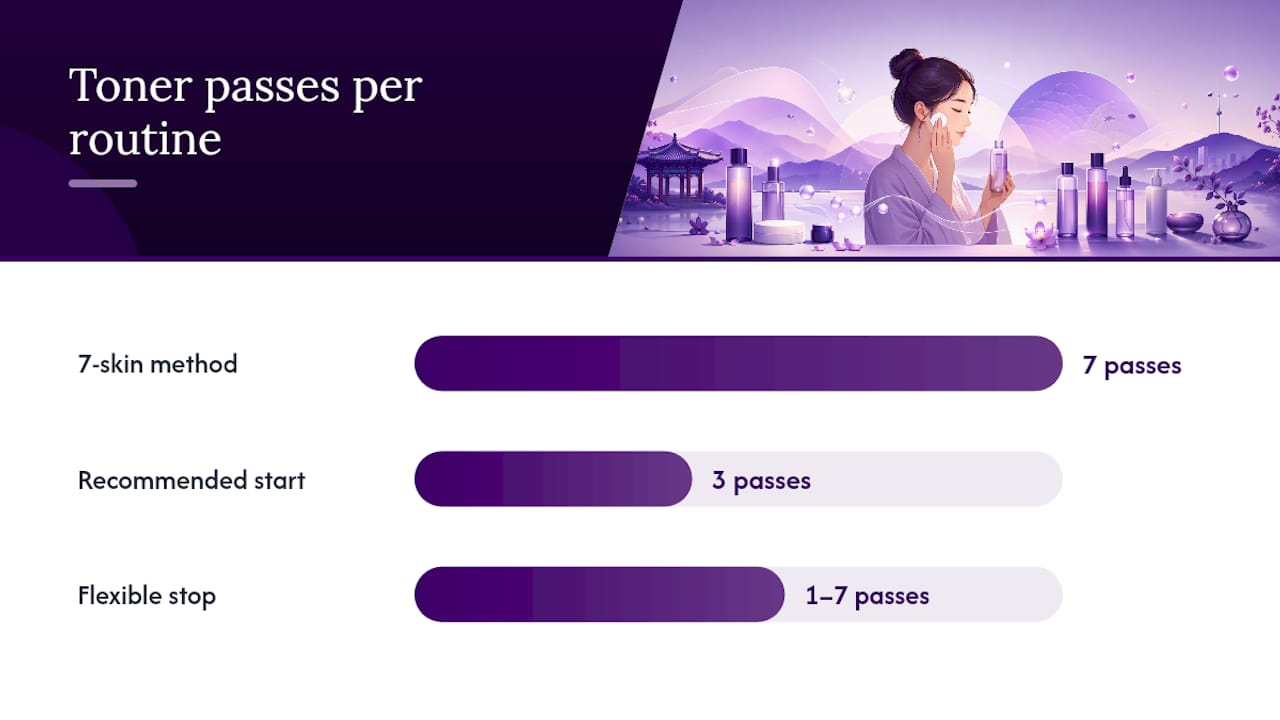
The 7-skin method is a K-beauty layering technique where you pat the same toner onto skin up to seven times in a row, building hydration in thin, repeated coats. Most people don’t need the full seven passes to see results.
A simplified 3-pass version delivers most of the benefit with far less time investment, and it’s the version most dermatology-minded K-beauty guides now recommend as a realistic starting point. Thin water-based layers absorb more effectively than one thick application because each pass has less volume to sink in before the next one goes on.
- Use a small amount of toner per pass on the face; more just sits on top and pills.
- Pat gently with your palms instead of rubbing, and wait until the surface loses its tacky feel before adding the next layer.
- Stop once skin feels plump and slightly cool to the touch. That’s your cue the layer is done, not a fixed count of passes.
- If product starts balling up under your fingers, you’ve either used too much or moved to the next step too fast.
Pro Tip: Warm the product between your palms for a second before applying. Cold toner straight from the bottle absorbs more slowly and is more likely to pill on contact.
For a deeper walkthrough of stacking order, see how to layer skincare products correctly.
How Do You Adjust a Dewy Skin Routine for Your Skin Type?
The core layering pattern stays the same for everyone. What changes is texture, product weight, and how often you touch up during the day.
- Oily or combination skin: swap the water-cream for a gel-cream and mist with a hydrating toner spray during the day instead of reaching for powder, which dulls the exact glow you’re building.
- Dry or mature skin: use a richer final seal and add a sleeping mask two to three nights a week rather than only during dry spells.
- Sensitive skin: prioritize barrier repair with ceramide-rich products before introducing any active ingredient, and add new actives one at a time, spaced a week apart.
- Acne-prone skin: stick to non-comedogenic humectants and light gels, and watch for new congestion for a few days after adding anything richer than a gel-cream.
If oily skin is your main challenge, customizing Korean layering for oily skin walks through texture swaps in more detail.
Why Isn’t Your Skin Staying Dewy, and How Long Should Results Take?
A handful of habits quietly sabotage dewy skin more than any missing product. Matte SPF is the biggest one. It flattens every layer underneath it, so switching to a dewy-finish or hydrating sunscreen alone can change your whole look.
- Skipping moisturizer after serum lets all that hyaluronic acid evaporate straight off the skin, taking your hydration with it.
- Over-exfoliating past twice a week strips the barrier and leaves skin tight, flaky, and anything but dewy.
- Pilling usually means too much product or not enough wait time between layers, not a bad product.
- Sudden congestion after adding a new step points to an occlusive that’s too heavy for your skin type, not necessarily the humectant underneath it.
On timeline: committing to a daily layering routine tends to show softer, more radiant skin within days, with more noticeable, consistent dewiness building over weeks. Take a photo in the same light each week. Progress on your own face is often easier to see in a side-by-side than in the mirror day to day.
Why Trust This Guide?
Lunarashopping specializes in Korean skincare, curating hydration-focused formulas built for texture, radiance, and skin health rather than trend-chasing releases. The recommendations here follow the same logic behind that catalog: fewer, better-layered products over more steps for their own sake.
- Detailed, step-by-step guides like the Night Skincare Routine Checklist and the 10-Step Korean Skincare Routine reflect ongoing, hands-on attention to how these routines actually perform.
- The Custom Skincare Kit Builder exists specifically because skin type and climate change what “dewy” requires from one person to the next.
- Every ingredient recommendation above traces back to published hydration and barrier research, not marketing copy.
A Quick Note From Lunara
We’ve watched enough customers test their way through layering routines to notice a pattern: the people who stick with a simple cleanse, hydrate, seal, SPF sequence get better, faster results than anyone chasing a ten-step routine cold. Start small, patch test anything new for a few days, and build from there. A starter kit built around your actual skin type beats guessing every time.
— Lunara
Start Your Dewy Skin Routine With the Right Starter Kit
Building a dewy skin routine from scratch means guessing at textures, humectant strength, and how many products your skin can actually handle at once. That’s exactly the gap the Custom Skincare Kit Builder closes. Answer a few questions about your skin type and goals, and it curates a starter set instead of leaving you to piece one together from a hundred product pages.

If you’d rather build your own from the categories covered in this guide, start with Face Toners & Mists for your layering base, then finish with a lightweight pick from Face Creams & Moisturizers to seal it in. Every order ships with flat rate standard shipping from $6.49, so testing a small kit before committing to a full routine won’t cost you a shipping surprise. Patch test each new product for a few days, track how your skin responds, and adjust from there.
Sources
- PubMed article relating to skin hydration and barrier science
- PMC article on skincare/exfoliation (source provided)
- Mul-Gwang: What Korean Dewy Water-Light Skin Actually Is | MyGuideKorea
FAQ
How Do Koreans Get Dewy Skin?
The technique centers on layering thin, water-based products, often called mul-gwang, rather than applying one heavy moisturizer. Multiple light passes of toner or essence build hydration gradually, which is then sealed with a lightweight cream so the glow looks wet rather than oily.
What Is the 4-2-4 Rule in Skincare?
Definitions of this rule vary across sources and it isn’t a standard dermatological framework, so treat any specific version you see online with caution. If your goal is dewy skin specifically, the layering pattern that actually holds up, cleanse, hydrate in thin passes, seal, and protect with SPF, matters more than following a numbered rule.
What Is the Best Skincare Routine for Glowy Skin?
The most reliable approach is a simple backbone: gentle cleansing, layered hydration with humectants like hyaluronic acid, a lightweight sealing moisturizer, and daily SPF, rather than a long, complicated routine. Lunarashopping’s Custom Skincare Kit Builder puts that backbone together for your specific skin type so you’re not guessing at product order.
What Products Give You Dewy Skin?
Hydrating toners or essences, a humectant serum such as hyaluronic acid, and a lightweight water-cream or gel-cream are the core products behind a dewy finish. Browse Face Toners & Mists and Face Creams & Moisturizers for formulas built specifically for this kind of layering.