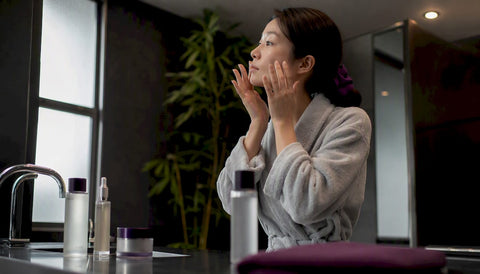
The five core Korean beauty secrets are: layer hydration in thin-to-thick steps, double cleanse gently every evening, apply SPF 30–50 every single morning, personalize your routine to your skin’s daily needs, and prioritize barrier repair before any corrective treatment. These principles, not a rigid 10-step checklist, are what produce the clear, even-toned skin K-beauty is known for.
Your start-today routine:
- AM: Gentle water cleanser → hydrating toner or essence → vitamin C serum (optional) → moisturizer → SPF 30–50
- PM: Oil cleanser → low-pH water cleanser → hydrating toner or essence → treatment serum (retinoid or niacinamide as needed) → moisturizer
TL;DR — act on these today:
- Apply SPF every morning, rain or shine. This is the single most evidence-backed anti-aging step.
- Start with 3–4 products. Add layers only once your skin is stable.
- Layer thinnest to thickest texture, patting each step in rather than rubbing.
- Introduce one new active every 2–4 weeks, never several at once.
- Patch test every new product on your inner arm for 24–48 hours before applying it to your face.
Brands like COSRX, Beauty of Joseon, Banila Co, Pyunkang Yul, MEDIHEAL, and Peach & Lily have built their reputations on exactly these principles. Each one is available in the US and appears throughout this guide with specific use-case guidance.
Table of Contents
- What does a full Korean skincare routine actually look like?
- What are the core principles behind K-beauty results?
- Which K-beauty ingredients actually work for your skin goals?
- Is “glass skin in 2 days” realistic, or is it misleading?
- How do you choose K-beauty products that actually fit your skin?
- Which lifestyle habits do Korean beauty traditions actually prioritize?
- What do dermatologists say about K-beauty practices?
- Traditional Korean skincare ingredients beyond the mainstream
- Key Takeaways
- Why Lunarashopping curates K-beauty the way it does
- Lunarashopping’s curated K-beauty sets make starting your routine simple
- Useful sources and further reading
What does a full Korean skincare routine actually look like?
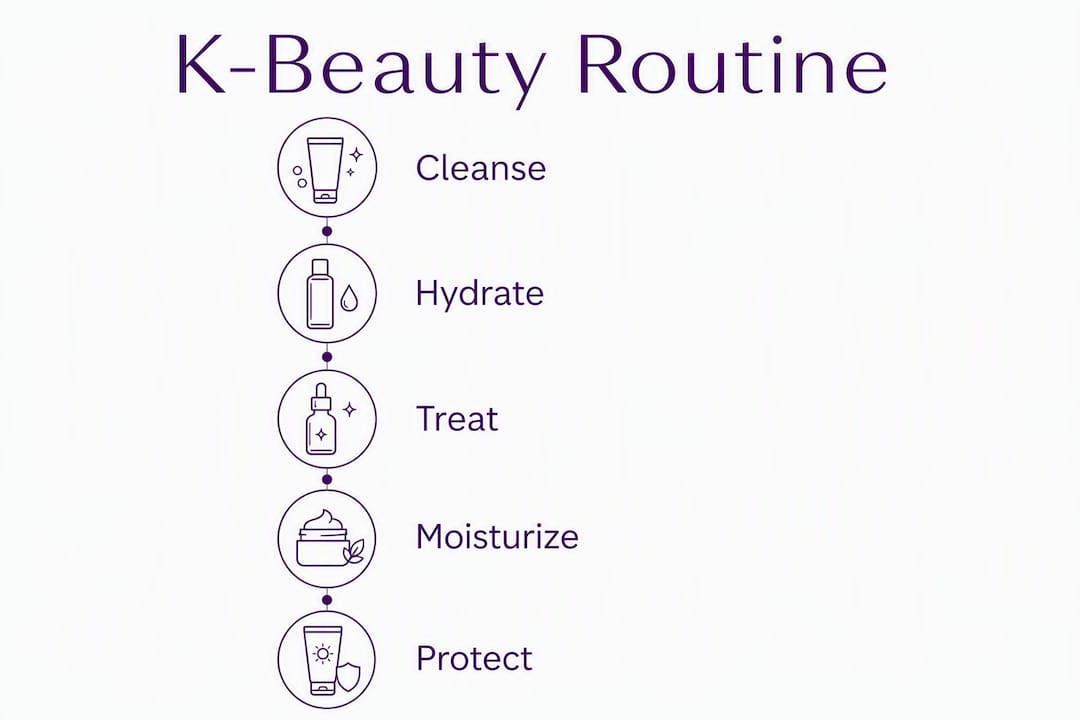
The K-beauty routine follows a fixed logic: remove, hydrate, treat, protect. Every step has a purpose, and the order is not arbitrary.
The complete step order and why it matters
Oil-based cleansers dissolve sunscreen, makeup, and sebum that water alone cannot lift. A low-pH water cleanser (pH ~4.5–5.5) follows to remove water-based impurities without disrupting the acid mantle, the skin’s natural protective film. Alkaline bar soaps strip that film and leave skin tight, which is why K-beauty moved away from them decades ago.

After cleansing, a hydrating toner or essence restores moisture and primes the skin to absorb what comes next. Serums and ampoules deliver concentrated actives. Moisturizer seals everything in. SPF, applied last in the morning, blocks UV-induced collagen breakdown.
AM vs. PM: what changes and why
The morning routine protects. The evening routine repairs. Vitamin C goes in the AM because it works synergistically with SPF and degrades in sunlight. Retinoids belong in the PM because they increase photosensitivity and break down with UV exposure. You do not need to double cleanse in the morning unless you sweat heavily overnight; a gentle water cleanse or even a rinse is enough.
Routine by experience level
| Routine Level | Steps | Frequency Notes |
|---|---|---|
| Beginner (3–4 steps) | Gentle cleanser, hydrating toner/essence, moisturizer, SPF | Daily AM/PM; no actives for first 3–4 weeks |
| Intermediate (6 steps) | Double cleanse (PM), toner, essence, niacinamide or vitamin C serum, moisturizer, SPF | Daily; add one active after base is stable |
| Advanced (layering) | Double cleanse, toner (layered 2–3x), essence, ampoule, serum, sheet mask (2–3x/week), moisturizer, SPF | Daily base; masks and exfoliants on scheduled days |
Beginner routines built around barrier support consistently outperform inconsistent multi-step routines. Nail the base first.
How to apply layers correctly
- Cleanse and pat skin damp, not dripping.
- Apply toner or essence with clean palms, pressing gently into skin.
- Wait 20–30 seconds between layers so each absorbs before the next.
- Apply serums from thinnest to thickest consistency.
- Finish with moisturizer, pressing rather than dragging across the face.
- In the AM, apply SPF as the final step, generously and evenly.
When to simplify: During travel, acne flares, or high-humidity weather, cut back to cleanser, moisturizer, and SPF. Fewer layers reduce the risk of clogging or irritation when your skin is already stressed.
What are the core principles behind K-beauty results?
The K-beauty philosophy centers on prevention through consistent barrier support and layered hydration, not on aggressive correction after damage appears. That distinction shapes every product choice and routine decision.
Layering as a functional method
Layering is not about applying more products for the sake of it. Thin, water-based formulas absorb faster and penetrate more evenly than a single thick cream. The seven-skin method, which involves pressing a hydrating toner into the skin up to seven times in succession, is the clearest expression of this logic: cumulative thin layers build deeper hydration than one heavy application. Apply thin layers and pat to aid absorption; observe your skin’s response and adjust the number of layers accordingly.
“Layering is a flexible principle where users add or remove steps based on daily skin needs — it’s not a rigid 10-step rule.” — Sarah Chung Park, K-beauty expert, via Vogue
Prevention and the SPF priority
Daily sun protection is the most evidence-backed anti-aging step in dermatology. Korean sunscreens are formulated for lightweight, cosmetically elegant wear specifically to encourage consistent daily use, which is the variable that matters most. K-beauty’s slow-ageing approach treats SPF not as an optional finish but as the non-negotiable anchor of every morning routine.
Personalization over step count
The 10-step routine is a cultural reference point, not a prescription. Dermatologists and K-beauty specialists agree: tailor your step count to what your skin needs on a given day. Dry, tight skin after a flight calls for extra hydrating layers. Congested skin after a humid week may need a gentle exfoliant and nothing else.
Pro Tip: For oily skin, do not skip moisturizer. Use a water-based gel moisturizer instead of a rich cream. Oily skin is often dehydrated, and skipping moisture pushes sebaceous glands to overproduce oil. Customizing layering for oily skin means choosing lighter textures, not fewer hydration steps.
Which K-beauty ingredients actually work for your skin goals?
The table below maps the core K-beauty actives to their primary benefit, safe usage frequency, best-fit skin types, and key cautions. Use it to build a targeted routine without guesswork.
| Ingredient | Main Benefit | Usage/Frequency | Best For | Cautions/Interactions |
|---|---|---|---|---|
| Hyaluronic acid | Deep hydration, plumping | Daily AM and PM | All skin types | Apply to damp skin; layer under moisturizer |
| Niacinamide | Brightening, pore refinement, barrier support | Daily AM and PM | Oily, combination, sensitive | Avoid layering with high-dose vitamin C simultaneously |
| Centella asiatica | Redness relief, barrier repair, wound healing | Daily | Sensitive, acne-prone, post-procedure | Generally well tolerated; rare sensitization |
| Snail mucin | Hydration, texture smoothing, minor repair | Daily | Dry, dull, post-blemish | Avoid if allergic to mollusks |
| Ceramides | Barrier restoration, moisture retention | Daily AM and PM | Dry, sensitive, compromised barrier | Compatible with most actives |
| Vitamin C (L-ascorbic acid) | Brightening, antioxidant, collagen support | AM, 1x daily | Dull, hyperpigmented, aging | Unstable; store away from light; do not layer with retinoids in same step |
| Retinoids | Cell turnover, firmness, acne | PM only, 1–2x/week to start | Aging, acne-prone | Introduce slowly; avoid with AHAs in same routine |
| AHAs (glycolic, lactic) | Exfoliation, texture, brightening | 1–2x/week | Dull, rough, hyperpigmented | Do not combine with retinoids on same night |
| BHAs (salicylic acid) | Pore clearing, acne, oil control | 2–3x/week | Oily, acne-prone | Can be drying; start low frequency |
| Peptides | Firmness, collagen signaling | Daily AM and PM | Mature, aging-concerned | Compatible with most actives |
Safe layering order for actives
Apply water-based actives (vitamin C, niacinamide, AHAs/BHAs) before moisturizer. Retinoids go on after toner and before moisturizer in the PM. Never apply a strong exfoliating acid and a retinoid on the same night, especially when you are new to either.
Traditional Korean botanicals
Beyond the mainstream actives, K-beauty draws on a long tradition of botanical ingredients rooted in hanbang, traditional Korean herbal medicine. Rice extract (found in products from brands like Beauty of Joseon) brightens and softens through a mild keratolytic action. Mugwort (ssuk) soothes inflammation and is a staple in formulas for reactive skin. Ginseng, rich in ginsenosides, supports circulation and is used in anti-aging formulations. These botanicals complement evidence-backed actives rather than replace them.
Pyunkang Yul takes this botanical minimalism furthest: its Essence Toner is built around Coptis japonica root water at high concentration, with a short supporting ingredient list. The brand originated from a hanbang clinic and remains a benchmark for reactive and atopic-prone skin.
Beginner-safe actives and a conservative introduction schedule:
- Week 1–4: Hyaluronic acid, ceramides, centella asiatica, niacinamide (all daily)
- Week 5–8: Add vitamin C in the AM (start 3x/week, build to daily)
- Week 9–12: Add a BHA 1–2x/week if targeting congestion or acne
- Week 13+: Introduce a retinoid 1–2x/week PM; hold off on AHAs until retinoid tolerance is established
Mixing actives safely is a skill that takes a few months to build. Patience here prevents months of barrier recovery later.
Is “glass skin in 2 days” realistic, or is it misleading?
Instant hydration can brighten and smooth your complexion within hours. Structural improvements — reduced pigmentation, firmer texture, visible anti-aging — take weeks to months. The “glass skin in 48 hours” claims circulating on social media describe the temporary effect of a well-hydrated, well-moisturized surface, not a lasting change in skin biology.
Realistic timelines by goal
- Hydration and initial glow: 1–3 days of consistent layering
- Texture refinement: 3–6 weeks of regular gentle exfoliation and barrier support
- Hyperpigmentation and brightening: 8–12+ weeks with consistent vitamin C, niacinamide, and SPF
- Firmness and anti-aging: 3–6+ months with retinoids and peptides
Safe short-term measures that actually work
A hydrating sheet mask used 2–3 times per week gives a visible plumping effect within minutes by temporarily increasing surface hydration. MEDIHEAL’s sheet masks are widely used for this purpose and are available across the US. A gentle exfoliant (lactic acid or a mild BHA) used once a week removes dead cell buildup and immediately improves light reflection on the skin surface.
Sheet masks are an enjoyable ritual but do not replace a well-formulated serum for long-term skin changes. Reserve daily masking for special occasions; 2–3 times per week is the practical sweet spot for most people.
Pro Tip: Use a sleeping mask (an occlusive overnight treatment) 2–3 nights per week instead of your regular moisturizer. Apply it as the final PM step. It locks in all the hydrating layers beneath it and you wake up with noticeably softer, more supple skin. Do not layer it on top of a retinoid night if your skin is still building tolerance.
How do you choose K-beauty products that actually fit your skin?
Choose products by skin goal, formulation texture, active concentration, and compatibility with your existing routine. That one sentence covers more ground than any “best of” list.
Concrete selection criteria
- Ingredient list placement: Actives listed in the first third of an ingredient list are present at meaningful concentrations. An active buried near the bottom is mostly marketing.
- Alcohol and fragrance: Denatured alcohol (alcohol denat.) high on the list is drying and can irritate a compromised barrier. Fragrance is the most common sensitizer in skincare; avoid it if your skin is reactive.
- pH for exfoliating toners: AHAs and BHAs work at pH 3–4. A toner labeled “exfoliating” with no pH information is a red flag.
- Packaging stability: Vitamin C oxidizes in air and light. Choose opaque, airtight packaging (pump or sealed tube) over open jars.
- Claim transparency: Brands like COSRX and Peach & Lily publish active concentrations and clinical data. Vague claims like “visibly younger-looking skin” with no ingredient evidence are a warning sign.
How to patch test (step by step)
- Apply a small amount of the new product to your inner forearm.
- Leave it on for 24–48 hours without washing the area.
- Check for redness, itching, swelling, or small bumps.
- If no reaction appears, apply a small amount behind your ear for another 24 hours.
- If still clear, introduce the product to your face, starting with every other day.
Typical cost ranges for K-beauty products in the US
| Product Category | Typical Price Range (USD) | Value Drivers |
|---|---|---|
| Gentle cleanser | $8–$20 | Low-pH formula, minimal fragrance |
| Hydrating toner/essence | $12–$30 | Active concentration, fermented ingredients |
| Serum (vitamin C, niacinamide) | $20–$45 | Stable packaging, verified concentration |
| Moisturizer | $15–$35 | Ceramide content, texture for skin type |
| Sunscreen SPF 30–50 | $12–$30 | Lightweight formula, broad-spectrum UVA/UVB |
| Sheet masks | $1–$5 per mask | Ingredient quality, serum volume |
Korean sunscreens often use filter combinations not yet approved in the US, which is why some formulas imported from Korea feel lighter than domestic options. The practical guidance: choose a sunscreen you will wear every day without skipping, regardless of origin.
Adapting by skin type and season
Dry skin benefits from richer moisturizers (shea butter, ceramides, squalane) in winter and lighter gel-creams in summer. Oily skin does well with water-based hydrators year-round and a gel or fluid SPF. Combination skin often needs zone-specific application: a richer cream on dry cheeks, a lighter gel on the T-zone. In humid summer months, cut back on occlusive layers; in dry winter months, add a facial oil as the final PM step before or after moisturizer.
Which lifestyle habits do Korean beauty traditions actually prioritize?
Topical products work best when your body is rested, hydrated, and not under chronic stress. K-beauty has always treated skin as a reflection of overall health, not just a surface to treat.
Daily habits that support your routine
- Sleep: Aim for 7–9 hours. Skin cell turnover peaks during deep sleep, and cortisol spikes from poor sleep accelerate collagen breakdown.
- Hydration: Drink water consistently throughout the day. Dehydrated skin loses elasticity and makes fine lines more visible, regardless of how many hydrating serums you apply.
- Diet: Fermented foods like kimchi and doenjang (fermented soybean paste) are staples in Korean cuisine and provide probiotics that support gut health, which has a documented relationship with skin barrier function. Broths and collagen-rich foods are also traditional dietary supports for skin.
- Smoking and alcohol: Both accelerate oxidative stress and collagen degradation. Smoking in particular constricts blood vessels in the skin, reducing oxygen and nutrient delivery. Avoiding or minimizing both is one of the most direct lifestyle changes you can make for skin health. Evidence-backed aging prevention strategies consistently list smoking cessation and alcohol reduction among the highest-impact interventions.
- Stress management: Chronic stress elevates cortisol, which triggers inflammation and can worsen acne, eczema, and rosacea. Consistent sleep and moderate exercise are the most practical stress regulators.
Facial massage: how to do it safely
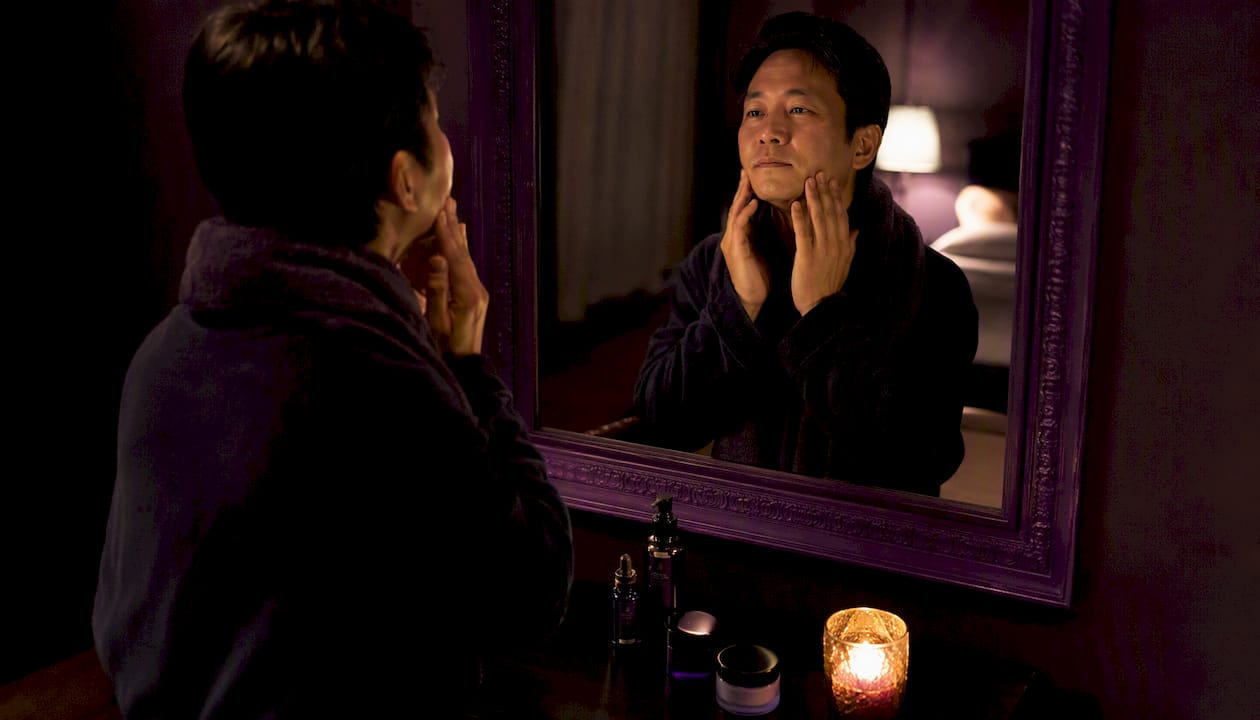
Gentle facial massage improves lymphatic drainage and circulation, which can reduce puffiness and give skin a more even tone. Use clean hands or a gua sha tool with a facial oil or balm to reduce friction. Apply light, upward strokes from the center of the face outward, spending 3–5 minutes in the PM routine. Avoid massage during active inflammation, open acne lesions, or rosacea flares, as pressure can worsen redness and spread bacteria.
What do dermatologists say about K-beauty practices?
Dermatologists broadly agree: daily SPF and barrier support are the two highest-impact practices in any skincare routine, and K-beauty has prioritized both for decades before they became mainstream in Western dermatology.
K-beauty expert Sarah Chung Park reinforces this from the consumer side: the strength of the K-beauty approach is its flexibility. A routine that adapts to your skin’s daily state is more sustainable than a rigid protocol, and sustainability is what produces results over months and years.
Pro Tip: When introducing a retinoid into a Korean layering routine, apply it after your hydrating toner and essence, not directly on bare skin. The hydration layers beneath it buffer the retinoid’s potential for irritation without reducing its efficacy. Start at 1–2 nights per week and hold that frequency for at least four weeks before increasing. Pair it with a ceramide-rich moisturizer on top. Do not add vitamin C to the same PM routine until retinoid tolerance is fully established.
Lunarashopping curates products from brands with clinical heritage, including COSRX, Beauty of Joseon, and Pyunkang Yul, specifically because their formulations reflect these evidence-aligned principles. The curation prioritizes gentle, barrier-supportive formulas over trend-driven launches.
Traditional Korean skincare ingredients beyond the mainstream
The mainstream K-beauty conversation focuses on hyaluronic acid, niacinamide, and retinoids. But the deeper tradition draws from a much wider botanical and fermented ingredient library that predates modern cosmetic chemistry.
Hanbang (한방) is the Korean practice of using traditional herbal medicine in skincare. Brands like Pyunkang Yul, Beauty of Joseon, and Sulwhasoo have built entire lines around it. The key ingredients and their applications:
Fermented ingredients are central to K-beauty’s efficacy story. Fermentation breaks down large molecules into smaller, more bioavailable forms and generates new bioactive compounds. Galactomyces ferment filtrate (used by COSRX and others) is a byproduct of sake fermentation and is well-documented for brightening and texture refinement. Bifida ferment lysate supports barrier function. These are not folk remedies; they appear in peer-reviewed cosmetic science literature.
Mugwort (Artemisia) is one of the most widely used traditional botanicals in Korean skincare. It contains flavonoids and terpenoids with anti-inflammatory properties, making it particularly effective for calming reactive and sensitized skin. COSRX’s Pure Fit Cica line and Banila Co’s Clean It Zero cleansing balm both incorporate calming botanical complexes that reflect this tradition.
Rice bran and rice water have been used in Korean and Japanese beauty for centuries. Rice bran contains ferulic acid, a potent antioxidant, as well as allantoin, which promotes cell renewal. The MIDHA Rice Bran Facial Scrub Foam is a practical example of this tradition applied to a modern gentle exfoliant.
Green tea (Camellia sinensis) provides catechins with antioxidant and anti-inflammatory activity. It appears in toners, essences, and moisturizers across the K-beauty spectrum and pairs well with vitamin C for daytime antioxidant protection.
Propolis (bee resin) has antimicrobial and wound-healing properties. COSRX’s Full Fit Propolis line is one of the most studied examples in the K-beauty market, with propolis extract used to calm post-blemish skin and support healing.
Pearl powder has been used in Korean and Chinese beauty traditions for centuries. Modern formulations use hydrolyzed pearl to deliver amino acids and trace minerals that support skin luminosity. It appears in premium serums and essences targeting dullness.
These traditional ingredients work best when integrated into a routine that already has a stable barrier foundation. They are not substitutes for SPF or a gentle cleanser; they are complementary layers that deepen the routine’s efficacy over time.
Key Takeaways
The most effective K-beauty approach combines a stable barrier-first base routine with daily SPF, layered hydration, and one new active introduced every 2–4 weeks.
| Point | Details |
|---|---|
| Start with 4 products | Cleanser, hydrating toner/essence, moisturizer, and SPF form the non-negotiable base for any K-beauty routine. |
| Layer thin to thick | Apply products from the thinnest to thickest texture, patting each step in; this improves absorption and reduces pilling. |
| SPF is the top anti-aging step | Daily broad-spectrum SPF 30–50 is the single most evidence-backed measure for preventing premature aging and hyperpigmentation. |
| Introduce actives one at a time | Add one new active every 2–4 weeks and patch test first; stacking multiple actives at once increases barrier disruption risk. |
| Lunarashopping curated sets | Lunarashopping’s morning routine sets and face care collections are built around these barrier-first, hydration-layering principles. |
Why Lunarashopping curates K-beauty the way it does
At Lunarashopping, the curation philosophy starts with one question: does this formula support the skin barrier before it tries to correct anything? Every brand we carry, from COSRX’s barrier-focused actives to Beauty of Joseon’s hanbang-rooted serums, earns its place by meeting that standard. We prioritize clinical heritage, transparent ingredient lists, and formulas that work across skin types rather than chasing seasonal trends.
The brands you will find at Lunarashopping, including ANUA, MEDICUBE, INNISFREE, and CIROA, were selected because they reflect the same principles this article covers: gentle cleansing, layered hydration, evidence-backed actives, and consistent sun protection. If you want to build a routine without spending hours comparing ingredient lists, the custom skincare kit builder on the Lunarashopping site lets you match products to your skin type, concern, and experience level.
Lunarashopping’s curated K-beauty sets make starting your routine simple
The hardest part of a new skincare routine is not the routine itself. It is choosing compatible products from a market with thousands of options, most of them marketed with the same claims.
Lunarashopping’s morning routine sets are pre-matched for compatibility: a gentle cleanser, a hydrating essence, a lightweight moisturizer, and an SPF, all from brands with documented clinical formulations. They map directly to the beginner AM routine in this article. For readers who are past the beginner stage, the full face care collection lets you add targeted serums, exfoliants, and treatment masks from brands like COSRX, Peach & Lily, and Beauty of Joseon without the guesswork of compatibility.
A curated set makes sense when you are starting fresh or rebuilding after barrier damage. Assembling products yourself makes sense when you already know your skin’s response to specific actives and want to optimize individual steps. Either way, the custom skincare kit builder is the fastest way to get a matched routine for your specific skin type and goals.
Useful sources and further reading
| Source | What it covers | Why it’s useful |
|---|---|---|
| Best Korean Skincare Routine 2026 — Jane Yoo MD | Evidence-based K-beauty routine guidance from a Korean-American board-certified dermatologist | Highest-authority clinical perspective on SPF, barrier care, and active introduction |
| What Experts Really Think of the 10-Step Korean Skin-Care Routine — Vogue | Expert commentary on personalization, double cleansing, and sheet mask frequency | Balances consumer and expert perspectives on practical K-beauty application |
| Korean Skincare Routine for Beginners — Korea Web Magazine | Beginner-focused routine structure, toner layering, and sunscreen guidance | Practical starting point for readers new to K-beauty |
| Pyunkang Yul: K-Beauty’s Hanbang Minimalist — K-Beauty Works | Deep dive into hanbang minimalism and short-formula approaches for sensitive skin | Useful for readers with reactive skin or ingredient sensitivity |
| Why K-Beauty Focuses on Prevention — Lunarashopping | K-beauty’s slow-ageing and prevention philosophy explained | Internal resource for readers who want to go deeper on SPF and long-term skin health |
| How to Layer Skincare Products Correctly — Lunarashopping | Step-by-step layering instructions and common mistakes | Practical companion to the routine section of this article |
This article is general skincare information, not medical advice. For persistent skin conditions, reactions to actives, or prescription-strength treatments, consult a board-certified dermatologist.