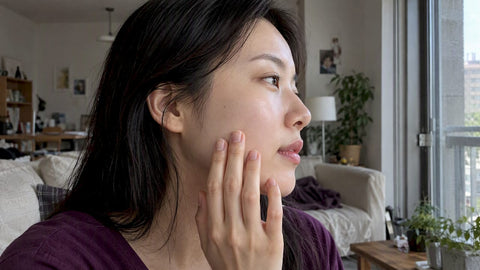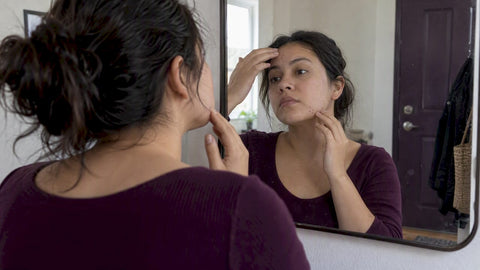
If your skin flared after starting a retinoid but the bumps are showing up where you normally break out, and it has only been a few weeks, you are most likely purging. Simplify your routine to a gentle cleanser, moisturizer, and sunscreen, and track your skin for 4 to 6 weeks. If things look worse, spread to new areas, or feel increasingly painful, stop the product and see a board-certified dermatologist.
TL;DR:
- Retinoids, alpha hydroxy acids, salicylic acid, benzoyl peroxide, and azelaic acid can trigger purging by speeding cell turnover; some vitamin C formulas can, too.
- Purging usually appears in existing acne zones and starts 2 to 6 weeks after an active; visible improvement often begins by weeks 4 to 6.
- Burning, itching, flaking, or pronounced redness suggests irritation; deep, painful nodules are unusual for purging and may increase scarring risk.
- Introduce one active at a time, start with a small amount every third night, and increase frequency only after your skin tolerates it.
- If acne persists beyond 8 weeks or lesions threaten scarring, a dermatologist can guide targeted treatment beyond over the counter options.
Table of Contents
- What Is Skin Purging? Mechanism and Common Triggers
- What an Acne Breakout Is: Causes and Clinical Features
- How to Tell Purging From a Breakout: A Quick Diagnostic Checklist
- How Long Purging Lasts and When to Escalate
- Managing Purging and Treating a True Breakout
- A Safer Way to Trial New Actives
- Patience Has a Limit, and That’s Okay
- Supportive Skincare While Your Skin Adjusts
- FAQ
- Sources
What Is Skin Purging? Mechanism and Common Triggers
Skin purging happens when an active ingredient speeds up cell turnover, pushing clogged material that was already forming beneath the surface up and out faster than usual. The bumps you see were, in a sense, already on their way. A new product just accelerated the timeline.
This reaction is tied to specific ingredient categories known for ramping up turnover. The most common triggers include:
- Retinoids (retinol, retinal, tretinoin, and similar derivatives)
- Alpha hydroxy acids (AHAs) like glycolic and lactic acid
- Beta hydroxy acid (BHA), primarily salicylic acid
- Benzoyl peroxide
- Azelaic acid
- Some vitamin C formulations, depending on concentration and pH
Formulation and potency matter here. It is worth noting that “purging” is a widely used clinical observation rather than a formally standardized diagnostic term, which is part of why so many people struggle to confirm it on their own.
A newly started active that increases cell turnover, especially a retinoid, typically produces purging within about 2 to 6 weeks, with improvement often visible by 4 to 6 weeks. If nothing has improved by the 8-week mark, it is worth reconsidering whether purging is really what is happening.
What an Acne Breakout Is: Causes and Clinical Features
A breakout, as distinct from purging, usually traces back to a mix of hormonal shifts, bacterial activity, inflammation, and pores clogging from comedogenic ingredients rather than from accelerated turnover. None of these causes are self-limiting the way a purge tends to be.
Breakouts show up as a range of lesion types, and the mix often tells its own story:
- Blackheads and whiteheads (comedones), which can appear in both purging and ordinary acne
- Papules: small, inflamed, tender red bumps
- Pustules: pus-filled lesions with visible white or yellow centers
- Nodules: larger, deeper, often painful lesions that sit under the skin
Nodules in particular are a signal that something beyond simple purging is at play, since purging rarely produces deep, painful lesions. A breakout driven by hormones, bacteria, or a pore-clogging product generally will not resolve just by waiting it out. It tends to need a targeted treatment approach, whether that is an over-the-counter active matched to the actual cause or a dermatologist-guided plan, especially when lesions are inflamed or recurring in the same spots month after month.
How to Tell Purging From a Breakout: A Quick Diagnostic Checklist
Appearance alone will not settle this. Experts consistently point to trend and context over any single lesion, which means the real diagnosis comes from tracking a few specific signals over time rather than judging day one.
- Timing: Purging tends to start 2 to 6 weeks after introducing a new active and should show visible improvement within 4 to 6 weeks. If you are past 8 weeks with no progress, reconsider the diagnosis.
- Location: Purging usually surfaces where you already tend to break out. New blemishes in unfamiliar areas, like your jawline suddenly flaring when you normally break out on your forehead, point toward irritation or a different cause entirely.
- Appearance: Purging often looks like clusters of small comedones or whiteheads. Burning, stinging, flaking, or pronounced redness points more toward irritation than a true purge.
- Symptom quality: Itching, burning, or scaly dryness alongside the bumps suggests a reaction rather than purging, which typically does not come with those sensations.
- Trend over time: A genuine purge gradually settles down. A reaction or ordinary breakout tends to hold steady, worsen, or spread.
Pro Tip: Photograph your skin before you start a new active, then again weekly, and log the start date alongside a rough lesion count, so you are comparing data instead of memory.
How Long Purging Lasts and When to Escalate
Most purging episodes follow a fairly predictable arc: onset within 2 to 6 weeks of starting the active, visible improvement by 4 to 6 weeks, and resolution soon after. Guidelines note that persistence beyond roughly 8 weeks is a signal to reconsider whether purging is really the right explanation.

A purge that has not improved by the 8-week mark is one of the clearest signals that something other than purging is driving the breakout.
A few things can stretch or compress that timeline. Your own skin cycle length varies by age and skin type, a higher-potency formulation can accelerate the process, and pre-existing subclinical congestion (clogged pores you could not yet see) can mean a longer purge simply because there is more material working its way out.
Stop waiting and get a professional opinion if lesions are still worsening past 6 to 8 weeks, if you notice painful cysts or nodules, if you are worried about scarring, or if irritation is severe enough to affect your daily comfort.
Managing Purging and Treating a True Breakout
Supportive, low-intervention care works best while your skin adjusts to a new active. The goal is to protect your barrier without undoing the active’s progress.
- Simplify your routine to a gentle cleanser, a barrier-supporting moisturizer, and daily sunscreen.
- Look for ceramides, glycerin, and hyaluronic acid in your moisturizer to help with hydration while turnover is elevated.
- Reduce how often you apply the active: every third night instead of nightly is a reasonable starting point.
- Avoid stacking multiple exfoliating actives (a retinoid and an AHA together, for example) while your skin is adjusting.
Pro Tip: If a retinoid is stinging, try applying it to fully dry skin and sandwiching it between two light layers of moisturizer rather than stopping it outright. Our retinol sandwich method guide walks through this technique for people managing early irritation.
If what you are dealing with is an actual breakout rather than purging, treatment usually needs to be more deliberate. The American Academy of Dermatology names benzoyl peroxide, topical retinoids, salicylic acid, and azelaic acid among first-line options, and persistent, painful, or scarring acne is a reason to bring in a dermatologist for prescription-strength options rather than cycling through over-the-counter products on your own.
Escalate to professional care when you notice painful nodules, visible scarring risk, or no improvement after roughly 8 weeks of consistent use.
A Safer Way to Trial New Actives
Introducing a new active does not have to be a guessing game. A 2024 consensus from 133 dermatologists on managing topical retinoid irritation recommends a measured, step-by-step approach, and it translates well to any purging-prone ingredient, not just retinoids.
- Photograph your baseline skin, note your usual problem areas, and list every product currently in your routine.
- Introduce only one active at a time. Start with a pea-size amount applied every third night rather than nightly.
- Build up gradually, moving from alternate nights to nightly use only once your skin tolerates it, while keeping the rest of your routine minimal and hydrating.
- Check in at the 2, 4, and 8-week marks. Reduce frequency or stop if you notice burning, itching, flaking, or spread to new areas.
If you are starting your first retinoid, our retinol versus retinal guide breaks down which form tends to be gentler for beginners, and our comedogenic ingredients list can help you rule out whether a different product in your routine is the real culprit.
Patience Has a Limit, and That’s Okay
Purging is a real, well-documented pattern, and it is normal to feel frustrated watching your skin look worse before it looks better. Measured patience, paired with photos and honest tracking, is the right instinct for most people.
But patience is not the same as ignoring your skin. If something feels wrong, painful, or like it is spreading rather than settling, a board-certified dermatologist can tell you in one visit what weeks of guessing cannot.
— Lunara
Supportive Skincare While Your Skin Adjusts
Whatever your skin is doing right now, a gentle, barrier-friendly routine makes the adjustment period easier to get through, and curated selections of formulations can offer gentleness and effectiveness across skin types, so you are not adding guesswork on top of an already confusing week.

A few categories worth building around while you wait out a purge or soothe irritated skin:
- Gentle, low-stripping options in our face cleansers and scrubs collection
- Ceramide and humectant-rich picks in face creams and moisturizers
- Calming, hydrating options among our face masks
- A ready-made morning routine set that covers cleanser, moisturizer, and sunscreen in one simplified step
| Need | Category |
|---|---|
| Gentle cleansing | Face Cleansers & Scrubs |
| Barrier support and hydration | Face Creams & Moisturizers |
| Calming or brightening boost | Face Masks |
| Minimal, pre-built routine | Morning Face Care Routine Set |
For readers who want formulation-first guidance on building a barrier repair routine from scratch, this guide on skin barrier repair from Maison Dovellé is a helpful companion read. When you are ready to shop, our full face care collection is a good starting point, and standard shipping starts at $6.49 flat rate.
This article is general information, not a substitute for advice from a qualified doctor. Consult a qualified healthcare professional about your own circumstances before acting on anything here.
FAQ
How to tell the difference between breakout and purging?
Purging tends to appear in your usual acne-prone areas within 2 to 6 weeks of starting a new active and improves by 4 to 6 weeks. A breakout or irritation reaction tends to spread to new areas, worsen over time, or come with burning, stinging, or flaking.
What does skin purging look like?
Purging usually shows up as small whiteheads or clustered comedones in the same spots where you already break out. It typically lacks the burning, itching, or scaly dryness that often signals irritation instead.
How long do purge breakouts last?
Purging typically begins within 2 to 6 weeks of starting a new active, with visible improvement often appearing by 4 to 6 weeks. If there is no improvement by around 8 weeks, it is worth reconsidering whether purging is really the cause.
Is it good if your skin is purging?
Purging itself is not harmful. It signals your skin working through congestion faster because of a new active, and it is generally a temporary phase rather than a sign of damage. That said, trend matters more than any single day, so track your skin and stop the product if things worsen instead of improving.
Sources
- American Academy of Dermatology issues updated guidelines for the management of acne
- Iberia Consensus on Strategies to Prevent and Manage Irritation by Topical Retinoids in Facial and Trunk Acne (PubMed)
- Skin Purging vs. Breaking Out: Experts Explain the Difference | SELF