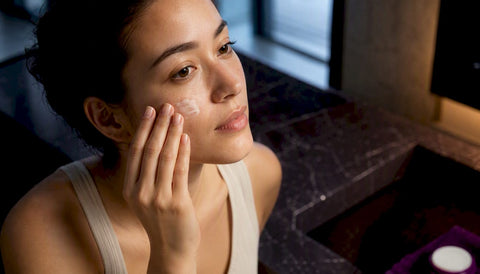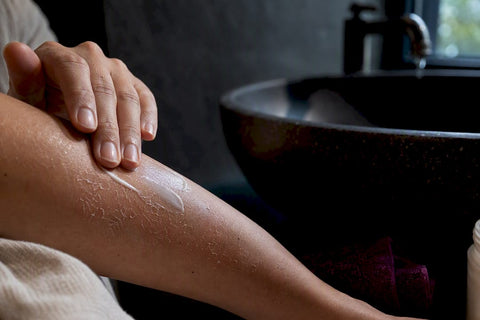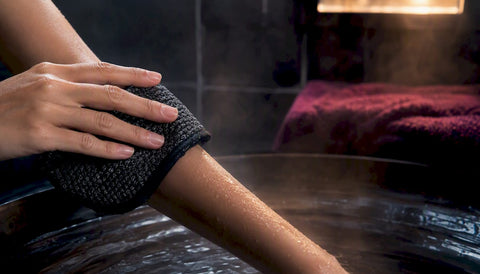
A viscose Italy towel is an inexpensive, effective weekly body exfoliator that sloughs off dead skin better than most scrubs on the market. Reach for a fine-to-medium grit mitt, use it once a week after a 10 to 15 minute hot shower, and skip it entirely if your skin is sunburned, freshly waxed, or already irritated.
TL;DR:
- Using a viscose Italy towel once a week after a warm shower effectively removes dead skin, especially on rough areas like elbows and knees.
- Proper technique, including soaking skin first and applying gentle pressure, is crucial to prevent irritation and achieve smooth, glowing skin.
- Avoid using the mitt on sensitive areas such as the face or freshly shaved, waxed, or broken skin to reduce the risk of irritation or damage.
- Mechanical exfoliation frequency should be limited to once every one to three weeks, depending on skin type, to avoid over-exfoliation and barrier damage.
- Regular cleaning, proper storage, and replacing the mitt every one to three months are essential to maintain hygiene and skin health.
Table of Contents
- What Is a Korean Exfoliating Mitt?
- How Do You Use a Korean Exfoliating Mitt Safely?
- Who Should Use a Mitt, and How Often?
- How Do You Choose the Right Exfoliating Mitt?
- How Do You Clean and Store a Mitt, and When Should You Replace It?
- What Are the Main Risks and Safety Precautions?
- Lunara’s Practical Perspective and Troubleshooting Tips
- Our Take: Technique Beats Product Every Time
- Where to Buy a Korean Exfoliating Mitt You Can Trust
- Sources
What Is a Korean Exfoliating Mitt?
A Korean exfoliating mitt, also sold as an Italy towel or seshin (때밀이), is a textured glove made from viscose or rayon fibers designed to physically lift dead skin cells from the body. The name “Italy towel” is a quirk of history: the fabric was reportedly first imported to Korea from Italy in the mid-20th century, and the nickname stuck long after the origin story faded into folklore. Walk into any Korean bathhouse (jjimjilbang) and you will see the same rough-textured mitts in the hands of professional scrubbers, working guests over on tiled tables after a long soak.
The material matters more than the branding on the package. Background on the mitt’s construction confirms it as a genuine Korean spa staple, and the reason it works comes down to fiber structure, not marketing.
- Viscose/rayon mitts have a slightly rough, almost sandpaper-like weave that catches on flaking, dead skin without needing soap or extra product.
- Polyester or synthetic-blend mitts tend to feel smoother and often move dead skin around rather than lifting it away.
- Grit texture intensifies after the fabric gets wet for the first time, which surprises a lot of first-time buyers who assume something is wrong with the product.
Bathhouse culture treats this as a full-body ritual, often done by someone else, on very softened, soaked skin, with firm and sustained pressure. Translating that into an at-home routine means turning the intensity down. You are your own scrubber now, working on skin that has had a shower instead of a 20-minute soak, so a lighter touch and shorter session make sense.
One detail trips up almost everyone new to this tool: these mitts are built for the body, not the face. The texture that works beautifully on a heel or elbow is too aggressive for facial skin, which is thinner and more reactive. If you want an exfoliating step for your face, a chemical exfoliant or a dedicated facial scrub, like the MIDHA Rice Bran Facial Scrub Foam, is the better fit.
How Do You Use a Korean Exfoliating Mitt Safely?
Technique determines whether you get smooth, glowing skin or an angry red rash. The steps below follow the same sequence recommended in step-by-step mitt guides, adapted for a home shower instead of a bathhouse soak.
- Soften your skin first. Take a hot shower or bath for 10 to 15 minutes before you scrub. Warm water opens pores and loosens the outer layer of dead skin, which is why skipping this step is the number one reason people don’t see results.
- Wet and prep the mitt. Soak the mitt in warm water, then wring it out. If it feels tighter or stiffer than expected, that is normal. Viscose fibers shrink and tighten the first time they get wet, so gently stretch the mitt back into shape before you start.
- Start with bare skin, no soap. A layer of body wash or lotion creates a slip barrier that stops the mitt from catching on dead skin. Scrub on clean, wet product-free skin.
- Use long strokes toward the heart. Work in the direction of circulation rather than scrubbing back and forth. Apply moderate pressure on most areas, and reserve firmer pressure for rough zones like elbows, knees, and the bottoms of your feet.
- Watch for the “rolls.” Within a minute or two on a given patch of skin, you should start to see small grayish rolls of dead skin lifting away. That is the mitt doing its job. Once an area stops producing rolls, move on. Continuing to scrub past that point just irritates healthy skin.
- Skip the face, neck, and any compromised skin. Keep the mitt off your face, and avoid sunburned areas, active breakouts, or anywhere you’ve recently shaved, waxed, or treated.
- Rinse and moisturize immediately. Rinse off loosened skin cells completely, pat dry rather than rubbing, and apply a rich moisturizer right away. Freshly exfoliated skin absorbs product faster and needs the hydration.
Pro Tip: If you’re heading outside after exfoliating, don’t skip sunscreen. Freshly scrubbed skin has a thinner protective layer and burns more easily, even on a mildly sunny day.
A full-body session should run 10 to 20 minutes total, not counting the pre-soak. Most first-timers rush the soak and then wonder why nothing seems to be happening. Skin that has not been properly softened resists the mitt, which leads people to press harder instead of soaking longer, and that is where irritation starts. The fix is almost always warmer water, not more force.
Who Should Use a Mitt, and How Often?
Frequency is where good intentions go wrong. This is a mechanical exfoliant, and mechanical exfoliants add up faster than most people expect.
- Normal to oily skin: once a week is a reasonable starting point, adjusting down if you notice redness lasting more than an hour.
- Dry skin: every 10 to 14 days, paired with heavier moisturizing immediately after.
- Sensitive or reactive skin: every two to three weeks at most, or a gentler chemical exfoliant instead.
- Anyone with active dermatitis, eczema flares, or recent laser or waxing treatments: skip entirely until skin has fully healed.
Dermatology guidance on exfoliation frequency generally caps strong exfoliation at two to three times a week for chemical methods, and mechanical tools like a mitt should sit even less often than that ceiling, since the physical friction compounds with any acids or retinoids already in your routine. If you use AHAs, BHAs, or PHAs on your body, avoid combining a mitt session on the same day. Allow time between treatments and monitor your skin’s reaction before resuming. K-beauty exfoliation philosophy generally favors gentler enzyme and low-concentration acid formulas, reserving firmer mechanical exfoliation for occasional deep treatment rather than constant use.
How Do You Choose the Right Exfoliating Mitt?
Not every mitt sold under this name performs the same way, and the price tag rarely tells you why.
- Material first. Viscose or rayon is the gold standard because the fiber holds a slightly rough texture even when wet, which is what actually lifts dead skin. Polyester blends often feel abrasive dry but go slippery once wet, doing far less work.
- Grit level matters. Fine grit suits beginners and anyone with sensitive skin. Medium grit is the workhorse choice for most people and most body areas. Coarse grit is reserved for calluses on feet or elbows and should never touch thinner skin like the inner arms or torso.
- Expect shrinkage. A mitt that felt roomy dry will tighten noticeably after its first soak. That’s normal viscose behavior, not a sizing mistake, and a gentle stretch after wetting restores a comfortable fit.
- Check the labeling. Packaging should clearly state the mitt is for body use. If a product markets itself for both face and body without any distinction in grit or material, treat that as a red flag rather than a bonus feature.
- Price isn’t the whole story. A two-dollar difference between two mitts rarely reflects a real quality gap. What matters is fiber content and weave tightness, which you can usually confirm from the material description, not the price.
Lunarashopping’s skin care accessories collection sources mitts built from the viscose weave dermatologists and K-beauty writers consistently recommend, so you’re not left guessing at fiber content from a vague product photo.
How Do You Clean and Store a Mitt, and When Should You Replace It?
Hygiene is where a lot of people cut corners, and it’s the easiest habit to fix.
- Rinse thoroughly after every use to remove dead skin residue and any leftover soap, then wring out excess water.
- Hang it to air-dry somewhere with airflow. Never seal a damp mitt in a drawer or plastic bag; that’s exactly the environment mold needs.
- Sanitize occasionally, but choose your method carefully. A gentle machine wash on a cool cycle preserves the fibers, while boiling disinfects effectively but breaks down viscose faster and shortens the mitt’s usable life.
- Expect a lifespan of roughly one to three months depending on how often you use it and how well you dry it between sessions. Fraying edges, a flattened texture, or a musty smell that survives washing are all signs it’s time to retire the mitt.
- In multi-person households, color-code mitts by user rather than sharing one. Sharing an exfoliating tool spreads bacteria and skin cells between people, which is worth avoiding even among family members.
What Are the Main Risks and Safety Precautions?
Over-exfoliation is the most common mistake, and it’s usually self-inflicted through impatience rather than a bad product.
- Watch for redness that lingers, stinging, or raw-feeling patches. That’s your signal to stop immediately, rinse with cool water, and apply a plain, fragrance-free moisturizer.
- Avoid mitt use on freshly shaved, waxed, or lasered skin. Wait at least 24 to 48 hours for shaving and longer, often a week or more, after waxing or laser treatments, since the skin barrier is compromised during that window.
- Sun sensitivity spikes right after exfoliating. Newly exposed skin burns faster, so apply SPF before going outside and skip tanning beds or intentional sun exposure for a day or two.
- Don’t stack mitt sessions with acid peels or aggressive chemical treatments on the same day. A mitt can work as a low-cost alternative to a body chemical peel for thickened, keratinized areas, but combining both mechanical and chemical exfoliation at once overwhelms the skin barrier rather than doubling the benefit.
Clinical guidance generally treats two to three exfoliation sessions per week, chemical or mechanical combined, as the upper limit for most people before barrier damage becomes a real risk. If irritation doesn’t calm down within 24 hours, or if you notice cracking, bleeding, or an infection developing, stop entirely and check with a dermatologist.
Lunara’s Practical Perspective and Troubleshooting Tips
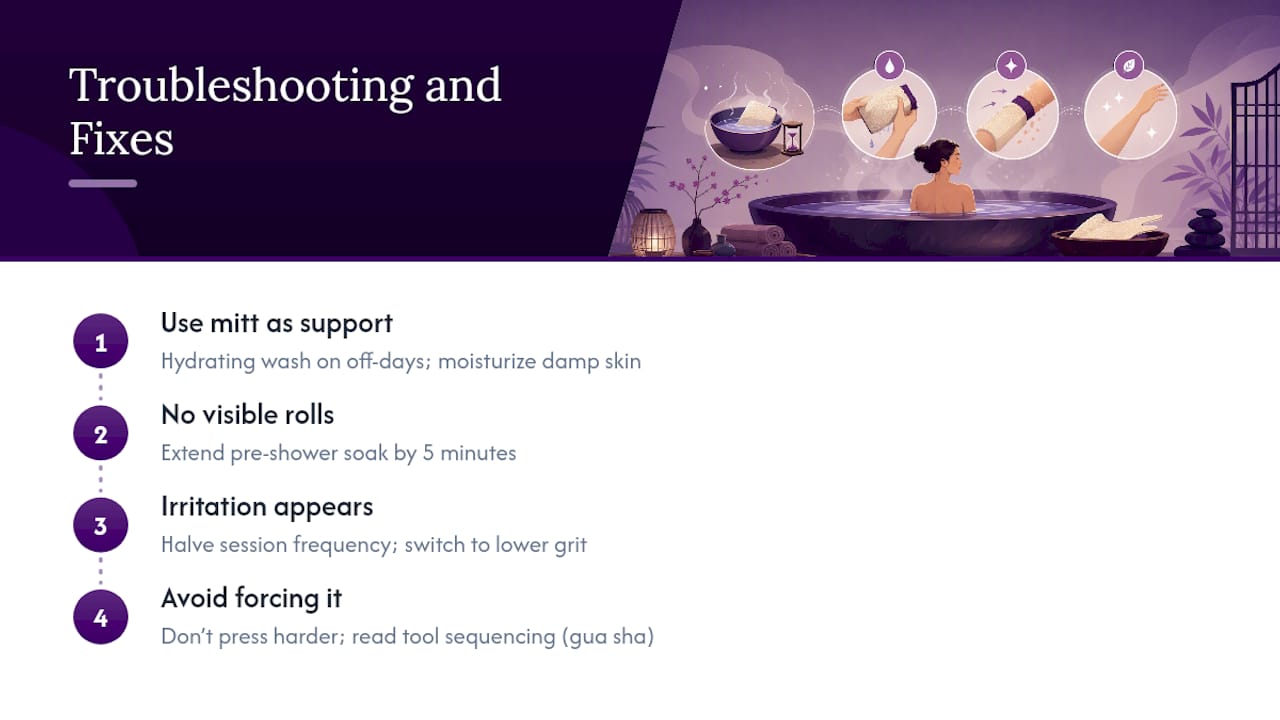
We treat the exfoliating mitt as a supporting player in a body-care routine, not a standalone fix. Pair it with a hydrating body wash on non-scrub days, and follow every session with a barrier-supporting moisturizer while skin is still slightly damp. A 3-in-1 face, body, and hair wash works well on the days between mitt sessions, keeping skin clean without adding extra friction.
If you’re not seeing visible “rolls” of dead skin after a few sessions, the soak time is almost always the culprit. Extend your pre-shower soak by five more minutes before blaming the mitt. If irritation shows up instead, cut your frequency in half and switch down a grit level. A mitt that feels too coarse on day one rarely feels better by forcing through it. Reading about how gua sha and other body tools fit into a Korean routine can also help you sequence exfoliation alongside massage and moisturizing steps for better results overall.
Our Take: Technique Beats Product Every Time
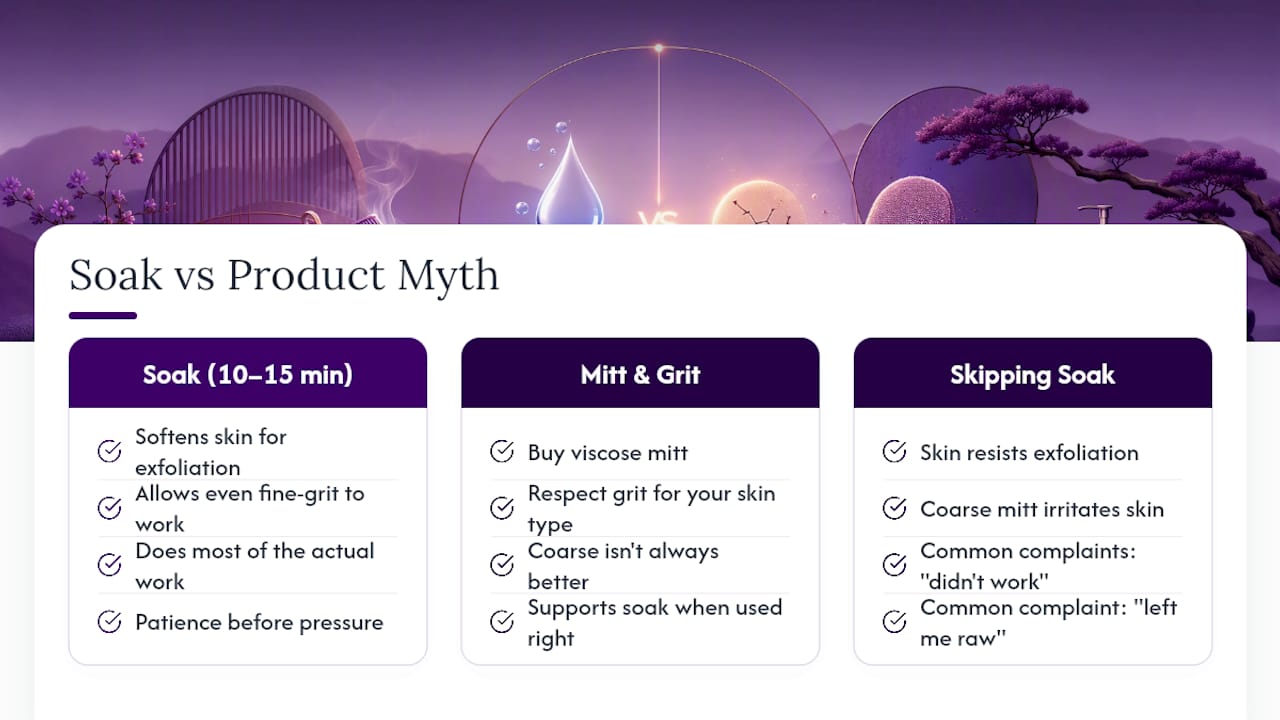
The biggest myth around Korean exfoliating mitts is that the right brand or the coarsest grit guarantees better results. It doesn’t. Skin softened by a proper soak responds to even a fine-grit mitt, while under-soaked skin resists a coarse one and just gets irritated instead of exfoliated.
Most articles on this topic rush past the soak step to get to the scrubbing, but the soak is doing more of the actual work than people realize. If you take one thing from this guide, make it patience before pressure. Buy the viscose mitt, respect the grit level for your skin type, and give the hot water time to do its job before you ever pick up the fabric. That single habit shift solves the majority of complaints people have about these tools, from “it didn’t work” to “it left me raw.”
— Lunara
Where to Buy a Korean Exfoliating Mitt You Can Trust
Everything covered above, viscose fiber, an appropriate grit level, honest labeling, points toward the same buying checklist, and Lunarashopping’s skin care accessories collection is built around exactly that checklist.
You’ll find mitts sourced in the material dermatologists and K-beauty writers actually recommend, paired with clear guidance on grit level so you’re not guessing between fine, medium, and coarse. If you’re building out a fuller routine rather than buying one item at a time, the custom skincare kit builder lets you combine a mitt with complementary body and face products in a single order. Shipping and returns follow straightforward policies across many e-commerce sites, so trying a new grit level or texture on similar platforms carries little risk if it isn’t the right fit for your skin. Head to the accessories collection and pick a grit level that matches the guidance above, fine or medium is the right starting point for most people, and add it to your next order.
Sources
The safety and technique guidance in this article draws on dermatologist advice about exfoliation frequency and barrier health, K-beauty routine guidance from Harper’s Bazaar, cultural context from Vogue’s coverage of the Italy towel, and material behavior notes from The Strategist’s mitt review.
For how mitt use fits into a broader routine, see Lunarashopping’s guides on Korean body care basics and at-home Korean spa routines.
- Jane Yoo MD: Korean skincare routine (2026)
- Harper’s Bazaar: 10-step Korean skincare routine (2025)
- Vogue: Why I can’t live without my Korean exfoliating mitt
- The Strategist (NYMag): best Korean exfoliating glove review