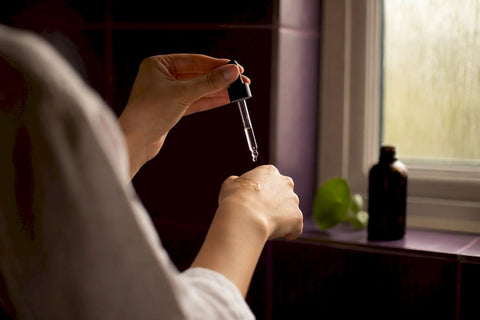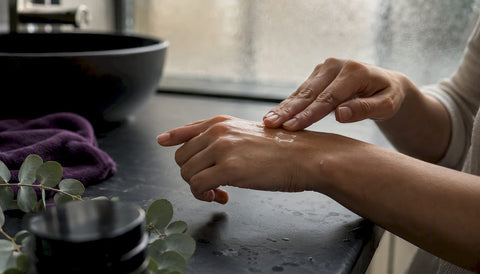
A Korean morning skincare routine is short by design: hydrate, protect, and wear daily sunscreen. That’s the entire assignment. Cleanse gently (or skip it), layer a toner and lightweight hydrator, add an antioxidant like vitamin C or niacinamide, seal with a light moisturizer, and finish with broad-spectrum sunscreen. Sunscreen is the one step you never skip.
TL;DR:
- Use a gentle water rinse or light cleanse in the morning only if you wake up with excess oil or sweat to prevent stripping dry skin.
- Apply a hydrating toner with hands and layer a lightweight essence or serum to boost hydration and prepare skin for active ingredients.
- Focus on antioxidants like stable vitamin C derivatives and niacinamide to protect skin from environmental damage without increasing sun sensitivity.
- Always finish with a non-greasy, broad-spectrum SPF 30 or higher and reapply midday for continuous protection during outdoor exposure.
- Tailor your routine based on skin type, adjusting moisturizer, sunscreen, and actives to avoid issues like oiliness, dryness, or irritation.
Table of Contents
- How to Build Your Korean Morning Skincare Routine, Step by Step
- The 4-Step Routine and When You Need More
- Customize Your Morning Routine by Skin Type
- The Five Morning Skincare Mistakes That Undo Your Routine
- What to Look for When Shopping for Morning Skincare Products
- How Lunara Curates Morning K-Beauty Products
- Why Sunscreen Reapplication Matters More Than the First Application
- Adjusting Your Routine for Climate and Season
- Nighttime Prep That Sets Up a Better Morning
- The Ingredients Doing the Real Work in Your Morning Routine
- What Consistency Actually Buys You
- Start Your Mornings With Lunara’s Curated Routine Set
- Sources
How to Build Your Korean Morning Skincare Routine, Step by Step
Morning skin has a different job than evening skin. At night, your routine repairs. In the morning, it defends. That distinction shapes every product decision you make before 9 a.m.
The goal of an AM Korean skincare routine is protection: shielding your barrier from UV rays, pollution, and the general wear of being outside, while keeping skin comfortable under makeup or sunscreen. PM routines exist to treat, exfoliate, and rebuild. Mixing up the two is where a lot of people go wrong, applying retinoids at 7 a.m. or skipping sunscreen at night because “it’s dark out anyway.”
Here’s the order that actually holds up, and why each step earns its place.
Step 1: Cleanse, or don’t. If your skin doesn’t feel oily or congested when you wake up, a splash of lukewarm water is enough. Skin that sweated overnight, used a heavier night cream, or lives in a humid climate benefits from a gentle, low-pH, water-based cleanser. Save foaming cleansers with sulfates for evenings when you’re removing sunscreen and makeup.
Step 2: Pat on toner. Korean toners are hydrating first, exfoliating second (if at all). Apply with your hands rather than a cotton pad, pressing it into skin instead of wiping. This preps the surface to absorb everything that follows, and it’s the foundation of the layering logic K-beauty is known for.
Step 3: Add essence, if you use one. Essence and serum get confused constantly, and the difference matters. Essence is thinner, water-forward, and designed to hydrate and prime; serum is more concentrated, often targeting a specific concern like brightening or fine lines. A daily essence sits between toner and moisturizer in weight, which is exactly where it belongs in the routine.
Step 4: Apply your morning antioxidant. This is where AM and PM routines diverge most sharply. Retinoids, AHAs, and BHAs belong at night, both because they increase photosensitivity and because they’re not doing much good sitting under a full day of sun exposure. Mornings call for antioxidants instead: a stable vitamin C derivative (look for sodium ascorbyl phosphate or ascorbyl glucoside on labels, which hold up better than pure L-ascorbic acid in daylight) or niacinamide, which helps calm redness and support the barrier without any sun sensitivity trade-off.
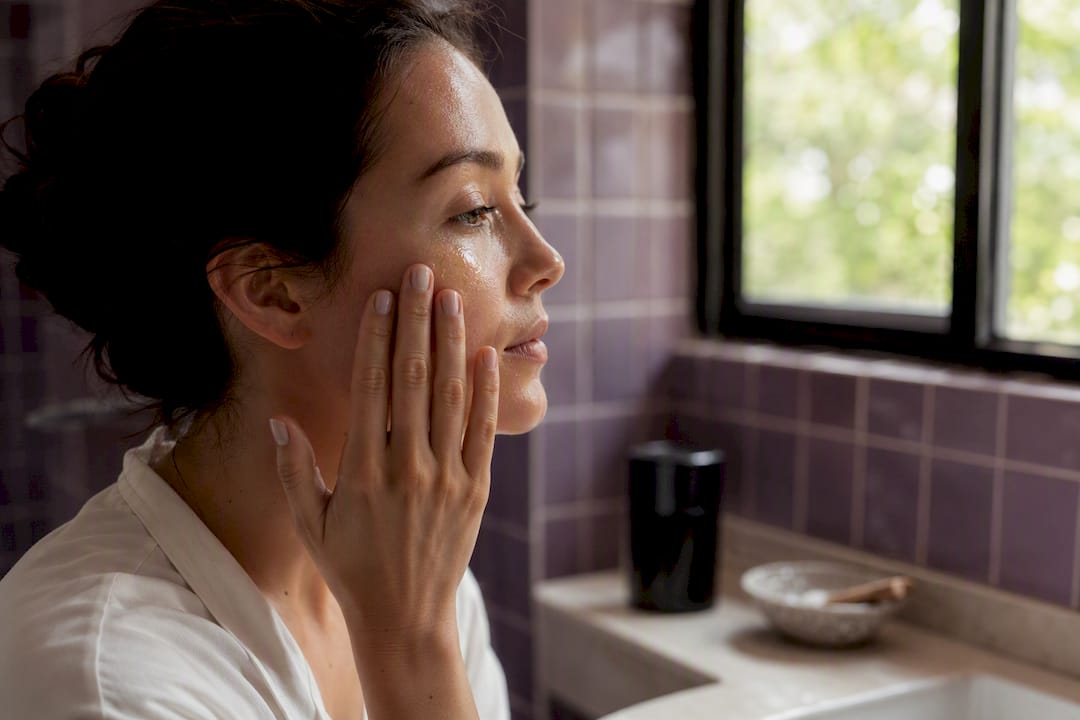
Step 5: Moisturize light. Morning moisturizers should feel closer to a gel or lotion than a rich cream. You’re layering sunscreen on top, so anything too heavy risks pilling or diluting your SPF’s coverage.
Step 6: Sunscreen, always. This is the step Korean skincare culture treats as sacred, and for good reason. Daily broad-spectrum SPF is the single most effective anti-aging habit available, full stop, and it’s the reason many Korean routines finish with a tone-up cream or BB cream that combines brightening with SPF in one product, cutting the routine down without cutting the protection.
- Apply sunscreen as the literal last step, after moisturizer, before makeup.
- Use an adequate amount to cover the face completely.
- Wait a minute or two before applying makeup so it sets rather than smears.
- Reapply at least once midday if you’re outdoors, using a setting-spray SPF or cushion compact over makeup.
Pro Tip: If a product pills or balls up under sunscreen, it’s usually a texture mismatch, not a skin problem. Let each layer absorb for 60 to 90 seconds before adding the next one, and swap heavy creams for gel textures if pilling keeps happening.
The 4-Step Routine and When You Need More
Not every morning calls for six steps. Skincare experts increasingly frame the famous “10-step” K-beauty routine as a flexible philosophy rather than a checklist, and the most practical takeaway is that a condensed version works fine for most people, most days.
- Gentle cleanse or water rinse (30 seconds): Skip the cleanser entirely if your skin isn’t oily.
- Toner or hydrating essence (1 minute): Pat in, don’t wipe.
- Lightweight moisturizer (30 seconds): A gel or lotion, not a rich cream.
- Broad-spectrum sunscreen (1 minute): Non-negotiable, applied last.
Total time: under five minutes, and it covers everything your skin structurally needs in the morning: gentle prep, hydration, and protection.
The 7-skin method is a different tool for a different problem. Instead of adding steps, you repeat one: applying the same hydrating toner in five to seven thin layers instead of one thick one. It’s most useful in the depths of winter, in dry climates, or when your barrier feels compromised and a single pass of product just isn’t sinking in. Pat one thin layer, wait until it’s mostly absorbed, then repeat. You’ll know you’ve done enough when skin looks visibly plumper and feels slightly tacky rather than dry.
This is also where “skip-care,” the minimalist counter-trend to maximalist K-beauty, earns its keep. Skip-care means cutting anything that isn’t pulling weight for your specific skin, whether that’s a toner that does nothing beyond what your moisturizer already handles or an essence layered under a hydrating serum that does the same job. The two things you never cut, regardless of how minimal you go, are hydration and sunscreen.
Customize Your Morning Routine by Skin Type
A routine that works for dry skin can actively backfire on oily or acne-prone skin, and vice versa. Here’s how to adjust each step.
- Oily skin: Skip rich creams entirely. Use a lightweight gel moisturizer and choose a sunscreen with a matte or “tone-up” finish that doubles as light coverage, cutting your step count without adding shine.
- Dry skin: Lean into the hydration-first approach with layered toner (the 7-skin method fits here well), hyaluronic acid-based serums, and a slightly richer AM cream if a gel isn’t cutting it by midday.
- Sensitive skin: Stick to fragrance-free formulas and centella asiatica, an ingredient widely used in Korean dermatology-adjacent skincare for calming redness. On flare-up days, a water-only cleanse followed by a simple moisturizer and mineral sunscreen is a legitimate routine, not a shortcut you should feel guilty about.
- Acne-prone skin: Prioritize barrier repair over aggressive treatment in the morning. Skip heavy occlusive balms, which can trap oil and contribute to breakouts, and reach for a morning-friendly niacinamide serum, which helps with both texture and calming inflammation without clogging pores.
- Mature skin: Antioxidants matter more here than almost anywhere else, since daytime environmental exposure is the primary driver of visible aging. Pair a stable vitamin C with a hydrating, slightly richer texture that plumps skin and softens the look of fine lines through the day.
If your skin doesn’t fit neatly into one category, which is true for most people, treat these as starting points to blend rather than rules to follow rigidly. Dry and sensitive often overlap; oily and acne-prone often do too.
The Five Morning Skincare Mistakes That Undo Your Routine
Most morning skincare problems trace back to the same handful of errors, and all of them are fixable in a day.
- Using PM actives in the morning. Retinoids, tretinoin, and high-strength AHAs or BHAs make skin more reactive to UV light. Save them for night and use antioxidants like vitamin C and niacinamide instead.
- Layering heavy occlusives under sunscreen. Thick balms and rich creams can interfere with how evenly SPF sits on skin, leaving thin spots with less coverage. Swap to a gel or lotion moisturizer on sunscreen days.
- Skipping the patch test on new products. Apply a new serum or moisturizer to your inner forearm for two to three days before putting it on your face, especially with active ingredients like vitamin C.
- Over-exfoliating in the morning. If your skin feels tight, red, or shiny by midday, you’re likely over-exfoliating at night and compounding it with actives in the morning. Cut back to two or three exfoliation nights a week.
- Not reapplying sunscreen. One morning application does not cover an eight-hour workday, especially if you’re near windows or outdoors at all.
Pro Tip: If your sunscreen pills under makeup, try applying it in thin layers and letting each one absorb fully before the next step. A mineral or hybrid formula often layers more smoothly than a heavy chemical one.
What to Look for When Shopping for Morning Skincare Products
Label reading matters more in the morning than at any other point in your routine, mostly because the stakes for getting sunscreen wrong are higher than for any other product.
Look for “broad-spectrum SPF” on any sunscreen, which confirms it protects against both UVA and UVB rays rather than just one. “Non-comedogenic” signals a lower likelihood of clogging pores, which matters most for oily and acne-prone skin. “Fragrance-free” is the flag to check for sensitive or reactive skin, since added fragrance is one of the most common irritant triggers in daily-use products.
On the ingredient side, prioritize stable vitamin C derivatives, niacinamide, hyaluronic acid, and centella asiatica for morning use. Avoid high-strength AHAs, BHAs, and retinol in your AM shopping cart entirely; they belong in your evening basket instead.
Texture rules simplify the guesswork: the thinnest product goes on first, the thickest goes on last, and sunscreen always comes after moisturizer, never before. If you’re building a routine under makeup, gel and lotion textures layer far more predictably than creams.
- Broad-spectrum SPF 30 or higher
- Non-comedogenic labeling for oily or acne-prone skin
- Fragrance-free formulas for sensitive skin
- Stable vitamin C, niacinamide, or centella as your morning active
Lunarashopping curates its full face-care catalog around exactly these signals, and the Custom Skincare Kit Builder lets you filter by texture and skin type instead of guessing from ingredient labels alone.
How Lunara Curates Morning K-Beauty Products
Lunara’s curation approach starts with a simple filter: does this product actually belong in a morning routine, or is it better suited to night? Every item considered for a morning collection gets evaluated on three criteria: hydration performance, texture compatibility under sunscreen, and how well it plays with layering.
That third point gets overlooked constantly. A serum can be excellent on its own and still be a poor AM choice if it pills under SPF or leaves a residue that interferes with makeup application later. Lunara’s editorial team tests for that friction point specifically, prioritizing lightweight, water-forward formulas from trusted Korean brands over heavier options that were designed with nighttime repair in mind.
The goal isn’t to stock everything K-beauty has to offer. It’s to make sure that what’s stocked for morning use actually functions as a morning product, which is a narrower and more useful standard than “popular” or “trending.”
Why Sunscreen Reapplication Matters More Than the First Application
One morning swipe of SPF protects you for roughly two hours, not eight. Sunscreen degrades with UV exposure, sweat, and friction from touching your face or wearing a mask, and most people apply it once at 8 a.m. and never think about it again until the next morning.
That single application is doing almost nothing by early afternoon if you’ve been outside, near a window, or sweating at all. Reapplication is what actually protects your skin through a full workday, not the first coat.
The practical fix is a format that fits into a normal day: a setting-spray SPF you can mist over makeup, a cushion compact with built-in sunscreen you can pat on during a lunch break, or a stick formula you can swipe on in a car or at your desk without disturbing foundation. Aim to reapply at least once around midday if you’re spending real time outdoors, and more often if you’re swimming, sweating, or at high altitude. Skipping reapplication is one of the most common reasons people feel like their sunscreen “isn’t working,” when the real issue is that it wore off hours earlier.
Adjusting Your Routine for Climate and Season
Korean morning skincare isn’t a fixed formula. It shifts with humidity, temperature, and UV intensity, and the routine that works in a humid summer will feel wrong by the middle of a dry winter.
In hot, humid climates, lean lighter across the board: a gel moisturizer instead of a cream, a matte-finish sunscreen, and skip any extra hydrating layers that will just feel heavy in the heat. In cold or dry climates, the 7-skin method becomes genuinely useful rather than optional, since a compromised, dry barrier needs more hydration passes to stay comfortable through the day. A richer AM moisturizer also makes sense in winter, even for people who run oily in summer.
High-altitude and high-UV environments call for stepping up sunscreen strength and reapplication frequency regardless of skin type, since UV exposure increases with elevation. Seasonal transitions, spring to summer or summer to fall, are also when skin tends to react unpredictably, so it’s worth patch-testing any product you’re reintroducing after a season away from it.
The core structure of the routine, hydrate then protect, doesn’t change. What changes is the weight of each layer and how many hydrating passes your skin needs before it feels balanced.
Nighttime Prep That Sets Up a Better Morning
A strong Korean morning skincare routine actually starts the night before. Skin that goes to bed properly hydrated and barrier-supported wakes up needing less correction in the morning, which means fewer products and less time before you walk out the door.
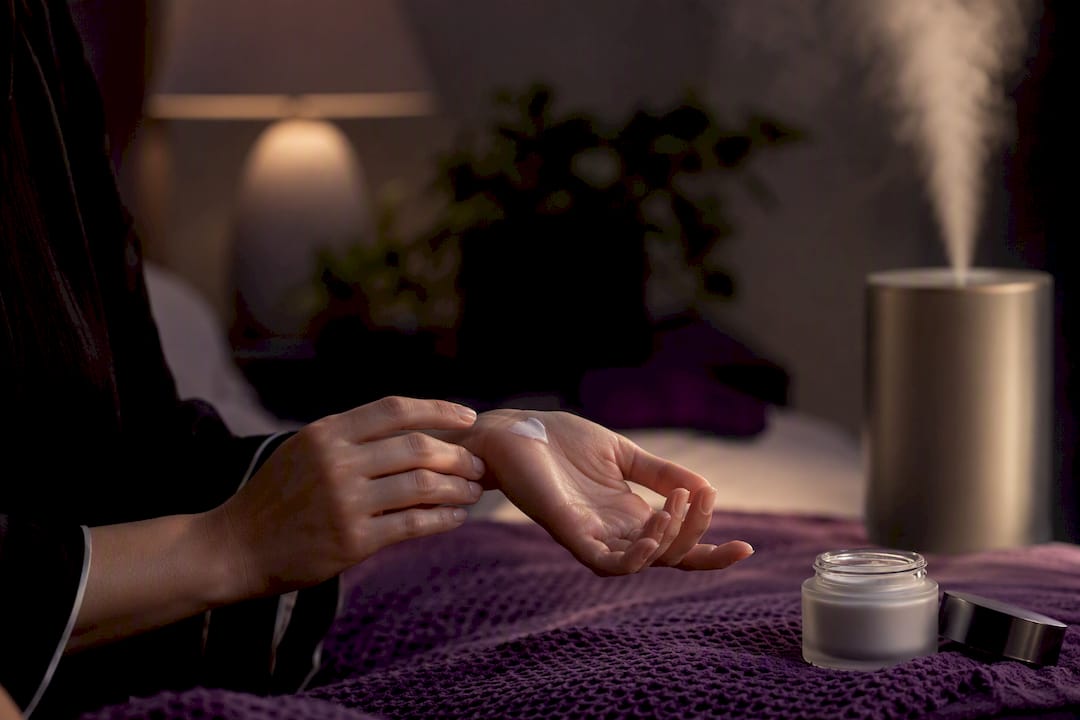
The biggest lever is your evening routine’s treatment step. If you’re using retinoids or exfoliating acids at night, give your skin time to fully absorb and settle before sleep rather than layering a heavy occlusive immediately on top, which can trap the active ingredient against skin longer than intended. A well-formulated night cream or sleeping mask finishes the job, locking in hydration overnight so your morning toner has less work to do.
Sleep position and pillowcase fabric matter more than people expect. A silk or satin pillowcase reduces friction against skin overnight, which can help minimize the creasing and puffiness that make mornings feel like they need extra product to fix. Drinking water before bed and keeping your bedroom slightly cool and humidified, especially in dry climates, also shows up directly in how your skin looks and feels when you wake up.
The practical takeaway: a rushed, product-light night routine usually means a longer, more corrective morning routine. Investing five extra minutes at night often saves you time at the sink the next day.
The Ingredients Doing the Real Work in Your Morning Routine
Antioxidants are the backbone of any effective AM routine, and their job is specific: neutralizing the free radicals generated by UV exposure and pollution before that damage accumulates in skin. Sunscreen blocks UV rays directly, but it can’t catch everything, and antioxidants act as a second line of defense against the environmental stress that builds up over the course of a day.
Vitamin C is the most studied of these for morning use, and stable derivatives like sodium ascorbyl phosphate hold up better under daylight and heat than pure L-ascorbic acid, which is notoriously unstable once a bottle is opened. Niacinamide works differently, supporting the skin barrier directly and helping calm the low-grade inflammation that comes from daily environmental exposure, which is part of why it pairs so well with vitamin C rather than competing with it.
Hyaluronic acid isn’t an antioxidant, but it belongs in the same conversation because hydrated skin handles environmental stress better than dehydrated skin does. A barrier that’s dry and compromised lets more irritants through; one that’s properly hydrated has an easier time doing its job. Centella asiatica rounds out the morning ingredient list for a different reason: it’s calming rather than active, which makes it useful on days when skin feels reactive and a full antioxidant serum would be one step too many.
What Consistency Actually Buys You
The best Korean morning skincare routine is the one you’ll actually do on a Tuesday when you’re running late, not the elaborate version you do once on a Sunday and then abandon. Korean morning wellness culture frames skincare as part of a broader daily ritual, not a separate chore, and that framing matters more than any single product choice.
Pick one non-negotiable habit and build around it. For most people, that’s sunscreen before makeup, applied the same way every single day regardless of how the rest of the routine shakes out. Everything else, the toner, the essence, the antioxidant serum, can flex with your schedule, your skin’s mood, and the season. Consistency in one or two steps beats perfection in seven steps you only manage twice a week.
Glowing skin isn’t the result of a perfect routine. It’s the result of a sustainable one, repeated for months.
— Lunara
Start Your Mornings With Lunara’s Curated Routine Set
Building a morning routine from scratch means researching cleansers, toners, essences, and sunscreens separately and hoping they layer well together. Lunarashopping removes that guesswork with the Morning Face Care Routine Set, a curated collection built specifically around the hydration-first, sunscreen-final structure outlined above.
The set maps directly onto the condensed 4-step routine: a gentle cleanser, a hydrating toner or essence suited to the 7-skin method if your skin needs extra layering, a lightweight AM moisturizer, and broad-spectrum sunscreen, all chosen for texture compatibility so nothing pills or interferes with the step after it. It’s built for anyone who wants the K-beauty layering logic without spending an afternoon reading ingredient labels one product at a time.
If your skin doesn’t fit a standard set, the Custom Skincare Kit Builder lets you swap individual steps by skin type and concern. Either way, the next step is simple: browse the Morning Face Care Routine Set and build the routine you’ll actually keep up tomorrow morning.
Sources
- How to Build a K-Beauty Morning Routine (2026)
- How Koreans start their morning & habits you’ll want to copy
- What Experts Really Think of the 10-Step Korean Skin-Care Routine
- Korean Skin Care Routine For Morning & Night for glass skin