The most effective approach to Korean skincare redness is a barrier-first routine built on centella (cica), ceramide-based repair, and daily fragrance-free SPF, not a rotation of active-heavy treatments. Some retailers curate gentle, centella-forward K-beauty for exactly this reason. Most people see visible calming within 2 to 4 weeks of consistent barrier repair, though deeper redness patterns can take longer.
TL;DR:
- Using a barrier-first routine with centella, ceramides, and SPF generally shows visible calming within two to four weeks, depending on redness severity.
- Check ingredient lists for centella, panthenol, or ceramides near the top; formulas lacking these are unlikely to help reduce redness effectively.
- Introduce new products gradually, patch testing beforehand, and avoid triggering ingredients like fragrance, alcohol, or strong acids during active flare-ups.
- Sunscreen, ceramide moisturizers, and centella serums are the most impactful products for calming redness, with targeted actives introduced only after skin stabilizes.
- Persistent redness symptoms such as papules, pustules, or burning may require dermatologist intervention alongside a barrier repair routine.
Table of Contents
- What Ingredients Actually Calm Korean Skincare Redness?
- A Simple AM and PM Routine for Redness-Prone Skin
- How Do You Choose Products Without Triggering More Redness?
- Which Product Types Matter Most for Redness?
- When Should You See a Dermatologist About Redness?
- Why Trust This Approach to Redness-Prone Skin
- What Causes Redness in the First Place?
- Our Take: Skip the Ten-Step Hype, Fix the Barrier First
- Start With a Kit Built for Calming, Not Guesswork
- Sources
- FAQ
What Ingredients Actually Calm Korean Skincare Redness?
Redness is inflammation showing on the surface, and the ingredients that work best interrupt that inflammatory response while rebuilding the skin’s protective layer. Centella asiatica, known as cica in K-beauty labeling, sits at the center of nearly every serious redness routine. Its active compounds, madecassoside and asiaticoside, carry documented anti-inflammatory and wound-healing properties that make it genuinely useful rather than just trendy.
Centella alone won’t fix a damaged barrier, though. You need materials that physically rebuild it.
- Ceramides, cholesterol, and fatty acids: these three lipids, in roughly the ratio your skin naturally produces them, patch the gaps in a compromised barrier.
- Panthenol (provitamin B5): draws in moisture and supports the barrier while easing surface irritation.
- Niacinamide: calms inflammation and can reinforce barrier function, though sensitive skin should start with lower concentrations.
- Allantoin: a mild soothing agent common in Korean formulas, good for daily use without added heat or tingling.
- Squalane: a lightweight, non-comedogenic oil that cushions the barrier without clogging pores.
- Green tea extract: contributes additional antioxidant and anti-inflammatory support, often layered alongside centella in calming serums.
- Azelaic acid: appropriate once skin is stable, useful for redness tied to rosacea-like patterns or post-inflammatory marks, but not the right first move during an active flare.
Pro Tip: Check the first five ingredients on any label. If centella, panthenol, or ceramides don’t appear near the top, the formula probably won’t do much for redness no matter what the front of the bottle promises.
Watch for red flags, too. Fragrance and parfum, even the “natural” kind, are among the most common and underrated triggers for reactive skin. High alcohol denat., stacked strong acids, and retinoids introduced mid-flare all tend to make redness worse before they make it better.
A Simple AM and PM Routine for Redness-Prone Skin
Consistency matters more than complexity here. A shorter routine done daily beats an elaborate one done sporadically, especially while your barrier is healing.
Morning:
- Cleanse gently with a low-foam or cream cleanser, or simply rinse with water if skin feels tight.
- Apply a hydrating toner or essence to prime skin with moisture.
- Layer a centella or soothing serum onto slightly damp skin.
- Seal with a ceramide-rich moisturizer.
- Finish with a fragrance-free sunscreen, mineral or chemical, whichever your skin tolerates best.
Evening:
- Remove sunscreen and makeup with a gentle oil or balm cleanser.
- Follow with a low-foam cleanser to clear remaining residue.
- Rehydrate with the same toner or essence used in the morning.
- Apply a barrier serum or richer moisturizer to support overnight repair.
- Introduce actives like azelaic acid or a mild retinoid only once skin has been calm for at least a week, and only one new product at a time.
Patch test every new product on your inner arm or jawline for 48 hours before applying it to your whole face. If you’re currently using exfoliating acids, taper gradually. Drop from daily use to two or three times weekly, then pause entirely until redness settles, before reintroducing at a lower frequency.
How Do You Choose Products Without Triggering More Redness?
Reading a label well matters more than brand reputation. A few rules make the process faster and more reliable.
- Choose formulas marked “fragrance-free,” not just “unscented,” since unscented products can still contain masking fragrance.
- Favor lightweight textures, gels, essences, and gel-creams, that layer without suffocating already-inflamed skin.
- Look for calming actives like centella, panthenol, or allantoin listed within the first several ingredients rather than buried near the bottom.
- Shorter ingredient lists tend to mean fewer potential triggers, which matters a lot for reactive skin.
- Introduce one new product at a time, waiting one to two weeks before adding another, so you can actually trace what caused any reaction.
This pacing feels slow compared to trying five new serums at once, but it’s the only way to build a routine you can trust.
Which Product Types Matter Most for Redness?
Not every step in a ten-step routine pulls equal weight. A few categories do most of the work.
- Centella serums and ampoules target inflammation directly and layer easily under moisturizer.
- Ceramide-rich moisturizers seal in hydration and rebuild the barrier that keeps irritants and moisture loss in check.
- Sunscreen is non-negotiable daily, since UV exposure both triggers new redness and slows healing of existing irritation. Fragrance-free formulas that also include soothing extracts tend to cause less irritation than premium options for sensitive skin.
- Hydrating mists and sheet masks work as occasional support, not daily essentials, best used after sun exposure or during dry spells.
When Should You See a Dermatologist About Redness?
Persistent flushing, visible papules or pustules, burning pain, or broken skin are signs a topical routine alone won’t resolve. These patterns often point to rosacea or a dermatitis that needs a prescription-level intervention.
A barrier-first Korean routine can support medical treatment for these conditions, but it doesn’t replace it. Bring your full product list to any dermatology appointment. Transient irritation from a new product usually settles within hours to a couple of days. Barrier-repair improvements from a consistent routine typically show up in 2 to 4 weeks, while chronic conditions like rosacea take longer and usually need ongoing management alongside skincare.
Why Trust This Approach to Redness-Prone Skin
Some skincare curations use a clear filter: centella-forward formulas, fragrance-free options, and barrier-repair ingredients take priority over trend-driven actives. This approach comes from research into how centella, azelaic acid, and barrier repair actually perform on reactive skin, not just what’s popular that season.
Picking products for redness-prone skin means reading past marketing claims to the actual ingredient list, checking concentration placement, and confirming a formula skips fragrance and essential oils. Applying this standard to calming products from serums to moisturizers helps avoid uncertainty over whether a “soothing” label actually means anything.
What Causes Redness in the First Place?
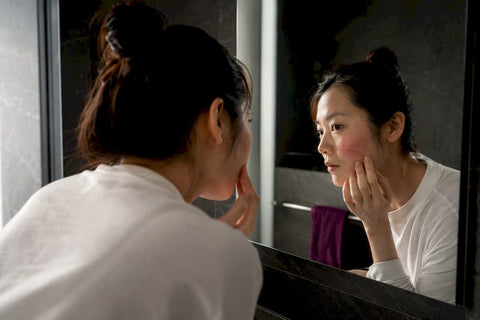
Redness usually comes from a barrier that’s lost its ability to hold moisture in and keep irritants out. Once that barrier is compromised, everyday exposures start to provoke a visible reaction that healthy skin would shrug off.
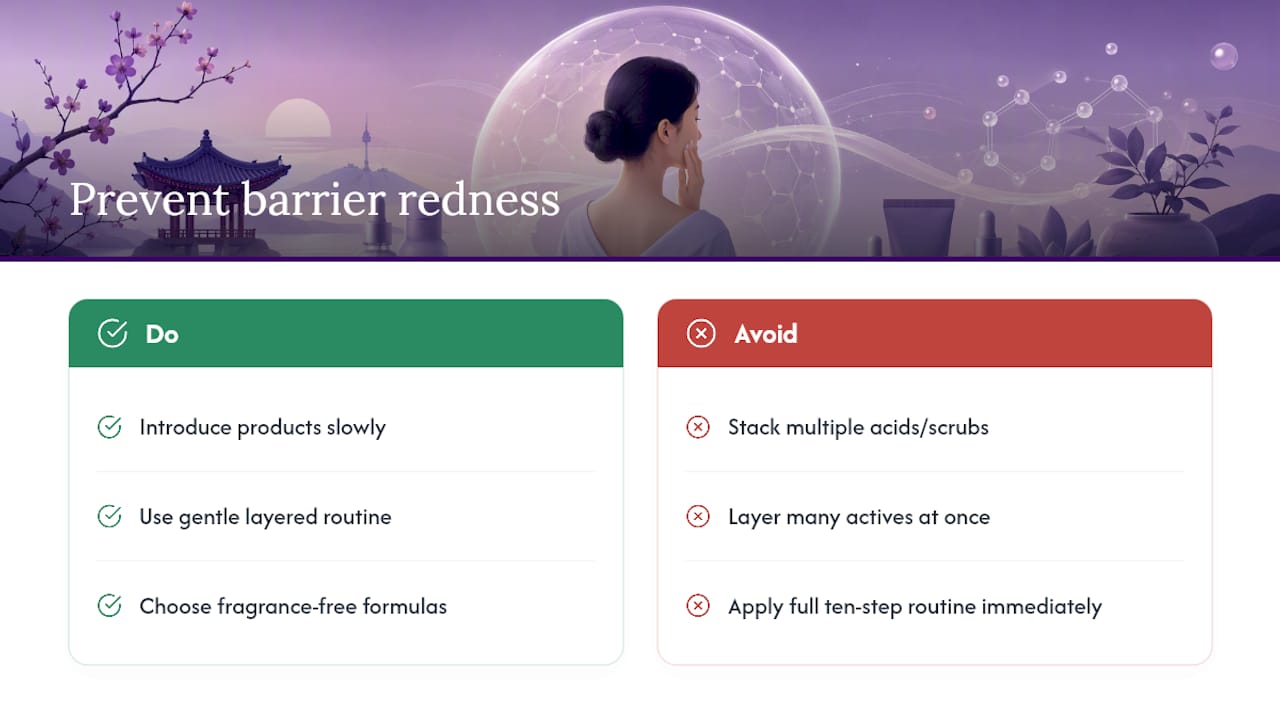
Common triggers include over-exfoliation from stacking multiple acids or scrubs in the same week, fragrance and essential oils hiding in “clean” or botanical-marketed products, and sudden temperature shifts, especially the jump from cold outdoor air to hot indoor heating. Layering too many actives at once, particularly retinoids alongside vitamin C or strong acids, is another frequent culprit. Sun exposure without daily SPF compounds all of it, since UV damage weakens the same barrier you’re trying to repair.
Korean routines get blamed for redness sometimes, but the actual cause is usually misuse: applying a ten-step routine all at once instead of building it gradually, or reaching for potent actives before the barrier can tolerate them. The gentle, layered structure that makes K-beauty effective only works if you introduce it slowly and skip the fragrance-heavy formulas.
Our Take: Skip the Ten-Step Hype, Fix the Barrier First
The conventional K-beauty pitch sells complexity: ten steps, layered essences, an ever-growing shelf of serums. That framing undersells what actually works for redness. The evidence points somewhere simpler. Centella, ceramides, and daily SPF do most of the heavy lifting, and stacking extra steps on top of a damaged barrier usually delays healing rather than speeding it up.
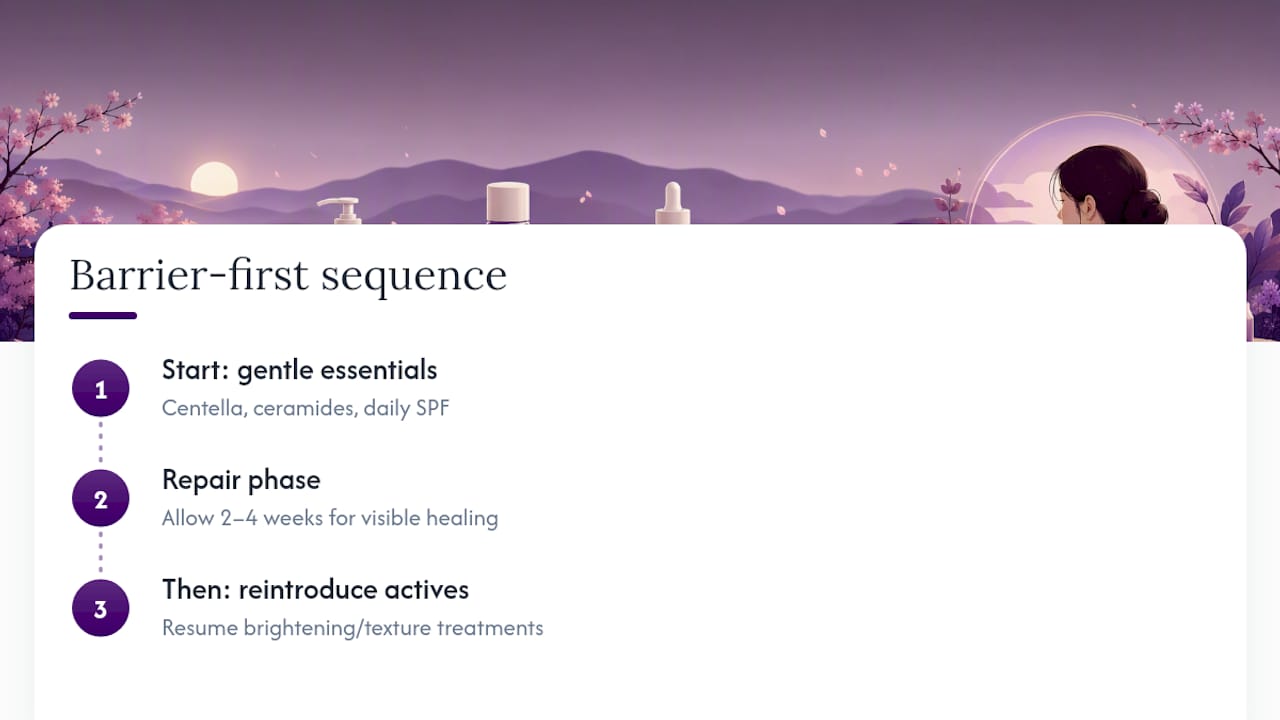
Where most advice falls short is pacing. Guides list the right ingredients but skip the sequencing: what to use immediately, what to hold off on, and how long a compromised barrier actually needs before it tolerates actives again. That timeline, 2 to 4 weeks for visible barrier repair, deserves more attention than it gets.
If you take one thing from this, let it be sequencing over volume. Fix the barrier before you chase brightening or texture. Everything else in a routine works better once redness has actually settled.
*— Lunara
Start With a Kit Built for Calming, Not Guesswork
Building a redness routine ingredient by ingredient takes time most people don’t have. The Morning Face Care Routine Set pairs a gentle cleanser, centella serum, and ceramide moisturizer with a fragrance-free sunscreen, the exact sequence this article walks through, already assembled.

If your skin has specific triggers or you’re managing rosacea-adjacent redness, the Custom Skincare Kit Builder lets you swap in or out based on what your skin actually tolerates rather than a generic bundle. Both options follow the same barrier-first logic: centella for calming, ceramides for repair, SPF as the non-negotiable finish. Browse the full face care collection if you’d rather build one step at a time, or start with the Morning Routine Set today and give your barrier the two to four weeks it needs to show real change.
Sources
- The 17 Best Korean Skincare Products of 2026, According to Testers & Derms
- PubMed: study on Centella asiatica and skin effects
- PMC review on skin barrier and topical interventions
- Tiger grass is the Korean skincare ingredient that fights redness | Vogue
FAQ
What do Koreans use for redness?
Korean skincare typically relies on centella asiatica (cica) serums, ceramide-based moisturizers, and fragrance-free sunscreen as the core redness-calming combination, layered over a simplified, gentle routine rather than heavy actives.
What do Koreans use to treat rosacea?
For rosacea, Korean routines lean on the same barrier-first principles, centella, ceramides, and daily SPF, as supportive care alongside dermatologist-prescribed treatment, since topical calming products manage symptoms but don’t replace medical treatment for rosacea.
What is the best skincare to get rid of redness?
The most reliable approach combines centella asiatica for anti-inflammatory support, ceramide-rich moisturizers for barrier repair, and daily fragrance-free sunscreen, with visible improvement typically appearing within 2 to 4 weeks of consistent use.
What is the best Korean serum for redness?
Look for a serum listing madecassoside or asiaticoside (centella’s active compounds) near the top of the ingredient list, ideally paired with panthenol or niacinamide, and free of fragrance; curated centella serums following this criteria are commonly recommended.
How long does it take for a Korean skincare routine to reduce redness?
Transient irritation from a single product often settles within hours to a couple of days, while barrier-repair improvements from a consistent routine generally show up in 2 to 4 weeks.