
Sebum control in Korean skincare is defined as a balanced method of managing excess oil by hydrating the skin and reinforcing its natural barrier, not by aggressively drying it out. If you have searched for what is sebum control Korea, you have found a concept that goes far beyond blotting papers and mattifying primers. Korean dermatologists and beauty experts treat oily skin as a hydration problem first and an oil problem second. The approach relies on gentle cleansing, targeted actives like niacinamide and salicylic acid (BHA), and layered hydration to bring sebaceous glands back into balance. Advanced clinical treatments in Seoul clinics take that philosophy even further, targeting oil glands directly for long-term results.
How does Korean skincare regulate sebum production?
Korean sebum regulation works by addressing the root cause of excess oil, which is most often a disrupted skin barrier and dehydrated skin. Charlotte Cho emphasizes that Korean sebum control is about balancing hydration and oil rather than harsh drying. That distinction shapes every step of the routine.
A well-structured Korean routine for oily skin follows a clear daily sequence:
- Oil-based cleanser (evening only). Double cleansing starts with an oil-based formula to dissolve sebum, sunscreen, and makeup without stripping the skin. This step is essential for evening routines and prevents residue buildup that clogs pores.
- Water-based cleanser. A low-pH gel cleanser, such as the COSRX Low pH Good Morning Gel Cleanser, removes water-based impurities without disrupting the acid mantle. Use this step morning and evening.
- Hydrating toner. Apply a lightweight, alcohol-free toner to restore moisture immediately after cleansing. Consistent hydration keeps sebaceous glands balanced and prevents the overproduction cycle.
- Targeted serum. Apply a niacinamide or BHA serum directly after toning. These actives address sebum at the pore level.
- Lightweight moisturizer. A water-based, non-comedogenic moisturizer seals in hydration without adding oil. Skipping this step causes the skin to compensate by producing more sebum.
- Broad-spectrum sunscreen (morning). Choose a sunscreen formulated for oily skin, such as a gel or fluid SPF. Sunscreen protects the barrier you are actively rebuilding.
Pro Tip: Layer water-based products from thinnest to thickest consistency. This order maximizes absorption and prevents pilling, which is a common issue when applying multiple serums.
Applying mattifying products only to the T-zone, not the entire face, prevents barrier compromise on the cheeks, which often need more hydration than the forehead or nose.
What ingredients actually control sebum in Korean products?
Korean skincare for oily skin relies on a core group of ingredients that each target a different part of the sebum problem. Understanding what each one does helps you build a routine that works rather than one that just sounds good.
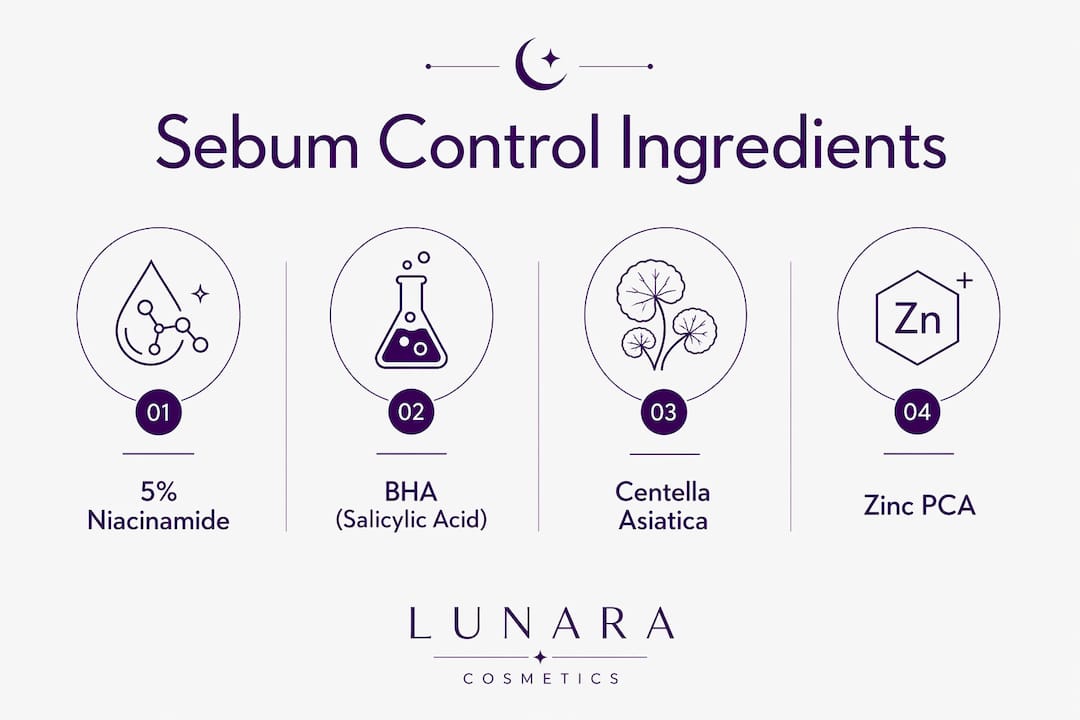
- Niacinamide. This is the gold-standard sebum regulator in Korean skincare. At 5% concentration, it visibly reduces oil production and minimizes pore appearance within six weeks. It also reduces redness and supports the skin barrier simultaneously.
- Salicylic acid (BHA). A keratolytic acid that penetrates into pores and dissolves sebum plugs. BHA exfoliation is recommended two to three times per week to reduce blackheads and manage oiliness without over-exfoliating.
- Green tea extract. Rich in polyphenols, green tea calms inflammation and reduces the activity of sebaceous glands. It pairs well with niacinamide in lightweight serums.
- Centella Asiatica. Known in Korean skincare as Cica, this plant extract soothes irritated, oily skin and strengthens the barrier. It is especially useful for people whose oiliness comes with redness or sensitivity.
- Hyaluronic acid. A hydrator, not an oil. Hyaluronic acid draws water into the skin without adding any lipid content, making it the ideal moisturizing agent for oily skin types.
The table below compares the primary function of each ingredient:
| Ingredient | Primary function | Best for |
|---|---|---|
| Niacinamide (5%) | Sebum regulation, pore minimizing | Daily serum use |
| Salicylic acid (BHA) | Pore cleansing, sebum dissolution | 2–3 times per week |
| Green tea extract | Anti-inflammatory, sebum reduction | Toners and serums |
| Centella Asiatica | Barrier repair, soothing | Sensitive oily skin |
| Hyaluronic acid | Hydration without oil | Moisturizers, toners |
Avoid ingredients that strip the skin aggressively, such as high-percentage alcohol, sulfates, and physical scrubs used daily. These damage the lipid barrier and trigger a rebound oil surge that worsens the original problem. Learning to mix skincare actives correctly prevents irritation and keeps your routine effective.
What mistakes make oily skin worse?
The most common mistake in sebum control is treating oily skin as a cleanliness problem. It is not. Washing your face more than twice daily or using harsh cleansers strips the natural lipid barrier, which triggers sebaceous glands to produce more oil in a reactive cycle. Korean dermatologists identify over-cleansing as a primary driver of sebum dysfunction.
Other frequent errors include:
- Skipping moisturizer. Dehydrated skin overproduces oil to compensate for lost moisture. This is the single most counterintuitive fact about oily skin, and it is well documented in Korean dermatology practice.
- Applying mattifying products all over the face. Mattifiers should go on the T-zone only. Applying them to the cheeks damages the hydration barrier in areas that are already drier, leading to rebound oiliness.
- Stacking too many actives at once. Using BHA, AHA, and retinol in the same routine causes barrier damage and irritation. Introduce one active at a time and monitor your skin’s response over two to four weeks.
- Jumping to high niacinamide concentrations. Concentrations of 10–15% frequently cause stinging and breakouts. Starting at 5% gives visible results without the irritation risk.
Pro Tip: If your skin feels tight after cleansing, your cleanser is too harsh. Switch to a low-pH gel formula and your sebum levels will likely decrease within two to three weeks.
Korean beauty avoids aggressive oil stripping because it treats the skin barrier as the foundation of all other improvements. Western routines have historically focused on removing oil. K-beauty focuses on replacing what the skin needs so it stops overproducing.
What advanced Korean dermatology treatments target sebum?
Topical care manages sebum effectively for most people. For persistent oiliness driven by hormonal or structural causes, Seoul clinics offer clinical treatments that target the oil glands directly. These procedures complement a topical routine rather than replace it.
Seoul clinics use technologies like Potenza (Microneedling RF) and Excel V laser in multi-session protocols designed to normalize oil gland activity over time. The results are longer-lasting than topical care alone.
| Treatment | Mechanism | Sessions typically needed |
|---|---|---|
| Microneedling RF (Potenza) | Radiofrequency energy shrinks oil glands | 3–5 sessions |
| Excel V laser | Targets sebaceous gland activity with light energy | 3–4 sessions |
| Genesis laser | Gentle heating reduces pore size and oiliness | 4–6 sessions |
| Microbotox | Botox injected into dermis reduces gland output | 1–2 sessions |
| Aqua Peel | Deep pore cleansing and barrier strengthening | Monthly maintenance |
Microbotox and energy-based devices represent a shift from surface management to root cause treatment. Botox injected superficially into the dermis reduces the secretory activity of sebaceous glands without affecting facial expression. International patients visit clinics in Seoul’s Cheongdam and Gangnam districts specifically for these treatments, which are less widely available in Western markets.
Chemical peels and Aqua Peels also play a role. They remove the buildup of dead skin and sebum that clogs pores while simultaneously strengthening the barrier. These are best used as monthly maintenance alongside a daily topical routine.
How do you personalize a Korean sebum control routine?
Your routine should match your actual level of oiliness, not a generic template. Follow these steps to build one that fits your skin:
- Start with niacinamide at 5%. Use it once daily in the morning or evening for six weeks before evaluating results. Do not increase the concentration unless you see no change after that period.
- Introduce BHA gradually. Begin with salicylic acid two times per week. If your skin tolerates it without dryness or irritation after three weeks, increase to three times per week.
- Apply mattifying products selectively. Use a mattifying moisturizer or primer only on the T-zone. Leave the cheeks and under-eye area with a standard lightweight hydrator.
- Adjust hydration layers to your skin’s response. If your skin feels tight or looks dull, add a second hydrating toner layer or a hyaluronic acid serum before your moisturizer. Oily skin still needs water-based hydration.
- Consider professional treatment if topical care plateaus. If your oiliness does not improve after three months of a consistent routine, a consultation at a Korean dermatology clinic or a local dermatologist familiar with K-beauty protocols is the logical next step.
For a detailed framework on layering products correctly, the Korean layering guide for oily skin at Lunarashopping walks through each step with product-specific recommendations.
Key Takeaways
Korean sebum control works by hydrating the skin and protecting its barrier, not by stripping oil, using niacinamide, BHA, and gentle cleansing as its core tools.
| Point | Details |
|---|---|
| Hydration reduces oil | Dehydrated skin overproduces sebum; consistent hydration brings glands back into balance. |
| Niacinamide at 5% is the starting point | This concentration delivers visible results within six weeks without causing irritation. |
| BHA exfoliates inside pores | Use salicylic acid two to three times per week to dissolve sebum plugs and reduce blackheads. |
| Over-cleansing worsens oiliness | Washing more than twice daily strips the lipid barrier and triggers reactive sebum production. |
| Clinical treatments address root causes | Microneedling RF, Microbotox, and Excel V laser target oil glands directly for long-term regulation. |
What I have learned about oily skin after years in Korean skincare
The biggest trap I see people fall into is treating oily skin like an enemy. They scrub harder, cleanse more, and layer on mattifiers until their skin is tight and raw. Then they wonder why the oil comes back worse by noon. The skin is not misbehaving. It is responding to damage.
What actually works is the opposite of what feels intuitive. When I started recommending hydration-first routines to people with very oily skin, the pushback was immediate. Nobody wants to put more product on skin that already feels greasy. But within three to four weeks, the results were consistent. Less oil, smaller-looking pores, and a calmer complexion overall.
The niacinamide piece is where I see the most self-inflicted setbacks. People read that 10% or 15% concentrations exist and assume more is better. It is not. Stinging, purging, and redness follow, and then they abandon the ingredient entirely. Starting at 5% and staying there for six weeks is not being cautious. It is being effective.
For persistent oiliness that does not respond to topical care, I genuinely believe clinical treatments like Microbotox and Microneedling RF are worth considering. They are not a shortcut. They are a different category of treatment that addresses what topical products cannot reach. The K-beauty no-sebum routine is a strong foundation. But for some skin types, the foundation alone is not enough.
— Lunara
Korean skincare for oily skin, available at Lunarashopping
Lunarashopping curates Korean skincare products specifically selected for oily and combination skin types, with a focus on ingredients that regulate sebum without compromising hydration.
The morning routine set at Lunarashopping is built around lightweight, water-based formulas that work with your skin’s natural balance. Each set includes products compatible with niacinamide and BHA-based routines, so you are not guessing which products layer well together. If you prefer to choose each product individually, the custom skincare kit builder lets you select targeted actives and hydrators matched to your specific skin concerns. Both options make it straightforward to start a Korean sebum control routine with products you can trust.
FAQ
What is sebum and why does it matter for skin health?
Sebum is an oily substance produced by sebaceous glands that lubricates and protects the skin. Balanced sebum production keeps the skin barrier intact, but excess sebum leads to clogged pores, blackheads, and acne.
How does Korean skincare differ from Western approaches to oily skin?
Korean skincare treats excess oil as a hydration and barrier problem, using gentle cleansing and hydrating layers to regulate sebum. Western routines have historically focused on removing oil aggressively, which often worsens production.
How long does niacinamide take to reduce sebum?
Niacinamide at 5% concentration produces visible sebum reduction within six weeks of consistent daily use. Higher concentrations do not speed up results and frequently cause irritation.
Can I use BHA every day for oily skin?
Daily BHA use risks over-exfoliation and barrier damage. Two to three times per week is the recommended frequency for salicylic acid to manage oiliness without compromising skin health.
Are Korean clinic treatments for sebum control worth it?
For oily skin that does not respond to topical routines, treatments like Microneedling RF and Microbotox directly reduce oil gland activity for lasting results. These procedures are best used as a complement to a consistent daily skincare routine.