Green tea is defined in Korean skincare as a multi-functional active ingredient that delivers antioxidant protection, reduces inflammation, and reinforces the skin barrier. The role of green tea in K-beauty goes well beyond a simple soothing agent. Camellia sinensis extract, the industry-standard term for green tea in cosmetic formulations, supplies polyphenols called catechins, with epigallocatechin gallate (EGCG) being the most clinically studied. K-beauty brands have built entire product lines around this compound because it works synergistically with other actives, suits sensitive skin, and supports gentle formulation principles that define the Korean approach to skincare.
What bioactive compounds in green tea support skin health?
Green tea’s skin benefits come directly from its polyphenol content, particularly catechins and flavonoids with strong antioxidant activity. EGCG is the most potent of these compounds. It neutralizes reactive oxygen species, which are unstable molecules generated by UV exposure and pollution that break down collagen and accelerate visible aging. EGCG also inhibits collagen-degrading enzymes, which means it preserves the skin’s structural proteins rather than rebuilding them from scratch.
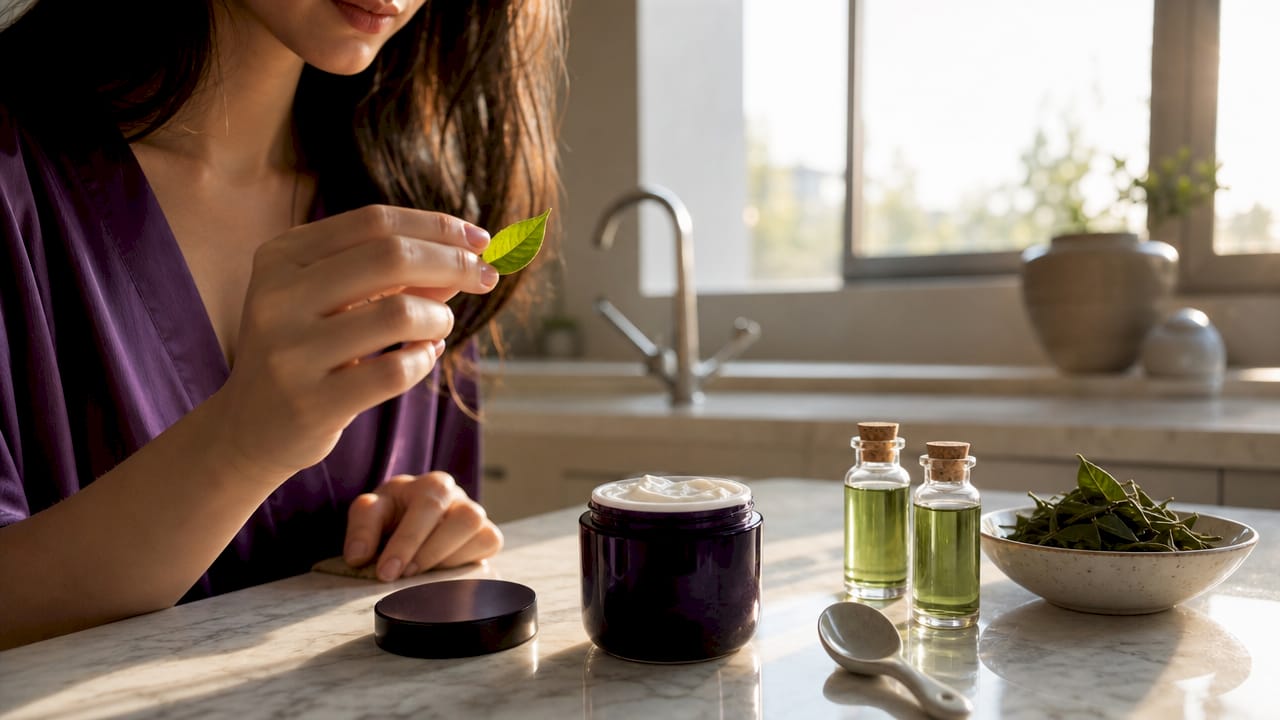
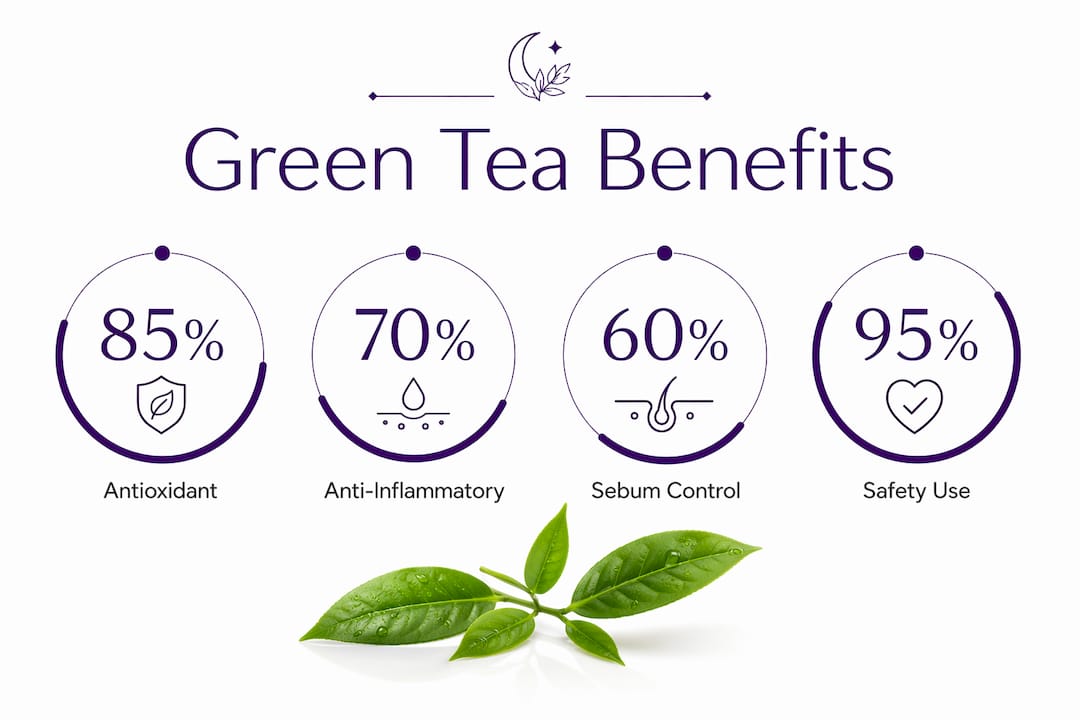
The anti-inflammatory effects of EGCG are well documented. Green tea extract reduces skin inflammation by up to 50% and delivers antibacterial activity against acne-causing bacteria. That level of reduction makes it one of the most effective plant-derived anti-inflammatory agents in topical skincare. For people with acne-prone skin, EGCG also suppresses sebocyte lipogenesis, which is the biological process that drives excess sebum production. Less sebum means fewer clogged pores and a lower risk of breakouts.
Key bioactive functions of green tea in skincare:
- Antioxidant protection: EGCG neutralizes free radicals from UV and environmental pollutants.
- Anti-inflammatory action: Reduces redness, irritation, and inflammatory markers in the skin.
- Antibacterial activity: Targets acne-causing bacteria, making it useful for blemish-prone skin.
- Sebum regulation: Inhibits excess oil production in oily and combination skin types.
- Collagen preservation: Blocks enzymes that break down collagen without requiring skin to rebuild it.
Green tea is safe for daily, long-term use, including during pregnancy. That safety profile is one reason K-beauty brands use it as a base ingredient rather than a specialty add-on.
How does green tea work with other K-beauty ingredients?
Green tea does not work in isolation. Its greatest value in a K-beauty routine is how well it pairs with other actives. Topical green tea enhances multiple skincare actives by reducing irritation and boosting their individual effects. This synergy is a core reason why green tea appears in so many layered K-beauty routines.
Here is how green tea interacts with the most common K-beauty actives:
- Retinoids: Green tea’s anti-inflammatory properties reduce the redness and peeling that retinoids commonly cause. Using a green tea toner or serum before or after a retinoid step calms the skin without interfering with the retinoid’s cell-turnover benefits.
- Vitamin C: Green tea boosts the photoprotective effect of Vitamin C. Both are antioxidants, and together they provide broader free-radical defense than either ingredient delivers alone.
- Hyaluronic acid: Green tea is fully compatible with humectants. Pairing them delivers both antioxidant protection and deep hydration in a single step.
- Niacinamide: Both ingredients target inflammation and uneven skin tone. Used together, they address hyperpigmentation and redness more effectively than niacinamide alone.
- Ceramides and squalane: Innisfree’s Green Tea Barrier Complex combines ceramide NP, squalane, and green tea seed oil to mimic the skin’s natural lipid layer. This combination supports barrier repair while delivering antioxidant and emollient benefits simultaneously.
Pro Tip: If you use a retinoid at night, apply a green tea toner immediately after cleansing. The anti-inflammatory catechins reduce retinoid-induced irritation without diluting its effectiveness.
Green tea’s compatibility with such a wide range of actives makes it one of the most versatile base ingredients in K-beauty. You can place it at almost any step in your routine without worrying about negative interactions.
How does K-beauty use green tea differently from Western skincare?
The difference between K-beauty and Western skincare’s use of green tea is primarily a matter of formulation philosophy. Western skincare has historically used green tea as a secondary ingredient in astringent toners designed for oil control. K-beauty takes the opposite approach. Korean green tea toners focus on active loading with humectants to soothe and hydrate rather than strip or tighten the skin. That distinction matters because astringent formulas can compromise the skin barrier over time, while hydrating formulas reinforce it.
| Approach | Formulation focus | Primary skin goal |
|---|---|---|
| K-beauty green tea toners | Humectants, calming actives, barrier support | Hydration, soothing, antioxidant loading |
| Western green tea toners | Astringents, oil-control agents | Pore tightening, sebum reduction |
| Traditional home remedies | Chilled tea bags, unpreserved liquid | Quick puffiness relief |
Bioavailability is another area where K-beauty formulations stand apart. Advanced K-beauty products use green tea extract as the primary solvent in formulations, placing Camellia sinensis extract high on the INCI list. When an ingredient appears near the top of an INCI list, it is present in a meaningful concentration. That is a deliberate formulation choice to maximize catechin delivery to the skin.
Traditional remedies like chilled green tea bags do provide quick relief for puffiness. However, home remedies lack the preservatives and stability of cosmetic-grade formulations. Unpreserved green tea degrades rapidly and carries a real contamination risk. Cosmetic formulations stabilize the active compounds so they remain effective through the product’s shelf life.
Korean green tea skincare has also evolved over 16+ years to incorporate ceramide complexes, postbiotic technology, and fragrance-free formulas for sensitive skin. That long development history means today’s K-beauty green tea products are far more sophisticated than their early iterations.
How to incorporate green tea into your K-beauty routine
Building green tea into your routine effectively requires knowing what to look for on a label and how to layer products correctly.
- Check the INCI list first. Look for “Camellia sinensis leaf extract” or “Camellia sinensis leaf water” positioned in the first five ingredients. A product with green tea listed near the bottom delivers minimal catechin activity.
- Use it daily for preventive benefit. Green tea works as a cumulative antioxidant shield. Daily use builds consistent protection against UV-generated free radicals and environmental stress. Occasional use delivers far less benefit.
- Layer it before heavier moisturizers. Apply a green tea toner or essence on clean skin, then follow with your serum and moisturizer. This sequence allows the catechins to absorb before occlusive or emollient layers seal them in.
- Pair with SPF in the morning. Green tea’s antioxidant activity complements sunscreen by neutralizing free radicals that UV filters do not block. The two together provide broader photoprotection than SPF alone.
- Skip DIY applications as a primary treatment. Homemade green tea preparations degrade within hours and carry bacterial contamination risk. For acne-prone skin care, a stabilized cosmetic formulation delivers consistent antibacterial and anti-inflammatory activity that a brewed cup of tea cannot replicate.
Pro Tip: For oily or combination skin, a green tea toner applied morning and night can reduce visible shine over time. EGCG’s sebum-regulating effect builds gradually, so give it at least four weeks before assessing results. You can also read more about managing excess oil with K-beauty methods.
Green tea is safe for all skin types, including sensitive and acne-prone skin. You do not need to cycle it on and off the way you would with stronger actives like acids or retinoids.
Key Takeaways
Green tea’s role in K-beauty is to act as a daily antioxidant and anti-inflammatory shield that preserves skin health, reduces redness, and amplifies the effects of other actives in your routine.
| Point | Details |
|---|---|
| EGCG is the core active | Catechin EGCG neutralizes free radicals and inhibits collagen-degrading enzymes to preserve skin structure. |
| Green tea reduces inflammation | Clinical evidence shows green tea extract reduces skin inflammation by up to 50%, benefiting all skin types. |
| Synergy with other actives | Green tea reduces retinoid irritation, boosts Vitamin C photoprotection, and pairs well with hyaluronic acid and niacinamide. |
| K-beauty prioritizes bioavailability | Placing Camellia sinensis extract high on the INCI list maximizes catechin concentration and skin benefit. |
| Daily use is the right approach | Green tea works as a preventive shield through consistent daily application, not occasional treatment. |
Green tea in K-beauty: what I’ve learned after years of formulation watching
Most people come to green tea expecting a wrinkle eraser. That expectation sets them up for disappointment. Green tea does not rebuild collagen. It preserves what you already have by blocking the enzymes that break it down and neutralizing the oxidative stress that accelerates aging. That is a fundamentally different mechanism, and understanding it changes how you use the ingredient.
What I find most compelling about green tea in modern K-beauty is the formulation sophistication. Brands are no longer adding a token drop of Camellia sinensis extract to claim the benefit. The best products use green tea extract as the actual base liquid, replacing water entirely. That approach delivers catechin concentrations that genuinely move the needle on inflammation and antioxidant protection.
The other misconception I see constantly is treating green tea as a standalone solution for acne or aging. It is not. Green tea is a foundation ingredient. It creates the conditions under which your other actives work better and your skin tolerates them more easily. Think of it as the stable base that makes everything else in your routine more effective.
In 2026, the most sophisticated K-beauty green tea formulations combine ceramide complexes, postbiotics, and stabilized EGCG in fragrance-free bases. That combination addresses barrier repair, microbiome balance, and antioxidant defense in a single product. If your current green tea product is just a toner with a pleasant scent, you are likely leaving real skin benefits on the table.
— Lunara
Green tea K-beauty products at Lunarashopping
Lunarashopping carries a curated selection of Korean skincare products built around green tea and complementary barrier-supporting ingredients. Whether you are starting with a hydrating toner, adding a green tea serum to your existing routine, or building a full morning protocol, the collection covers every step.
The Innisfree Green Tea Seed Hyaluronic Face Serum pairs stabilized Camellia sinensis extract with hyaluronic acid for antioxidant protection and deep hydration in one step. For a complete daily protocol, the morning routine set at Lunarashopping brings together green tea-infused products formulated to work together from cleanse through SPF. Every product in the collection is selected for ingredient quality, formulation integrity, and compatibility with sensitive skin.
FAQ
What does green tea actually do for your skin?
Green tea delivers antioxidant protection, reduces inflammation, and helps regulate sebum production. Its primary active compound, EGCG, neutralizes free radicals and inhibits the enzymes that break down collagen.
Is green tea good for acne-prone skin?
Green tea is well suited for acne-prone skin. EGCG has antibacterial activity against acne-causing bacteria and suppresses excess sebum production, reducing two of the main drivers of breakouts.
How do I know if a green tea product has enough active ingredient?
Check the INCI list for “Camellia sinensis leaf extract” or “Camellia sinensis leaf water” positioned within the first five ingredients. Products that list it lower in the formula deliver minimal catechin activity.
Can I use green tea skincare every day?
Green tea is safe for daily, long-term use across all skin types, including during pregnancy. Consistent daily application builds cumulative antioxidant and anti-inflammatory protection over time.
Does green tea remove wrinkles?
Green tea does not remove existing wrinkles. It preserves skin structure by blocking collagen-degrading enzymes and neutralizing oxidative stress, which slows the formation of new lines rather than reversing existing ones.