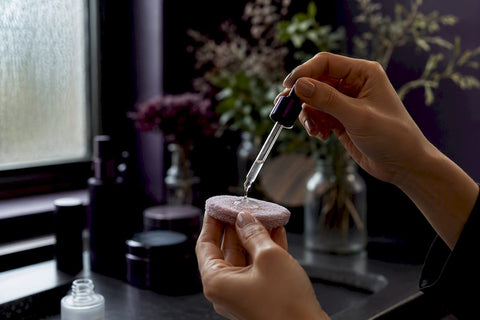
Topical tranexamic acid works by interrupting the signal that tells your skin to overproduce melanin, making it one of the most effective low-irritation options for melasma and post-inflammatory hyperpigmentation. In tranexamic acid Korean skincare formulas, you’ll typically find it at 2% to 5%, often paired with niacinamide for extra brightening support. Here’s the fast version if you’re ready to shop:
- Start with a serum or ampoule listing 2% to 5% tranexamic acid on the label.
- Patch test on your inner arm for 24 to 48 hours before applying to your face.
- Follow with broad-spectrum sunscreen every morning, no exceptions.
Pro Tip: Scan the ingredient list (INCI) for “tranexamic acid” near the top third of the list. If a brand advertises a specific percentage, that’s usually a sign of a formulation built around the active rather than a token dose thrown in for marketing.
Key Takeaways
Topical tranexamic acid fades melasma and hyperpigmentation by blocking the plasmin pathway upstream of melanin production, and it works best at 2% to 5% with consistent daily sunscreen use.
| Point | Details |
|---|---|
| Mechanism | TXA blocks plasminogen activator signaling, reducing melanin transfer rather than bleaching existing pigment. |
| Effective concentration | Look for 2% to 5% tranexamic acid clearly listed in the INCI ingredient list. |
| Realistic timeline | Expect 4 to 6 weeks for PIH improvement and 8 to 12 weeks for melasma with consistent use. |
| Safe pairing | Niacinamide is the most common and best-supported K-Beauty pairing for barrier support. |
| Where to start | Lunarashopping’s face care collection and Morning Routine Set offer verified Korean TXA serums with transparent labeling. |
Table of Contents
- What Is Tranexamic Acid, and Why Does K-Beauty Use It?
- How Well Does Tranexamic Acid Actually Work?
- How Do You Use Tranexamic Acid in a Korean Routine?
- What Should You Avoid Mixing With Tranexamic Acid?
- What Korean Product Forms Should You Look For?
- Is Tranexamic Acid Safe? What About Side Effects?
- How Long Until You See Results?
- Why Tranexamic Acid Deserves a Permanent Spot in Your Routine
- Find the Right Tranexamic Acid Serum for Your Skin
- Sources
What Is Tranexamic Acid, and Why Does K-Beauty Use It?
Tranexamic acid (TXA) is an amino acid derivative originally developed for medical use in controlling bleeding. In skincare, applied topically, it works differently: it interrupts the plasmin pathway, a chain reaction in skin cells that gets triggered by UV exposure, inflammation, or hormonal shifts and ends up telling melanocytes to churn out more pigment.
That’s an important distinction from oral TXA, which is taken for medical bleeding disorders and carries systemic clotting considerations your doctor would manage. Topical TXA stays local, acting only where you apply it.
Korean formulators gravitated toward this ingredient for a few practical reasons:
- It’s photostable, meaning sunlight doesn’t degrade it or trigger sensitivity, unlike some brightening acids.
- It layers well into multi-step routines without competing for the same receptors as other actives.
- It gives R&D teams room to get creative, showing up in serums, ampoules, and even cushion formulas.
How Well Does Tranexamic Acid Actually Work?
The mechanism matters here: TXA blocks plasminogen activator activity, which reduces downstream signals that push melanocytes into overdrive and limits how much pigment gets transferred to surrounding skin cells. That’s a different approach than tyrosinase inhibitors like arbutin, which work further down the pigment production chain.
Clinical guides summarizing trial data show topical TXA around 2% to 5% produces measurable reductions in melasma severity scores over roughly 8 to 12 weeks, with notably less irritation than some stronger alternatives.
What that means in practice:
- Melasma tends to respond over a longer arc, often 8 to 12 weeks of consistent use.
- Post-inflammatory hyperpigmentation (those stubborn marks left after acne or irritation) often improves somewhat faster.
- Evidence depth is solid but not as extensive as decades of hydroquinone research, and it doesn’t match the speed of in-office laser treatments. TXA earns its place as a gentler, daily-use option rather than a dramatic quick fix.
How Do You Use Tranexamic Acid in a Korean Routine?
Layering order follows the same logic as the rest of your Korean skincare routine: thinnest to thickest.
- Cleanse and tone as usual.
- Apply your TXA serum or ampoule while skin is slightly damp.
- Follow with a moisturizer to lock in hydration.
- Finish with sunscreen every morning, since pigmentation treatments only work if you’re also preventing new UV-triggered melanin.
A few practical notes worth knowing before you commit to a bottle:
- Concentrations in Korean formulas commonly run 2% to 5%, though some products list lower ranges around 1% to 3% for sensitive-skin lines.
- Most people can use TXA once or twice daily depending on the formula’s other ingredients.
- Because TXA is photostable and doesn’t cause photosensitivity, it’s suitable for morning application, though sunscreen still does the heavy lifting against new pigmentation.
- Patch test first: apply a small amount to your inner forearm and wait 24 to 48 hours before using it on your face.
What Should You Avoid Mixing With Tranexamic Acid?
TXA is generally easygoing, but a few pairings deserve caution rather than an outright ban:
- If your skin is already reactive, stagger high-strength exfoliating acids (like strong AHAs or BHAs) or potent retinoids to different times of day or alternate nights rather than layering everything at once.
- Watch for cumulative irritation if you’re combining several actives; your barrier can only handle so much at a time.
On the flip side, plenty of pairings work well and Korean brands lean into them deliberately, as detailed in complementary ingredient recommendations and luxury product approaches.
- Niacinamide is the most common partner. It supports the skin barrier while TXA works upstream on pigment signaling, and many K-Beauty formulas combine the two intentionally.
- Vitamin C derivatives can layer in for a multi-mechanism brightening approach, though gentler derivatives tend to play nicer with sensitive skin than pure L-ascorbic acid.
- Centella asiatica and other soothing botanicals help offset any mild dryness.
- Hyaluronic acid keeps skin hydrated while active ingredients do their work.
What Korean Product Forms Should You Look For?
TXA shows up across serums, ampoules, essences, and even some creams, but concentration and delivery vary a lot by format. Ampoules and serums tend to carry the highest concentrations since they’re formulated as leave-on treatments rather than rinse-off or lightweight layering steps.
When you’re reading a label, a few cues separate a genuinely active formula from one riding the trend:
- Look for “tranexamic acid” listed clearly in the INCI, ideally within the first half of the ingredient list.
- Some Korean brands state the percentage directly on the front label or product page. One example on the market lists 5% tranexamic acid paired with 10% niacinamide, which gives you a real benchmark for what a serious formulation looks like.
- Check for complementary actives like niacinamide or arbutin, which often signal a more thoughtfully built product. If arbutin interests you as a comparison point, it’s worth understanding how it differs from TXA.
- Sensitive skin? Scan for unnecessary fragrance or high alcohol content further down the list, since those can undercut an otherwise gentle active.
Is Tranexamic Acid Safe? What About Side Effects?
TXA’s biggest selling point is how well most people tolerate it. Unlike exfoliating acids or high-strength vitamin C, it doesn’t cause peeling or purging, which makes daily use realistic even for reactive skin.
That said, patch testing still matters. Apply a small amount to your inner arm and watch for 24 to 48 hours. Stop use and check the ingredient list if you notice:
- Persistent redness or stinging beyond mild initial tingling.
- Dermatitis, flaking, or unusual dryness.
- New breakouts that seem tied to the product.
Higher concentrations can occasionally cause mild irritation in sensitive individuals. See a dermatologist if a reaction persists, if you’re pregnant and want to confirm your full routine is appropriate, or if you’re on systemic anticoagulants, since that consideration applies to oral TXA rather than the topical formulas covered here.
Pro Tip: If you’ve had a reaction to niacinamide-heavy formulas before, look for a TXA product without it first. You can always add niacinamide back in separately once you know how your skin handles the tranexamic acid alone.
How Long Until You See Results?
Patience pays off more than intensity here. A realistic timeline:
- 4 to 6 weeks: early improvement in post-inflammatory hyperpigmentation for many people.
- 8 to 12 weeks: measurable fading for melasma, based on the clinical timelines cited in K-Beauty dermatology guides.
- Ongoing: chronic pigmentation, especially melasma, tends to need maintenance use rather than a one-time fix.
TXA calms the inflammatory signals driving new pigment rather than bleaching existing spots instantly. Combine it with daily sunscreen and consistent application, and the results compound over time.
Why Tranexamic Acid Deserves a Permanent Spot in Your Routine
Tranexamic acid earns its place in our curated Korean lines because it does something most brightening actives can’t: it works upstream, calming the trigger for excess pigment rather than just managing it after the fact. For anyone dealing with melasma or acne marks that keep resurfacing, that mechanism matters more than a flashy percentage on a label.

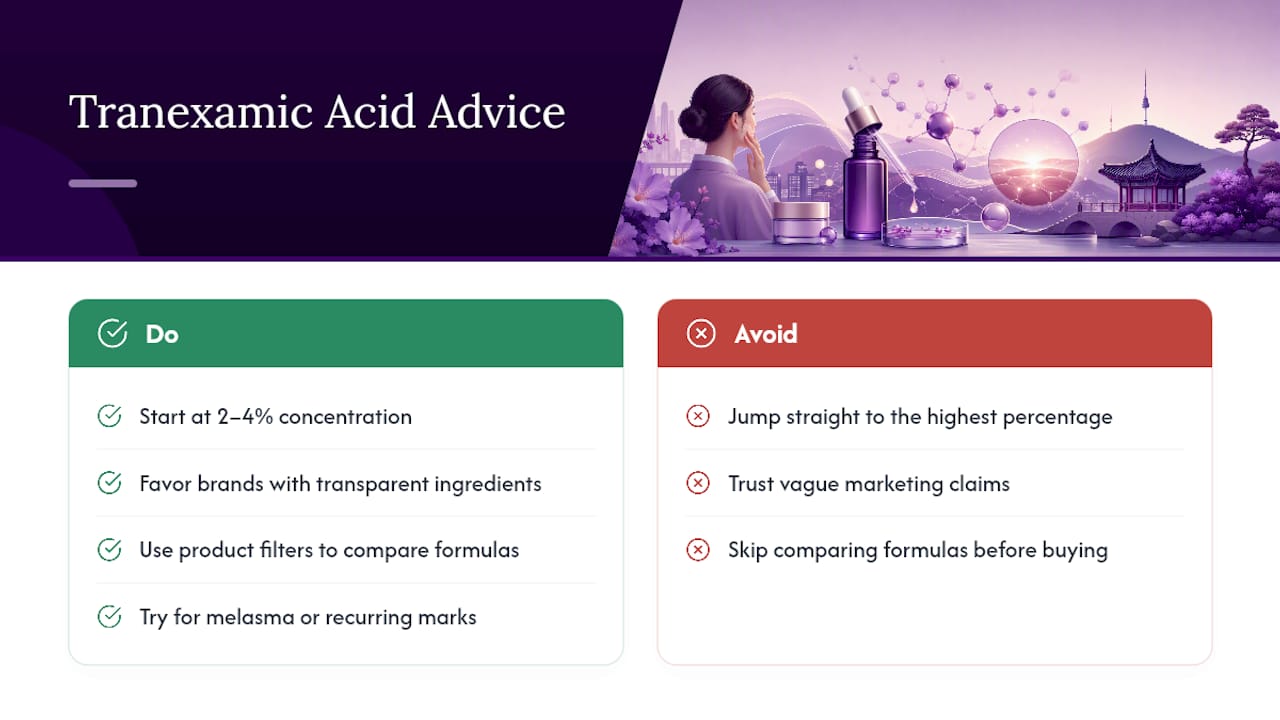
If you’re trying TXA for the first time, start with a mid-range concentration around 2% to 4% rather than jumping straight to the highest percentage you can find. Favor brands with transparent ingredient lists over vague marketing claims, and use our product filters to compare formulas side by side before committing.
Find the Right Tranexamic Acid Serum for Your Skin
Once you know what to look for, the shopping part gets a lot easier. Lunarashopping’s face care collection lets you filter by ingredient, so you can pull up every tranexamic acid serum and ampoule we carry without digging through product descriptions one by one.
If you’d rather not build a routine from scratch, our Morning Face Care Routine Set bundles a brightening serum with sunscreen already built in, which solves the “don’t forget SPF” problem before it starts. Every product listing shows the full ingredient list up front, so you can check concentration claims and complementary actives before you buy rather than guessing from marketing copy. We also stand behind authenticity: every Korean brand we carry, from COSRX to Beauty of Joseon, comes through verified sourcing, and returns are straightforward if a formula doesn’t agree with your skin.
Start by browsing the Morning Face Care Routine Set or search the face care collection directly for tranexamic acid by name.
Sources
- Tranexamic Acid Korean Skincare | Brightening & Dark Spot Guide | knok
- Tranexamic Acid: The K-Beauty Brightening Secret Dermatologists Actually Use | ChokChok
- Medicube TXA Niacinamide 15 Serum (30ml) | K-BEAUTY – LEWKIN