A moisturizer is a topical product designed to maintain and restore the skin’s protective barrier by preventing water loss and enhancing hydration. Understanding why moisturizer matters for skin health goes well beyond cosmetic smoothness. Dermatologists now classify moisturizers as essential adjunctive therapy, not optional extras. The stratum corneum, the outermost layer of skin, depends on ceramides, cholesterol, and fatty acids to hold moisture in and keep irritants out. When that barrier weakens, the skin becomes reactive, tight, and prone to inflammatory conditions. Daily moisturization is the most direct, evidence-backed way to keep that barrier intact.
Why moisturizer matters: the skin barrier explained
The skin barrier works on a “bricks and mortar” model. Skin cells act as the bricks, and a lipid bilayer made mainly of ceramides, cholesterol, and fatty acids acts as the mortar between cells. That lipid layer is what stops water from evaporating through the surface, a process called transepidermal water loss (TEWL). When TEWL rises, skin feels tight, looks dull, and becomes more reactive to environmental triggers.
Moisturizers address this at a biological level through three distinct mechanisms. Effective moisturization depends on a coordinated balance between humectants, occlusives, and emollients working together:
- Humectants draw water into the skin from the environment and deeper layers. Hyaluronic acid and glycerin are the most studied examples.
- Occlusives form a physical film on the skin surface to slow evaporation. Petrolatum, shea butter, and ceramides fall into this category.
- Emollients fill the microscopic gaps between skin cells, softening texture and improving flexibility. Plant oils and fatty alcohols are common emollients.
Using only one type produces incomplete results. A humectant alone pulls water to the surface, but without an occlusive layer, that water evaporates quickly. Moisturizing formulations that include physiologic lipids, ceramides, and natural moisturizing factors restore barrier function more completely than single-ingredient products.
Regular moisturizer use also reduces skin reactivity. Studies show that consistent moisturization relieves xerosis (clinically dry skin) and reduces the need for topical corticosteroid treatments in inflammatory conditions. That is a meaningful clinical outcome, not just a cosmetic one.
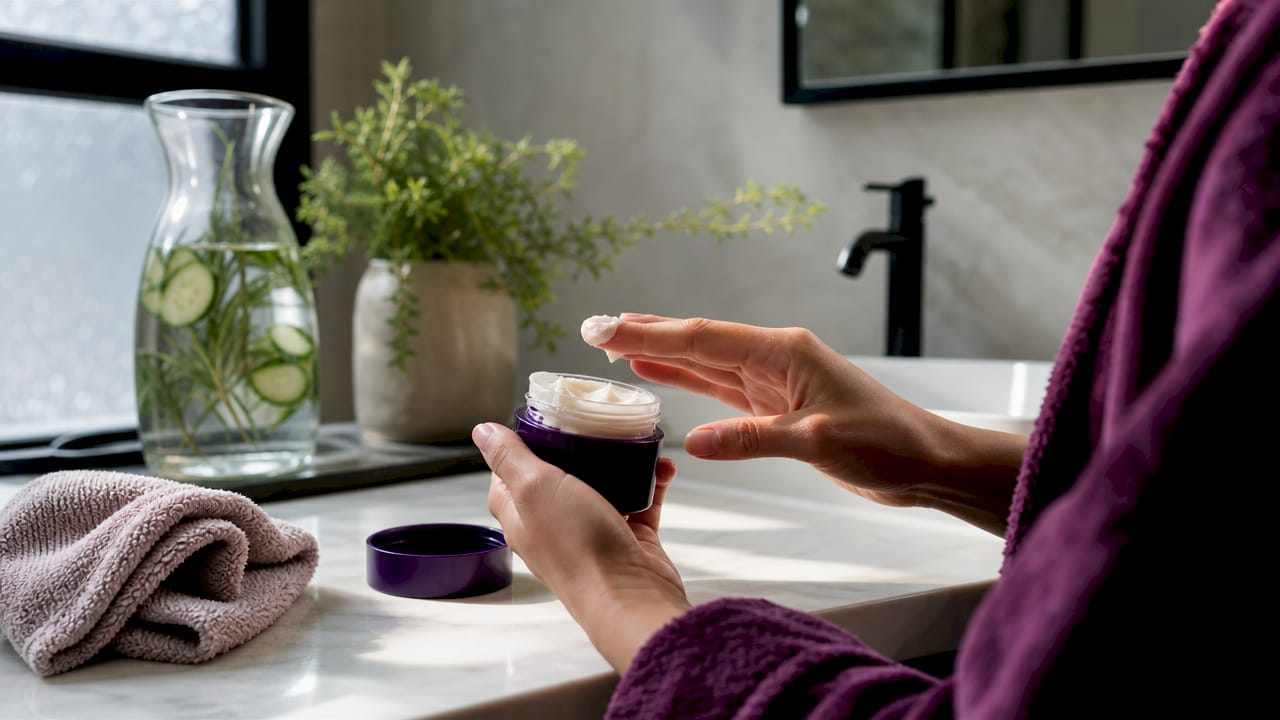
Pro Tip: Apply your moisturizer within 60 seconds of patting skin dry after cleansing. The residual dampness on the surface gives humectants more water to bind, which increases their effectiveness.
Is drinking water enough to keep skin hydrated?
Many people assume that drinking more water will directly improve skin moisture. The science does not support that assumption. Topical moisturizers have a greater impact on skin surface hydration than increasing water intake alone. Drinking water beyond adequate daily hydration shows limited visible improvement in skin moisture levels.
The reason comes down to how the body distributes water. Internal hydration keeps cells functioning, but the skin’s surface moisture depends on the lipid barrier, not on how much water you drink. Those are two separate systems.
“Hydration and moisturization are distinctly different processes. Hydration refers to water within skin cells; moisturization refers to the lipid barrier that prevents that water from escaping. Both must be addressed for healthy skin. Using only one approach leaves the other unresolved.”
This distinction matters practically. You can drink the recommended daily amount of water and still have visibly dry, flaky skin if your barrier is compromised. Conversely, a well-formulated moisturizer can restore surface hydration even in dry climates or during winter months when indoor heating strips moisture from the air.
| Approach | What it does | Limitation |
|---|---|---|
| Drinking water | Hydrates cells internally | Limited effect on skin surface moisture |
| Humectant serum | Draws water to the skin surface | Needs an occlusive to lock moisture in |
| Occlusive moisturizer | Prevents water evaporation | Does not add water on its own |
| Combined routine | Addresses both hydration and barrier | Requires correct layering order |
Environmental factors compound the issue. Low humidity, wind, air conditioning, and frequent cleansing all accelerate TEWL. A topical moisturizer is the only direct way to counteract those external stressors on the skin surface. This is why Korean skincare brands have long prioritized layered hydration as a core routine principle.
What ingredients should you look for in a moisturizer?
Choosing the right moisturizer starts with understanding what each ingredient class does for your skin type. The three core categories are humectants, occlusives, and emollients, but several additional ingredients significantly improve outcomes.
- Hyaluronic acid: A humectant that can hold many times its weight in water. Best suited for all skin types, including oily skin, because it adds moisture without heaviness.
- Ceramides: Lipids that directly replenish the mortar layer of the skin barrier. Particularly effective for dry, sensitive, or eczema-prone skin.
- Petrolatum: One of the most effective occlusives available. It creates a strong barrier film and is well-tolerated even by reactive skin.
- Shea butter: An occlusive and emollient that also contains fatty acids beneficial for barrier repair.
- Niacinamide: A form of vitamin B3 that reduces redness, supports ceramide production, and helps with blemish control. Works well alongside moisturizing ingredients.
- Colloidal oatmeal: An FDA-recognized skin protectant with anti-inflammatory properties. Particularly useful for sensitive or eczema-prone skin.
Formulation matters as much as individual ingredients. Oily skin benefits from gel or lightweight lotion formulas with humectants and minimal occlusives. Dry skin needs richer creams that combine all three ingredient classes. Sensitive skin does best with fragrance-free, minimal-ingredient formulas that prioritize ceramides and colloidal oatmeal.
Climate also affects your choice. In humid environments, a lighter humectant-forward formula works well. In dry or cold climates, a heavier occlusive layer becomes necessary to prevent moisture loss. The difference between Korean emulsions and traditional moisturizers is a useful reference point for understanding how texture and formulation affect barrier support.
Pro Tip: Layer your products from thinnest to thickest consistency. Apply a hyaluronic acid serum first on damp skin, then follow with a cream or lotion moisturizer to seal the hydration in. Using a humectant serum without an occlusive in dry environments can actually increase water loss by drawing moisture from deeper layers that then evaporates.
How to build an effective daily moisturizing routine
Consistency produces results. Most people see visible improvement in skin texture and tightness within 1–2 weeks of consistent moisturizer use. Full barrier restoration, including the skin’s ability to synthesize its own lipids, takes 4–8 weeks of regular application.
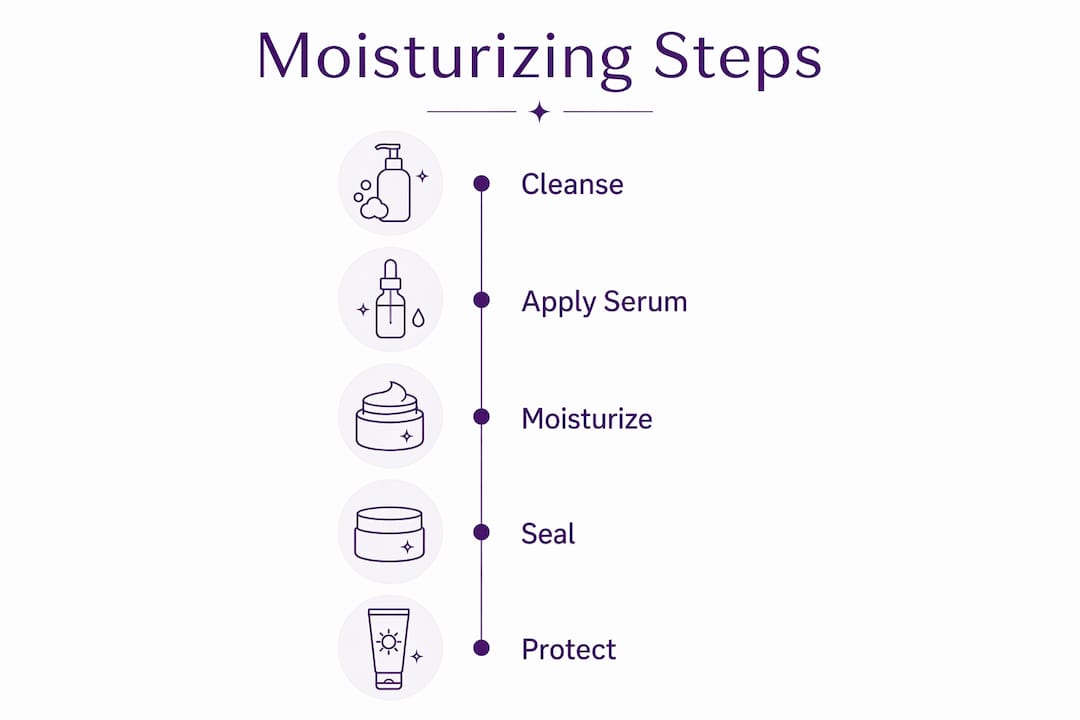
Follow these steps to get the most from your routine:
- Cleanse gently. Harsh cleansers strip the skin’s natural lipids before you even apply moisturizer. Use a pH-balanced, sulfate-free cleanser to minimize barrier disruption.
- Apply while damp. Pat skin dry with a towel, leaving it slightly damp. Applying moisturizer immediately post-cleansing on damp skin maximizes absorption and barrier retention.
- Layer correctly. If you use a serum, apply it before your moisturizer. Thinner, water-based products go first; thicker, oil-based products go last.
- Moisturize twice daily. Morning and evening application maintains a consistent barrier throughout the day and overnight, when skin repair processes are most active.
- Adjust for seasons. Switch to a richer formula in winter and a lighter one in summer. Your skin’s needs change with humidity and temperature.
Common mistakes undermine even the best products. Skipping the occlusive layer in dry conditions leaves humectants working against you. Choosing a formula too heavy for oily skin can clog pores and cause breakouts. Applying moisturizer over unwashed skin traps bacteria and debris under the barrier film.
For a complete picture of how moisturization fits into a broader self-care approach, the skincare best practices guide from Lunarashopping covers routine building across skin types in practical detail.
Pro Tip: Apply a slightly richer moisturizer at night than in the morning. Skin loses more water overnight due to lower humidity indoors, and nighttime is when barrier repair is most active. A ceramide-rich cream used as your last evening step supports that process directly.
Key Takeaways
Daily moisturizer use is the most direct, evidence-backed method for maintaining the skin barrier, preventing water loss, and supporting long-term skin health.
| Point | Details |
|---|---|
| Barrier function is the core issue | The stratum corneum’s lipid layer prevents water loss; moisturizers directly repair and reinforce it. |
| Three ingredient classes work together | Humectants, occlusives, and emollients each play a distinct role; effective products combine all three. |
| Topical beats internal hydration | Drinking water has limited effect on skin surface moisture; topical application is the more direct solution. |
| Timing and layering matter | Apply moisturizer on damp skin post-cleansing, with humectant serums layered underneath occlusives. |
| Results require consistency | Visible texture improvement appears in 1–2 weeks; full barrier restoration takes 4–8 weeks of daily use. |
What I’ve learned from watching moisturizer science evolve
The shift I find most significant in dermatology over the past decade is this: moisturizers are no longer considered cosmetic extras. They are now recognized as essential therapy in managing inflammatory skin conditions, reducing the need for prescription treatments, and improving quality of life for people with chronic dryness.
What surprises most people is how much the timing and layering of application matters. You can use an excellent product incorrectly and get poor results. The science on applying moisturizer to damp skin, and on layering humectants under occlusives, is not widely communicated. Most people skip these steps entirely.
My honest observation is that simplicity and consistency outperform complexity and expense. A well-formulated ceramide cream applied twice daily, every day, does more for your skin than an elaborate ten-step routine used sporadically. The skin barrier rebuilds gradually. It rewards patience and repetition, not novelty.
The most overlooked detail remains the role of the lipid barrier itself. People focus on water, but the real work is done by fats: ceramides, cholesterol, and fatty acids. Any moisturizer that does not address the lipid layer is only solving half the problem.
— Lunara
Lunarashopping’s moisturizing picks for every skin type
Lunarashopping curates Korean skincare products specifically chosen for their barrier-supporting and hydration-focused formulations. Every product in the face care collection is selected with ingredient integrity in mind, covering humectants, ceramides, and emollients suited to different skin types and climates.
Whether your skin runs dry, oily, or sensitive, the morning face care routine set from Lunarashopping gives you a structured, daily moisturizing foundation built around proven ingredients. For a broader selection, the full face care collection includes moisturizers formulated to support barrier function and visible hydration across all skin types. If you prefer to build your own regimen, the custom skincare kit builder at Lunarashopping lets you match products to your specific skin needs and routine goals.
FAQ
What does a moisturizer actually do for your skin?
A moisturizer preserves the skin’s protective barrier by reducing transepidermal water loss and replenishing lipids like ceramides. It keeps skin hydrated, smooth, and less reactive to environmental stressors.
How is moisturization different from hydration?
Hydration refers to water content within skin cells; moisturization refers to the lipid barrier that prevents that water from evaporating. Both are needed for healthy skin, and they require different products to address.
Do moisturizers really work, or is it just marketing?
Clinical studies confirm that regular moisturizer use relieves xerosis, reduces skin reactivity, and decreases the need for topical corticosteroid treatments. The evidence is dermatological, not cosmetic.
How long does it take to see results from moisturizing?
Most people notice improved texture and reduced tightness within 1–2 weeks. Full barrier restoration, including the skin’s ability to produce its own lipids, takes 4–8 weeks of consistent daily use.
Can oily skin skip moisturizer?
Oily skin still needs moisturizer. Skipping it can trigger the skin to overproduce sebum to compensate for barrier disruption. A lightweight, gel-based formula with humectants and minimal occlusives works well for oily skin types.