A good butt acne routine has four parts: a gentle wash, a chemical exfoliant a few times a week, a targeted treatment, and a light, non-comedogenic moisturizer. Pair those with loose clothing and a quick shower after sweating, and give it two to three months. Most of what people call butt acne is actually folliculitis, which changes what works. This guide walks through each step, the ingredients that earn their place, and the signs that mean it’s time to see a professional.
TL;DR
- Many “butt acne” bumps are folliculitis, an inflammation of the hair follicles, so gentle, consistent care beats aggressive scrubbing.
- The core routine: cleanse, exfoliate chemically (salicylic, glycolic or lactic acid), treat with benzoyl peroxide if needed, then moisturize with an oil-free formula.
- Skip loofahs and rough scrubs. Friction and micro-tears make breakouts worse.
- Expect 2 to 3 months of steady use for lasting improvement. See a doctor if bumps are painful, spreading, or not improving.
Table of Contents
- Is it really acne? Why the distinction matters
- The four-step butt acne routine
- A sample week
- The habits that decide whether it works
- Never pick, and what to do with a painful bump
- How long until you see results
- When to see a doctor
- Our perspective: gentle, consistent, and simple
- Build your routine with Lunara
- FAQ
- Sources
Is it really acne? Why the distinction matters
Facial acne forms when pores clog with oil and dead skin. On the buttocks, the bumps are more often folliculitis. Medical News Today explains that folliculitis affects the hair follicles, which become clogged and infected with bacteria, producing red bumps and pus-filled follicles that look like pimples. UW Medicine adds that body acne typically develops on the upper chest and back, while folliculitis can appear anywhere you have hair follicles.
Why does this matter for your routine? Because the cause can be bacterial, fungal, or simply friction and trapped sweat. Standard drying acne treatments can irritate the skin if the real trigger is a yeast overgrowth or rubbing. That is why the best plan is consistent and gentle, not harsh.
Some quick clues:
- Small, uniform red bumps around hair follicles, sometimes with a white tip: likely folliculitis.
- Blackheads and whiteheads, larger clogged pores: more like traditional acne.
- Itchy bumps that don’t respond to standard acne products after a few weeks: could be fungal or viral, per Cleveland Clinic’s guidance. Time to check in with a healthcare provider.
The four-step butt acne routine
Cleveland Clinic describes the core approach as a three-part sequence: cleanse with a gentle or antibacterial wash, treat with chemical exfoliants, and moisturize with non-comedogenic, oil-free products. We add a dedicated treatment step for stubborn or inflamed bumps, since that is where many people need the extra help.
Step 1: Cleanse once or twice a day
Use a gentle wash in the shower, and always rinse well. If you are prone to breakouts on the butt or body, cleansing twice a day (morning and evening) is a reasonable pattern, and you should always shower soon after a workout. Lather with your hands, not a loofah.
What to look for:
- A low-irritation formula that does not leave skin tight or squeaky.
- A wash with salicylic acid or benzoyl peroxide if your bumps are persistent. Prevention shares dermatologist advice to start with a good cleanser.
- Fragrance-light products if your skin is sensitive.
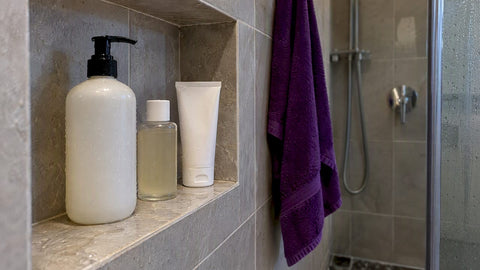
If you want a simple option that works across the body, hair and face, our CIROA Face-Body-Hair Wash 3 in 1 keeps a shower shelf minimal. For a lower-pH daily cleanser, the COSRX Low pH Good Morning Gel Cleanser is one of the K-beauty staples we carry. Face cleansers are made for facial skin, so patch-test and use them gently on the body if you choose to.
Step 2: Exfoliate chemically, 2 to 3 times a week
This is the step most people get wrong. Scrubbing feels productive, but dermatologists warn that aggressive scrubbing with loofahs or abrasive sponges causes micro-tears that leave skin more open to bacteria and inflammation. Chemical exfoliants do the same job without the friction.
| Ingredient | What it does | Good for |
|---|---|---|
| Salicylic acid (BHA) | Oil-soluble, works inside the pore | Clogged, oily, bumpy skin |
| Glycolic acid (AHA) | Loosens dead skin on the surface | Rough texture, dark marks |
| Lactic acid (AHA) | Gentler exfoliation with some hydration | Sensitive or dry skin |
The ingredient list comes from Cleveland Clinic. Start with two nights a week, then add a third only if your skin stays calm. Leave on the product as directed, rinse, and let skin air dry before dressing.
Step 3: Treat the bumps that remain
For bumps that don’t budge with a wash and exfoliant alone, benzoyl peroxide is the most widely recommended over-the-counter active. Cleveland Clinic notes that it is safe at 2.5% to 10% for topical use, with a suggestion to start with once-daily application and increase as tolerated. Keep it away from eyes, lips and mouth.
Three practical cautions:
- It bleaches fabric. Towels, sheets, underwear and pajamas can all lose color. Use white linens and let the product dry fully before dressing.
- It can dry skin out. Start low, apply to a small area first, and back off if skin stings or peels.
- Don’t layer everything at once. If you use a benzoyl peroxide wash, skip a strong acid on the same day until you know how your skin reacts.
If you’re wondering whether you can use benzoyl peroxide on body acne in general: yes, it’s commonly used on the chest, back and buttocks. Keep it off sensitive genital skin and mucous membranes, and ask a doctor or pharmacist if you’re unsure about placement.
Step 4: Moisturize with something light
Treatment steps dry skin out, and dry, irritated skin is more reactive. Choose an oil-free, non-comedogenic lotion or gel-cream and apply it after you towel off. Avoid heavy oils and thick butters on breakout-prone areas, since they can trap sweat and clog follicles.
An ingredient check is worth the minute. Our guide to comedogenic ingredients to flag shows what to look for on a label, and our body moisturizers collection is where to browse lighter textures.
A sample week
Here is how the pieces fit together. Adjust frequency to how your skin responds.
| Day | Morning | Evening |
|---|---|---|
| Mon | Gentle wash, moisturizer | Wash, chemical exfoliant, moisturizer |
| Tue | Gentle wash, moisturizer | Wash, spot treatment, moisturizer |
| Wed | Gentle wash, moisturizer | Wash, spot treatment, moisturizer |
| Thu | Gentle wash, moisturizer | Wash, chemical exfoliant, moisturizer |
| Fri | Gentle wash, moisturizer | Wash, spot treatment, moisturizer |
| Sat | Gentle wash, moisturizer | Wash, spot treatment, moisturizer |
| Sun | Gentle wash, moisturizer | Rest night: wash and moisturize only |
Shower right after any workout, whatever the day. If you want a template for building the habit around your face and body together, our Korean body care routine guide breaks it down for real life.
The habits that decide whether it works
Products only go so far if the trigger keeps coming back. Friction and moisture are the two big ones.
- Wear loose, breathable fabric. Dr. Garshick and other dermatologists, cited by Prevention, recommend loose cotton clothing so sweat doesn’t sit against the skin.
- Limit long stretches of sitting. Pressure and friction irritate follicles. Stand and move when you can.
- Change out of sweaty clothes quickly. Gym leggings and wet swimsuits are classic culprits.
- Wash workout clothes and towels often. Fresh fabric, every time.
- Don’t shave aggressively. If you shave the area, use a clean blade and go gently. Irritated follicles are more likely to get inflamed.
- Pat dry, don’t rub. A soft, clean towel keeps friction low.
Stress and sleep routines can also affect how your skin behaves overall, and a calmer wind-down helps you stick with a routine. If you’re looking for gentle self-care ideas beyond skincare, this read on holistic approaches to stress and digestive relief offers a different angle on looking after your body.
Never pick, and what to do with a painful bump
Picking at a bump can push bacteria deeper. For a painful, pus-filled boil, the American Academy of Dermatology advises against squeezing and recommends a warm, clean compress for 10 to 15 minutes, three to four times a day. Most boils heal on their own within one to three weeks with that care.

See a doctor promptly if you develop a fever, chills, or a sudden increase in redness and pain. Those are signs the infection may need medical treatment.
How long until you see results
Skin turns over roughly every four weeks, so overnight fixes are unrealistic. Dermatology guidance points to two to three months of consistent use for significant, lasting improvement in texture and clarity. In the first couple of weeks, some dryness or mild flaking can happen as you start an exfoliant or benzoyl peroxide. If you suspect your skin is reacting rather than clearing, our guide to skin purging vs. breakouts shows how to track where bumps appear and when.
Track three things for the first month: how many new bumps appear each week, how itchy or sore the area feels, and whether dryness is building. If new bumps keep outpacing healing, adjust before you escalate.
When to see a doctor
Home care is a fair first step for mild bumps. Get professional help if:
- The condition is widespread or the symptoms don’t go away after a week or two of self-care, according to Mayo Clinic. You may need a prescription-strength antibiotic or antifungal.
- The bumps are painful, itchy, or persistent after a few weeks of consistent care, since the cause could be fungal or viral.
- You see boils, spreading redness, or have a fever.
- Bumps leave scars or deep dark marks.
A board-certified dermatologist or your primary care provider can identify the cause, which is the fastest way to the right treatment.
Our perspective: gentle, consistent, and simple

We work with Korean skincare every day, and the philosophy behind it fits butt acne well: support the skin barrier, keep steps few, and be patient. Body skin is often treated more harshly than facial skin, with hot water, rough scrubs and strong drying products. That usually backfires. Our approach is to choose one gentle wash, one exfoliating acid used sparingly, and one light moisturizer, then give them time.
We also think the label matters more than the brand. Check for the active ingredient and its strength, avoid heavy oils on breakout-prone areas, and introduce one new product at a time. That way, if your skin reacts, you know why. Our selection is curated for quality, gentle formulations and inclusivity across skin types, so you can build a routine without sorting through hundreds of options. For more on how we think about acne-prone skin, read our guide to Korean acne care best practices.
— Lunara
Build your routine with Lunara
If you want everything in one place, browse our Body & Bath collection for washes and body care, or try our Acne & Barrier Repair Bundle to support breakout-prone skin while keeping your barrier comfortable. Standard shipping is a flat rate, from $6.49. You can also start from our homepage and pick what fits your skin type.
FAQ
Can I use benzoyl peroxide on body acne?
Yes. Benzoyl peroxide at 2.5% to 10% is considered safe for topical use, and starting with once-daily application is the usual advice. It can bleach clothing and towels and dry skin out, so start low and go slowly.
What kills acne the fastest?
Nothing clears it overnight. A benzoyl peroxide or salicylic acid product used consistently gives the most reliable results, and improvement typically takes weeks to months. Picking or over-scrubbing slows healing, so avoid both.
Should I use a face cleanser on my butt?
You can, and some dermatologists suggest it, as long as the formula is gentle and you rinse well. A body wash with salicylic acid or benzoyl peroxide is more practical for larger areas. Stop if you notice stinging or redness.
Is butt acne the same as folliculitis?
Often, yes. What looks like acne on the buttocks is frequently folliculitis, an inflammation of hair follicles from bacteria, yeast or friction. If bumps are itchy, painful, or don’t improve after a few weeks, see a healthcare provider.
Can I pop butt pimples?
No. Popping can spread infection deeper into the skin. For painful bumps, a warm compress for 10 to 15 minutes, several times a day, is the recommended home care.
Sources
- Butt Acne: Causes, Treatment and Prevention, Cleveland Clinic
- 8 Ways to Treat Body Acne, Right as Rain by UW Medicine
- Butt Acne: Causes, Treatments, and Prevention, Per Dermatologists, Prevention
- How to treat boils and styes, American Academy of Dermatology
- What can clear severe acne?, American Academy of Dermatology
- Folliculitis: Symptoms and causes, Mayo Clinic
- Butt acne: Home and natural treatments for folliculitis, Medical News Today