Yes, you can still use K-beauty if you have fungal acne, but the formulas matter more than the brand. “Fungal acne” is usually Malassezia folliculitis, a yeast-driven follicle irritation, not true acne. Simplify your routine, choose lightweight, low-lipid, non-occlusive products, and give a supportive approach several weeks before adding antifungal treatment or seeing a dermatologist for confirmation.
TL;DR:
- Lightweight, non-occlusive products with low lipid content are essential, especially avoiding thick creams, heavy oils, and occlusive sunscreens that can feed Malassezia.
- Long-chain fatty acids and esters, common in plant oils and emollients, are the main ingredients to avoid; substitutes like squalane and caprylic triglyceride are safer options.
- Gradual routine changes, with a focus on humectants and gel textures, help manage mild fungal acne, requiring several weeks to see noticeable improvement.
- Persistent or widespread fungal acne may require topical antifungal treatments like ketoconazole or oral antifungals prescribed by a dermatologist.
- Proper diagnosis is critical, as fungal acne often mimics regular acne, leading to ineffective treatments if misidentified.
Table of Contents
- What Is Malassezia Folliculitis, and How Is It Different From Acne?
- Which K-Beauty Ingredients Can Feed Malassezia?
- Building a Fungal-Acne-Safe K-Beauty Routine
- When Do You Need Antifungal Treatment Instead of Skincare?
- How Lunarashopping Approaches K-Beauty for Fungal-Acne-Prone Skin
- Try a Fungal-Acne-Friendly Starter Routine
- Sources
- FAQ
What Is Malassezia Folliculitis, and How Is It Different From Acne?
Malassezia folliculitis happens when lipophilic yeasts that normally live on your skin overgrow inside hair follicles, feeding on the oils there and triggering inflammation. This is a fundamentally different mechanism than acne, which involves clogged pores, excess sebum, and often bacteria (C. acnes). That difference is exactly why standard acne treatments sometimes make fungal acne worse instead of better.
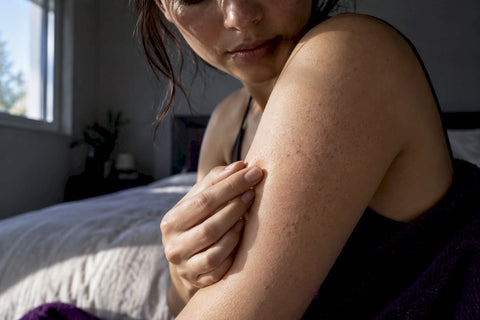
The condition, documented in clinical literature as commonly appearing on the forehead, chest, and upper back, has a few telltale signs that separate it from a typical breakout:
- Small, uniform, itchy bumps that look almost identical to each other, unlike the mixed blackheads, whiteheads, and cysts of acne
- Noticeable itching, which classic acne rarely produces
- No true comedones (no blackhead or whitehead cores)
- Clustering in oil-rich, sweat-prone zones rather than scattered across the face
Dermatologists confirm the diagnosis with a KOH prep, dermoscopy, or occasionally a biopsy. Self-diagnosis from a mirror is a reasonable starting point, but it is unreliable. The American Academy of Dermatology points out that folliculitis frequently gets mistaken for acne, which leads people toward the wrong treatment for months.
Which K-Beauty Ingredients Can Feed Malassezia?
Malassezia yeasts thrive on certain lipids, and lab studies show they can metabolize specific fatty acids, esters, and oils efficiently. This is the actual mechanism behind most “fungal acne safe” ingredient lists you have seen circulating online, and it matters more than any brand reputation.
Ingredients with the strongest evidence for feeding the yeast include:
- Long-chain fatty acids and oils (oleic acid, many plant oils high on an ingredient list)
- Certain esters used as texture enhancers or emollients in creams and sunscreens
- Long-chain fatty alcohols, which show up often in occlusive moisturizers and cushion formulas
K-beauty brings its own quirks to this picture. Fermented ingredients get blacklisted reflexively across social media, but fermentation itself is not inherently risky. What matters is the final lipid content of the fermented filtrate or extract, not the word “fermented” on the label. Heavy emollients and occlusive sunscreens, both K-beauty staples prized for their glowy finish, are usually a bigger concern than a fermented essence.
Statistic Callout: Lab research on individual ingredients shows caprylic/capric triglyceride and squalane are less likely than long-chain plant oils to feed Malassezia, making them reasonable substitutes when you still want a hydrating, cushiony texture.
Here is the nuance that most ingredient blacklists skip: in-vitro testing on a single ingredient does not reliably predict how a finished product behaves on your actual skin. Concentration, how far up the ingredient list a lipid sits, and how occlusive the overall texture feels all shift the real-world risk. A serum with a trace amount of a “risky” ester behaves very differently than a rich cream where five lipid-heavy ingredients stack near the top of the label.
Building a Fungal-Acne-Safe K-Beauty Routine
A workable routine does not require throwing out every K-beauty product you own. It requires paying closer attention to texture, occlusion, and total lipid load.
Morning routine:
- Cleanse with a gentle, low-residue gel or foam cleanser that rinses clean without leaving film.
- Apply a lightweight, humectant-based serum (think hyaluronic acid or panthenol rather than a heavy oil serum).
- Follow with a gel or lotion moisturizer, not a thick cream, especially if you run oily or live somewhere humid.
- Finish with a sunscreen labeled as non-occlusive or gel-based, since occlusion from sunscreens and emollients is a documented predisposing factor for Malassezia overgrowth.
Evening routine:
- Cleanse the same way you did in the morning, removing sunscreen and sweat thoroughly.
- Introduce targeted actives cautiously. Azelaic acid is generally well tolerated and helps with both redness and mild fungal activity. Reserve topical ketoconazole for when a clinician recommends it.
- Moisturize with a lightweight gel cream rather than a rich night cream.
- Once or twice weekly, consider a maintenance step like a diluted antifungal wash if your dermatologist suggests one.
When swapping products, favor humectants over heavy plant oils, and choose squalane or caprylic/capric triglyceride when you need slip or hydration without heavy occlusion. If you are unsure whether a moisturizer is too rich, our guide on K-beauty no-sebum routines covers lightweight texture swaps in more detail.
Introduce one new product at a time and give it a few weeks before judging it. The American Academy of Dermatology recommends changing a single variable and keeping a log, since simultaneous changes make it impossible to know what actually caused a flare or an improvement. Patch testing will not diagnose fungal acne, but it will flag irritants before you commit a full bottle to your face.

Pro Tip: Keep a simple note on your phone every time you introduce a new product: the date, the product name, and how your skin looks a week later. This single habit does more to prevent guesswork than any ingredient list you’ll find online.
If a product genuinely helps, expect gradual improvement in bump texture and itch within a few weeks, not overnight clearing. If nothing changes or symptoms worsen, that is your signal to stop and reassess rather than push through.
When Do You Need Antifungal Treatment Instead of Skincare?
Skincare adjustments help manage mild, early-stage Malassezia folliculitis, but they are not a cure on their own in many cases. DermNet documents topical ketoconazole, selenium sulfide, and econazole as effective options, typically used as washes or leave-on treatments a few times weekly.
For more persistent or widespread cases, oral antifungals like fluconazole or itraconazole tend to work more reliably than topical treatment alone. A prescriber will consider liver function and drug interactions before starting an oral course, and treatment duration varies by severity.
- Recurrence is common even after successful clearance, since the yeast is a normal skin resident that simply overgrew once
- Ongoing maintenance, whether a periodic antifungal wash or continued attention to occlusive products, often prevents relapse
- A 2025 review in the journal Mycoses notes that Malassezia folliculitis is frequently misdiagnosed as acne, and that tailored antifungal therapy improves outcomes once the diagnosis is confirmed
- See a dermatologist if bumps persist past four to six weeks of consistent skincare changes, spread rapidly, or if you have already tried antibiotics or steroids without improvement, since those treatments can sometimes make fungal overgrowth worse
How Lunarashopping Approaches K-Beauty for Fungal-Acne-Prone Skin
Curating K-beauty for fungal-acne-prone skin means looking past marketing claims and reading the actual formula. We prioritize ingredient transparency and note texture on product pages, so lightweight gels and heavier creams are never lumped together as interchangeable.
Start with our face care collections if you are rebuilding a routine from scratch, and use the ingredient callouts as a filter rather than a guarantee. No product page replaces a dermatologist’s diagnosis. Our role is helping you shop smarter once you know what you are dealing with.
— Lunara
Try a Fungal-Acne-Friendly Starter Routine
Rebuilding a routine from zero is easier with a set that has already been thought through, rather than assembling five separate products and hoping the textures play well together. Lunarashopping’s Morning Face Care Routine Set bundles lightweight cleansers and hydrators without the heavy creams that tend to trip up Malassezia-prone skin.

Browse the set and you will notice the pattern: gel textures over rich creams, humectants over heavy oils, and clear ingredient notes so you are not guessing what is in the tube. If you want a broader look before committing, our full face cleansers and scrubs and face creams and moisturizers collections let you filter by texture and skip anything too occlusive. Standard shipping is a flat $6.49, so trying a starter set costs less than a single dermatologist copay while you figure out what your skin actually needs. Give a new routine two to four weeks. If bumps persist past that window, that is your cue to see a dermatologist rather than keep swapping products on your own.
Sources
This guide draws on peer-reviewed reviews of Malassezia folliculitis, clinical position statements on diagnosis and treatment, and patient resources from DermNet and the American Academy of Dermatology.
This article is general information, not a substitute for advice from a qualified doctor. Consult a qualified healthcare professional about your own circumstances before acting on anything here.
- Pityrosporum (Malassezia) folliculitis review — PubMed Central
- Malassezia (pityrosporum) folliculitis — DermNet NZ
- Malassezia folliculitis review (MDPI Mycoses journal)
- Acne-like breakouts could be folliculitis — American Academy of Dermatology (patient resource)
FAQ
What Do Koreans Use for Fungal Acne?
Korean skincare routines for fungal acne generally lean on the same principles used elsewhere: lightweight, low-lipid cleansers and moisturizers rather than a specific brand or product line. The focus stays on gel textures, humectants like hyaluronic acid, and avoiding heavy, occlusive creams and sunscreens.
What Skincare Is Best for Fungal Acne?
The best approach favors non-occlusive, low-lipid formulas: a gentle cleanser, a humectant serum, and a lightweight gel moisturizer. DermNet notes that topical antifungal washes containing ketoconazole or selenium sulfide can support these choices for many cases.
Which Korean Cleansers Are Fungal-Acne Safe?
Look for low-residue gel or foam cleansers with a low-pH formula and no heavy oils sitting high on the ingredient list. A cleanser like the COSRX Low pH Good Morning Facial Gel Cleanser fits this profile, since it rinses clean without leaving an occlusive film.
Which Korean Moisturizer Is Fungal-Acne Safe?
A fungal-acne-safe moisturizer uses gel or lightweight lotion textures built on humectants and substitutes like squalane rather than heavy plant oils or fatty alcohols. Check the face creams and moisturizers collection and favor products with fewer lipid-heavy ingredients near the top of the ingredient list.
How Long Does It Take for Fungal Acne to Clear Up?
With consistent lightweight skincare, mild improvement often appears within two to four weeks, though full clearance sometimes takes longer and depends on severity. Recurrence is common, and DermNet notes that ongoing maintenance often matters more than the initial treatment period.
Do I Need a Dermatologist for Fungal Acne?
You do not need one for a mild case you catch early, but you should see one if bumps persist past four to six weeks of skincare changes or if you have already used antibiotics or steroids without improvement. The American Academy of Dermatology recommends professional evaluation whenever a diagnosis is uncertain, since correct identification prevents treatments that could worsen the yeast overgrowth.