For keratosis pilaris, prioritize Korean body-care products built on lactic acid or other alpha hydroxy acids, salicylic acid, and urea, layered under a fragrance-free barrier cream. These keratolytic ingredients loosen the dead skin plugging your follicles, while rich moisturizers keep the barrier calm enough to tolerate them. Expect visible change in weeks to months, not days, and plan to keep using them since KP returns when treatment stops.
TL;DR:
- Regular use of products with lactic acid, salicylic acid, or urea is necessary for visible improvement, but results typically take weeks or months.
- Exfoliating products should be introduced gradually, starting with once or twice a week, and paired with a barrier cream to reduce irritation.
- Physical scrubs are discouraged, as they can worsen bumps; chemical exfoliants are more effective and gentler for keratosis pilaris.
- Seasonal changes impact KP flare-ups, with colder months requiring more moisture and less exfoliation, while summer allows for slightly increased treatment frequency.
- Persistent bumps may need stronger prescription retinoids or in-office laser treatments if over-the-counter acids and moisturizers do not show results after several months.
Table of Contents
- What the Evidence Says About Ingredients That Improve KP
- Building a Korean-Style Body-Care Routine for Keratosis Pilaris
- How to Introduce Actives Without Irritating Your Skin
- When to See a Dermatologist for Keratosis Pilaris
- Why LunaraShopping Supports Your KP Routine
- Layering and Double Cleansing for KP-Prone Skin
- Does Physical Exfoliation Have a Place in KP Care?
- Soothing Korean Ingredients That Support Barrier Repair
- Adjusting Your KP Routine by Season
- Author Perspective: Progress Is Slow, and That’s Normal
- Start Your KP Routine With a Curated Korean Body Care Approach
- Sources
- FAQ
What the Evidence Says About Ingredients That Improve KP
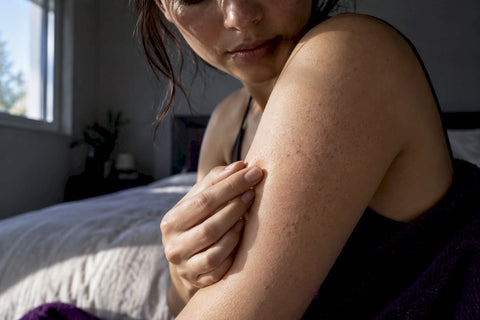
Keratosis pilaris happens when keratin builds up and plugs hair follicles, creating those small, rough bumps usually on the upper arms, thighs, or cheeks. It is common, generally harmless, and often fades somewhat with age, but it rarely disappears completely without ongoing care, according to the American Academy of Dermatology.
Three ingredient categories do the real work here. Keratolytics like lactic acid and other alpha hydroxy acids dissolve the bonds between dead skin cells so they shed instead of clogging pores. Salicylic acid, a beta hydroxy acid, works similarly but penetrates oil in the follicle, which makes it useful for bumps that look slightly inflamed. Urea, in higher concentrations, both loosens dead skin and pulls water into it, so it functions as an exfoliant and a hydra tor at once. Creams built around these three ingredients are the standard nonprescription approach dermatologists recommend, per Mayo Clinic.
Retinoids show up in some formulas too, though prescription-strength versions are stronger than what you will find on a store shelf. Korean brands tend to translate these actives into lightweight, leave-on formats rather than heavy medicated creams, which is part of why they suit KP-prone skin so well.
Common product forms include:
- Body washes infused with salicylic acid for daily cleansing
- Leave-on lactic acid or AHA lotions for targeted areas
- Urea-based body creams, typically at concentrations effective for KP treatment
- Pre-soaked exfoliating pads for localized rough patches
One thing to skip: gritty physical scrubs. Vigorous scrubbing irritates the skin and can worsen the bumps rather than clear them, which is why dermatologists lean toward chemical exfoliation instead, according to Harvard Health.
Building a Korean-Style Body-Care Routine for Keratosis Pilaris
A workable routine doesn’t need ten steps. It needs the right ingredients in the right order, used consistently enough to matter.
- Cleanse. Use a gentle, low pH body wash daily. Swap in a salicylic acid body wash three to four times a week if your skin tolerates it, reserving plain cleanser for the other days.
- Treat. Apply a leave-on lactic acid or urea lotion to affected areas while skin is still slightly damp. This is when actives absorb best.
- Moisturize. Follow immediately with a fragrance-free, occlusive body cream to lock in moisture and buffer any tingling from the active step.
- Protect. Apply sunscreen to any exposed treated areas, since exfoliated skin sunburns more easily.
For frequency, most people do well starting with leave-on acids every other day rather than daily, then adjusting based on how skin responds. Reserve any exfoliating pad or scrub-adjacent product for once or twice a week at most, since daily use of two exfoliating steps tends to backfire.
When shopping, read labels for the actual percentage of active ingredient, not just marketing terms like “brightening” or “smoothing,” which say nothing about strength. A body lotion listing 10% urea or 5% lactic acid gives you something to work with; one that just says “AHA complex” does not.
Pro Tip: Keep your leave-on acid step and your moisturizer as separate products at first. If irritation shows up, you’ll know which one to dial back instead of guessing.
For a fuller walk-through of sequencing, this Korean body care routine breakdown covers order of application in more detail.
How to Introduce Actives Without Irritating Your Skin
Patch test before committing to any new acid or urea product. Apply a small amount to the inside of your forearm, wait 48 hours, and check for redness, itching, or swelling before using it on a larger area.
Ramp up gradually rather than starting at full strength:
- Week 1 to 2: use the active product one to two times a week
- Week 3 to 4: increase to three times a week if skin tolerates it
- Week 5 onward: move to every other day or daily, based on comfort
If you notice stinging that doesn’t fade within a minute, persistent redness, or dryness that flakes, cut back frequency and add a plain moisturizer layer until skin calms down. A gradual, once-a-week entry point works especially well for anyone new to chemical exfoliation.
Combining multiple actives (say, salicylic acid wash plus a lactic acid lotion) can work, but doubling up too fast is the most common irritation trigger. Space them apart or alternate days instead of layering both at full strength immediately.
If you are pregnant or nursing, avoid retinoids and check with your doctor before starting any new acid regimen, since safety data for some formulations during pregnancy is limited.
When to See a Dermatologist for Keratosis Pilaris
If over-the-counter lactic acid, salicylic acid, or urea products haven’t moved the needle after a few months of consistent use, a dermatologist can prescribe stronger topical retinoids like tretinoin or tazarotene. These speed up cell turnover more aggressively, though they also bring a higher risk of dryness and irritation, and case reports on their effectiveness for KP remain limited rather than backed by large trials, per StatPearls.
For redness or textured bumps that bother you visually, laser treatments are an in-office option some dermatologists offer. Results vary person to person, and none of these treatments cure KP permanently. Bring notes on what you’ve tried, how long, and how your skin reacted. That history helps a clinician skip straight to what might actually help.
Why LunaraShopping Supports Your KP Routine
The featured Korean skincare curates products with a barrier-first philosophy: gentle formulations first, targeted actives layered in carefully, never the other way around. That approach matters most on body skin, where irritation from over-exfoliation is common and easy to avoid with the right sequencing.
A few places to start:
- Korean acne care best practices for background on how Korean formulas use exfoliating actives
- Why gentle formulas work so well for the reasoning behind barrier-first product design
- Managing redness while using actives if irritation shows up mid-routine
Browse the body care collection to find cleansers and creams suited to sensitive, bump-prone skin.
Layering and Double Cleansing for KP-Prone Skin
Double cleansing, a staple of Korean facial routines, has a place on the body too, though it looks different than on the face. If you use sunscreen or a heavier body cream during the day, an oil-based cleanser first removes that residue, followed by your regular body wash to clean the skin itself. This matters more in summer, when sunscreen buildup on treated areas can trap sweat and worsen bumps.
For KP-affected skin specifically, skip double cleansing on days you’re using an exfoliating wash. Two cleansing steps plus an active wash is one step too many, and it strips more than it helps. Save the double cleanse for days you’re using a plain, non-exfoliating body wash.
Layering order for actives follows the general skincare rule: thinnest, most active product first, richest and most occlusive last. That means your lactic acid or urea lotion goes on before your body butter or cream, never after. Applying a heavy cream first blocks the active from reaching the skin at all.
If you’re using both a leave-on acid lotion and a separate moisturizer, wait roughly a minute between the two so the acid has time to start working before the occlusive layer seals everything in. This small pause makes a real difference in how well the active performs, especially with lower-concentration lactic acid products that need a bit more contact time than stronger salicylic formulas.
Does Physical Exfoliation Have a Place in KP Care?
Not much of one, honestly. Dermatologists generally steer people away from gritty scrubs, loofahs, and dry brushing for KP because physical friction irritates already-sensitive follicles and can trigger more redness and inflammation rather than clearing bumps, per Harvard Health.
That doesn’t mean zero physical exfoliation is required. Some people find a very soft washcloth, used gently while cleansing, helps remove already-loosened dead skin after a few weeks of chemical exfoliant use. The key word is gentle: no scrubbing, no circular pressure, just light contact to sweep away skin that’s already lifted.
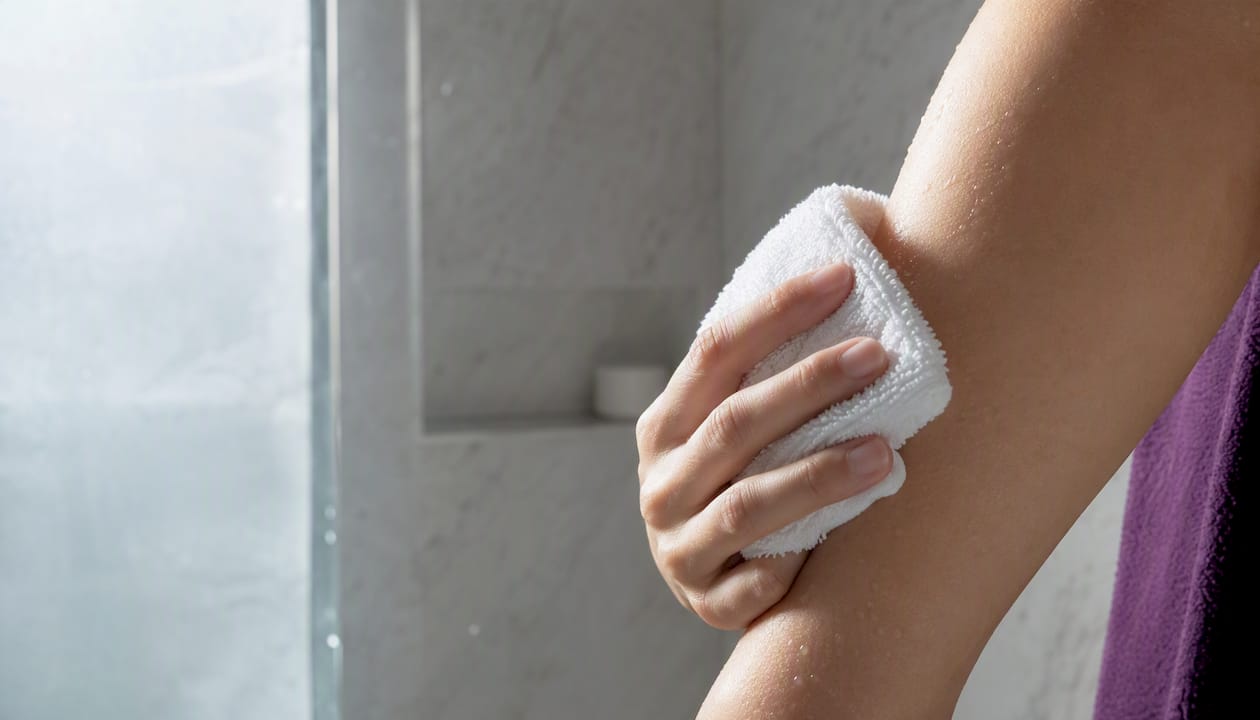
If you want to use a Korean exfoliating pad or foam scrub, save it for once a week at most, and only on skin that isn’t actively irritated. Pat, don’t rub, and follow immediately with a rich moisturizer. Anything that leaves your skin looking pink or feeling raw afterward is too aggressive, no matter how “gentle” the product claims to be on the label.
The safest version of physical exfoliation for KP is really just cleansing with a soft cloth, not a dedicated scrub step. Chemical exfoliants should do the heavy lifting; physical touch is there to help clear away what the acids already loosened.
Soothing Korean Ingredients That Support Barrier Repair
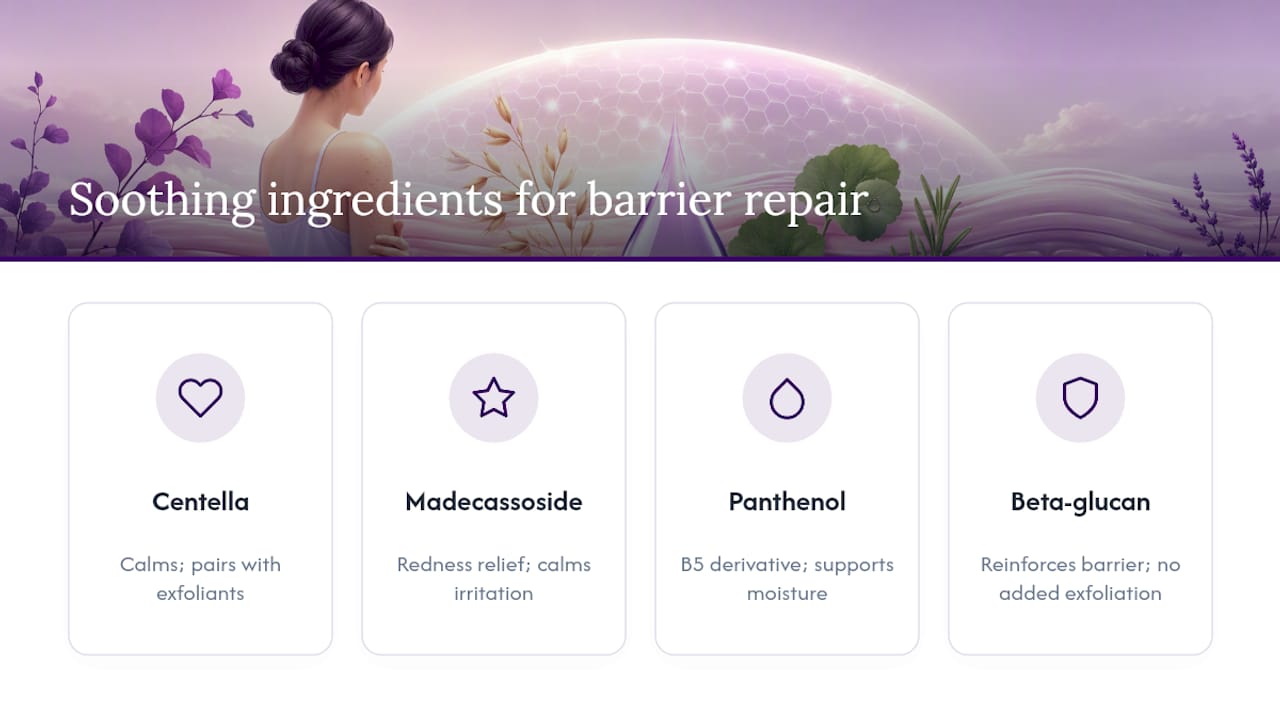
Centella asiatica, often listed as Centella asiatica extract or by its common Korean skincare nickname, shows up constantly in Korean formulas for a reason: it’s a calming ingredient frequently paired with exfoliating actives to offset irritation. Madecassoside, one of the active compounds derived from centella, appears in many of the same barrier-repair creams and is often marketed specifically for redness relief and irritated skin.
For KP care, these ingredients matter less as treatment and more as damage control. Since lactic acid, salicylic acid, and urea all work by disrupting the outer skin layer to some degree, pairing them with centella-based creams helps offset the dryness and redness that active ingredients can cause, especially in the first few weeks of use.
Other calming ingredients common in Korean body and face products include panthenol (a vitamin B5 derivative that supports moisture retention) and beta-glucan, which helps reinforce the skin barrier without adding active exfoliation on top of what you’re already doing. None of these ingredients treat KP bumps directly, but they make it far more comfortable to stick with the actives that do.
If irritation flares up mid-routine, switching your moisturizer to one built around centella or madecassoside for a few days, while pausing acids, is often enough to calm things down without abandoning the routine entirely.
Adjusting Your KP Routine by Season
Keratosis pilaris typically gets worse in winter, when low humidity and hot showers strip moisture from already-dry skin. During colder months, lean harder on urea creams and occlusive moisturizers, and consider cutting back exfoliating frequency slightly since dry, cold air makes skin more reactive to acids.
Summer brings different challenges. Sweat and humidity can make skin feel less dry, which sometimes lets you tolerate more frequent exfoliation, but sunscreen use becomes non-negotiable on any area you’re actively treating. Freshly exfoliated skin has less of its own protective dead-cell layer, so it burns more easily and holds onto sun damage longer.
A simple seasonal swap: increase urea or lactic acid frequency slightly in summer if skin tolerates it, and pull back in favor of heavier, more occlusive creams once the weather turns cold and dry. Bathing habits matter too. Hot, long baths and showers, more common in winter, strip natural oils and worsen KP regardless of what products you’re using afterward, per the Merck Manual. Shorter, lukewarm showers help year-round, but the habit matters most when the air outside is already pulling moisture from your skin.
Author Perspective: Progress Is Slow, and That’s Normal
KP doesn’t respond to quick fixes, and chasing one usually just irritates skin further. Test any new product on one small area first, track it for a few weeks, then expand what works. Barrier care comes before aggressive actives, always.
— Lunara
Start Your KP Routine With a Curated Korean Body Care Approach
This curation is centered around one principle: gentle formulations paired with effective actives, so you’re not choosing between comfort and results. This barrier-first approach is well suited for a KP routine, since the biggest risk with acids and urea creams is picking something too harsh and giving up after one bad reaction.

A simple starter bundle covers the basics: a gentle, fragrance-free cleanser for daily use, a lactic acid or urea leave-on lotion for treated areas, and a rich, occlusive body cream to seal everything in. Browse the body moisturizers collection for barrier creams built to pair with exfoliating actives, or check the full body and bath collection to build a routine piece by piece. Flat rate shipping is available on every order, so testing a few products before committing to a full routine won’t incur unexpectedly high shipping fees. Pick your cleanser and moisturizer first, add an active lotion once your skin is used to the basics, and go from there.
This article is general information, not a substitute for advice from a qualified doctor. Consult a qualified healthcare professional about your own circumstances before acting on anything here.
Sources
- Keratosis pilaris: Treatment and self-care for this common skin condition - American Academy of Dermatology (AAD)
- Keratosis pilaris - Diagnosis and treatment - Mayo Clinic
- Keratosis pilaris: Treatment and self-care - Harvard Health
- Keratosis pilaris - StatPearls / NCBI Bookshelf
FAQ
What Is the Most Effective Product for Keratosis Pilaris?
No single product cures KP, but creams combining lactic acid, salicylic acid, or urea consistently rank as the most effective nonprescription options for improving bump texture, according to Mayo Clinic. Results depend more on consistent use over weeks to months than on any one formula.
Is Keratosis Pilaris a Gut Issue?
There’s no established medical evidence linking KP to gut health. KP is a genetic condition caused by keratin buildup blocking hair follicles, not a digestive or dietary problem, per the American Academy of Dermatology.
What Is the Top Korean Skincare Brand in Korea?
Korea’s skincare market includes many well-established brands, and no single one holds a universal “top” ranking. Lunarashopping curates products from multiple trusted Korean brands rather than betting on just one, so you can compare formulations and find what actually suits your skin.
Does Anything Actually Work for Keratosis Pilaris?
Yes, though results take patience. Consistent use of leave-on lactic acid, salicylic acid, or urea products over weeks to months improves bump texture for most people, while stopping treatment typically brings symptoms back, according to the American Academy of Dermatology.