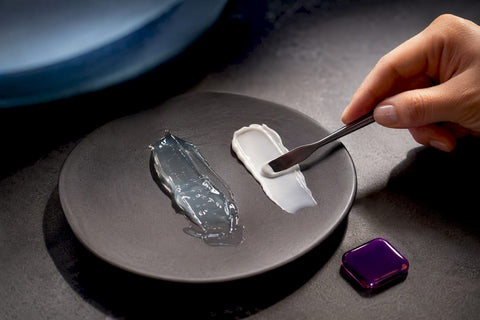
Choose a gel when you want lightweight, humectant-led hydration, best for oily, combination, or acne-prone skin, and in hot, humid weather. Choose a cream when your skin needs emollients and occlusives to rebuild its barrier, which usually means dry, mature, or cold-weather skin. Ingredients like hyaluronic acid and glycerin drive most gels, while richer creams lean on barrier-supporting actives, and a good skincare store stocks both so you’re not locked into one texture year-round.
TL;DR:
- Gels mainly rely on humectants like hyaluronic acid and glycerin to hydrate the skin without adding weight, making them ideal for oily or humid conditions.
- Creams contain both humectants and barrier-supporting emollients and occlusives, providing longer-lasting hydration, especially for dry or mature skin.
- Skin type and climate are the primary factors; gels suit oiliest, humid climates and active skin, while creams address dryness and barrier repair needs.
- Switching between textures seasonally optimizes hydration and barrier support, with gels preferred in summer and creams in winter.
- Using both textures in combination allows for tailored skincare that adapts to changing skin needs rather than sticking to one formula year-round.
Table of Contents
- Gel Moisturizer vs Cream: Quick Comparison
- What Is a Gel Moisturizer?
- What Is a Cream Moisturizer?
- What Do Humectants, Emollients, and Occlusives Actually Do?
- Which Texture Fits Your Skin Type?
- Should You Swap Textures by Season?
- How Do You Choose the Right Moisturizer?
- What Should You Know Before You Buy?
- Why Flexibility Beats Texture Loyalty
- Try Both Textures Without the Guesswork
- Sources
- FAQ
Gel Moisturizer vs Cream: Quick Comparison
Skin type and climate decide the winner more often than personal preference does. Dermatology guidance from the American Academy of Dermatology backs a simple rule: match the formula to your barrier needs, not to whatever trend is popular that month.
- Texture and finish: Gels feel light, almost watery, and sink in fast with no greasy film. Creams sit heavier, often leaving a soft, cushioned finish that takes longer to absorb.
- Primary hydration strategy: Gels lean on humectants like hyaluronic acid and glycerin to pull water into skin. Creams combine those humectants with emollients and occlusives that trap moisture and reinforce the surface.
- Best-for skin types: Gels suit oily, combination, and acne-prone skin. Creams suit dry, mature, and sensitive skin that needs extra barrier support.
- Seasonal fit: Gels perform well in summer heat and humid climates. Creams earn their keep in winter dryness and indoor heating season.
- Makeup compatibility: Gels layer cleanly under foundation with minimal pilling. Creams can work under makeup too, but a richer formula sometimes needs a few extra minutes to settle first.
What Is a Gel Moisturizer?
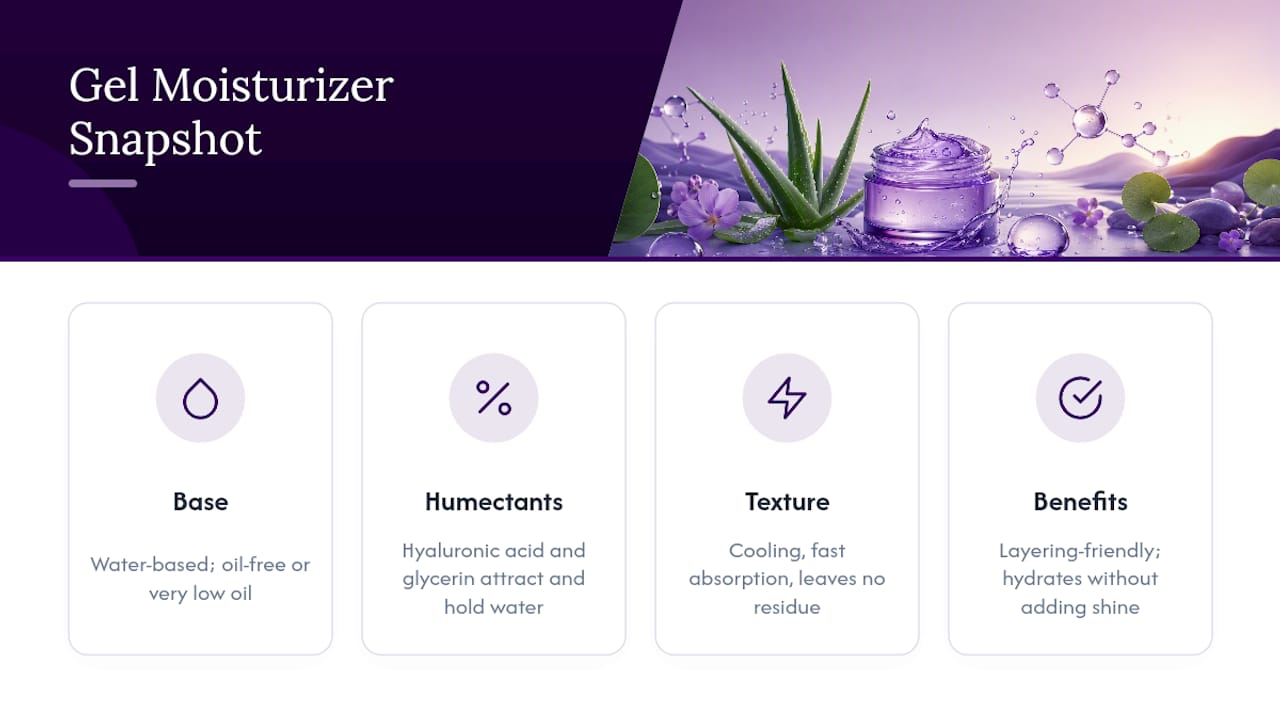
A gel moisturizer is a water-based formula, often oil-free or very low in oil, built to hydrate without adding weight. The base is mostly water, thickened just enough to hold its shape in the jar, then loaded with humectants that do the actual hydrating work.
Hyaluronic acid and glycerin show up in nearly every gel formula because both molecules attract water and hold onto it. Hyaluronic acid can bind many times its weight in water, drawing moisture from the air and deeper skin layers up toward the surface. Glycerin works similarly, pulling water into the outer skin layer and keeping it there longer than most people expect from something so lightweight. Research on moisturizer performance confirms that humectant-driven formulas like these can meaningfully increase skin hydration, even without heavier oils in the mix.
What that translates to on your face: a cooling sensation on application, fast absorption, and zero residue left behind. That’s why gels have become the default choice for anyone who hates the feeling of product sitting on their skin. It’s also why board-certified dermatologists consistently point to gels as the layering-friendly option for people who wear makeup daily. If your skin tends to get shiny by noon, a gel gives you real hydration without contributing to that oil buildup.
What Is a Cream Moisturizer?
A cream moisturizer is an emulsion, meaning it blends water with lipids (oils and fats) into one stable formula. That structural difference from gel is the whole story: creams carry more oil-based ingredients suspended in the water phase, which is exactly what gives them their thicker, richer feel.
The lipid side of a cream typically includes emollients and occlusives working together. Ceramides restore the natural lipid matrix between skin cells, essentially patching gaps in a compromised barrier. Petrolatum and shea butter sit on top of skin and form a physical seal, slowing the moisture escape that dermatologists call transepidermal water loss. The Mayo Clinic notes that moisturizers combining these occlusive and emollient ingredients directly support barrier repair, which is the mechanism creams rely on that gels generally don’t.
That combination is why creams deliver hydration that lasts longer between applications. A gel can hydrate effectively in the moment, but without an occlusive layer, that water can evaporate faster, especially in dry air. Creams hold the line overnight or through a cold, windy commute. For skin already dealing with flaking, tightness, or a damaged barrier from over-exfoliation, a cream’s staying power tends to matter more than a gel’s light feel.
What Do Humectants, Emollients, and Occlusives Actually Do?
Every moisturizer, gel or cream, is built from three ingredient categories, and knowing them turns you into someone who can read a label instead of guessing from marketing copy.
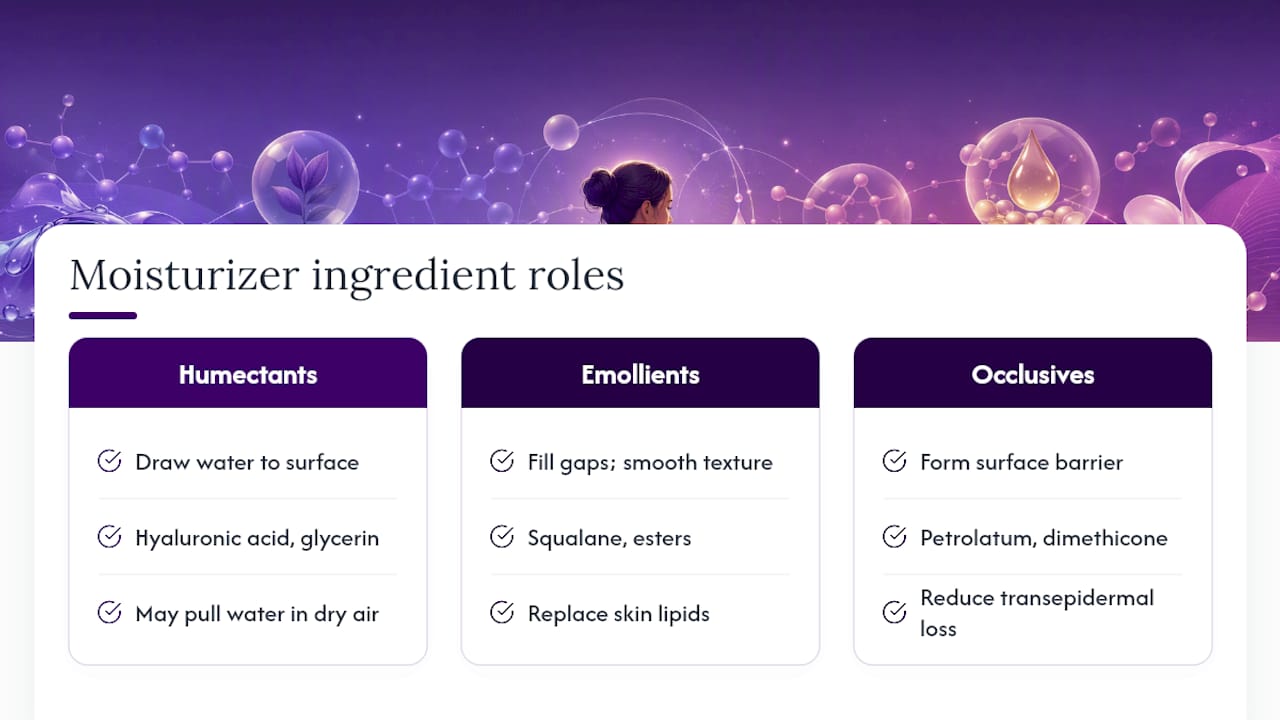
Humectants draw water in. Hyaluronic acid and glycerin are the two you’ll see most often, and both pull moisture from the environment and from deeper skin layers toward the surface. On their own, in very dry air, humectants can occasionally pull water out of skin instead of in, which is why pairing them with an occlusive matters more as conditions get drier.
Emollients smooth things over, literally. Ingredients like squalane and various esters fill in the tiny gaps between skin cells, softening rough texture and replacing lipids that daily life strips away through cleansing or weather exposure.
Occlusives seal the deal. Petrolatum and dimethicone form a barrier on the skin’s surface that physically blocks water from escaping, which is the mechanism behind reduced transepidermal water loss.
A 2016 study comparing gel and cream formats found that both texture types can increase hydration, with the real difference showing up in barrier effects rather than the base texture alone.
Pro Tip: If your skin is very dry, don’t rely on a humectant-only gel in winter. Pair it with an occlusive layer, or switch to a cream that already contains one, since humectants work best when there’s enough moisture around to draw from.
Which Texture Fits Your Skin Type?
Skin type should drive your texture choice more than anything else, including the season. Here’s how that breaks down in practice.
- Oily and combination skin: Reach for a gel or a gel-cream hybrid built around humectants. Skip heavy occlusives like thick petrolatum blends, which can trap oil under skin that’s already producing plenty on its own.
- Dry and mature skin: Go with a cream containing ceramides, occlusives, and humectants together. Mature skin has typically lost lipids over time, so it needs the full three-ingredient combination, not just water.
- Sensitive and reactive skin: Prioritize fragrance-free formulas with a short ingredient list. Barrier-supporting creams with minimal potential irritants tend to calm reactive skin faster than trend-driven formulas packed with actives.
- Acne-prone skin: Look for non-comedogenic gels that pair soothing humectants with niacinamide, which helps calm visible redness without adding pore-clogging oils.
Combination skin deserves a special note here. A lot of people with an oily T-zone and dry cheeks assume they need to pick one texture and live with the tradeoff. Gel-cream hybrids solve that by blending lightweight emollients into a humectant-rich water base, giving combination skin a middle ground instead of forcing an either-or decision.
Pro Tip: You can also mix textures by zone. Apply a gel to your T-zone and a light cream to your cheeks in the same routine, no rule says the whole face gets identical treatment.
Should You Swap Textures by Season?
Your skin’s needs shift with the weather, and your moisturizer should shift with it. Dermatologists generally recommend choosing by barrier needs and season rather than staying loyal to one texture year-round.
- Summer and humid climates: Use a gel. Humid air already supports hydration, so a lighter formula prevents the heavy, congested feeling creams can cause in warm weather.
- Winter and dry, heated indoor air: Switch to a cream. Indoor heating strips moisture fast, and a richer formula with occlusives holds up against that dryness far better than a gel alone.
- Layering routine: Apply a hydrating serum with hyaluronic acid first, follow with your gel or cream, and add a targeted occlusive on top only if your skin still feels tight afterward.
For daytime and makeup, gels are the easier base since they absorb quickly and leave less residue for foundation to grip onto. Save richer creams for your nighttime routine, when barrier repair matters more than makeup compatibility.
How Do You Choose the Right Moisturizer?
Start with three questions: How does your skin feel by midday (tight, shiny, or balanced)? What’s your climate like right now? What actives, like retinoids or exfoliating acids, are already in your routine?
Your answers point you toward a texture fast. Tight and flaky skin in a dry climate calls for a cream. Shiny, congested skin in a humid one calls for a gel. If you’re using retinoids or acids that can compromise your barrier, lean toward a cream regardless of skin type, since those actives increase your need for occlusive support.
- Check the ingredient list for humectants (hyaluronic acid, glycerin) near the top, which signals a hydration-focused formula.
- Watch for heavy oils positioned high on the ingredient list if you’re prone to congestion or breakouts.
- Flag added fragrance and high concentrations of alcohol, both common irritants for reactive or compromised skin.
- Red flag: any formula promising “instant deep hydration” with no humectants or occlusives listed at all. That’s marketing language, not formulation.
Pro Tip: When in doubt, buy travel or trial sizes of both a gel and a cream before committing to a full-size jar. Your skin’s needs will likely change with the seasons anyway, so having both on hand saves you from buying blind twice.
What Should You Know Before You Buy?
A product range that spans both hydration strategies, from lightweight gels to ceramide-rich creams, helps address different needs since no single texture works for every reader, every season, or every skin concern. The practical move is to patch test any new formula on your inner forearm for a few days before applying it to your face, especially if you have reactive or sensitive skin.
Trial sizes matter here more than most people realize. Buying a small size of a gel and a cream lets you compare how each performs on your actual skin instead of guessing from reviews written by people with different skin entirely. Rotating textures seasonally isn’t a compromise; it’s simply matching your formula to what your barrier needs that week.
Why Flexibility Beats Texture Loyalty
Most people who get frustrated with moisturizers are loyal to a texture instead of loyal to results. I’ve found the smartest approach is treating gel and cream as tools, not identities: run through the checklist above whenever your skin or the season shifts, and let the answer change your jar without guilt.
— Lunara
Try Both Textures Without the Guesswork
Rather than betting on one jar and hoping it works through every season, Lunarashopping’s Custom Skincare Kit Builder lets you assemble a gel and a cream side by side, so you can actually compare how each performs on your own skin instead of relying on someone else’s routine.

If you’d rather start with a curated set instead of building one piece by piece, the Morning Face Care Routine Set pairs a lightweight daytime formula with complementary steps, giving you a ready-made way to test how a humectant-led texture fits your morning routine. For nighttime barrier support, browse the full range of face care products to find a cream built around ceramides and occlusives. A silk pillowcase, like the Bella Lu mulberry silk pillowcase, also helps overnight, since smoother fibers reduce the friction that pulls moisture out of skin while you sleep. Start with a trial size of each texture, run the patch test, and let your skin tell you which one earns a permanent spot on your shelf.
Sources
For deeper reading on moisturizer science and formulation, consult the American Academy of Dermatology on choosing by skin type, Mayo Clinic on barrier repair, and MedlinePlus on dry skin care basics.
- Moisturizers: The Slippery Road to Efficacy (PMC)
- How to pick a moisturizer (American Academy of Dermatology)
- Gel vs. Cream Moisturizer: Everything You Need to Know (Byrdie)
FAQ
Is gel more effective than cream?
Neither is more effective outright. Research shows both gel and cream formats can increase skin hydration; the better choice depends on your skin type, climate, and barrier condition.
Who should use a gel-based moisturizer?
Gels suit oily, combination, and acne-prone skin, along with anyone in hot or humid climates who wants hydration without heaviness or a greasy finish.
Is gel moisturizer good for mature skin?
Not usually as a standalone option. Mature skin has typically lost lipids over time, so dermatologists generally recommend creams with ceramides and occlusives for lasting barrier support, though a gel can still work well layered under a richer cream.
What is the difference between gel and cream moisturizer?
Gels are water-based and humectant-led, absorbing quickly with a light finish. Creams are emulsions combining water with emollients and occlusives, offering richer, longer-lasting barrier support. Many skincare retailers carry both, since most people need one or the other depending on the season and their skin type.