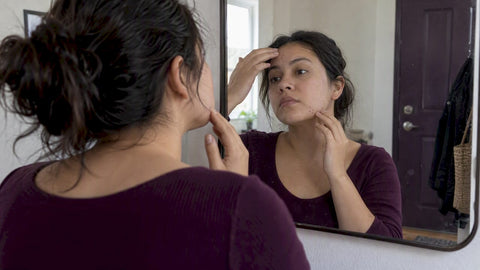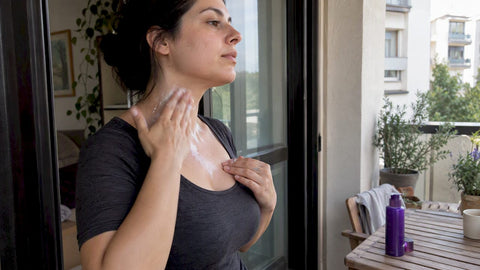
Fragrance in skincare is not inherently bad: most people use scented products without any problem, but a meaningful minority develop irritation or allergic contact dermatitis. If you have eczema, rosacea, a compromised skin barrier, or a history of reacting to scented products, we recommend steering clear of fragrance altogether. For everyone else, choosing fragrance-free leave-on products and patch-testing new scented items first is the simplest way to enjoy scent with less risk.
TL;DR:
- People with eczema, rosacea, prior fragrance reactions, or frequent workplace exposure should avoid fragrance; consult a dermatologist if a rash spreads or persists.
- Choose fragrance free moisturizers and serums because they stay on skin longer; reserve scented formulas for cleansers that wash off within minutes.
- Irritation usually causes burning or redness within minutes and stays localized, while allergic contact dermatitis often appears 24 to 48 hours later and may spread.
- Apply the product to your inner forearm daily for three to five days; if no reaction appears, test a small facial area before full use.
- A European general population study estimated fragrance allergy prevalence at about 1.9%; higher positivity in clinical patch testing reflects patients already suspected of contact allergy.
Table of Contents
- Why Brands Add Fragrance and Where It Shows Up
- What “Fragrance” Actually Means on an Ingredient List
- How Fragrance Irritates or Triggers an Allergic Reaction
- How Common Is Fragrance Allergy, Really?
- Who Should Avoid Fragrance or Stay Cautious
- How to Tell If You Have a Fragrance Sensitivity
- Practical Ways to Use Scented Products with Less Risk
- Choosing Scented Skincare When Your Skin Runs Sensitive
- A Balanced View on Scent and Self-Care
- FAQ
- Sources
Why Brands Add Fragrance and Where It Shows Up
Fragrance serves a few practical purposes in skincare formulas. Many active ingredients, from certain acids to plant extracts, have natural odors that aren’t pleasant on their own, so fragrance masks them. It also shapes how a brand feels to use, since a signature scent can make a routine feel more like self-care and less like a chore.
Where fragrance appears matters more than whether it appears at all. Leave-on products sit on your skin for hours, giving fragrance compounds extended contact time, while rinse-off formulas wash away within minutes.
You’ll commonly find fragrance in:
- Face and body moisturizers, serums, and night creams (leave-on)
- Cleansers, shampoos, and body washes (rinse-off)
- Toners, mists, and setting sprays (leave-on, with added inhalation exposure)
- Sheet masks and overnight treatments (leave-on)
What “Fragrance” Actually Means on an Ingredient List
The word “fragrance” or “parfum” on a label rarely refers to a single compound. It’s typically a blend of dozens of aroma chemicals, and manufacturers aren’t required to disclose each one individually, since fragrance formulas are often treated as trade secrets under FDA guidance. That guidance confirms cosmetic companies can list “fragrance” generically, and while they’re responsible for product safety, the FDA does not pre-approve cosmetic formulas before they reach shelves.
Dermatologists group known sensitizers into categories like Fragrance Mix I and II when patch testing, since these mixes capture the most common allergenic components found across products.
A few things worth knowing:
- Essential oils are natural but not automatically gentler. Oxidized limonene and linalool, both common in citrus and lavender oils, are recognized allergenic components once they break down from exposure to air.
- Synthetic fragrance blends can be formulated to lower known allergens, though this varies by brand.
- Trade-secret labeling means you often can’t identify the exact molecule causing a reaction without professional testing.
How Fragrance Irritates or Triggers an Allergic Reaction
Skin can respond to fragrance in two distinct ways, and telling them apart helps you figure out what’s happening. Irritant reactions show up fast: burning, stinging, or redness within minutes of application, usually limited to where the product touched. These don’t require prior exposure and can happen the first time you use something.
Allergic contact dermatitis works differently. It requires sensitization, meaning your immune system has to be exposed to a fragrance compound at least once before it reacts. Once sensitized, future exposure can trigger a delayed rash, often itchy, sometimes spreading beyond the application site, appearing 24 to 48 hours later.

Aggregate exposure raises your risk over time. The EDEN fragrance study found that people using multiple scented leave-on products face higher odds of developing fragrance contact allergy, since repeated exposure compounds the chance of sensitization. Reducing the number of scented leave-on items you use at once is a practical way to lower that risk.
The face, hands, and eyelids react most often, partly because facial skin is thinner and more permeable, and partly because hands transfer product to other sensitive areas like the eyes without you realizing it.
How Common Is Fragrance Allergy, Really?
Prevalence depends heavily on who’s being measured. Clinical patch-test populations, people already suspected of having a contact allergy, show much higher positivity rates than the general public.
| Data source | Population | Fragrance allergy rate |
|---|---|---|
| NACDG patch-test results, 2023 to 2024 | 3,979 clinical patients tested | a clinically relevant proportion tested positive for Fragrance Mix I |
| General-population cross-sectional study | European general population | Approximately 1.9% |
The gap makes sense: clinical series select people already experiencing symptoms, while general-population surveys capture everyone, including those who never react. The EDEN study also found that women report higher exposure to scented products and show higher sensitization rates across multiple studies, likely tied to greater cumulative use of fragranced leave-on items.
Who Should Avoid Fragrance or Stay Cautious
Some skin types and histories carry meaningfully higher risk, and recognizing yours helps you decide how much caution to apply.
- Atopic dermatitis or eczema: a compromised skin barrier lets fragrance molecules penetrate more easily, raising both irritation and sensitization risk.
- Rosacea: fragrance is a frequently reported trigger for flares and visible redness.
- Prior contact dermatitis: once sensitized to a fragrance compound, reactions tend to recur with similar ingredients.
- Occupational exposure: hairstylists, estheticians, and healthcare workers often handle fragranced products daily, which raises cumulative exposure.
“Sensitive skin” in practice usually means a tendency toward redness, stinging, or tightness after new products, even ones others tolerate fine. If you notice a pattern of reactions across multiple scented products, that’s a signal to stop and reassess rather than keep testing by trial and error.
Pro Tip: If a reaction spreads beyond the area you applied product to, or doesn’t improve within a few days of stopping use, check in with a dermatologist rather than waiting it out.
How to Tell If You Have a Fragrance Sensitivity
Figuring out whether fragrance is behind a reaction takes a methodical approach rather than guesswork.
- Stop and observe. Discontinue the suspected product for one to two weeks and watch whether redness, itching, or bumps resolve.
- Patch-test before reintroducing. Apply a small amount to your inner forearm once daily for three to five days, checking for redness, itching, or swelling before using it on your face.
- Reintroduce gradually. If the patch test is clear, apply the product to a small facial area for a few days before resuming full use.
- See a dermatologist for formal testing. If reactions persist or you suspect a true allergy, a dermatologist can run standardized patch testing with fragrance mix panels, which is a more reliable diagnostic method than product elimination alone.
Practical Ways to Use Scented Products with Less Risk
A few habits make scented skincare noticeably safer, whether you’re trying something new or already have a routine you enjoy.
- Choose fragrance-free for leave-on products like moisturizers and serums, since these carry the longest skin contact time.
- If you want fragrance, favor rinse-off formulas like cleansers or body washes, which the EDEN study associates with lower allergy risk than leave-on exposure.
- Introduce one new product at a time and keep a simple log of what you used and any reaction, so you can trace a cause if something flares up.
- Know the label terms: “unscented” can still contain masking fragrance to cover other ingredient odors, while “fragrance-free” means no fragrance ingredients were added at all.
Pro Tip: When a product’s labeling feels unclear, contacting the manufacturer directly for an ingredient breakdown is faster than guessing from the packaging.
Choosing Scented Skincare When Your Skin Runs Sensitive
If you love a good scent but your skin reacts easily, leaning toward rinse-off formats and fragrance-free leave-on basics gives you room to enjoy both. Our fragrance-free selection guide walks through how to build a routine around lower-exposure choices without giving up the products you like. For redness-prone skin specifically, our rosacea-friendly K-beauty guide covers formulations that tend to sit better with reactive skin.
When shopping, a short ingredient list is a good starting signal, along with conservative preservative systems and visible customer feedback mentioning sensitive skin tolerance. Our sensitive skin guide breaks down the signs worth watching for before you commit to a new product.
- Favor leave-on products labeled fragrance-free first, then experiment with scent in rinse-off formats.
- Check for short, recognizable ingredient lists over long fragrance blends.
- Look for customer reviews that specifically mention sensitive or reactive skin.
A Balanced View on Scent and Self-Care
Scent is part of why skincare feels good to use, and for most people, that pleasure comes with no real cost. The instinct to fear every fragranced product isn’t backed by how most skin actually responds. What matters is matching your choices to your own skin’s history: prefer fragrance-free during a flare or when your barrier feels compromised, and otherwise, test new products conservatively and enjoy the ones that work for you.
— Lunara
This article is general information, not a substitute for advice from a qualified doctor. Consult a qualified healthcare professional about your own circumstances before acting on anything here.
FAQ
Is it safe to use a fragranced face wash?
Rinse-off products like face washes carry lower fragrance exposure than leave-on items because they’re removed within minutes, and population research links rinse-off use to a smaller fragrance allergy risk than leave-on products carry, according to the EDEN study. If you have sensitive, eczema-prone, or rosacea-prone skin, patch-testing a new scented cleanser first is still a sensible precaution.
How can I tell if a reaction is irritation or a true allergy?
Irritation tends to appear quickly, within minutes to hours, and stays limited to where you applied the product, while allergic contact dermatitis is typically delayed by a day or two and can spread beyond the application site. A dermatologist can confirm which one you’re dealing with through formal patch testing.
What does “fragrance-free” mean compared to “unscented”?
“Fragrance-free” means no fragrance ingredients, including masking agents, were added to the formula. “Unscented” products can still contain a masking fragrance used to neutralize other ingredient smells, so the two terms aren’t interchangeable.
How common is fragrance allergy?
In clinical patch-test populations, fragrance mix positivity reached a clinically relevant proportion among 3,979 patients tested, but that figure reflects people already suspected of a contact allergy. In the general population, prevalence is considerably lower, around 1.9% according to a cross-sectional European study.
Should I avoid all fragranced skincare if I have sensitive skin?
Not necessarily. Many people with sensitive skin tolerate lightly fragranced rinse-off products fine while reserving fragrance-free formulas for leave-on items like moisturizers and serums. If you have eczema, rosacea, or a history of reactions, a dermatologist can help you decide where your personal threshold lies.
Sources
- North American Contact Dermatitis Group patch-test results: 2023–2024
- Skin exposure to scented products used in daily life and fragrance contact allergy in the European general population — EDEN Fragrance Study
- Fragrances in cosmetics | FDA