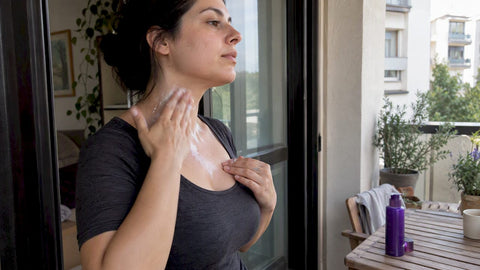
A complete neck and chest skincare routine follows one order: cleanse, treat selectively, moisturize, and protect with daily SPF 30+. Neck and décolletage skin is thinner than facial skin and more reactive, so we recommend introducing actives slowly and never skipping sunscreen. The American Academy of Dermatology backs daily broad-spectrum protection, and our collections at LunaraShopping are organized to match each step of that routine.
TL;DR:
- Apply broad spectrum SPF 30 or higher 15 minutes before going outdoors, using about 1 ounce across exposed skin, including your neck and chest.
- Patch test new actives, begin retinol or exfoliating acids infrequently at the lowest effective strength, and never use both on the same night.
- Retinoids increase sun sensitivity and are unsuitable during pregnancy; reduce use if redness, peeling, or stinging appears, and consult a dermatologist if irritation persists.
- People with sensitive skin or no experience with actives can use a basic routine: gentle cleanser, serum, moisturizer, and SPF by day, then cleanser and moisturizer at night.
- See a dermatologist for sudden discoloration, persistent irritation, laxity, or texture that fails to improve after months of consistent care.
Table of Contents
- Your Quick Routine Checklist for Morning and Night
- Why Neck and Chest Skin Needs Different Care
- Key Ingredients That Work on Neck and Chest Skin
- How to Introduce Actives Without Triggering Irritation
- Sun Protection: The Step That Makes Everything Else Work
- Two Sample Routines to Copy
- How to Apply Products Without Pulling or Tugging Fragile Skin
- When to See a Dermatologist
- Tips for Preventing Sagging and Loss of Elasticity
- Korean Skincare Ingredients That Suit Neck and Chest Care
- Treating Pigmentation and Sunspots on Neck and Chest
- Our Take on Neck and Chest Care
- Build Your Routine With LunaraShopping
- FAQ
- Sources
Your Quick Routine Checklist for Morning and Night
A routine you can actually stick to beats a perfect one you abandon after a week. Here is the simplified version for both halves of the day.
Morning steps:
- Cleanse gently with a low pH formula that will not strip the thin skin on your neck and chest.
- Apply an antioxidant serum if your skin tolerates it well.
- Layer on a moisturizer with hyaluronic acid or ceramides while skin is still slightly damp.
- Finish with broad-spectrum SPF 30 or higher, applied before you get dressed so you do not miss exposed skin at the collarbone and neck.
Night steps:
- Cleanse again to remove sunscreen and the day’s buildup.
- Apply a targeted treatment, retinol or peptides depending on your tolerance, starting infrequently.
- Seal everything in with a barrier-supporting moisturizer.
The American Academy of Dermatology recommends applying sunscreen to dry skin 15 minutes before heading outdoors and using about 1 ounce to cover all exposed body skin, which includes your neck and chest, not just your face. Texture matters too: richer creams tend to suit the drier décolletage, while lighter gels work better on an oilier or more hair-covered chest.
Pro Tip: Keep your sunscreen bottle next to your moisturizer so the last step never gets skipped on a rushed morning.
Why Neck and Chest Skin Needs Different Care
Your neck and chest are not just an extension of your face. This skin is thinner, has fewer sebaceous glands, and produces less natural oil, which makes it dry out faster and show signs of collagen loss earlier than the face often does.
Years of sun exposure add up here too, often with less sunscreen attention than the face receives, and repetitive motion from posture and daily movement contributes to the fine horizontal lines many people notice across the neck. Because the skin barrier is more fragile, this biology changes what belongs in your routine: barrier-repairing hydrators take priority, exfoliation needs a gentler hand, and strong actives require more caution than they would on the face.
That is the reasoning behind every recommendation in this guide: protect first, hydrate consistently, and treat carefully.
Key Ingredients That Work on Neck and Chest Skin
Not every active that works on your face belongs on your neck and chest at the same strength. Here is what the evidence supports and how to use each ingredient with this more delicate skin in mind.
Retinoids and retinol stimulate collagen production and improve texture and fine lines by increasing epidermal thickness, according to research on topical retinoids. The tradeoff is increased photosensitivity and a higher chance of dryness, redness, and irritation, so these ingredients need daytime sun protection and a gradual introduction. A 2016 in vivo study found that topical retinol meaningfully increased epidermal thickness and improved markers of the dermal extracellular matrix in naturally aged skin, without notable side effects over that study’s short duration. A more recent prospective study comparing retinol concentrations found both retinol creams improved hydration and reduced water loss, though the higher concentration brought more redness, making the lower strength a sensible starting point for the neck and chest.
Peptides support collagen and firmness with a gentler irritation profile than retinoids, which makes them a good fit for alternating nights or for skin that reacts poorly to stronger actives.
Hyaluronic acid and ceramides form the hydration and barrier-repair foundation that thinner neck and chest skin depends on, and we consider them non-negotiable regardless of which actives you add on top.
Exfoliating acids like glycolic, lactic, and PHA ingredients smooth texture and can help with rough patches, but this skin calls for lower concentrations and less frequent use than you would choose for the face.
Vitamin C and other antioxidants offer some photo-protection support and a brightening effect. Apply vitamin C right after cleansing, before your thicker creams, since layering order affects how well it performs and how stable the formula stays on skin.
- Retinoids: collagen support, texture improvement, start low and slow.
- Peptides: firming support with lower irritation risk.
- Hyaluronic acid and ceramides: hydration and barrier repair.
- Exfoliating acids: texture refinement at reduced frequency.
- Vitamin C: antioxidant support, applied early in the routine.
How to Introduce Actives Without Triggering Irritation
Starting actives on neck and chest skin rewards patience more than ambition. Follow these steps in order:
- Patch test any new active on a small area first, and wait before applying it more broadly.
- Begin retinoids or exfoliating acids infrequently, increasing frequency only once your skin shows no redness or flaking.
- Choose the lowest effective concentration first. Non-prescription retinol is a reasonable starting point before considering prescription tretinoin, and our retinol versus retinal guide can help you decide which form fits your skin.
- Never layer a retinoid and a strong exfoliating acid on the same night. Alternate them instead, and always follow with a moisturizer to buffer irritation, a technique we break down in our retinol sandwich method guide.
- Remember that retinoids increase sun sensitivity and should not be used during pregnancy. The RETIN-A MICRO prescription label specifies a thin layer applied once daily in the evening, avoiding the eyes, mouth, and skin creases, with moisturizer used to manage irritation.
- If redness, peeling, or stinging shows up, cut back frequency and lean on barrier-repair moisturizers. See a dermatologist if irritation does not settle down.
Sun Protection: The Step That Makes Everything Else Work
Every ingredient above works better when your skin is not simultaneously taking sun damage. This is the step we never let readers skip.
The American Academy of Dermatology recommends a broad-spectrum, water-resistant sunscreen with SPF 30 or higher applied generously to all skin not covered by clothing, including the neck and chest, every single day.
The Academy’s guidance is specific on amount and timing: apply sunscreen to dry skin 15 minutes before heading outdoors, and use about 1 ounce to cover exposed body skin, which is roughly a shot glass worth spread across face, neck, and chest combined. Most people apply far less than this without realizing it.

For sensitive neck and chest skin, physical sunscreens built on zinc oxide or titanium dioxide tend to sit more calmly than some chemical filters, and a water-resistant formula holds up better if you sweat or swim. Whichever formula you choose, consistency matters more than brand, since missed days are what let visible sun damage accumulate.
Two Sample Routines to Copy
Pick the version that matches where your skin is right now, and adjust from there.
Hydration-first routine, best if your skin is sensitive or new to actives:
- Morning: gentle cleanser, hyaluronic acid serum, ceramide moisturizer, SPF 30+.
- Night: gentle cleanser, hydrating serum, moisturizer.
Active progression routine, for skin that already tolerates a basic regimen:
- Morning: antioxidant serum, moisturizer, SPF 30+.
- Night: retinol infrequently, with moisturizer, gradually building toward alternate nights as tolerated, with peptides on the nights you skip retinol.
If your skin runs oilier or more combination, swap the ceramide cream for a lighter gel moisturizer and consider a toner step before treatment, something our guide to building a K-beauty routine for mature skin covers in more depth. Traveling or just want a lower-maintenance week? Drop to cleanser, moisturizer, and SPF in the morning, and cleanser plus moisturizer at night, skipping actives until you are back in a steady routine. Our night routine checklist lays out a fuller version if you want to build up gradually from either starting point.
How to Apply Products Without Pulling or Tugging Fragile Skin
The neck and chest stretch and move constantly, which makes heavy-handed application a real risk for accelerating lines rather than preventing them.
Use gentle upward strokes when applying creams and serums, and pat products in rather than rubbing them vigorously. A light touch protects the thin skin here far better than a thorough massage would.
The chest often tolerates slightly more product than the neck simply because it covers more surface area, and a richer cream usually suits the drier décolletage while a gel works better if your chest runs oilier or has more hair. Our guide to what to expect from neck cream walks through texture choices in more detail.
If you use a roller or gua sha tool, keep the pressure light. This skin does not need aggressive scraping, and overuse on fragile tissue can do more harm than good.
When to See a Dermatologist
Most neck and chest concerns respond to a consistent routine, but a few signs call for professional input rather than more product experimentation.
See a dermatologist for sudden or unexplained discoloration, irritation that will not resolve, noticeable skin laxity, or texture that is not improving despite months of consistent care. In-office options like lasers, ultrasound treatments, and injectables exist as dermatologist-guided steps for more pronounced laxity or lines that topical care alone cannot fully address.
We also recommend a consultation before starting prescription retinoids, since a clinician can personalize strength and frequency to your skin’s actual tolerance.
Tips for Preventing Sagging and Loss of Elasticity
Collagen and elastin give your skin its structure and bounce, and both decline naturally with age, as described in clinical resources on collagen and elastin. You cannot stop that decline entirely, but you can slow how it shows up on your neck and chest.
Daily sunscreen is the single highest-leverage habit here, since UV exposure accelerates the breakdown of the collagen and elastin that keep skin firm. Pair that with consistent retinoid or peptide use, since both ingredient classes support the collagen production that naturally slows with age.
Sleep position matters more than people expect. Side sleeping that crushes your neck against a pillow night after night can contribute to crease formation over time, so a supportive pillow that keeps your neck in a neutral position is worth considering.
Posture plays a role too. Looking down at a phone for hours a day puts repeated strain on neck skin, and small adjustments, like raising your phone to eye level, reduce that repetitive folding. None of this replaces a solid topical routine, but it supports the work your moisturizer and SPF are already doing.
Korean Skincare Ingredients That Suit Neck and Chest Care
Korean skincare tends to favor layered hydration and gentler formulations, which fits the lower-tolerance needs of neck and chest skin particularly well.
Sheet masks built around hydrating or firming ingredients give the décolletage a concentrated moisture boost without the friction of a heavier massage-in cream, which matters on skin this thin. Our Face Masks collection includes options like the MEDIHEAL Collagen Essential Mask and the JM Solution Honey Luminous Royal Propolis Mask, both formulated around the kind of barrier-friendly, hydration-forward ingredients that suit sensitive skin beyond the face.
Low pH gel cleansers, a hallmark of Korean cleansing routines, also matter more here than people expect. A cleanser that disrupts your skin’s natural pH can worsen the dryness that already affects the neck and chest, so a gentle, low pH option like the COSRX Low pH Good Morning Facial Gel Cleanser is a sound foundation to build the rest of your routine on.
Treating Pigmentation and Sunspots on Neck and Chest
Pigmentation on the neck and chest usually comes from years of sun exposure in an area that gets less sunscreen attention than the face.
Daily SPF 30 or higher is the first and most important step, since it prevents new pigmentation from forming while existing spots fade. Vitamin C serums applied in the morning, before moisturizer, support brightening alongside your sunscreen rather than instead of it. A vitamin C cleanser formulated with manuka honey is a gentle way to work a brightening ingredient into your routine from the very first step.
Gentle exfoliation with a mild AHA or PHA, used less often on the chest and neck than you might on your face, can help fade surface pigmentation over time by encouraging cell turnover. Our PHA versus AHA guide breaks down which option suits more sensitive skin if you are deciding between the two. Persistent or darkening spots are worth a dermatologist visit to rule out anything beyond typical sun-related pigmentation.
Our Take on Neck and Chest Care
Most neck and chest advice treats this skin like an afterthought to a facial routine, a few extra swipes of whatever cream is already in hand. We think that habit is backwards. The neck and chest show sun damage and collagen loss earlier than the face in many people, precisely because they get less protection, not because they are inherently weaker.
The real gap is not knowledge, it is follow-through. People understand that SPF matters, yet the neck and chest are the first areas skipped on a rushed morning. We would rather see someone master one consistent step, daily sunscreen on the chest and neck, than attempt an elaborate regimen they soon abandon. Consistency with the basics beats intensity with the extras every time on skin this reactive.
Our curation approach reflects that belief: we group products by what a routine actually needs, from gentle cleansers to barrier moisturizers, rather than pushing the most expensive active first.
— Lunara
Build Your Routine With LunaraShopping
Putting this routine together is easier when the right textures and formulas are already sorted for you. We curate Korean skincare and self-care essentials chosen for gentle, effective formulations that work for a range of skin types.

Start with a gentle cleanser, add a hydrating serum, lock it in with a moisturizer, and finish with SPF, exactly the order this guide walks through.
| Step | What to shop | Where to find it |
|---|---|---|
| Cleanse | Low pH gel or foaming cleanser | Face Cleansers & Scrubs |
| Hydrate | Hyaluronic acid or ceramide moisturizer | Face Creams & Moisturizers |
| Richer chest hydration | Body-friendly moisturizing cream | Body Moisturizers |
| Treat | Full face care range for serums and targeted treatments | All Face Care Products |
Every order ships with flat rate standard shipping starting at $6.49, so building out a full neck and chest routine in one checkout stays simple. Browse our Face Creams & Moisturizers collection to start building yours today.
This article is general information, not a substitute for advice from a qualified doctor. Consult a qualified healthcare professional about your own circumstances before acting on anything here.
FAQ
Is it possible to reverse neck wrinkles?
Topical retinoids and retinol can improve the appearance of fine lines and texture by stimulating collagen production and increasing epidermal thickness, though results are gradual and vary by individual. Daily SPF 30+ protection prevents further damage while these improvements develop, and more pronounced sagging may need dermatologist-guided options like lasers or injectables.
What is a good face and neck cream?
A good face and neck cream contains hydrating ingredients like hyaluronic acid and barrier-supporting ceramides, since neck skin is thinner and drier than facial skin. Look for a fragrance-free formula with a texture suited to your skin type, richer for dry areas and lighter for oilier ones.
Can you use a neck and chest cream formulated for the body on your face?
Body-focused neck and chest creams are generally formulated for thicker application and may be heavier than what facial skin needs, so it is safer to use a dedicated facial moisturizer on your face and reserve richer body-area creams for the neck, chest, and décolletage. Checking the product label for intended use is the most reliable way to decide.
What is the best anti-wrinkle cream for the neck?
The most evidence-backed option for improving neck wrinkles is a retinol-based cream, since studies show retinol improves hydration and reduces visible signs of aging when introduced gradually. Starting at a lower concentration and building frequency slowly reduces the irritation risk that comes with higher strengths.
Sources
- Aad
- Pmc
- Barrier Function and Biophysical Effects of 0.104% and 0.247% Retinol Creams in Mature Facial Skin: A Prospective Study - PubMed
- RETIN-A MICRO ® is indicated for the topical treatment of acne vulgaris in adults and pediatric patients 12