A solid Korean skin care regimen follows one principle: layer lightweight hydration first, treat targeted concerns second, and protect with SPF every morning. In the evening, start with an oil cleanser, follow with a low-pH water cleanser, then add your hydrating layers and actives. In the morning, cleanse lightly, hydrate, and finish with sunscreen. That is the core of it.
If you are just starting out, these are the steps that matter most:
- Double cleanse (PM only): oil cleanser first, then a gentle water-based cleanser
- Hydrating toner: your first moisture layer after cleansing
- Moisturizer: seal in hydration and support your skin barrier
- Sunscreen (AM only): a high-SPF sunscreen every morning, consistently
Pro Tip: Consistency with four well-chosen steps will outperform an inconsistent ten-step routine every time. Nail the base four first, then add steps as your skin adjusts.
Table of Contents
- What does the full Korean skin care regimen look like step by step?
- How do you adapt the Korean regimen for your skin type?
- Which ingredients should you look for (and which should you layer carefully)?
- How long does the routine take, and what does it cost in the US?
- What mistakes do people make with a K-beauty routine?
- What do dermatologists say about the K-beauty approach?
- Key Takeaways
- A note on building your routine with intention
- Start your Korean skin care routine with Lunarashopping
- Useful sources and further reading
What does the full Korean skin care regimen look like step by step?
The 10-step Korean skincare routine is less a rigid formula and more a layering framework. Most steps are optional; the order is what matters. Here is each step, what it does, and how to apply it.
Step 1: Oil-based cleanser (PM)
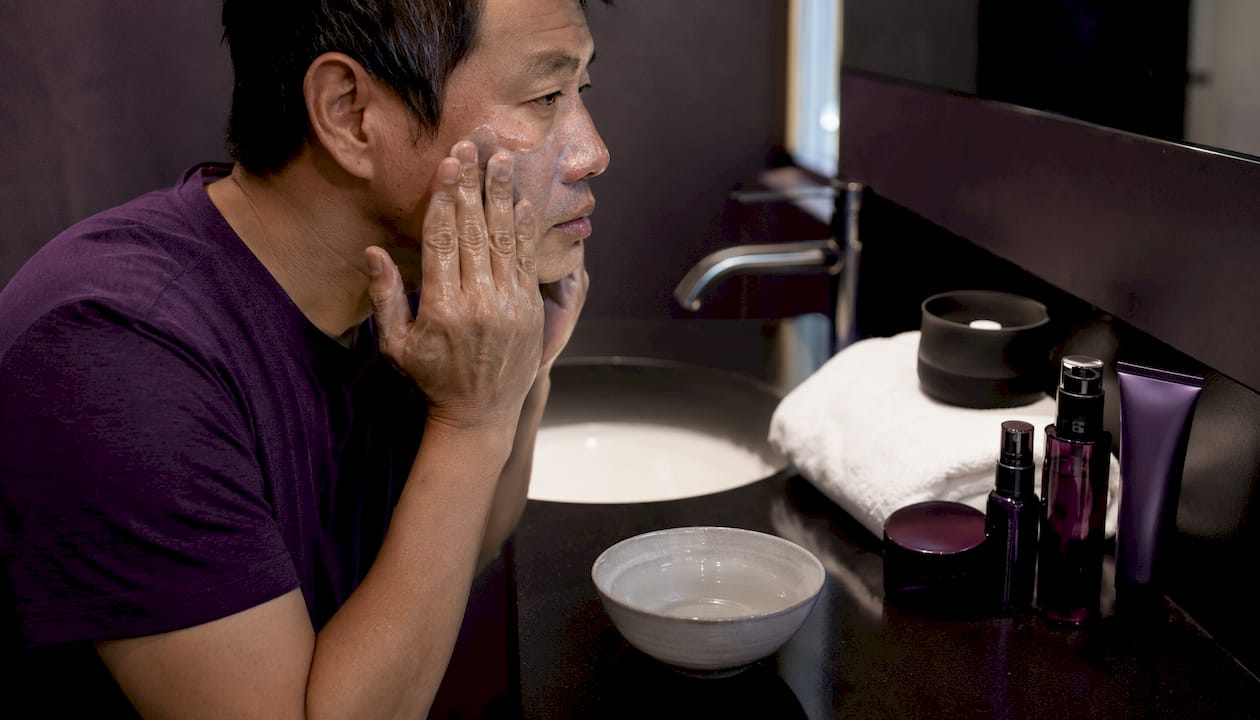
Apply a dime-sized amount to dry skin and massage in circular motions for 60 seconds to dissolve sunscreen, sebum, and makeup. Emulsify with a few drops of water, then rinse. ANUA’s Heartleaf Pore Control Cleansing Oil and Beauty of Joseon’s Ginseng Cleansing Oil are reliable options available through Lunarashopping.
Step 2: Water-based cleanser (AM and PM)
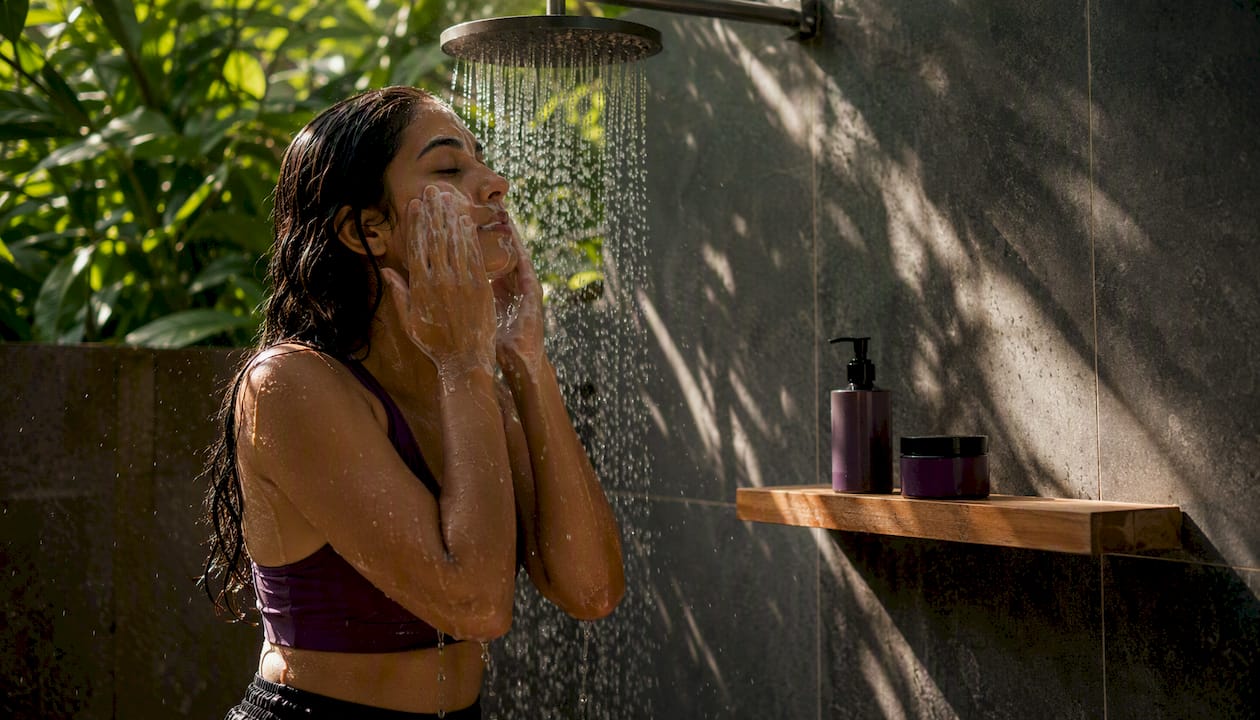
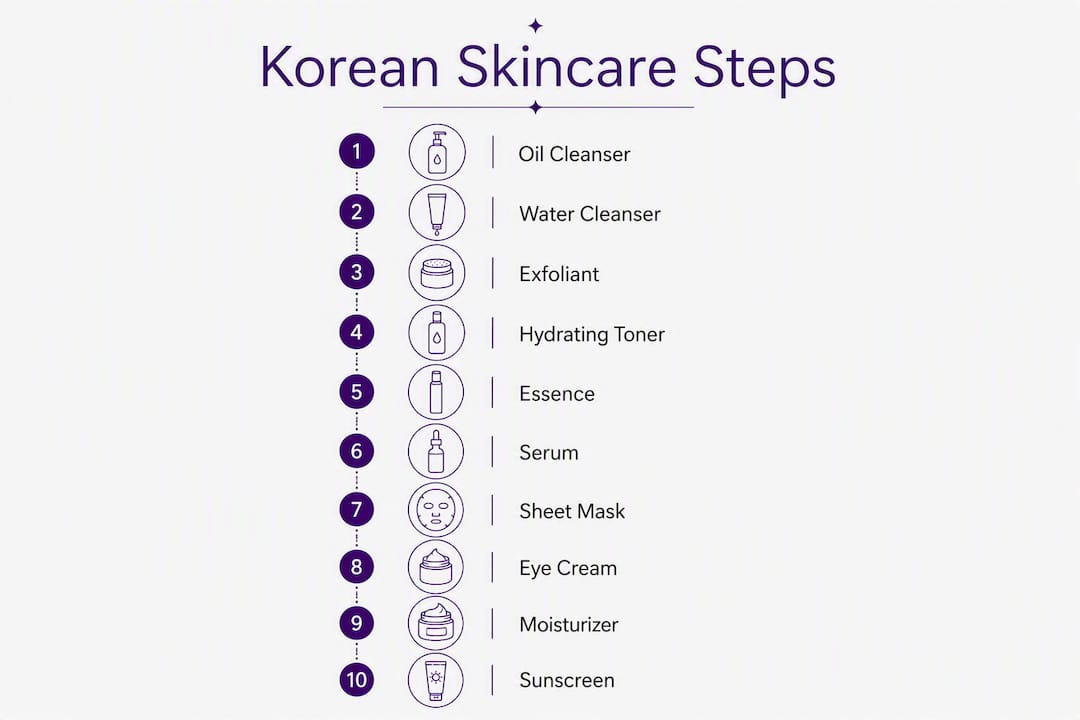
Follow the oil cleanser with a low-pH gel or foam cleanser, ideally formulated at pH 4.5–5.5 to preserve your acid mantle. COSRX’s Low pH Good Morning Gel Cleanser is a benchmark product in this category. Use a nickel-sized amount, lather gently, and rinse with lukewarm water.
Step 3: Exfoliant (2–3x per week, PM)
Chemical exfoliants, such as AHAs (glycolic, lactic acid) or BHAs (salicylic acid), outperform most physical scrubs for consistent results. Apply after cleansing on dry skin and wait 10–15 minutes before layering. The Beauty of Joseon Apricot Blossom Peeling Gel offers a gentler keratolytic option suited to most skin types.
Step 4: Hydrating toner (AM and PM)
K-beauty toners are not the alcohol-based astringents common in Western routines. They are lightweight hydrators that contain hyaluronic acid, niacinamide, centella, or fermented extracts. Press two to three pumps into your palms and pat gently into skin. ANUA’s Heartleaf 77% Soothing Toner and COSRX’s Advanced Snail 96 Mucin Power Essence both work well at this stage.
Step 5: Essence (AM and PM)
Essences are thinner than serums and focus on cellular hydration and skin prep. Pat three to four drops across your face. Skin1004’s Madagascar Centella Ampoule functions effectively as an essence for sensitive or reactive skin.
Step 6: Serum or ampoule (AM and PM)
This is your targeted treatment step. Choose based on your primary concern: niacinamide for hyperpigmentation and pore appearance, hyaluronic acid for hydration, or centella-based formulas for calming. Beauty of Joseon’s Glow Serum with Propolis and Niacinamide addresses both brightness and barrier support. MEDICUBE’s Age-R Booster Pro pairs well with their serums for enhanced absorption.
Step 7: Sheet mask or treatment mask (1–3x per week)
Sheet masks deliver a concentrated dose of hydration and actives in 15–20 minutes. Press the mask flat against your face, leave on for the recommended time, and pat in the remaining serum rather than rinsing. Use hydrating masks up to three times per week; clay or exfoliating masks once weekly.
Step 8: Eye cream (AM and PM)
The skin around your eyes is thinner and more prone to dehydration. Use your ring finger to tap a grain-of-rice-sized amount along the orbital bone, working inward. Never drag or pull.
Step 9: Moisturizer or emulsion (AM and PM)
Seal everything in with a moisturizer matched to your skin type. Emulsions are lighter and better suited to oily or combination skin; creams suit dry or mature skin. COSRX’s Advanced Snail 92 All In One Cream and Beauty of Joseon’s Dynasty Cream are both well-regarded options. For a deeper look at the difference, Lunarashopping’s guide on Korean emulsions vs. moisturizers breaks it down clearly.
Step 10: Sunscreen (AM only, final step)
Sunscreen is the single most evidence-backed step in any skincare routine. Korean sunscreens frequently achieve SPF 50+ PA++++ with textures far lighter than most Western formulas, which makes daily reapplication more realistic. Apply a full quarter-teaspoon to your face and neck as the absolute last step before makeup or going outside.
| Step | Purpose | Frequency |
|---|---|---|
| Oil cleanser | Removes oil-based impurities | PM only |
| Water cleanser | Removes water-based residue, balances pH | AM and PM |
| Exfoliant | Removes dead cells, improves texture | 2–3x per week (PM) |
| Hydrating toner | First moisture layer, preps skin | AM and PM |
| Essence | Cellular hydration, skin prep | AM and PM |
| Serum / ampoule | Targeted treatment (pigment, hydration, calming) | AM and PM |
| Sheet mask | Concentrated hydration and actives | 1–3x per week |
| Eye cream | Hydrates and protects delicate eye area | AM and PM |
| Moisturizer / emulsion | Seals in moisture, supports barrier | AM and PM |
| Sunscreen | UV protection, prevents premature aging | AM daily (final step) |
How do you adapt the Korean regimen for your skin type?
The 10-step count was always an oversimplification; the real lesson is personalized layering. Your skin type should drive texture choices and active ingredient selection.
- Oily or acne-prone skin: Choose gel-based cleansers, lightweight watery toners, and oil-free emulsions. BHA (salicylic acid) is your best exfoliant. Lunarashopping’s Korean acne care guide covers targeted protocols. Avoid heavy creams and occlusive oils that can clog pores.
- Dry skin: Reach for cream cleansers, richer moisturizers, and ceramide-heavy formulas. AHAs (lactic acid especially) exfoliate without stripping. Layer your hydrating toner two to three times before moving to your moisturizer.
- Sensitive or rosacea-prone skin: Centella asiatica is your anchor ingredient. Skin1004’s Madagascar Centella line and ANUA’s Heartleaf products are formulated specifically for reactive skin. Avoid fragrance, alcohol, and high-concentration actives until your barrier is stable.
- Hyperpigmentation concerns: Niacinamide (5–10%) and alpha-arbutin are the gentlest brightening actives to start with. Beauty of Joseon’s Glow Deep Serum with Rice and Alpha-Arbutin is a well-formulated option. Vitamin C serums work well in the morning, but introduce them slowly.
Introducing new products safely: Wait approximately two weeks between adding new products so you can identify what your skin is responding to. Patch test every new product on your inner arm for 24 hours before applying it to your face. If you notice widespread redness, stinging, or new breakouts after adding multiple products at once, pull back to your base four steps and reintroduce one product at a time.
Which ingredients should you look for (and which should you layer carefully)?
K-beauty’s prevention-first philosophy centers on a handful of well-researched ingredients that work synergistically when layered correctly.
Beneficial ingredients by function:
- Hydration: Hyaluronic acid, glycerin, and beta-glucan draw moisture into skin. These belong in your toner and essence.
- Barrier support: Ceramides and fatty acids reinforce the lipid barrier. Look for them in your moisturizer.
- Calming: Centella asiatica (cica) reduces inflammation and supports healing. Skin1004 and ANUA both build entire lines around it.
- Brightening: Niacinamide (5–10%) and alpha-arbutin address hyperpigmentation without the irritation risk of high-strength vitamin C.
- Exfoliation: AHAs (glycolic, lactic) resurface and hydrate; BHAs (salicylic acid) penetrate pores. Both are keratolytic agents best used 2–3 times per week.
Layering rules that protect your results:
The dermatologist-backed rule is simple: apply products from thinnest to thickest consistency. This preserves absorption and prevents heavier products from blocking lighter actives. For a detailed breakdown of how textures interact, Lunarashopping’s guide on layering skincare products correctly is worth bookmarking.
Pro Tip: Separate your strongest actives by time of day. Use vitamin C in the morning (it pairs well with SPF) and retinoids or AHAs in the evening. Combining high-strength AHAs with a daily retinoid without a buffer night in between is one of the fastest routes to irritation.
Avoid combining strong AHAs or BHAs with retinoids on the same evening until your skin has adapted to both individually. When you do use a retinoid, keep your exfoliation frequency to once or twice a week rather than three times.
How long does the routine take, and what does it cost in the US?
Time and cost are the two reasons people abandon a routine. Here is what to realistically expect.
Time per routine:
- Morning (4-step minimalist): 3–5 minutes
- Evening (full 10-step): 20–30 minutes
- Evening (4-step): 8–10 minutes
A consistent 4-step routine typically outperforms an inconsistent 10-step one. Start with the minimalist version and add steps as the habit solidifies.
Frequency at a glance:
| Step | Recommended frequency | Approximate US price range |
|---|---|---|
| Oil cleanser | nightly | $12–$20 |
| Water cleanser | morning and evening | $10–$20 |
| Exfoliant | a few times per week | $15–$30 |
| Hydrating toner | AM and PM | $15–$30 |
| Essence | AM and PM | $18–$30 |
| Serum / ampoule | AM and PM | $20–$40 |
| Sheet masks | once or several times per week | $1–$4 per mask |
| Eye cream | morning and evening | $15–$30 |
| Moisturizer | morning and evening | $15–$30 |
| Sunscreen | every morning | $12–$20 |
A beginner starter kit covering the four core steps typically costs a modest amount for mid-range K-beauty products. Hydration and texture improvements often show within a few weeks; deeper concerns like hyperpigmentation or firmness generally require longer, consistent use.
If you are managing a busy schedule, a natural beauty regimen for working professionals offers practical strategies for keeping your AM routine under five minutes without sacrificing results.
What mistakes do people make with a K-beauty routine?
Most problems trace back to a handful of predictable errors.
- Too many actives at once: Introducing niacinamide, a BHA, vitamin C, and a retinoid in the same week makes it impossible to identify what is causing a reaction. One new product every two weeks is the standard guidance.
- Skipping sunscreen: SPF is not optional. Skipping it undoes the brightening and anti-aging work of every other step.
- Over-exfoliating: Daily exfoliation disrupts your acid mantle and triggers sensitivity. Limit AHAs and BHAs to 2–3 times per week, especially when starting out.
- Using a high-pH cleanser: A bar soap or alkaline cleanser (pH above 6) strips the acid mantle and leaves skin vulnerable. Stick to a low-pH formula in the 4.5–5.5 range.
- Pilling: If products are balling up on your skin, you are either layering too quickly or using incompatible textures. Wait 30–60 seconds between steps and apply thinner layers.
- Sunscreen white cast: Switch to a Korean chemical or hybrid sunscreen. The UV filter technology used in many Korean formulas produces significantly less white cast than most Western mineral sunscreens.
When to pause and see a dermatologist: If you develop widespread redness, hives, or persistent breakouts after starting a new routine, stop all new products and return to your base cleanser and moisturizer. Consult a dermatologist before reintroducing actives, particularly if you are using prescription retinoids or have a diagnosed skin condition like rosacea or eczema.
What do dermatologists say about the K-beauty approach?
The science behind the Korean beauty routine aligns closely with dermatology best practices, which is why clinicians increasingly recommend it to patients.
The dermatologist-backed order is always thinnest to thickest. This is not arbitrary. Heavier products form a partial seal on the skin surface; applying a lightweight essence after a thick cream means the essence cannot penetrate effectively. Low-pH cleansers (pH 4.5–5.5) matter for the same reason: they preserve the acid mantle, the skin’s natural defense layer, rather than stripping it the way alkaline soaps do.
Gentle formulas also win over time. Lunarashopping’s overview of why gentle K-beauty formulas work explains the barrier-health science in accessible terms. Practitioners caution against stacking many high-strength actives in a layered routine before the barrier is stable; build the hydrated base first, then introduce concentrated actives like prescription retinoids or high-strength AHAs one at a time.
Pro Tip: If you are integrating a prescription retinoid into your K-beauty routine, apply it after your hydrating toner and before your moisturizer. The “sandwich method” (toner → retinoid → moisturizer) buffers irritation without reducing efficacy.
Facial massage is a traditional adjunct technique worth adding once your base routine is established. It can temporarily reduce puffiness and improve circulation, though it requires consistency for visible changes. Lunarashopping’s Korean face massage guide walks through the technique step by step.
Key Takeaways
A consistent Korean skin care regimen built on four core steps (double cleanse, hydrating toner, moisturizer, and daily SPF) delivers measurable results within weeks and forms the foundation for adding targeted actives safely.
| Point | Details |
|---|---|
| Start with four core steps | Oil cleanser (PM), water cleanser, hydrating toner, moisturizer, and sunscreen (AM) cover the essentials for most skin types. |
| Layer thin to thick | Apply products from lightest to heaviest consistency so each layer absorbs fully before the next. |
| Introduce actives gradually | Wait approximately two weeks between new products and patch test to avoid compounding irritation. |
| Sunscreen is non-negotiable | SPF 50+ every morning is the single most evidence-backed step for long-term skin health. |
| Lunarashopping makes it accessible | Lunarashopping stocks COSRX, Beauty of Joseon, ANUA, MEDICUBE, and Skin1004 so you can build a complete routine from one curated source. |
A note on building your routine with intention
The most common mistake people make with K-beauty is treating it as a product collection rather than a practice. The brands matter less than the habit. What consistently works is a simple, well-layered routine you actually follow every day, not a shelf full of products you rotate unpredictably.
At Lunarashopping, the approach to curation reflects that. The brands stocked, including COSRX, Beauty of Joseon, ANUA, MEDICUBE, and Skin1004, are chosen because they deliver on the core principles: gentle formulations, effective hydrators, and SPF options that people will actually use. The goal is not to sell you ten products at once. It is to help you build a routine that fits your skin, your schedule, and your budget, then scale it thoughtfully as your skin responds.
If you are building a routine for mature skin with different texture and firmness concerns, Lunarashopping’s guide on K-beauty for mature skin addresses those adjustments specifically.
Start your Korean skin care routine with Lunarashopping
Your skin deserves a routine that is backed by science and easy to stick with. Lunarashopping’s Morning Face Care Routine Set gives you a curated starting point for your AM routine, covering the core steps without the guesswork of building from scratch. For a targeted brightening treatment, the Beauty of Joseon Glow Deep Serum with Rice and Alpha-Arbutin slots directly into your serum step. A complete starter kit for the four core steps typically runs $30–$55 using mid-range K-beauty products.
Browse the full face care collection to find every product you need for a complete routine, from oil cleansers to SPF, all from brands that dermatologists and K-beauty enthusiasts trust. Your routine starts with one good product and builds from there.
Useful sources and further reading
- Korean Skin Care Routines: What You Need To Know — Cleveland Clinic
- Best Korean Skincare Routine 2026 — Jane Yoo MD
- Korean Skincare Guide 2026: The Only Guide You Need — Seoul Signal
- What Experts Really Think of the 10-Step Korean Skin-Care Routine — Vogue
- The Surprising Truth Behind Korea’s Most Effective Skincare Products — BBC Science Focus Magazine
- Why Facial Massage and Other Korean Beauty Rituals Are Used — Byrdie
This article is for general informational purposes only and does not constitute medical or dermatological advice. Consult a board-certified dermatologist for guidance specific to your skin condition or before introducing prescription actives.