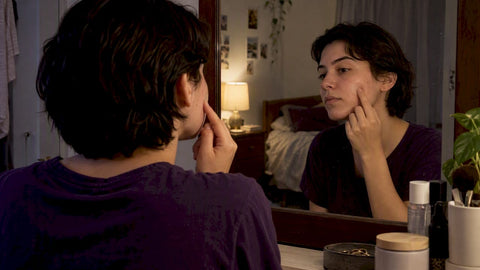
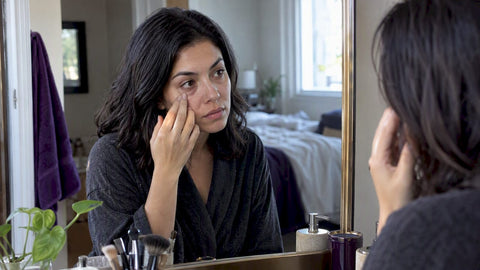
If your skin feels tight, dull, or flaky, the fastest fix is simple: stop hot showers and harsh cleansers, switch to a gentle cleanse, layer a humectant serum under a ceramide-rich moisturizer, and finish mornings with sunscreen. Most people notice less tightness within days, though full barrier repair takes several weeks of consistent care. If cracking, bleeding, or intense itching shows up, that is a signal to see a dermatologist rather than add more products. The rest of this guide walks through the signs, the causes, and the exact routine to try first.
TL;DR:
- Dehydrated skin can often be fixed within days by switching to gentle cleansers, layering hydrating products, and avoiding harsh ingredients, but full repair takes weeks.
- Hot showers, indoor heating, and over-exfoliation are common triggers that worsen dehydration by disrupting the skin barrier and pulling moisture away from the skin.
- A Korean-inspired routine prioritizes drawing water into the skin first with essences and humectants, then sealing it with ceramide-rich moisturizers for lasting hydration.
- Products containing glycerin or hyaluronic acid, combined with barrier lipids like ceramides, are most effective, but avoid fragrance, high alcohols, and strong acids during barrier recovery.
- Applying humectants on damp skin and giving each product time to absorb improves hydration and prevents pilling, making the routine more efficient and effective.
Table of Contents
- How to tell if your skin is dehydrated
- Common causes and triggers behind dehydrated skin
- A Korean-style, barrier-first routine you can follow
- Ingredients that repair and hydrate, and ones to avoid
- Choosing the right texture for your skin right now
- Applying your products the right way
- When dehydration doesn’t improve on its own
- Why trust this guide on Korean skincare and hydration
- The part of K-beauty routines most people get wrong
- Build your hydration routine with curated skincare selections
- Sources
- FAQ
How to tell if your skin is dehydrated
Dehydration means your skin lacks water, not oil, and that distinction changes what you should reach for. Dry skin is a skin type tied to low oil production, while dehydration is a temporary condition that can affect oily, combination, or dry skin alike. That is why some people notice shine on their forehead and tightness on their cheeks at the same time: sebum output and water content are controlled by separate processes in the skin.
A quick pinch test can help. Gently pinch the skin on your cheek or the back of your hand. Skin that snaps back quickly is generally well hydrated, while skin that stays tented or wrinkled for a moment often points to low water content.
Watch for these everyday signs:
- Tightness that shows up right after cleansing, even before your skin fully dries
- Fine, powdery flaking that looks different from thicker, scaly dry patches
- Dullness or a grayish cast that temporary occlusives like balm seem to fix, but then the feeling returns
- Oiliness in the T-zone paired with tight, flaky cheeks on the same day
If moisturizer brings relief for an hour or two and then wears off fast, that pattern usually points to dehydration rather than a structural dryness problem.
Common causes and triggers behind dehydrated skin
Dehydration rarely has one cause. It is usually a mix of habits, products, and environment working against your skin’s barrier at the same time.
Hot showers and long baths strip natural lipids faster than warm water does, and indoor heating or air conditioning pulls moisture from the air and your skin along with it. Harsh, high-foam cleansers and alcohol-heavy toners add to the problem by disrupting the outer barrier that normally holds water in. The American Academy of Dermatology points to hot showers and indoor heating as common, overlooked triggers worth checking before you blame your products.
Routine mistakes make things worse. Introducing several new actives at once, like a retinoid and an exfoliating acid in the same week, overwhelms a barrier that is already compromised. Over-exfoliating with physical scrubs or frequent chemical peels has a similar effect.
Some causes sit outside your skincare cabinet entirely:
- Certain medications, including diuretics and some acne treatments, increase water loss
- Underlying conditions like eczema or atopic dermatitis disrupt barrier function at a deeper level
- Seasonal shifts, especially low humidity in winter, intensify existing dehydration
Pro Tip: If your skin reacts to everything you try, stop adding new products for two weeks and reintroduce one at a time to find the irritant.
A Korean-style, barrier-first routine you can follow
Korean skincare routines are built around a simple idea: pull water into the skin first, then seal it in before it evaporates. That sequencing, often called layering, is why K-beauty routines favor lightweight, water-based steps before anything rich or heavy. Allure’s breakdown of K-beauty for dry skin highlights essences and multiple humectants as the backbone of this approach, paired with barrier-support ingredients like ceramides for lasting relief.
Morning routine:
- Rinse with a gentle, low-foam cleanser or skip cleansing if your skin feels fine after sleep
- Pat on a hydrating toner or essence while skin is still damp
- Apply a humectant serum containing glycerin or hyaluronic acid
- Seal with a ceramide-containing moisturizer
- Finish with a broad-spectrum sunscreen, applied as the last step
Evening routine:
- Double cleanse if you wore sunscreen or makeup, starting with an oil-based cleanser followed by a gentle water-based one
- Apply the same hydrating toner or essence used in the morning
- Layer a humectant serum
- Add a treatment product, such as a mild exfoliant or retinoid, only if your skin tolerates it that week
- Seal with a ceramide moisturizer, and add an occlusive balm or sleeping mask on nights when skin feels especially tight
The logic behind this order matters more than the step count. Humectants like glycerin and hyaluronic acid draw water into the surface layers of skin, but water pulled in without a sealing step evaporates just as fast as it arrived. The American Academy of Dermatology’s guidance on relieving dry skin recommends exactly this pairing: a hydrating toner or essence, a humectant serum, then a moisturizer with emollients or ceramides to lock moisture in place.
If a six-step evening routine feels like too much some nights, a shortened version still works. Cleanse, apply a humectant serum, and seal with a ceramide moisturizer. That three-step version keeps the core logic intact: hydrate, then seal. You can read a fuller breakdown of sequencing in this 10-step Korean skincare routine if you want to build up to the complete version gradually.
Ingredients that repair and hydrate, and ones to avoid
Reading an ingredient label is faster once you know which categories to look for. Three groups matter most for dehydrated skin: humectants, barrier lipids, and soothing agents.
Humectants pull water into the skin’s surface. Glycerin and hyaluronic acid are the two most common and most effective, and they show up in nearly every Korean essence and serum built for hydration. On their own, though, humectants can backfire in dry air: without something to seal them in, they can pull moisture from deeper skin layers instead of the atmosphere.
That is where barrier lipids come in. A qualitative review of ceramide-containing formulations found supportive evidence that topical ceramides improve water retention and barrier function, particularly in skin affected by atopic dermatitis, though the review’s authors called for larger double-blind studies to confirm the scale of benefit. In practice, this means a humectant serum paired with a ceramide moisturizer does more for lasting hydration than either step alone.

Soothing ingredients round out the routine. Panthenol and centella asiatica calm visible redness and support comfort while the barrier recovers, and both appear often in Korean formulas aimed at sensitive or reactive skin. Choosing fragrance-free versions of these products reduces one more source of irritation while your barrier is compromised.
A few ingredient categories deserve caution when your skin is already dehydrated:
- Fragrance, natural or synthetic, which is a common irritant even in small amounts
- Drying alcohols like denatured alcohol, often found in older-style toners
- High-strength acids such as concentrated glycolic or salicylic acid
- Retinoids, which can increase water loss if introduced before your barrier has recovered
None of these ingredients are harmful in general use, but layering them onto compromised skin slows the repair you are trying to achieve.
Choosing the right texture for your skin right now
Texture matters as much as ingredients. The American Academy of Dermatology describes gels as the lightest option, creams as thicker and more hydrating, and ointments as the most effective choice for very dry or compromised skin. Matching texture to your current state, rather than your skin type on a good day, gets better results.
- Choose a gel moisturizer if you have oily or combination skin with mild dehydration and want hydration without heaviness
- Choose a cream if your skin feels consistently tight or flaky and needs more sustained support
- Choose an ointment or balm for severe dryness, cracked patches, or overnight repair when a regular moisturizer isn’t holding up
Hydrating sheet masks and ampoules can give a short-term boost, but using them daily can oversaturate skin without improving the underlying barrier. Two to three times a week is a reasonable starting point for most people.
When shopping, a simple checklist helps:
- Fragrance-free formula
- Non-comedogenic label if you’re prone to breakouts
- Ceramides or other barrier lipids listed in the first half of the ingredient list
- At least one humectant, such as glycerin or hyaluronic acid
If your skin runs oily but still feels dehydrated, a lightweight option like the Oil Control Hydrator from Maison Dovellé illustrates the kind of gel-texture formula that hydrates without adding shine.
Applying your products the right way
How you apply a product matters nearly as much as what’s in it. Apply serums and moisturizers to damp, not dripping, skin, since a thin layer of water helps humectants absorb instead of sitting on the surface. Work from thinnest to thickest texture, and pat products in rather than rubbing, which can irritate already-compromised skin.
Give each layer thirty seconds to a minute to settle before adding the next one. If products start pilling into little balls instead of absorbing, that usually means too many layers, a product with silicones sitting under one without them, or not enough wait time between steps.
- Reduce the number of layers if pilling happens often
- Check for silicone-heavy products and apply those last, right before sunscreen
- Let each layer absorb fully before moving to the next
Pro Tip: On rushed mornings, a three-step version still works: humectant serum, ceramide moisturizer, sunscreen. You can skip toner without losing the core benefit.
When dehydration doesn’t improve on its own
Most dehydration responds to consistent gentle care within a few weeks. Some signs mean it’s time to stop experimenting and get a professional opinion instead.
See a dermatologist if you notice:
- Cracking or bleeding skin, especially around joints or on the hands
- Itching intense enough to disrupt sleep or daily activity
- A rash that spreads or doesn’t improve with basic care
- Flaking or redness that persists for more than a few weeks despite a consistent routine
In the meantime, simple adjustments often help: stop introducing new actives, switch to a ceramide-rich ointment at night, and limit showers to five or ten minutes with lukewarm rather than hot water, a pattern the American Academy of Dermatology recommends for managing everyday dryness.
Persistent cases sometimes need more targeted treatment. Ingredients like urea or lactic acid, or prescription therapy for underlying conditions such as eczema or psoriasis, go beyond what a cosmetic routine can address. A dermatologist’s evaluation can determine whether that’s the case for you.
Why trust this guide on Korean skincare and hydration
This guide draws on dermatology guidance from the American Academy of Dermatology, a peer-reviewed review of ceramide research, and current reporting on Korean skincare formulation, rather than general impressions about what “should” work.
Lunara writes educational content on Korean hydration routines and barrier repair for LunaraShopping’s blog, focusing on practical steps readers can test themselves.
A few resources go deeper into specific pieces of this routine:
- The barrier-first guide to Korean skincare for dry skin expands on product choices for compromised barriers
- Why Korean brands emphasize hydration explains the layering philosophy behind essences and multiple humectants in more detail
The part of K-beauty routines most people get wrong
The biggest misconception about Korean skincare is that more steps automatically means better hydration. A ten-step routine with no sealing moisturizer at the end does less for dehydrated skin than a simple three-step version that actually locks water in. Layering only works when the last product applied reduces water loss, not just when the list of products is long.
The second mistake is treating every flare the same way. Tight, flaky skin after a flight calls for a humectant and an occlusive for a day or two. Tight, flaky skin that persists for a month calls for a harder look at your cleanser, your shower habits, or whether something like eczema is driving it. Korean routines are genuinely useful here, but only when you match the step to the cause instead of adding product for its own sake. Start with the basics: gentle cleanse, humectant, ceramide moisturizer, sunscreen. Add complexity only once that foundation is working.
— Lunara
Build your hydration routine with curated skincare selections
Shopping for barrier-support skincare is easier when the categories are already narrowed down for you. LunaraShopping’s Face Toners & Mists collection covers the hydrating essences this routine depends on, while Face Creams & Moisturizers includes ceramide and barrier-support formulas to seal that hydration in. Gentle options in Face Cleansers & Scrubs help you avoid the harsh, high-foam cleansers that trigger dehydration in the first place, and Face Masks offer an occasional intensive boost for especially tight or flaky days.

Each collection focuses on fragrance-free options and formulations built for hydration and barrier support, helping reduce the time needed for cross-checking ingredient lists.
| Step | Product category | What to look for |
|---|---|---|
| Hydrate | Face Toners & Mists | Glycerin or hyaluronic acid, fragrance-free |
| Seal | Face Creams & Moisturizers | Ceramides, emollients |
| Cleanse | Face Cleansers & Scrubs | Low-foam, gentle surfactants |
| Boost | Face Masks | Ceramide or humectant-rich sheet or sleeping masks |
- Start with a toner or essence and a moisturizer if you’re building the routine from scratch
- Add a mask once or twice a week for extra relief during flare-ups
- Browse the full Face Care Products selection to compare options side by side
Sources
- Clinical significance of the water retention and barrier function‐improving capabilities of ceramide-containing formulations: A qualitative review
- Best Korean skin care for dry skin
This article is general information, not a substitute for advice from a qualified doctor. Consult a qualified healthcare professional about your own circumstances before acting on anything here.
FAQ
What is the best Korean skincare for dehydrated skin?
There’s no single best product, but the most effective approach pairs a hydrating essence or toner with a humectant serum and a ceramide-containing moisturizer. This layering sequence, central to Korean routines, hydrates first and seals second so water doesn’t evaporate as quickly.
What is a good Korean skincare routine for dry, dehydrated skin?
A solid starting routine is: gentle cleanse, hydrating toner or essence, humectant serum with glycerin or hyaluronic acid, ceramide moisturizer, and sunscreen in the morning. At night, double cleanse if you wore sunscreen or makeup, then repeat the hydrating steps and add an occlusive balm on especially dry nights.
What skincare is best for dehydrated skin?
The most useful products combine humectants, which draw water into the skin, with barrier lipids like ceramides, which help retain that water once it’s absorbed. Fragrance-free formulas reduce the risk of further irritating an already compromised barrier.
What is the best Korean serum for dehydrated skin?
Look for a serum where glycerin or hyaluronic acid appears near the top of the ingredient list, since these humectants are the ingredients doing the hydrating work. Pairing that serum with a ceramide moisturizer afterward makes a bigger difference than the serum choice alone.
How long does it take for dehydrated skin to improve?
Many people notice less tightness and flaking within a few days of switching to gentle cleansing and a humectant-plus-ceramide routine. Full barrier repair typically takes several weeks of consistent care, and skin that doesn’t improve or that shows cracking or bleeding warrants a dermatologist’s evaluation.