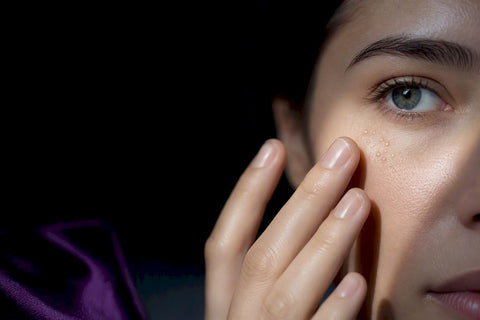
Milia under the eyes are small, firm, keratin-filled cysts that sit just beneath the surface of the skin. The safest first move is to leave them alone: do not squeeze or try to extract them, especially so close to the eye. Many milia clear on their own within weeks to several months, but bumps that persist, grow, or change should be checked by a professional.
TL;DR:
- Heavy, occlusive eye creams and thick formulations significantly increase the risk of milia formation around the eyes.
- Gentle skincare routines, including warm compresses and mild cleansing, support natural resolution but usually require patience over several weeks or months.
- Professional removal methods like deroofing or laser ablation are safer and more effective for persistent or bothersome milia in sensitive eye areas.
- Squeezing milia is strongly discouraged due to the potential for tissue damage, scarring, and infection, especially near thin skin and blood vessels.
- Using lightweight, non-comedogenic products, avoiding heavy occlusives, and managing irritation reduce the likelihood of recurrence and support healthier skin.
Table of Contents
- What Milia Are and How They Differ From Whiteheads
- What Causes Milia to Form Under the Eyes
- Safe At-Home Steps and What to Avoid
- In-Office Treatments and When to See a Professional
- Building a Prevention Routine for the Eye Area
- A Note From Lunara on Gentle Eye-Area Care
- What Actually Matters Here
- Where LunaraShopping Fits Into Your Routine
- Sources
- FAQ
What Milia Are and How They Differ From Whiteheads
Milia form when keratin becomes trapped under the skin, creating a tiny, hard, dome-shaped cyst rather than an open pore clogged with oil. They are most common on the eyelids and cheeks, though they can appear on the forehead and nose as well. Because they sit fully enclosed under the skin with no opening, they look and behave differently from other blemishes people often confuse them with.
A few distinguishing features help with a confident self-check:
- Milia are firm, white or pale yellow, and have no visible opening or head.
- Whiteheads sit in a pore, often have a slight head, and can be softened with gentle cleansing over a few days.
- Styes and chalazia are usually red, tender, and swollen, unlike the painless texture of milia.
- Xanthelasma appear as soft, flat, yellowish patches on the eyelid rather than firm round bumps.
- Syringomas are small, skin-colored bumps tied to sweat gland tissue and tend to cluster symmetrically under both eyes.
If you are unsure which one you are looking at, a dermatologist visit clears up the confusion quickly and rules out anything that needs different care.
What Causes Milia to Form Under the Eyes
At the core, milia come down to trapped keratin that the skin cannot shed on its own, often because dead skin cells and oils build up faster than normal exfoliation clears them. Several everyday habits and conditions make this more likely near the eyes, where the skin is thinner and more reactive.
- Heavy eye creams or ointments with occlusive, waxy bases can trap keratin under the surface.
- Skin trauma, including sunburn, blistering, or friction from rubbing the eyes, can trigger new milia as the skin heals.
- Postinflammatory changes from eyelid dermatitis or recent procedures may leave the skin prone to forming cysts.
- Long-term use of thick, pore-clogging formulations around the orbital rim raises the odds of recurrence.
Milia show up differently depending on age. Neonatal milia are extremely common in newborns and resolve without treatment, while adult-onset milia are more often linked to skincare habits, sun damage, or an underlying condition. Recurrent milia around the eyes often trace back to heavy emollients, prior eyelid procedures, or eyelid dermatitis, and treating that underlying irritation is frequently what stops new bumps from forming. Eyelid contact dermatitis and similar inflammatory conditions can leave skin more reactive, which is worth ruling out if milia keep coming back in the same spot.
Safe At-Home Steps and What to Avoid
Home care can support milia clearing on their own, but the eye area has a low tolerance for anything abrasive or occlusive. The goal is gentle support, not do-it-yourself extraction.
- Use a warm compress for five to ten minutes once daily to soften the skin gently, then pat dry rather than rub.
- Cleanse with a mild, fragrance-free formula both morning and night to prevent buildup without stripping the skin barrier.
- Apply chemical exfoliants containing AHAs or BHAs to the cheeks and forehead only, starting two to three times a week, and keep them off the eyelids entirely.
- Introduce a topical retinoid on the advice of a dermationlogist to support cell turnover, applying it to the orbital rim with care and never directly on the lid margin.
- Choose lightweight, non-comedogenic eye products and skip heavy, occlusive ointments near the lash line.
Milia are true cysts located in the dermis, not surface-level clogs, so squeezing them can damage surrounding tissue and lead to scarring. That risk is higher right at the eye, where skin is thin, blood vessels sit close to the surface, and infection can spread faster than in thicker skin elsewhere on the face.
Pro Tip: Keep any exfoliating acid or retinoid at least a finger’s width away from the lash line, and apply eye products with your ring finger, which naturally uses the lightest pressure.

In-Office Treatments and When to See a Professional
When milia persist past a few months or bother you cosmetically, in-office removal is the more reliable route, particularly around the eyes.
- Deroofing uses a sterile needle to nick the surface and lift out the keratin plug, and it is the removal method many clinicians prefer for eyelid milia
- Cryotherapy freezes the cyst but is used cautiously near the eyes because of the risk of pigment change.
- Laser ablation offers precise targeting and requires a specialist experienced with the periocular area.
- Curettage or diathermy may be added to reduce recurrence in stubborn or repeat cases.
Professional extraction by a dermatologist or ophthalmologist is considered the most effective and safest option for persistent or bothersome milia, and at-home removal near the eyes is strongly discouraged. See a clinician if a bump changes color or size, becomes painful, affects your vision, or if you are simply unsure what you are looking at.
Because the skin around the eyes is thin and sensitive, professional removal is the safer route for periocular bumps, and certain in-office methods lower the chance they will come back.
Aftercare is typically minimal, limited to keeping the area clean and avoiding sun exposure while it heals, though recurrence is possible if the underlying trigger, such as a heavy eye cream, is not addressed.
Building a Prevention Routine for the Eye Area
A consistent, gentle routine reduces the odds of new milia forming while protecting the delicate skin around your eyes.
- Cleanse morning and night with a mild formula that removes buildup without over-drying the skin.
- Apply any prescribed retinoid or exfoliating treatment to the cheeks and forehead first, working outward from the eyes rather than inward toward them.
- Follow with a lightweight, non-comedogenic moisturizer instead of a heavy night cream near the lash line.
- Finish mornings with a mineral sunscreen formulated for the eye area, applied by patting along the orbital rim rather than rubbing.
Keep retinoids and AHA or BHA exfoliants on separate parts of your routine rather than layering them directly over each other, and always patch test a new product on the inner forearm before bringing it near your eyes. Look for labels that say non-comedogenic or ophthalmologist-tested, and skip anything built around petrolatum or other heavy occlusives if you are prone to milia. A full night routine checklist can help you sequence these steps without guesswork.
A Note From Lunara on Gentle Eye-Area Care
I’m Lunara, and I write about skincare with an emphasis on what is gentle enough for the eye area without cutting corners on evidence. LunaraShopping is an e-commerce retailer, not a medical provider, and removal of persistent milia should always go through a board-certified dermatologist or ophthalmologist.
Where LunaraShopping’s categories fit into prevention:
- Lightweight formulas in the face creams and moisturizers collection suit skin prone to clogging.
- Gentle options in face cleansers and scrubs support daily buildup removal without over-stripping skin.
- The OOTD Wrinkle Lift Eye Serum reflects the lighter textures better suited to the eye area than heavy balms.
- Hydrating options in face masks can round out a routine without adding occlusive weight near the lids.
What Actually Matters Here
The advice that gets repeated most about milia, that they are basically harmless and will go away, is true but incomplete. It skips the part that matters most for the eye area specifically: the same DIY confidence that works fine on a chin whitehead is a genuine liability on an eyelid, where the skin is thinner and closer to structures you cannot afford to damage.

Where conventional advice falls short is in treating all milia as interchangeable. A cluster on the cheek and a single bump on the lower lash line deserve different levels of caution, and lumping them together leads people to try extraction tools meant for surface acne on cysts that sit deeper in the dermis.
If I had to rank priorities for someone dealing with milia under their eyes, it would be this: stop using whatever heavy product might be feeding the problem, be patient while the bump clears on its own, and skip straight to a professional if it does not. Everything else, including which serum you reach for, matters less than getting those three things right.
— Lunara
Where LunaraShopping Fits Into Your Routine
If you are rethinking what touches your eye area after reading this, LunaraShopping’s curated selection makes it easier to swap heavy, occlusive products for lighter formulas without combing through dozens of brands yourself. The store’s face care lineup, sourced from Korean skincare brands known for gentle, effective formulations, gives you a starting point built around hydration and skin health rather than harsh actives.

For milia-prone skin specifically, browsing face creams and moisturizers or face cleansers and scrubs is a practical way to find lighter alternatives to whatever thick eye cream may be part of the problem. If you prefer a calming option outside Korean beauty brands, the Soothing Emulsion from Maison Dovellé is another lightweight formula worth a look. Shipping fees apply; current prices are available on the LunaraShopping website. Browse the full face care collection and start building a routine that treats the eye area with the care it needs.
This article is general information, not a substitute for advice from a qualified doctor. Consult a qualified healthcare professional about your own circumstances before acting on anything here.
Sources
- What are milia and how do you get rid of them? — USF Dermatology
- Milia removal — RAO Dermatology
- Milia: Causes and treatment — All About Vision
FAQ
How do I remove milia naturally?
There is no reliable way to remove milia at home, especially under the eyes, but gentle steps like warm compresses and a mild cleansing routine can support the skin while milia clear on their own over weeks to months. Avoid picking or squeezing, since this risks scarring and infection rather than speeding things up.
What is milia caused by?
Milia form when keratin gets trapped beneath the skin’s surface, often due to heavy eye creams, skin trauma, or inflammatory conditions like eyelid dermatitis. Newborns commonly develop milia that resolve on their own, while adult cases are more often tied to skincare habits or underlying skin issues.
Can milia be squeezed out?
Milia should not be squeezed, particularly around the eyes, because they are enclosed cysts in the dermis rather than open pores, and forcing them out can damage surrounding tissue. Professional extraction methods like deroofing are safer and more effective for persistent bumps.
Why did I suddenly get milia?
A sudden appearance of milia is often linked to a new heavy eye cream, recent skin trauma such as sunburn, or an inflammatory condition like eyelid dermatitis that disrupted normal skin shedding. Reviewing recent changes to your skincare routine is a reasonable first step before seeking a professional opinion.
How long does milia take to go away?
Most milia clear on their own within a few weeks to several months without any treatment. If a bump lingers well beyond that window or changes in appearance, a dermatologist or ophthalmologist can evaluate it and discuss removal options.