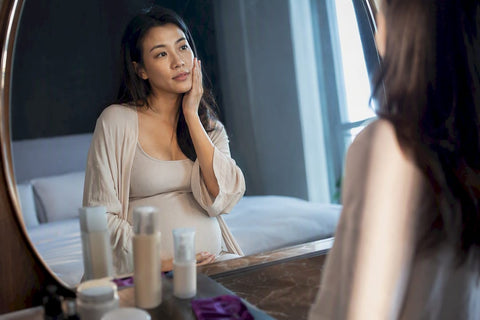
Yes, many K-beauty products are pregnancy-friendly when you avoid specific actives and prioritize gentle, hydrating, and mineral-based formulas. Topical absorption of most skincare ingredients is low, but obstetric and dermatology sources still advise caution with certain compounds. The safest approach favors hyaluronic acid, niacinamide, centella asiatica, ceramides, and mineral SPF while skipping retinoids, hydroquinone, and strong acids.
TL;DR:
- Avoid retinoids and hydroquinone, as they have higher systemic absorption and lack sufficient safety data during pregnancy.
- Focus on ingredients like hyaluronic acid, niacinamide, ceramides, centella asiatica, snail mucin, and azelaic acid, which are generally considered safe and hydrating.
- Use mineral sunscreens containing zinc oxide or titanium dioxide to minimize systemic absorption risks and protect against melasma.
- Read ingredient lists carefully to identify potentially harmful actives, since marketing claims may be misleading or non-specific.
- Limit in-office treatments like chemical peels, exosomes, and PDRN-based therapies until more pregnancy safety data becomes available.
Table of Contents
- Which K-Beauty Ingredients Should You Avoid During Pregnancy?
- What Ingredients Are Considered Safe for Pregnancy Skincare?
- How Do You Build a Pregnancy-Safe K-Beauty Routine?
- Why Mineral Sunscreen Matters More Than Ever Right Now
- How Do You Check If a K-Beauty Product Is Pregnancy-Safe?
- Why Trust This Guide on Pregnancy-Safe K-Beauty
- What a K-Beauty Shop Owner Tells Pregnant Customers
- Build a Pregnancy-Safe Routine With Lunara’s Curated Kits
- Sources
Which K-Beauty Ingredients Should You Avoid During Pregnancy?
Building a pregnancy-safe K-beauty routine starts with knowing what to set aside. This isn’t about fear. It’s about picking the formulas that carry the least uncertainty while your body is doing something extraordinary.
Retinoids top the list. Retinol, tretinoin, retinal, and adapalene all belong to the same vitamin A family, and medical sources advise avoiding topical retinoids during pregnancy as a precaution, even though topical absorption is generally modest. If acne treatment feels urgent, talk to your provider about alternatives rather than reaching for your pre-pregnancy retinol serum.
Hydroquinone is another one to shelve. This skin-brightening ingredient shows higher systemic absorption than many other topicals, and dermatology guidance flags it as an ingredient to avoid in pregnancy.
Here’s what else belongs on your “not right now” list:
- High-strength BHAs and professional peels. Wash-off cleansers with low-concentration salicylic acid are generally considered lower risk, but leave-on treatments above 2% and in-office peels are not recommended during pregnancy.
- Exosomes and PDRN-based treatments. These newer bioactive technologies simply lack pregnancy safety data, so it’s smarter to wait.
- Essential oils and heavy fragrance. Pregnancy often heightens skin sensitivity, and fragrance is a common trigger for reactivity even in products you tolerated before.
- Any active applied near the nipple area if you’re breastfeeding. Direct transfer risk to a nursing infant makes this a firm no regardless of the ingredient’s general pregnancy status.
What Ingredients Are Considered Safe for Pregnancy Skincare?
The good news is that K-beauty’s whole philosophy leans hydration-first rather than aggressively corrective, which is exactly what pregnant skin usually wants anyway. K-beauty formulas built around hyaluronic acid, centella, ceramides, and niacinamide tend to check the safety box and the “does it actually work” box at the same time.
Here’s what to look for on the label:
- Hyaluronic acid. A humectant that draws moisture into the skin’s surface without meaningful deep absorption, making it one of the safest hydrators available.
- Niacinamide. Handles oil control, redness relief, and mild brightening. It’s well tolerated in pregnancy and doubles as a gentle fix for pregnancy-related breakouts.
- Centella asiatica, ceramides, and panthenol. This trio repairs and calms a compromised skin barrier, which matters when hormonal shifts leave skin drier or more reactive than usual.
- Snail mucin and propolis. Two K-beauty staples known for gentle repair and hydration, common in essences and ampoules across nearly every Korean skincare line.
- Azelaic acid and benzoyl peroxide. Often used conditionally for acne, but only with your provider’s sign-off given varying study depth.
- Vitamin C derivatives. Useful for brightening, though gentler, more stable forms are worth prioritizing since pregnancy skin bruises easily in the irritation department.
Pro Tip: Read the ingredient list, not the marketing claim. A “brightening serum” could rely on stable vitamin C, or it could lean on hydroquinone. The word on the front of the bottle tells you the goal; the INCI list on the back tells you what’s actually inside.
How Do You Build a Pregnancy-Safe K-Beauty Routine?
You don’t need to abandon the ritual you love. You just swap the corrective actives for calming, hydrating ones and keep the layering approach that makes K-beauty routines effective in the first place.
Morning routine:
- Gentle, low-pH cleanser (or a water rinse if your skin is already dry from hormonal changes).
- Hydrating toner or essence with centella or snail mucin.
- Niacinamide serum if you’re managing oiliness or occasional breakouts.
- Ceramide-rich moisturizer to lock in hydration.
- Mineral SPF, applied generously and reapplied through the day.
Evening routine:
- Oil cleanser followed by a gentle foam cleanser if you wear sunscreen or makeup (a light double cleanse, not a scrub session).
- Hydrating essence or ampoule, layered while skin is still damp.
- Barrier-repair cream with ceramides and panthenol.
- Spot treatment with azelaic acid only if your provider has approved it for melasma or breakouts.
Layer thinnest to thickest, and introduce one new product at a time rather than overhauling your entire shelf in one week. If melasma shows up, lean harder into niacinamide and mineral SPF rather than brightening acids. If dryness spikes, add a second hydrating layer before your moisturizer instead of switching to heavier, pore-clogging creams.
Why Mineral Sunscreen Matters More Than Ever Right Now
Sunscreen is non-negotiable during pregnancy, partly because melasma (the “mask of pregnancy”) responds directly to UV exposure. The filter type you choose matters here more than in almost any other product category.
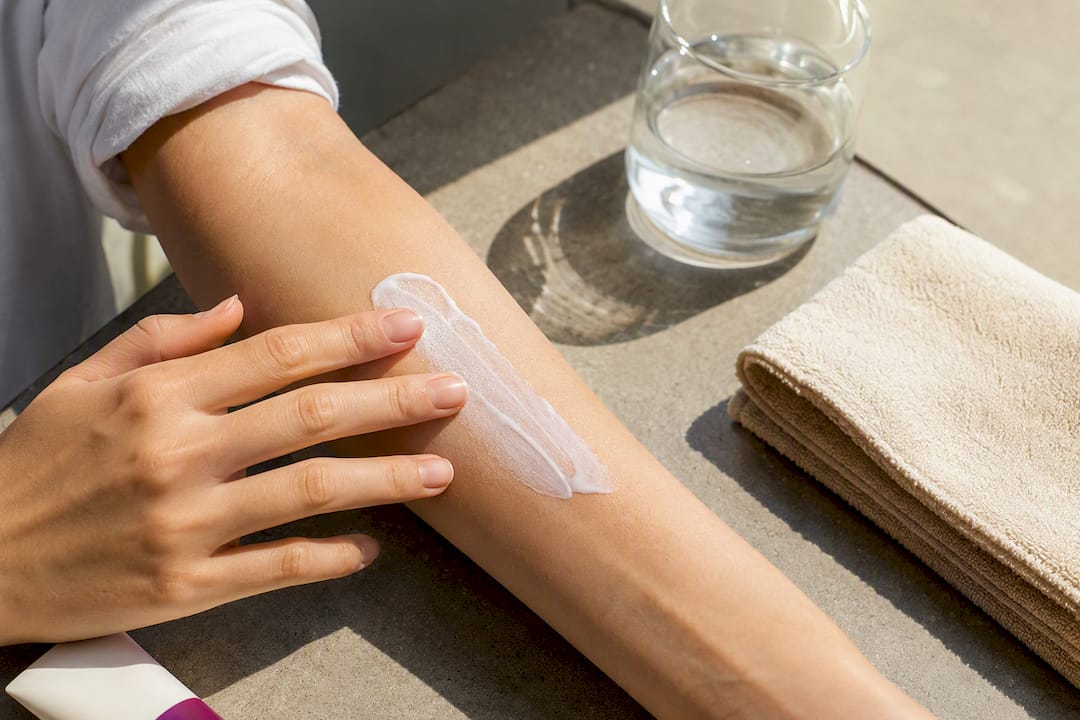
Mineral filters, meaning zinc oxide and titanium dioxide, sit on top of the skin rather than absorbing into it. Many practitioners recommend mineral sunscreens during pregnancy precisely because of that minimal systemic absorption alongside solid broad-spectrum coverage. Chemical filters like oxybenzone and octinoxate show higher systemic absorption in research, which is why the precautionary approach favors mineral formulas instead.
Your shortlist when shopping:
- Look for zinc oxide or titanium dioxide as the active ingredient, not buried in a long list of chemical filters.
- Pick a finish you’ll actually tolerate daily. A chalky white cast that makes you skip reapplication defeats the purpose.
- Watch for “tone-up” formulas with added brighteners. Check that secondary actives are pregnancy-friendly too.
Pro Tip: Sunscreen adherence beats sunscreen perfection. A comfortable mineral SPF you’ll wear every single day protects you more than a theoretically “better” one sitting in a drawer.
How Do You Check If a K-Beauty Product Is Pregnancy-Safe?
Reading a Korean skincare label takes a little practice, especially since some ingredient names differ from what you’d expect. A quick scan before checkout saves you a return later.
- Scan for “retinyl,” “retinal,” “tretinoin,” or “adapalene” hiding under different naming conventions.
- Check concentration language. Words like “peel,” “resurfacing,” or “intensive exfoliating” often signal higher-strength acids best avoided.
- Flag “parfum,” “fragrance,” or listed essential oils if your skin has become more reactive lately.
- For sunscreen, confirm zinc oxide or titanium dioxide appears in the active ingredients section, not just the marketing copy.
- Product-level formulation matters more than brand reputation: the same brand can sell both a pregnancy-safe cleanser and a retinol-packed serum.
- When in doubt about an active ingredient, check with your OB or dermatologist before adding it to your cart.
- Patch test every new product on your inner arm for 24 to 48 hours first. Pregnancy hormones can turn a previously fine ingredient into an irritant overnight.
A buyer’s guide to shopping Korean skincare online can help you build the habit of checking labels before you check out, and simplifying your ingredient list altogether is one of the more reliable ways to reduce reaction risk when your skin is already working overtime.
Why Trust This Guide on Pregnancy-Safe K-Beauty
Lunarashopping specializes in curating Korean skincare, and part of that job is understanding which formulas fit which life stages, pregnancy included. This guide draws on general medical guidance, not personalized advice: avoid topical retinoids as a precaution, and check with your provider before using acne actives like azelaic acid or benzoyl peroxide.
Pregnancy skin isn’t broken skin. It’s skin adjusting to a hormonal shift that calls for gentler tools, not fewer options.
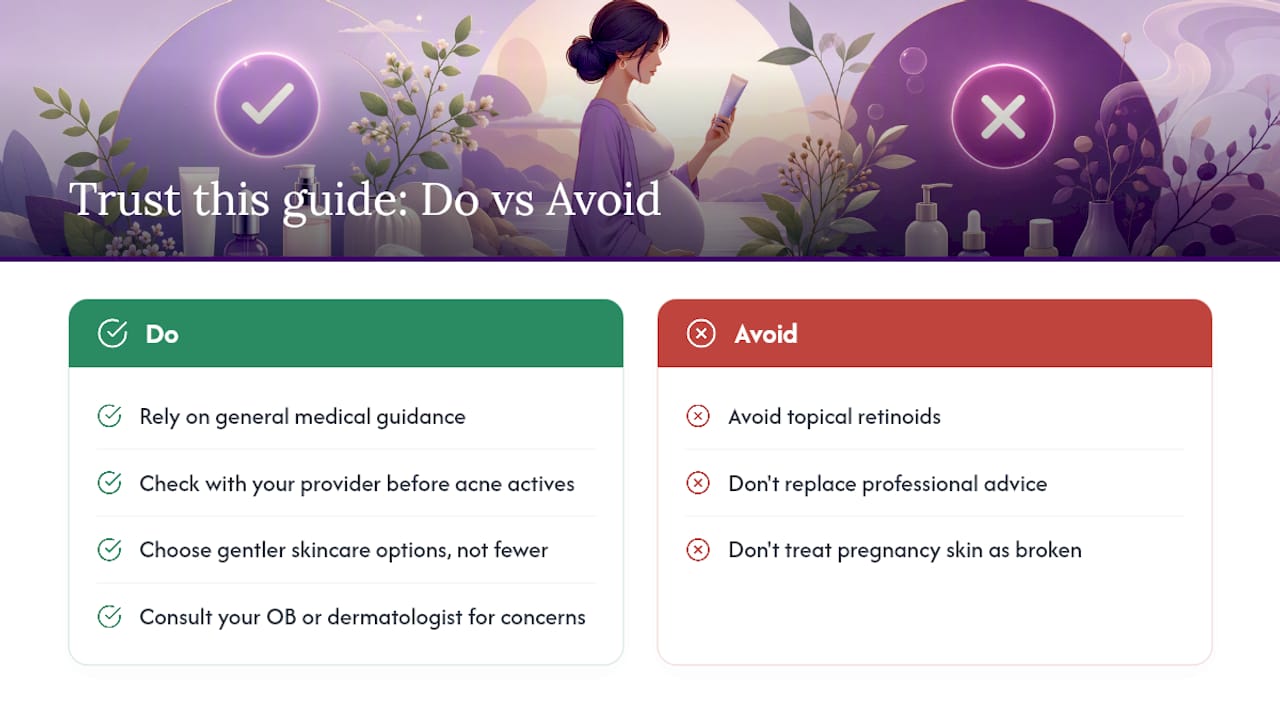
Nothing here replaces a conversation with your OB or dermatologist, especially if you have a specific skin condition or a borderline ingredient you’re unsure about.
— Lunara
What a K-Beauty Shop Owner Tells Pregnant Customers
The questions we hear most often are about melasma, sudden sensitivity, and which sunscreen won’t feel greasy under makeup. There’s rarely a one-size answer, because pregnancy skin changes month to month for a lot of people.
We lean toward gentle textures and smaller, curated kits for pregnant shoppers rather than pushing a full ten-step lineup. A shorter routine you’ll actually finish beats an elaborate one that sits half-used on the counter. Our honest advice: patch test everything, even products you’ve used before pregnancy, and don’t be afraid to simplify further if your skin pushes back.
Build a Pregnancy-Safe Routine With Lunara’s Curated Kits
Once you know which ingredients to look for, the next step is finding them all in one place instead of cross-checking a dozen product labels yourself. Lunarashopping’s Custom Skincare Kit Builder lets you assemble a routine from pregnancy-friendly categories, hydrators, barrier creams, mineral SPF, without guessing which formulas belong together.
If you’d rather start with something ready-made, the Morning Face Care Routine Set bundles cleanser, hydrating essence, and moisturizer in one sequence built for daily use. Browse the full face care collection for individual pieces like ceramide moisturizers and hyaluronic acid essences if you’d rather build gradually. Whatever you choose, confirm any active ingredient with your provider first if you’re managing a specific concern like melasma or persistent breakouts. Start with the kit builder, pick your categories, and check out with a routine that’s actually suited to where your skin is right now.
Sources
- Korean Skincare Products Safe During Pregnancy and Breastfeeding
- Pregnancy-Safe Korean Skincare: What to Use and Avoid
- Pregnancy-Safe Korean Sunscreens for 2026 | MamaSkin
This article is general information, not a substitute for advice from a qualified doctor. Consult a qualified healthcare professional about your own circumstances before acting on anything here.