Korean SPF formulas differ from Western ones because Korea classifies sunscreens as functional cosmetics, not drugs. That single regulatory distinction unlocks access to over 30 approved UV filters, compared to just 16 in the United States. The result is a fundamentally different chemistry: lighter textures, more photostable ingredients, and formulas that double as skincare. If you have ever wondered why Korean sunscreens feel so different on your skin, the answer starts in a government classification document, not a lab.
Why Korean SPF formulas differ from Western ones
The core reason differences in Korean SPF exist comes down to regulation. Korea’s Ministry of Food and Drug Safety classifies sunscreens as functional cosmetics. That classification gives Korean formulators access to over 30 approved UV filters, including advanced options like Tinosorb S, Tinosorb M, and Uvinul A Plus. Access to these filters changes everything about how a formula is built.
The US Food and Drug Administration treats sunscreens as over-the-counter drugs. That means stricter approval requirements and a much shorter list of permitted actives. The FDA had not approved a new UV filter since 1999 until june 2026. That 27-year gap left American formulators working with older filter chemistry while Korean brands moved forward.
This regulatory divide creates what chemists call a fundamental chemistry split. The US system pushes formulators toward older filters that need solubilizer boosters to work effectively. Korea’s system allows newer, more efficient filters that perform at lower concentrations. The downstream effect on texture, feel, and skin compatibility is significant.
Key regulatory differences at a glance:
- Korea: Sunscreens classified as functional cosmetics, 30+ approved UV filters, flexible formulation standards
- United States: Sunscreens classified as OTC drugs, 16 approved filters, strict active ingredient and labeling rules
- Filter examples exclusive to Korea: Tinosorb S, Tinosorb M, Uvinul A Plus, Mexoryl XL
- Consequence: Korean brands can build lighter, more photostable formulas without the chemical workarounds US brands require
Why do Korean sunscreens feel lighter on skin?
The texture difference between Korean and Western sunscreens is not accidental. Korean formulas typically carry an active ingredient load of around 18%, while US formulas often require 25–35% active load to meet protection standards. Lower active load means less heavy material sitting on your skin.
New-generation filters like Tinosorb S and Uvinul A Plus are highly photostable and effective at lower concentrations. Photostability means the filter does not break down in sunlight, so the formula maintains its SPF throughout the day without needing extra active material to compensate for degradation. Older filters used in many US products are less photostable, which is part of why higher loads are needed.
Korean formulators also include skin-conditioning ingredients that improve the sensory experience without adding protection weight. Common additions include:
- Snail mucin: Supports skin barrier repair and adds a smooth, hydrating finish
- Centella asiatica (cica): Calms redness and reduces post-sun inflammation
- Birch sap: A lightweight humectant that adds hydration without greasiness
- Emollients: Soften and smooth skin texture without occlusive heaviness
Denatured alcohol also appears in many Korean sunscreen formulas. Alcohol denat. enhances the fast-drying finish and is generally well tolerated by people with normal to oily skin. It is a deliberate formulation choice, not a flaw, and it contributes directly to the clean, non-greasy feel that makes Korean sunscreens so popular for daily wear.
Pro Tip: If you have dry or sensitive skin, look for Korean sunscreens that list alcohol denat. lower in the ingredient list. That placement signals a smaller concentration, which reduces the chance of dryness or irritation.
What is the PA rating system and why does it matter?
The PA rating system is Korea’s standardized scale for measuring UVA protection. PA stands for “Protection Grade of UVA,” and it runs from PA+ to PA++++. A PA++++ rating corresponds to a PPD value of 16 or higher, which means the formula blocks over 95% of UVA rays. That level of UVA protection is clinically meaningful for preventing photoaging and hyperpigmentation.
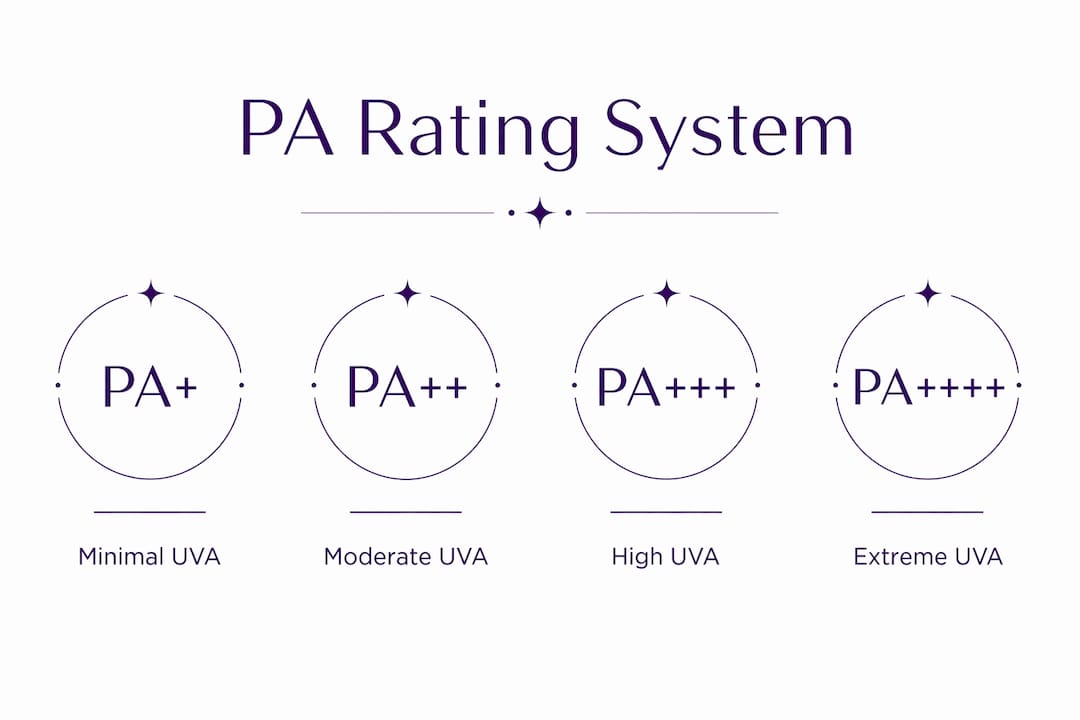
The US FDA uses a different approach. The “broad spectrum” label is a binary pass/fail test. A product either passes or it does not. There is no gradation, no scale, and no way for you to compare UVA protection levels between two products from the label alone. The PA++++ system provides a continuous scale that lets you make informed choices based on your skin’s actual needs.
| PA Rating | PPD Value | UVA Blockage | Best For |
|---|---|---|---|
| PA+ | PPD 2–3 | Minimal | Low UV exposure days |
| PA++ | PPD 4–7 | Moderate | Everyday indoor use |
| PA+++ | PPD 8–15 | High | Outdoor activities |
| PA++++ | PPD 16+ | Over 95% | High UV exposure, hyperpigmentation concerns |
There is one important catch. Korean PA ratings cannot appear on US packaging due to FDA labeling restrictions. If you buy a Korean sunscreen sold in the US, the PA rating may be absent from the label even if the formula provides PA++++ protection. Checking the original Korean packaging or the brand’s product page gives you the full picture.
How Korean SPF formulas integrate skincare benefits
Korean sunscreens are designed to function as the final step in a skincare routine, not as a standalone product applied reluctantly before going outside. That design philosophy changes what goes into the formula. Hydrating and anti-inflammatory ingredients like birch sap and Centella asiatica appear alongside UV filters, making the product genuinely useful for skin health beyond sun protection.
This approach reflects a broader cultural context. In Korea, sunscreen is a daily skincare essential driven by cultural preferences for youthful, even-toned skin. That consumer demand pushes brands to create products people actually want to wear every day, which means comfort, hydration, and a finish that works under makeup. The result is a category of products that Western formulas have historically not prioritized.
Practical benefits you get from this integration:
- Hydration support: Humectants like birch sap and hyaluronic acid keep skin plump without adding a heavy layer
- Barrier reinforcement: Centella asiatica and ceramide-adjacent ingredients support the skin’s natural defense function
- Anti-inflammatory action: Cica extracts reduce redness from UV exposure before it becomes visible
- Makeup compatibility: Lightweight, fast-absorbing finishes sit cleanly under foundation or tinted moisturizer
Pro Tip: Apply your Korean SPF as the last step before makeup, after all serums and moisturizers have fully absorbed. This preserves the filter’s integrity and gives you the cleanest possible base.
You can read more about why Korean brands prioritize hydration in their formulations, including how ingredients like birch sap function in a full routine context.
Key Takeaways
Korean SPF formulas differ because Korea’s functional cosmetic classification unlocks advanced UV filters, lower active loads, and skincare-integrated ingredients that Western OTC drug regulations do not permit.
| Point | Details |
|---|---|
| Regulatory classification drives everything | Korea’s cosmetic classification allows 30+ UV filters; the US OTC drug system limits formulators to 16. |
| Lower active load means lighter texture | Korean formulas use around 18% active ingredients versus 25–35% in US products, producing a lighter feel. |
| PA++++ signals superior UVA protection | A PA++++ rating blocks over 95% of UVA rays, far more informative than the US pass/fail broad spectrum label. |
| Skincare ingredients are built in | Birch sap, Centella asiatica, and snail mucin make Korean sunscreens functional as daily skincare, not just UV blockers. |
| US packaging hides PA ratings | FDA labeling rules prevent PA ratings from appearing on US-sold products, so check original Korean packaging for full data. |
What I have learned from years of watching Korean SPF evolve
Lunara’s perspective:
The thing that strikes me most about Korean sunscreens is not the ingredient list. It is the intent behind the formula. Korean brands build SPF products for people who want to wear sunscreen every single day, not just at the beach. That intent shapes every decision, from the filter selection to the finish to the skincare actives included.
What I find genuinely underappreciated is how much the regulatory environment drives innovation pace. When formulators have access to photostable, efficient filters like Tinosorb M, they do not need to compensate with heavy loads or greasy emollients. The formula can be elegant because the chemistry is efficient. US brands are not behind because of skill. They are behind because the approval system has not kept pace.
I also think the PA rating system deserves far more attention from Western skincare enthusiasts. UVA radiation is the primary driver of photoaging and hyperpigmentation. Knowing your sunscreen blocks over 95% of UVA rays is genuinely useful information. The US broad spectrum label tells you almost nothing by comparison.
My practical advice: match your Korean SPF to your skin type using the types of Korean sunscreens guide before you buy. Oily skin benefits from alcohol-containing, fast-drying formulas. Dry or sensitive skin does better with alcohol-free options rich in humectants and cica. The formula differences that make Korean sunscreens special are also the reason one size does not fit all.
— Lunara
Korean SPF at Lunarashopping: curated for your daily routine
Lunarashopping carries a curated selection of Korean SPF products built around the formulation principles covered here: modern UV filters, low active loads, and skincare ingredients that work alongside sun protection.
The face sunscreens collection includes lightweight options featuring photostable filters and hydrating actives suited to a range of skin types. If you want to build a complete morning routine around your SPF, the morning face care set pairs Korean-inspired sunscreens with complementary skincare steps. Every product is selected for quality, ingredient transparency, and daily wearability. You can also browse the full face care collection to find the right fit for your skin.
FAQ
Why do Korean sunscreens feel so much lighter than American ones?
Korean sunscreens use an active ingredient load of around 18% compared to 25–35% in US formulas. New-generation filters like Tinosorb S require lower concentrations for equivalent protection, which directly reduces the heavy, greasy feel.
What does PA++++ mean on a Korean sunscreen?
PA++++ corresponds to a PPD value of 16 or higher, indicating the formula blocks over 95% of UVA rays. It is the highest rating on Korea’s standardized UVA protection scale.
Why don’t US sunscreens use the same UV filters as Korean ones?
The FDA classifies sunscreens as OTC drugs and had not approved a new UV filter since 1999 until june 2026. Korean regulators classify sunscreens as functional cosmetics, allowing access to 30+ modern filters not permitted in the US.
Are Korean sunscreens safe for sensitive skin?
Many Korean sunscreens include anti-inflammatory ingredients like Centella asiatica and are formulated without heavy active loads, making them well suited to sensitive skin. Check for alcohol denat. in the formula if your skin is prone to dryness or irritation, and choose alcohol-free options when needed.
Can I use a Korean sunscreen as my only moisturizer?
Korean sunscreens often include humectants and emollients that provide meaningful hydration, but they are formulated as the final skincare step, not a replacement for a dedicated moisturizer. People with oily skin may find a Korean SPF sufficient on its own for lighter days.