What is K-beauty skin flooding?
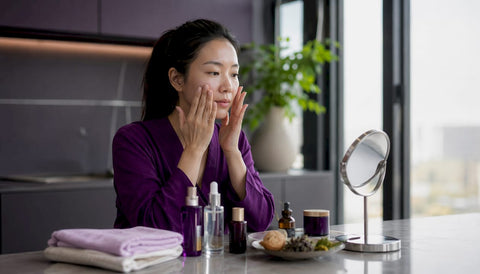
K-beauty skin flooding is a hydration layering technique rooted in Korean skincare philosophy. You apply multiple lightweight hydrating products in rapid succession on damp skin, saturating the skin’s upper layers with moisture before sealing everything in with an emollient moisturizer.
The technique centers on a few core principles:
- Damp skin application: Products go on while your skin is still wet from cleansing or toning, which enhances permeability and product absorption.
- Humectant layering: Ingredients like hyaluronic acid, glycerin, and panthenol attract water to the skin’s surface layers.
- Thin to thick ordering: You layer from the lightest consistency to the heaviest, so each product absorbs fully before the next.
- Occlusive seal: A moisturizer or facial oil locks everything in, preventing moisture from evaporating.
The goal is plump, luminous skin with a visibly improved texture. Skin flooding does not require a special product line. As NBC Select notes, toner, serum, and moisturizer applied in the correct sequence are all you need.
Table of Contents
- How skin flooding actually works on your skin
- Who benefits most from skin flooding?
- How to do skin flooding correctly: step by step
- What experts say about the science behind skin flooding
- Build your skin flooding routine with Lunarashopping
- Key Takeaways
How skin flooding actually works on your skin
The science behind skin flooding is straightforward once you understand how the skin manages water. Your skin maintains a natural water gradient, with moisture levels highest in the deeper layers and lower at the surface. Applying humectants to damp skin works with that gradient, helping water move toward and stay in the upper layers rather than evaporate.
Damp skin has significantly increased permeability, which means ingredients spread more uniformly and penetrate more effectively than they would on dry skin. Layering products before earlier ones dry keeps that window of absorption open throughout the routine.
The step sequence matters for a specific reason. Applying thin formulas before thick ones prevents a premature barrier from forming on the skin’s surface, which would block absorption of subsequent layers. A heavy moisturizer applied first would essentially seal out everything you try to add afterward.
“Humectants attract water but do not retain it well without an occlusive seal. In dry environments, they can actually draw moisture out from deeper skin layers, causing dryness and transepidermal water loss.”
— Cosmetic chemistry principle, cited by Women’s Health
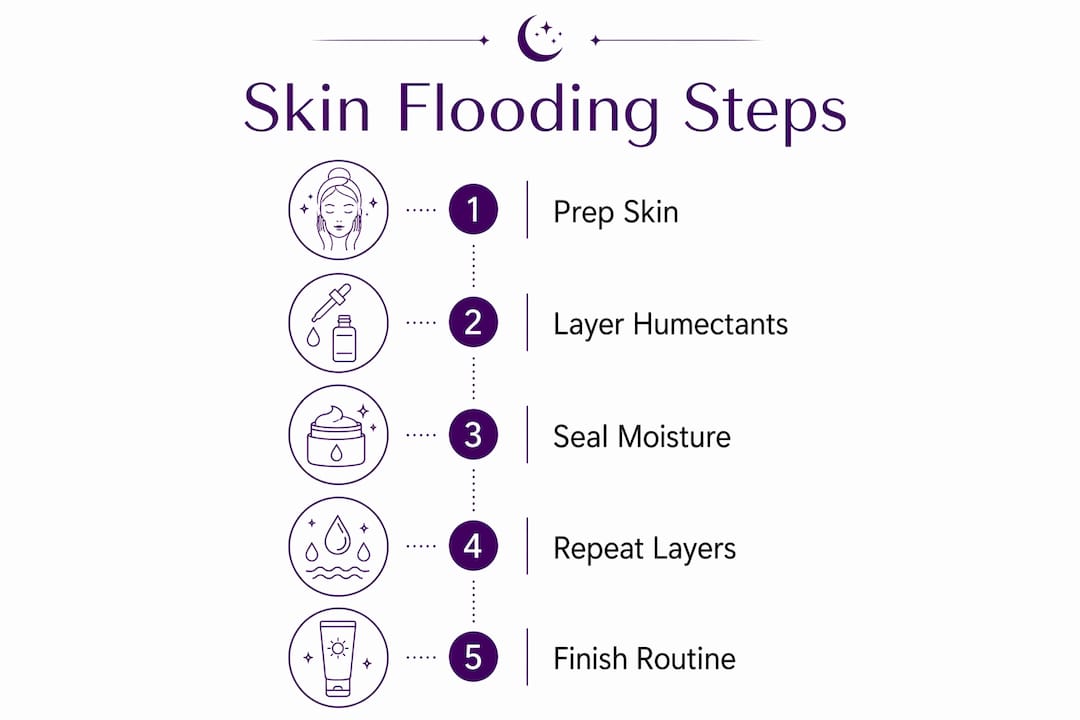
The typical step sequence in a skin flooding routine:
- Gentle cleanse
- Hydrating toner or essence applied to damp skin
- Humectant serum (hyaluronic acid, glycerin, or similar) while skin is still wet
- Emollient moisturizer or facial oil to seal
Timing is everything here. Each layer should go on before the previous one fully dries. That continuous damp environment is what makes skin flooding distinct from a standard layered routine.
Who benefits most from skin flooding?
Skin flooding is especially beneficial for dry, dehydrated, dull, and mature skin types. If your skin feels tight after cleansing, looks lackluster by midday, or shows fine lines that seem more pronounced when your skin is dry, this technique directly addresses those concerns.
Key benefits:
- Deep hydration: Water content in the stratum corneum increases, leading to plumper, smoother skin cells.
- Improved skin barrier: Consistent hydration supports the barrier’s ability to retain moisture and resist environmental stressors.
- Reduced appearance of fine lines: Hydrated skin cells swell slightly, which visibly softens the look of fine lines.
- Enhanced radiance: Well-hydrated skin reflects light more evenly, producing the luminous finish K-beauty is known for.
Hydration and the stratum corneum: When water content in the stratum corneum increases, skin cells swell and smooth out, producing a visibly plumper texture and reducing the appearance of fine lines. This is the core mechanism behind skin flooding’s visible results.
Oily and sensitive skin types can still benefit, but with adjustments. If your skin leans oily, opt for gel-based humectants and a lightweight, non-comedogenic moisturizer as your seal. Sensitive skin does well with fragrance-free, minimal-ingredient products. Reduce the number of layers if your skin reacts to product stacking, and introduce the routine gradually rather than all at once.
How to do skin flooding correctly: step by step
Skin flooding follows a clear sequence. Rushing or skipping steps, particularly the final seal, undermines the entire routine.
-
Cleanse gently. Use a gentle, non-stripping cleanser free from strong actives like acids, retinol, or vitamin C. You want clean skin without any disruption to its moisture levels. Pat lightly with a towel but leave your skin slightly damp.
-
Apply a hydrating toner or essence. While your skin is still damp, press a hydrating toner or essence into your skin. Korean essences, which are thinner than serums but more concentrated than toners, work particularly well here. This is the first layer of hydration.
-
Layer a humectant serum. Before the toner dries, apply a hyaluronic acid serum or another humectant-rich formula. Hyaluronic acid can hold up to 1,000 times its weight in water, making it the most effective humectant for this step. Press it in gently rather than rubbing.
-
Seal with an emollient moisturizer or facial oil. This step is non-negotiable. An emollient moisturizer or a few drops of facial oil creates the occlusive layer that traps all the hydration you just applied. Without it, humectants can pull moisture out of deeper skin layers in low-humidity environments, leaving skin drier than before.
Pro Tip: Apply each layer while the previous one is still slightly tacky. The moment your skin feels fully dry between steps, you’ve lost the absorption window that makes skin flooding effective.
Frequency by skin type:
- Dry or dehydrated skin: daily, morning and evening
- Normal skin: once daily or every other day
- Oily or combination skin: 2–3 times per week, focusing on drier zones
- Sensitive skin: start 2–3 times per week and increase only if your skin tolerates it well
Avoid layering harsh actives during flooding sessions. Save exfoliating acids, retinol, and vitamin C for separate routines so they do not interfere with the hydration focus.
What experts say about the science behind skin flooding
Skin flooding is not a new invention. Its principles reflect longstanding K-beauty hydration philosophies that prioritize prevention and barrier care over correction. The viral social media framing is recent, but the underlying approach has been central to Korean skincare for decades.
Dermatologists and cosmetic chemists consistently point to a few key mechanisms that explain why the technique works:
- Stratum corneum hydration: The outermost skin layer holds water in a tightly regulated balance. Flooding it with humectants while damp increases water content directly, producing the plumping effect.
- Damp skin permeability: Wet skin allows ingredients to spread more uniformly and absorb more deeply than on a dry surface.
- Layering order: Thin-to-thick application prevents early barrier formation that would block absorption of subsequent products.
- Occlusive necessity: Humectants attract water but cannot hold it without a physical seal. Skipping the final moisturizing layer is the most common mistake in skin flooding routines, and it causes the opposite of the intended effect.
“Skin flooding should not be a random piling on of products but a strategic hydration that supports barrier function and elasticity while achieving a luminous finish.”
— Expert consensus, NBC Select
One point worth emphasizing: you do not need to buy new products to practice skin flooding. The technique works with commonly used hydrating toners, serums, and moisturizers applied in the right order. The strategy is in the sequencing and timing, not the products themselves. If you already follow a 10-step Korean skincare routine, you likely have everything you need.
For readers looking to identify creator-tested hydration boosters that work well in layered routines, dermatologist-reviewed roundups can help narrow down which humectant serums and occlusive moisturizers perform best for different skin types. The K-beauty innovation behind these formulas continues to set the standard for hydration-focused skincare globally.
Build your skin flooding routine with Lunarashopping
If you are ready to put skin flooding into practice, Lunarashopping carries a curated selection of Korean skincare products built for exactly this kind of layered hydration routine. Rather than piecing together products from multiple sources and guessing at compatibility, you can shop a collection where the formulas are chosen to work together, from gentle cleansers that prep damp skin correctly to humectant serums and sealing moisturizers that complete the routine.
The morning face care routine set is a strong starting point, with products sequenced for the thin-to-thick layering that makes skin flooding effective. If you prefer to build your own stack, the full face care collection includes hydrating toners, essences, and barrier-supporting moisturizers from trusted Korean brands. Browse both and find the combination that fits your skin type and frequency goals.
Key Takeaways
K-beauty skin flooding delivers deep, lasting hydration by layering humectants on damp skin and sealing with an occlusive moisturizer, a sequence that increases stratum corneum water content and supports the skin barrier.
| Point | Details |
|---|---|
| Apply on damp skin | Wet skin has increased permeability, allowing humectants to absorb more deeply and uniformly. |
| Layer thin to thick | Applying lighter formulas first prevents early barrier formation that blocks absorption of subsequent products. |
| Never skip the seal | Without an occlusive moisturizer, humectants can draw moisture out of deeper layers, worsening dryness. |
| Best for dry and mature skin | Dry, dehydrated, and mature skin types benefit most; oily skin should use lighter formulas and lower frequency. |
| Lunarashopping | Offers curated K-beauty hydration sets and individual products suited to building an effective skin flooding routine. |