
A winter skin care checklist is a structured seasonal routine that protects your skin barrier, locks in hydration, and prevents the dryness and irritation that cold, low-humidity air causes. Dermatologists including Dr. Shirazi, along with sources like Elle and Vogue, consistently recommend adjusting your routine when you notice skin tightness after cleansing, flakiness, or makeup settling into dry patches. Those signs of seasonal dryness signal that your skin barrier is compromised and needs targeted support. The right cold weather skin care plan centers on three pillars: gentle cleansing, layered hydration using humectants and occlusives, and carefully adjusted actives. Think of it as a seasonal routine refresh rather than a full overhaul.
1. How to adjust your cleansing routine for winter
Your cleanser is the first place winter skin care goes wrong. Foaming and gel cleansers strip the skin’s natural lipid barrier, leaving it vulnerable to moisture loss in already dry air. Switching to a cream or milk cleanser is the single most effective first step in any cold weather skin care plan.
The squeaky clean feeling after washing is not a sign of thorough cleansing. It is a sign of barrier damage. Non-foaming, pH-balanced cleansers clean effectively without removing the oils your skin needs to stay protected.
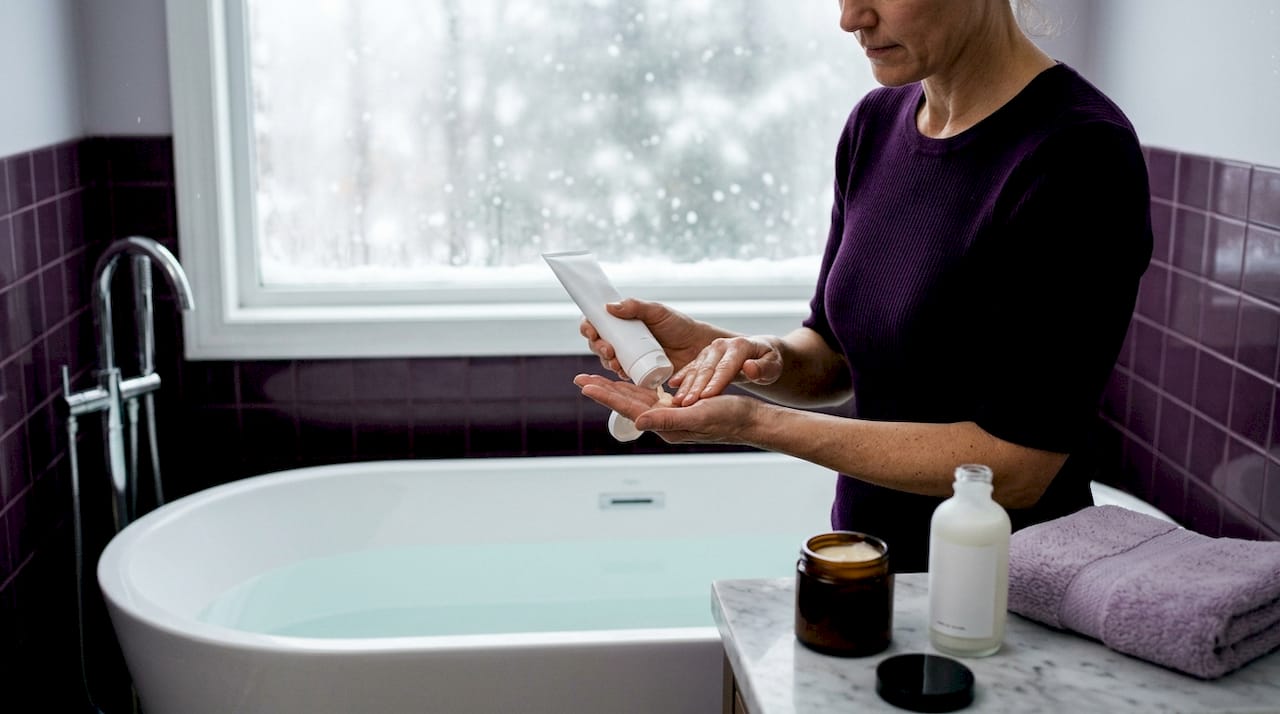
Water temperature matters just as much as product choice. Hot water strips skin oils, causing dryness and irritation that compounds throughout the day. Use warm water instead, and pat your skin dry rather than rubbing, leaving a slight film of moisture on the surface before applying your next product.
Key cleansing swaps for winter:
- Replace foaming cleansers with cream, milk, or oil-based formulas
- Use warm water only, never hot
- Pat dry with a soft towel, do not rub
- Cleanse once daily at night if your skin is very dry; rinse with water in the morning
- Avoid bar soaps with high pH levels, which disrupt the acid mantle
Pro Tip: If your skin feels tight within 60 seconds of cleansing, your cleanser is too harsh for winter. Swap it immediately.
2. Essential moisturizing strategies and ingredients for winter skin
Hydration in winter requires a two-step approach: attract moisture, then seal it in. Humectants like hyaluronic acid and glycerin draw water to the skin’s surface. Occlusives like shea butter, squalane, and petroleum jelly create a physical barrier that prevents that water from evaporating. Using humectants without occlusives in dry indoor air can actually pull moisture out of deeper skin layers, making dryness worse.
The correct layering sequence is humectant serum on damp skin, followed by a cream moisturizer, then an occlusive on top. This sequence is the foundation of effective hydration layering and mirrors the Korean skincare approach to barrier support.
Lightweight pump-bottle lotions are insufficient in winter. Thicker creams and ointments sold in jars provide superior protection against transepidermal water loss. That difference in texture is not cosmetic preference. It is barrier science.
Top ingredients to look for in your best winter moisturizers:
- Ceramides: Restore the lipid matrix of the skin barrier
- Hyaluronic acid: Draws moisture to the skin surface
- Glycerin: A lightweight humectant that works at multiple skin layers
- Shea butter: A rich emollient and mild occlusive
- Squalane: A lightweight oil that mimics skin’s natural sebum
- Vitamin E: Supports barrier repair and reduces oxidative stress
- Petroleum jelly: The most effective occlusive for overnight repair
Understanding the difference between Korean emulsions and moisturizers helps you layer products correctly without pilling or overloading the skin.
Pro Tip: Run a humidifier in your bedroom overnight. Indoor heating drops humidity levels significantly, and a humidifier helps your moisturizer work harder by reducing the rate of moisture evaporation from your skin.
3. Modifying actives and exfoliation in your winter skin care checklist
Retinoids and chemical exfoliants remain effective in winter, but they require adjustment. Cold air and indoor heating already stress the skin barrier. Adding aggressive actives on top accelerates irritation, redness, and peeling. The goal is to maintain the benefits of your actives while giving your barrier room to recover.
The sandwich method is the most practical technique for continuing retinoid use in winter. Apply a layer of moisturizer first, then your retinoid, then another layer of moisturizer on top. This buffers the active ingredient and significantly reduces irritation without eliminating its effectiveness.
For exfoliation, reduce frequency and switch to gentler formats:
- Use enzyme-based exfoliants or low-concentration lactic acid instead of glycolic acid or physical scrubs
- Limit exfoliation to once per week if your skin is dry or sensitive
- Avoid combining retinoids and exfoliating acids on the same night
- Watch for redness, stinging, or increased dryness as signs to scale back further
Winter is actually the best season for in-office chemical peels. Lower UV exposure in winter reduces the risk of post-treatment hyperpigmentation, and treatments spaced every 4–6 weeks allow full healing between sessions. If you want to address dullness or uneven texture, scheduling peels from november through february is the smart approach.
For guidance on combining actives safely, layering order and ingredient compatibility matter as much as the products themselves.
Pro Tip: If you are new to retinoids, winter is not the time to start at full strength. Begin with a low concentration two nights per week and build slowly.
4. Protective practices and lifestyle tips in the winter skin care checklist
Topical products alone cannot compensate for habits that strip your skin daily. Long, hot showers are one of the most common causes of winter dryness. They feel restorative but remove the oils your skin needs to stay intact. Keep showers under 10 minutes and use warm water throughout.
Sunscreen is non-negotiable year-round. SPF 30 broad-spectrum sunscreen applied daily protects against UV damage even on overcast winter days. UVA rays penetrate clouds and glass, contributing to hyperpigmentation and collagen breakdown regardless of temperature. Reapply every 2 hours if you spend extended time outdoors.
Hands and lips need dedicated protection in winter:
- Apply a thick hand cream containing ceramides or shea butter after every wash
- Use an occlusive lip balm with petrolatum or beeswax, not flavored glosses that encourage licking
- Wear cotton-lined gloves outdoors to shield skin from wind and cold
- Apply petroleum jelly to cracked hands at night, then wear cotton gloves overnight to accelerate healing
Internal hydration supports your topical routine. Drinking adequate water and including healthy fats like omega-3s from fish, walnuts, or flaxseed in your diet helps maintain skin lipid levels from the inside. A humidifier set to 40–60% humidity indoors counteracts the drying effect of central heating.
Pro Tip: Apply your body moisturizer within 3 minutes of stepping out of the shower. That window is when your skin absorbs hydration most effectively.
5. Winter skin care product recommendations and checklist summary
The right product formats matter as much as ingredients. Jars and tubes outperform pump bottles in winter because they typically contain richer, denser formulas with higher occlusive content. Hydrating serums in dropper bottles work well as your humectant layer before cream application.
| Product Type | Key Ingredients | Best Format | Winter Benefit |
|---|---|---|---|
| Gentle cleanser | Ceramides, glycerin | Cream or milk tube | Cleans without stripping barrier |
| Hydrating serum | Hyaluronic acid, panthenol | Dropper bottle | Draws moisture to skin surface |
| Moisturizer | Ceramides, shea butter, squalane | Jar or thick tube | Seals hydration, repairs barrier |
| Occlusive | Petroleum jelly, beeswax | Jar or stick | Prevents transepidermal water loss |
| Sunscreen | Zinc oxide, SPF 30+ | Cream or fluid | Daily UV protection year-round |
| Lip treatment | Petrolatum, vitamin E | Stick or pot | Protects and heals dry, cracked lips |
Your daily winter skincare checklist at a glance:
- Morning: gentle rinse, hydrating serum, ceramide moisturizer, SPF 30+ sunscreen
- Evening: cream cleanser, hydrating toner or essence, serum, rich moisturizer, occlusive if needed
- Weekly: gentle enzyme or lactic acid exfoliant (once per week maximum)
- Nightly (as needed): petroleum jelly on hands with cotton gloves for cracked skin repair
- Ongoing: humidifier running indoors, warm showers under 10 minutes, omega-3 rich diet
For a structured nightly routine that maps directly to these steps, a nine-step checklist approach gives you a clear framework to follow without guesswork. Reviewing common skincare routine errors also helps you avoid the habits that undo your winter routine progress.
Key takeaways
A complete winter skin care checklist combines gentle cleansing, layered hydration with ceramides and occlusives, reduced exfoliation, and daily SPF to protect and repair the skin barrier through cold, dry months.
| Point | Details |
|---|---|
| Switch your cleanser | Replace foaming formulas with cream or milk cleansers to avoid stripping the skin barrier. |
| Layer humectants and occlusives | Apply hyaluronic acid on damp skin, then seal with a ceramide cream and occlusive. |
| Adjust actives carefully | Use the sandwich method for retinoids and limit exfoliation to once per week. |
| Wear sunscreen daily | Apply SPF 30 broad-spectrum every morning, even on cloudy winter days. |
| Protect hands and lips | Use petroleum jelly with cotton gloves overnight to heal cracked, dry skin fast. |
What I have learned from years of winter skin care
Winter skin care is where patience separates good routines from great ones. The most common mistake I see is people reaching for stronger products when their skin gets dry, adding more actives, more exfoliation, more steps. That approach almost always makes things worse. Skin recovery in winter requires gentleness and consistency, not intensity.
The insight that changed how I approach cold weather skin care is understanding that barrier repair is not passive. You have to actively support it with the right ingredients in the right order. Ceramides rebuild the lipid matrix. Occlusives hold the work in place overnight. Skipping either one leaves the barrier incomplete.
I also think people underestimate how much their environment affects their skin. A humidifier is not a luxury product. In a centrally heated apartment in january or february, it is as important as your moisturizer. The air inside your home can be drier than a desert, and no cream fully compensates for that.
My honest recommendation: treat your winter routine like a repair phase. Scale back on actives, add one occlusive step, and give your skin four to six weeks of consistent gentle care before judging results. If dryness is severe or you are dealing with eczema or psoriasis, consult a board-certified dermatologist rather than layering more products on your own.
— Lunara
Lunarashopping’s picks for your winter routine
Cold weather skin care works best when your products are formulated for barrier repair and deep hydration, not just surface moisture.
Lunarashopping carries Korean skincare products built specifically for this kind of layered, barrier-focused approach. The Korean Glass Skin Routine Bundle brings together the hydrating serum, essence, and moisturizer steps your winter routine needs in one curated set. If you prefer to build your own routine from scratch, the Custom Skincare Kit Builder lets you select products by skin concern and season. Browse the full face care collection to find cleansers, serums, and moisturizers matched to your skin type and winter goals.
FAQ
What is a winter skin care checklist?
A winter skin care checklist is a structured daily and weekly routine that adjusts your cleansing, hydration, and protection steps to address the dryness and barrier damage caused by cold, low-humidity air.
When should I switch to my winter skincare routine?
Switch when you notice skin tightness after cleansing, flakiness, or makeup settling into dry patches. These signs of dryness typically appear in late fall as temperatures and humidity drop.
What are the best ingredients in winter moisturizers?
The best winter moisturizers contain ceramides, hyaluronic acid, glycerin, shea butter, and squalane. Pair humectants with an occlusive like petroleum jelly to prevent moisture from evaporating in dry indoor air.
Can I still use retinol in winter?
Yes. Use the sandwich method: apply moisturizer, then your retinoid, then moisturizer again on top. This buffers the retinoid and reduces irritation while preserving its skin-renewing benefits.
Do I need sunscreen in winter?
Daily SPF 30 broad-spectrum sunscreen is required year-round. UVA rays penetrate clouds and glass throughout the winter months, contributing to pigmentation and collagen loss regardless of how cold it feels outside.