Caring for skin in winter is defined as a targeted process of protecting, hydrating, and repairing your skin barrier against cold weather, low humidity, and indoor heating. These seasonal conditions strip your skin of ceramides and natural oils faster than any other time of year, leaving it tight, flaky, and reactive. A multi-layer routine using gentle cleansers, antioxidant serums, ceramide-rich moisturizers, and daily SPF 30 is the most effective approach dermatologists recommend. Your skin does not need a complete overhaul. It needs the right adjustments, applied consistently.
What causes winter skin dryness and barrier damage?
Your skin loses moisture faster in winter because cold air holds less water vapor. That drop in humidity accelerates transepidermal water loss, or TEWL, which is the rate at which water evaporates through your skin’s outer layer. When TEWL rises unchecked, your skin becomes dehydrated from the inside out.

Indoor heating makes the problem worse. Central heating systems reduce ambient humidity to levels comparable to desert air. Your skin responds by pulling moisture from deeper layers, which leads to tightness, flaking, and redness.
Hot showers and harsh cleansers strip the natural oils your skin needs to hold moisture in place. This is the detail most people overlook. You feel clean after a hot shower, but your skin’s lipid barrier has been compromised. Switching to a pH-balanced, non-foaming cleanser and cooler water is one of the highest-impact changes you can make.
Here is what winter specifically depletes from your skin:
- Ceramides. These are natural fats that hold skin cells together. Ceramide depletion accelerates in cold weather, weakening your barrier and allowing more moisture to escape.
- Natural moisturizing factors (NMFs). These include amino acids and lactic acid that keep your skin supple. Cold air reduces their concentration.
- Sebum. Oil gland activity slows in cold temperatures, reducing your skin’s natural protective film.
- Skin microbiome balance. Dryness and barrier damage alter the bacterial environment on your skin, increasing sensitivity and reactivity.
Dehydrated skin also becomes more sensitive to products it previously tolerated. If your skin suddenly reacts to your regular serum or toner in january, barrier damage is likely the cause, not the product itself.
Which ingredients and products are essential for winter skin care?
The right ingredients do two jobs at once: they attract water to your skin and seal it in. Products that only do one of these two things are less effective in winter.
Cleansers
Use a gentle, non-foaming cleanser every time you wash your face. Foaming cleansers contain surfactants that dissolve oils efficiently. That is exactly what you do not want in winter. Look for cream or oil-based formulas that clean without stripping.
Moisturizers and hydrators
Ceramide-, glycerin-, and hyaluronic acid-based moisturizers restore your lipid barrier and draw water into the skin. Each ingredient works differently. Hyaluronic acid is a humectant that pulls moisture from the air. Glycerin does the same and is more affordable. Ceramides physically rebuild the barrier structure.
Ointments and heavy creams outperform lotions in winter because their higher oil content slows evaporation. This is especially true for your hands and feet, which lose moisture fastest. Apply an ointment at night and cover with cotton gloves or socks to maximize overnight barrier repair.
Sunscreen
Mineral sunscreens with zinc oxide or titanium dioxide protect against UVA, UVB, infrared radiation, and pollution. UVA levels stay stable year-round regardless of temperature. Skipping sunscreen in winter means accepting daily photoaging and inflammation that compounds over time. Korean SPF formulas are worth considering here. They tend to be lighter and more wearable in cold months. You can learn more about Korean SPF differences and why they perform well in seasonal routines.
What to reduce in winter
- Chemical exfoliants. AHAs and BHAs are keratolytic agents that remove dead skin cells. Reduce frequency to once per week maximum in winter to avoid worsening barrier stress.
- Retinoids. These vitamin A derivatives accelerate cell turnover but increase sensitivity. Use them less frequently and always follow with a rich moisturizer.
Pro Tip: Apply your moisturizer within 60 seconds of stepping out of the shower. Damp skin absorbs hydrators more effectively and the occlusive layer traps that surface moisture before it evaporates.
How to build an effective winter skincare routine
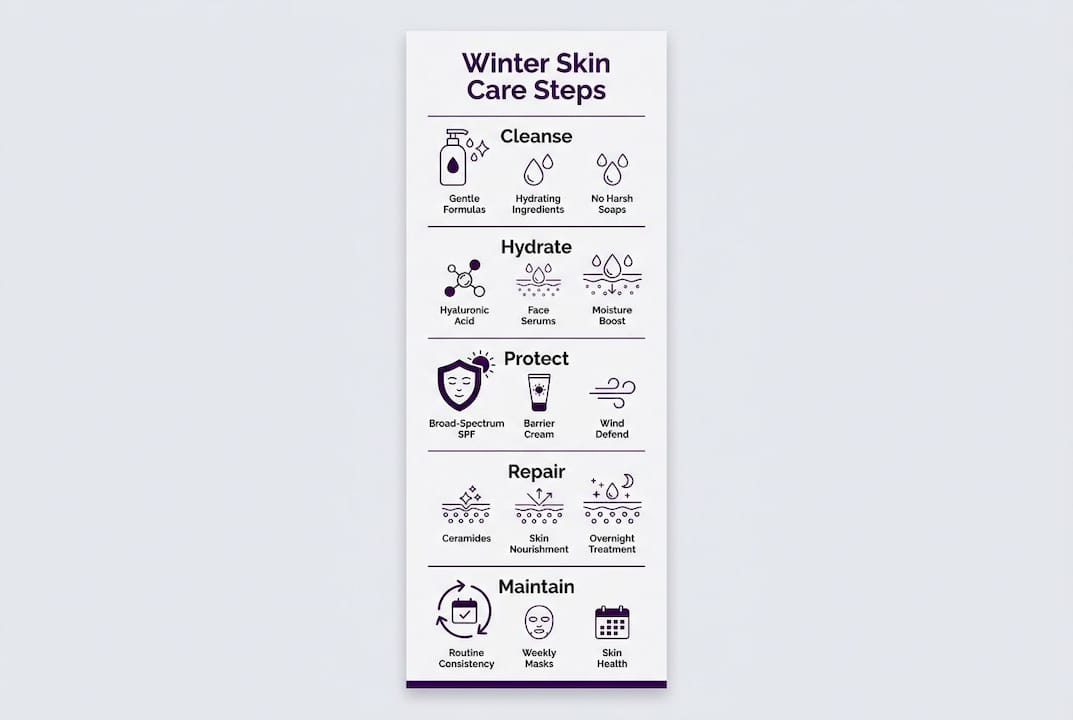
A structured daily routine prevents the reactive cycle of dryness and overcompensation. The goal is to cleanse gently, hydrate in layers, and protect consistently.
Morning routine
- Cleanse with a non-foaming, cream-based cleanser using lukewarm water.
- Apply an antioxidant serum with vitamin C or niacinamide to defend against environmental damage. Antioxidant serums are particularly effective in winter when pollution and UV exposure combine. Read more about serum benefits for glowing skin.
- Moisturize immediately on damp skin. Applying moisturizer to damp skin creates an occlusive seal that significantly reduces transepidermal water loss compared to applying on dry skin.
- Apply SPF 30 or higher. This step is non-negotiable even on overcast winter days.
Evening routine
- Double cleanse if you wore SPF or makeup. An oil cleanser first, then a gentle water-based cleanser.
- Apply treatment serums such as hyaluronic acid or a low-dose retinoid if your skin tolerates it.
- Moisturize with a richer cream or ointment. Night is when your skin repairs itself. A thicker product supports that process. Check the night skincare routine checklist for a full nine-step framework.
- Treat lips. Apply petroleum jelly before bed. Lips have no oil glands and crack quickly in winter without occlusive protection.
Weekly additions
| Step | Frequency | Purpose |
|---|---|---|
| Gentle exfoliation | Once or twice per week | Remove dead cells without disrupting barrier |
| Hydrating face mask | Once per week | Deliver concentrated humectants to depleted skin |
| Heavy ointment treatment on hands and feet | Two to three nights per week | Restore barrier on high-loss areas |
Pro Tip: Run a humidifier in your bedroom overnight. Indoor heating can drop humidity below 30%, which is dry enough to pull moisture from your skin while you sleep. A humidifier set to 45–55% makes a measurable difference.
What lifestyle changes improve winter skin health?
Topical products work best when your daily habits support them. Several behavioral adjustments directly reduce moisture loss and skin irritation during cold months.
- Shorten your showers. Limiting shower time and using cool or warm water prevents the oil stripping that hot water causes. Five to ten minutes is enough.
- Stop licking your lips. Saliva evaporates quickly and leaves lips drier than before. Use an occlusive lip balm or petroleum jelly instead.
- Drink more water. Skin hydration depends partly on internal water levels. Cold weather suppresses thirst, so you may be dehydrated without realizing it.
- Eat healthy fats. Omega-3 fatty acids found in salmon, walnuts, and flaxseed support your skin’s lipid barrier from the inside. This is not a replacement for topical care, but it reinforces it.
- Protect exposed skin outdoors. Wind strips moisture from your face and hands faster than still air. Wear a scarf, gloves, and a hat when temperatures drop. Reapply SPF if you are outside for extended periods.
- Avoid extreme temperature changes. Going from freezing outdoor air to a heated room repeatedly stresses your skin’s vascular system and worsens redness, particularly for those with sensitive or rosacea-prone skin.
These adjustments do not require new products. They require awareness of what your environment is doing to your skin and small corrections to your daily habits.
Key Takeaways
Effective winter skin care requires consistent barrier repair, layered hydration, and daily sun protection applied in the right order on damp skin.
| Point | Details |
|---|---|
| Barrier repair is the priority | Use ceramide-rich moisturizers and gentle cleansers to rebuild what cold weather strips away. |
| Layer hydrators correctly | Apply humectants like hyaluronic acid first, then seal with a cream or ointment on damp skin. |
| Sunscreen is non-optional | UVA levels stay stable in winter and cause photoaging; use SPF 30 or higher every morning. |
| Reduce exfoliants seasonally | Cut chemical exfoliant use to once per week in winter to avoid worsening barrier stress. |
| Lifestyle habits reinforce topical care | Short cool showers, a humidifier, and healthy fats all reduce moisture loss alongside your routine. |
What I have learned from years of watching winter routines fail
The most common mistake I see is people adding more products when their skin gets dry in winter. They reach for a new serum, a stronger treatment, or a more active formula. That instinct is wrong. Winter skin needs fewer actives and more barrier support.
The second mistake is skipping sunscreen because it feels unnecessary in cold, gray weather. UVA radiation is stable year-round and contributes to photoaging and inflammation regardless of temperature or cloud cover. I have seen people develop significant hyperpigmentation and fine lines from years of winter sun neglect.
Consistency in layering is what separates people who maintain healthy skin through winter from those who spend january and february dealing with flaking and redness. The routine does not need to be complicated. It needs to happen every day in the right order.
Your skin also signals when something is off. Tightness after cleansing means your cleanser is too harsh. Persistent redness that does not resolve with moisturizer means your barrier needs more time and a simpler routine. If dryness continues despite consistent self-care, a dermatologist visit is the right next step. Some conditions like eczema or psoriasis worsen in winter and need targeted treatment beyond standard skincare.
— Lunara
Lunarashopping’s winter skin care collection
Lunarashopping carries a curated selection of Korean skincare products built for exactly this kind of seasonal care. The focus is on hydration, barrier repair, and protection from environmental damage.

The morning routine set includes products designed to cleanse gently, hydrate, and protect your skin before you face the cold. For body care, the body moisturizer range covers hands, feet, and dry patches with rich, occlusive formulas suited for winter repair. Browse the full face care collection to find ceramide-rich creams, antioxidant serums, and SPF products that work together as a complete winter routine. Every product is selected for quality, skin compatibility, and real results.
FAQ
What is the best moisturizer for winter dry skin?
Ceramide-, glycerin-, and hyaluronic acid-based creams or ointments are the most effective moisturizers for winter. They restore the lipid barrier and attract water to the skin simultaneously.
How do I prevent dry skin in winter without changing my whole routine?
Switch your cleanser to a non-foaming formula, apply your existing moisturizer on damp skin, and add a humidifier to your bedroom. These three adjustments reduce moisture loss without requiring a full routine overhaul.
Do I still need sunscreen in winter?
Yes. UVA radiation levels remain stable year-round and cause photoaging and skin inflammation regardless of season. Use SPF 30 or higher every morning, even on overcast days.
How often should I exfoliate in winter?
Limit chemical exfoliation to once or twice per week in winter. More frequent use worsens barrier stress and increases sensitivity in already-compromised skin.
Why do lips crack so badly in winter?
Lips have no oil glands, which makes them unable to self-moisturize. Cold air and the habit of licking lips accelerate cracking. Apply petroleum jelly at night and use an occlusive lip balm throughout the day.